Santa Fe's Art Market Is Booming in Visitors and Shrinking in the People Who Run It
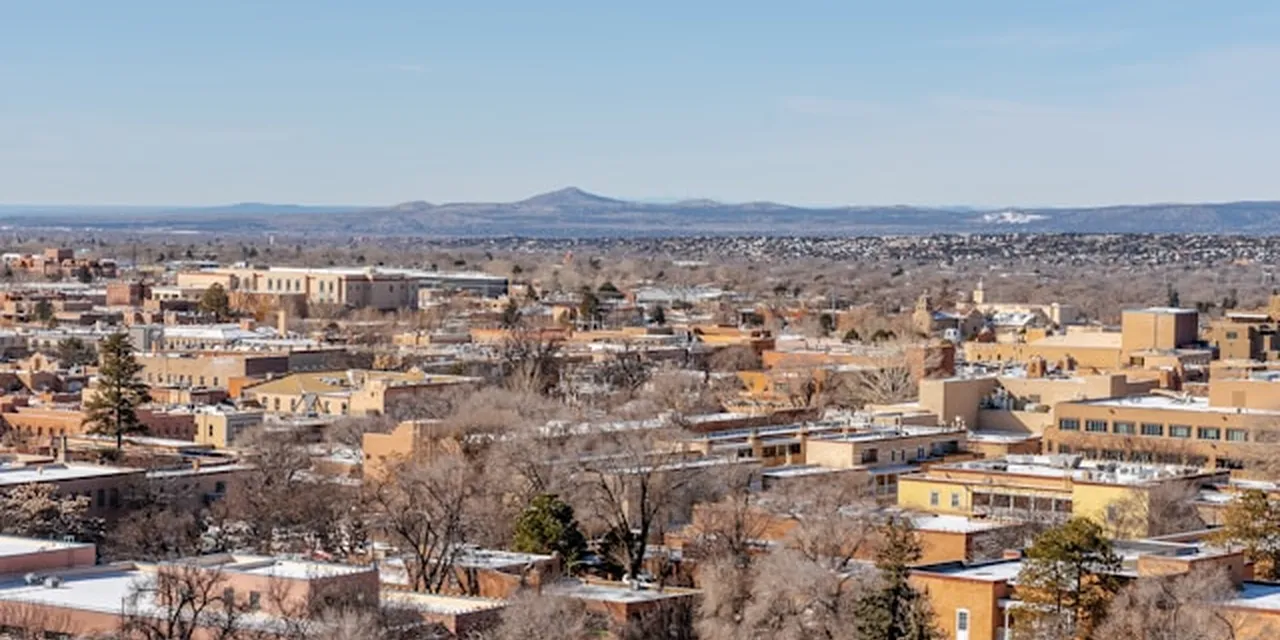
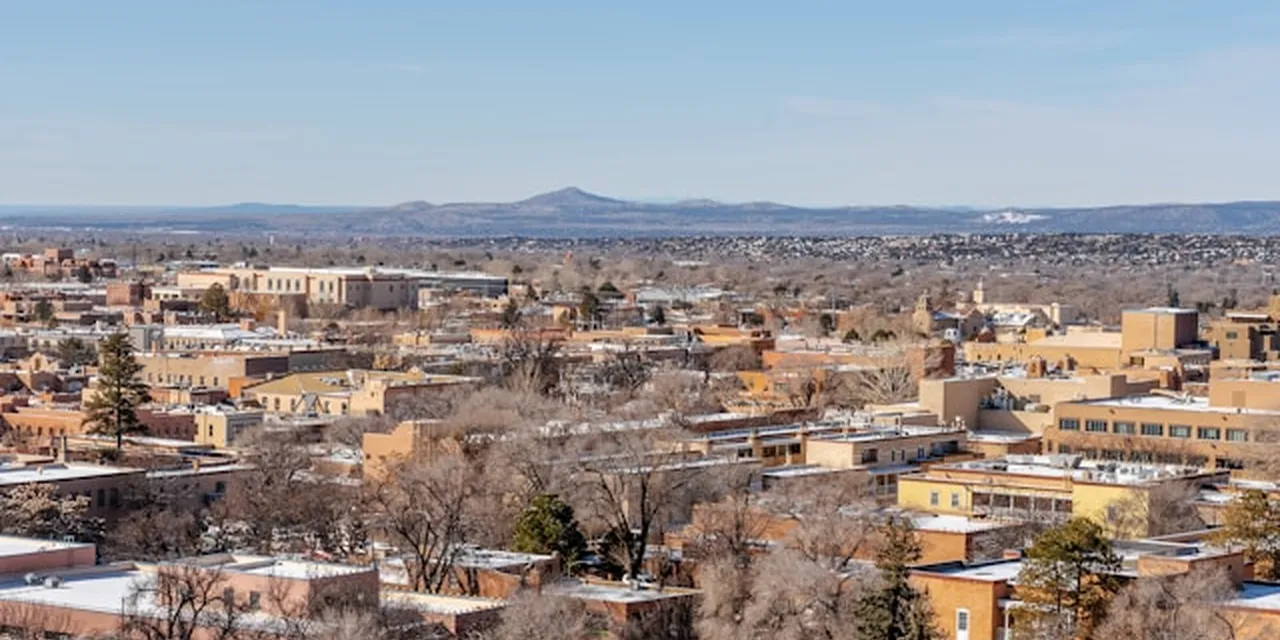
Santa Fe welcomed 4.2 million visitors in 2024. Canyon Road lost 18 galleries in the same period. These two facts, sitting side by side, define the central paradox of the third-largest art market in the United States. More people are walking through the door. Fewer galleries remain open to receive them. And the specialist professionals who authenticate, conserve, handle, and sell the work that makes this market globally distinctive are harder to recruit than at any point in the last two decades.
The visible problem is a talent shortage. The deeper problem is a structural mismatch between what this market needs and what the available workforce can provide. Santa Fe does not lack people who work in the arts. It lacks experienced Native American art curators with established tribal relationships, paper and textile conservators trained in Pueblo textile traditions, and senior preparators who can condition-report a ceremonial object with the cultural sensitivity the work demands. These are not interchangeable skills. They cannot be trained in a semester or recruited from a generalist pool. The candidate universe for the most critical roles in this market numbers in the low dozens, and over 90% of those individuals are not looking for a new position.
What follows is a ground-level analysis of where the hiring gaps are most acute in Santa Fe's gallery and museum sector, what is driving them, what they cost, and what organisations competing for this talent need to do differently in 2026.
The Market That Grew and Contracted at the Same Time
The surface numbers tell a story of growth. Total visitor volume to Santa Fe reached 4.2 million in 2024, surpassing the pre-pandemic peak set in 2019. The SWAIA Santa Fe Indian Market drew an estimated 115,000 visitors to its August 2024 event, a 3% increase over the prior year, generating approximately $15 million in direct artist sales and exceeding $200 million in total economic impact to the city. Gerald Peters Gallery, operating from a 30,000-square-foot flagship on Canyon Road, reported annual turnover exceeding $45 million across 2022 and 2023. Blue Rain Gallery expanded its Canyon Road presence to 12,000 square feet in 2023.
Beneath these headline figures, a contraction is underway. The Canyon Road Arts District Association counted approximately 105 operational galleries in 2019. By 2024, that figure had fallen to roughly 87. Direct art sales across the Canyon Road corridor generated an estimated $250 million in 2023, but 2024 figures indicate an 8 to 12% year-over-year decline consistent with national luxury goods softening. Average inventory holding periods for Canyon Road galleries stretched from 180 days in 2019 to 240 days in 2024. Mid-market galleries selling works priced between $2,000 and $15,000 face particular liquidity pressure, with extended days-on-market for inventory eroding working capital.
The Railyard District presents a somewhat different picture. Its 20 to 25 commercial galleries and the SITE Santa Fe museum skew toward contemporary and experimental work. The collector demographic here is younger, and the galleries are less dependent on the walk-in tourism that sustains Canyon Road. But the Railyard is not immune to the forces compressing the broader market.
This is the tension that matters for hiring leaders: the institutions driving the most revenue and cultural authority in this market are growing, consolidating, and demanding more specialist talent. The mid-tier is thinning. And the overall talent pool is not expanding to meet either demand. The market is concentrating, and concentration intensifies competition for every qualified professional who remains.
The Three Roles This Market Cannot Fill
Job postings for art preparator and collections manager roles in the Santa Fe metropolitan area increased 42% between Q3 2023 and Q3 2024. During the same period, the regional unemployment rate for arts, design, entertainment, sports, and media occupations held at 1.8%, which represents effective full employment for specialised positions. The gap between rising demand and a static supply is not closing. It is widening.
Senior Preparators with Cultural Competency
The role of senior preparator in Santa Fe is not the same role as senior preparator in New York or Los Angeles. The work here requires museum-standard condition reporting, custom crating for three-dimensional works, climate-controlled transport logistics, and something that no certification programme teaches: Native American art handling protocols. This means ceremonial sensitivity, cultural patrimony awareness, and the practical knowledge of which objects require tribal consultation before they can be moved, photographed, or displayed.
Gerald Peters Gallery demonstrated the market's intensity when it recruited a senior preparator and registrar from the Denver Art Museum's Western art collection in Q2 2024, according to an industry source cited by Artnet News. The gallery offered a 35% salary premium over the Denver public-sector wage scale to secure the candidate. The Denver Art Museum subsequently reposted the vacancy at an increased salary band of $68,000 to $78,000, up from $52,000 to $58,000, and left it unfilled for four months before promoting internally.
That single hire illustrates three dynamics at once. First, the commercial sector can outbid institutional employers. Second, the institutional sector cannot easily replace what it loses. Third, the resulting cascade creates two vacancies from one recruitment event.
Native American Art Curators with Tribal Relationships
The Wheelwright Museum of the American Indian maintained an open search for a Curator of Collections from January through September 2024. Eight months. According to an interview with Director Jonathan Batkin published in the Santa Fe New Mexican, the position required expertise in Navajo textiles and contemporary Native American jewelry, specialisations where the candidate pool in New Mexico numbers fewer than 15 qualified individuals. The role was ultimately filled by recruiting from the Heard Museum in Phoenix, with a relocation package exceeding $25,000.
This is not a role where a strong generalist can learn on the job. Federal compliance requirements under the Indian Arts and Crafts Act demand authentication expertise with legal consequences for error. Tribal consultation protocols require relationships built over years. The skills that qualify a curator for this work are acquired through a combination of academic training, community trust, and lived professional experience that takes a decade or more to assemble. The pipeline produces graduates. It does not efficiently produce the 5-to-10-year veteran the market actually needs.
Paper and Textile Conservators for Indigenous Materials
Blue Rain Gallery's experience in 2024 is the clearest illustration of a shortage that traditional hiring methods cannot solve. Unable to secure a full-time conservator with expertise in contemporary glass and ceramic sculpture, the gallery created a "Conservation Fellowship" arrangement. It contracted a conservator from the Museum of New Mexico on a 0.5 FTE basis while funding a graduate internship to handle routine collection care. The gallery effectively purchased access to institutional expertise because the open market could not provide it.
Paper and textile conservators working with Pueblo textiles, ledger art, and WPA-era works on paper command $75,000 to $95,000 in the private sector, according to the American Institute for Conservation's 2023 salary survey for the Southwest region. Chief conservators in private consultation roles reach $140,000 to $180,000. But compensation alone does not solve the problem when the number of people who possess the relevant skills and experience is measured in single digits regionally.
The Missing Middle: Why Training Programmes Have Not Closed the Gap
The University of New Mexico operates the only art conservation programme in the region. Despite the acute shortage of conservators in the Santa Fe market, UNM's programme reports placement rates of only 60% for graduates into full-time conservation roles. Many graduates leave the field or the state entirely.
This data point, read in isolation, suggests the shortage should not exist. Graduates are available. Employers are hiring. The two should connect.
They do not connect because the shortage is not at the entry level. It sits in the middle of the career arc. Employers in Santa Fe's gallery and museum sector demand conservators and curators with 5 to 10 years of niche experience in Native American art materials, tribal consultation, and authentication practice. The training pipeline produces graduates who possess foundational skills. It does not produce the intermediate-stage professional who has spent years building relationships with tribal communities, handling contested provenance cases, and developing the material-specific intuition that separates competent conservation from expert conservation.
This is the original analytical claim this article makes: Santa Fe's talent crisis is not a shortage of people trained in art conservation or curatorial practice. It is a shortage of time. The market demands a depth of specialised experience that takes a decade to accumulate, and neither higher salaries nor more graduate places can compress that timeline. Capital moved faster than human capital could follow. Galleries expanded, collections grew, compliance requirements tightened, and the experienced professionals who could have met those demands were never produced in sufficient numbers because the training-to-mastery pipeline was never designed for the pace at which this market matured.
The result is a "missing middle" in the labour market. Entry-level talent leaves for New York or Denver. Senior talent is entrenched and passive. The band between them, the working professional with five to eight years of specialised experience, barely exists in this geography. Any organisation hiring for these roles is not competing against other job postings. It is competing against the time it takes to develop competency that cannot be accelerated.
What These Roles Pay and Why It Matters
Compensation in Santa Fe's art sector reflects both the specialisation premium and the cost-of-living pressure that defines this market. Median home prices reached $850,000 in Q3 2024, while median arts sector wages remain below $55,000. That ratio creates a recruitment barrier that compensation alone cannot fully resolve, though the premium for specialist roles has widened materially.
Senior art preparators in Santa Fe command $58,000 to $72,000 in base salary, a 12 to 15% premium over the national median for the role according to Bureau of Labor Statistics OEWS data. At the director level, a Director of Registration or Preparator Services earns $95,000 to $125,000 in base salary, with total compensation reaching $140,000 to $165,000 when performance bonuses tied to major exhibition installations or estate collection intake are included. Gerald Peters Gallery listed a Director of Operations role in 2024 at a range of $110,000 to $140,000.
Native American art specialists at the senior curator level earn $65,000 to $85,000 in base salary, according to the College Art Association's 2024 curatorial compensation survey for the Southwest region. At the gallery director or chief curator level, base compensation reaches $120,000 to $180,000. At major commercial galleries, profit participation structures push total compensation above $250,000 for top performers. The gap between institutional and commercial pay at the executive level is stark: a chief curator at a state museum earns roughly half of what their commercial counterpart commands.
For conservators, the public-private divide is equally pronounced. Paper and textile conservators in the museum sector earn $52,000 to $68,000. The same expertise deployed in private practice serving high-end galleries commands $75,000 to $95,000. Chief conservators in institutional roles earn $95,000 to $125,000; in private consultation, $140,000 to $180,000.
These differentials drive the poaching dynamic the market is experiencing. Commercial galleries can consistently outbid museums. Museums cannot match commercial offers without restructuring their entire pay scales. The result is a one-way flow of senior talent from the public to the private sector that weakens the institutional base that gives Santa Fe's art market its credibility and depth. The cost of losing a key hire to a competitor in this market extends far beyond the replacement search. It erodes institutional knowledge that took years to build.
The Competitors Pulling Talent Away
Santa Fe does not compete for art talent in isolation. Three markets exert distinct gravitational pull on different segments of its workforce, and understanding those dynamics is essential for any organisation building a talent pipeline in the creative sector.
Scottsdale, Arizona, is the most direct competitor for Western and Native American art professionals. Compensation for equivalent preparator and gallery director roles in Scottsdale runs 8 to 12% higher than Santa Fe, and Arizona's 2.5% flat income tax compares favourably with New Mexico's progressive structure reaching 5.9%. Santa Fe's housing costs are lower, with a median home price of $850,000 against Scottsdale's $1.2 million in the Paradise Valley corridor. But the net talent flow is currently negative. Mid-career gallery professionals are moving to Scottsdale for higher earnings. The reverse flow brings Scottsdale-based conservators to Santa Fe seeking the institutional resources available at the Museum of Indian Arts and Culture and the Wheelwright Museum.
Denver, Colorado, has become an increasingly aggressive recruiter since 2022. The Kirkland Museum and the Denver Art Museum's Western art collections have built capacity that directly competes with Santa Fe for preparators and conservators. Denver offers 15 to 20% higher salaries than Santa Fe with comparable outdoor amenities and materially better air quality reliability during wildfire season. That last factor is not trivial. The 2024 Canadian wildfire smoke event reduced Canyon Road foot traffic by an estimated 40% during the normally lucrative early summer period. Climate reliability is now a recruitment differentiator.
New York represents a different kind of loss. For senior curators and contemporary art specialists, the compensation premium is 40 to 60%. But cost-of-living differentials exceeding 100% for housing mean the real economic gain is marginal. The talent dynamic is one of "upward outmigration": Santa Fe trains early-career professionals who depart for New York after three to five years to access primary market auction houses and global galleries. The New Mexico Department of Workforce Solutions identified this pattern in its 2023 "Brain Drain Report." Each departure removes not just a worker but the years of relationship-building and market-specific knowledge that Santa Fe invested in their development.
The cumulative effect is a market where every successful hire at a competitor creates a vacancy in Santa Fe that may take months to fill, and where the counteroffer dynamic is complicated by the fact that matching a salary offer from Scottsdale or Denver often means matching a fundamentally different cost-of-living equation.
The Regulatory and Environmental Pressures Compounding the Squeeze
Two forces beyond the labour market itself are making the hiring challenge harder: tightening regulation and increasing climate disruption.
Compliance Costs Under the Indian Arts and Crafts Act
The Indian Arts and Crafts Act of 1990, as amended with strengthened enforcement provisions in 2024, imposes criminal penalties for misrepresentation of Native American art. For Santa Fe galleries, this means heightened costs for provenance research and tribal authentication letters. Legal consultation fees for galleries increased 25% year-over-year according to the Santa Fe Gallery Association's compliance survey. Non-compliance carries the risk of federal felony charges and permanent exclusion from SWAIA Indian Market participation.
The compliance burden falls disproportionately on the same specialist talent the market already cannot find enough of. Authentication requires curators with deep knowledge of tribal artistic traditions. Provenance research requires professionals who understand both art historical methodology and the specific cultural and legal frameworks governing Native American art. Every tightening of the regulatory environment increases the demand for these skills without increasing their supply.
Simultaneously, increasing legal challenges regarding the authenticity of historic Pueblo pottery and Navajo rugs have created liability risks for galleries. Insurance premiums for errors and omissions coverage rose 30% in 2024, according to AXA Art Insurance's market report. Galleries that cannot afford specialist authentication and curatorial talent face both regulatory and financial exposure.
Climate Disruption of the Business Model
The sector derives 70 to 75% of revenue from non-resident buyers. Santa Fe's gallery economy is, fundamentally, a tourism economy with extraordinarily high transaction values. Anything that disrupts tourist flow disrupts revenue. Wildfire smoke events during peak season now represent a structural risk, not an occasional inconvenience. The 40% drop in Canyon Road foot traffic during the June 2024 smoke event demonstrates the fragility of a business model built around physical presence in a geography increasingly subject to air quality disruption.
For hiring, this creates a specific challenge. Candidates evaluating a move to Santa Fe are performing a longer-term calculation that now includes climate risk. Denver's cleaner air during wildfire season is not just an amenity preference. It is an economic reliability factor that affects the stability of gallery employment. The City of Santa Fe's proposed Arts and Culture District zoning amendments, expected for final approval in late 2025, may preserve gallery space on Canyon Road by restricting conversion to hospitality use, but they are projected to increase rental costs for mid-tier galleries by 15 to 20%. Higher operating costs layered onto climate-disrupted revenue make the mid-tier gallery employer less stable, which makes recruitment harder still.
What Hiring Leaders in This Market Must Do Differently
The conventional approach to filling these roles does not work in Santa Fe. Posting a vacancy and waiting for applications reaches, at best, the 10% of qualified professionals who happen to be actively looking at any given moment. For senior Native American art specialists and conservators, the passive candidate ratio exceeds 90%. These individuals hold tenured positions or established private practices. They do not browse job boards. They do not respond to posted vacancies.
Reaching them requires direct identification and outreach through the networks where they operate: tribal networks, professional conservator guilds, the annual American Institute for Conservation conference, and the informal professional community that gathers around SWAIA Indian Market each August. This is not a market where volume sourcing produces results. It is a market where a single perfectly matched candidate, identified through deep sector knowledge and approached with a proposition tailored to their specific career situation, is worth more than a hundred applications.
The timeline expectations must also shift. The Wheelwright Museum's eight-month curatorial search is not an outlier in this market. It is typical for roles requiring the intersection of academic credentials, tribal relationships, and material-specific expertise. Organisations that begin a search expecting a 60-day process will be disappointed. Organisations that begin with a realistic talent map of the available candidate universe and a proactive engagement strategy will move faster because they start from a position of knowledge rather than hope.
SWAIA's planned Year-Round Marketplace digital platform, launching in 2025 with projected revenue of $2 to $3 million by 2026, may create new role categories at the intersection of digital commerce and art market expertise. Gallery directors who can manage both physical and digital sales channels are not yet a standard profile in this market. Organisations building for 2026 and beyond should be identifying and developing this hybrid capability now, before the competitive pressure arrives.
For organisations competing for specialist gallery and museum leadership in a market where the candidates who matter are not visible through conventional channels, where an eight-month search is not unusual, and where a single mismatched hire carries regulatory as well as financial risk, speak with our executive search team about how KiTalent approaches markets like this. With a 96% one-year retention rate across 1,450+ executive placements and a pay-per-interview model that eliminates upfront retainer risk, KiTalent delivers interview-ready candidates within 7 to 10 days by reaching the 80% of senior professionals who are not on any job board.
Frequently Asked Questions
What is the average salary for a gallery director in Santa Fe?
Gallery director compensation in Santa Fe varies sharply between institutional and commercial roles. At the senior curator or gallery director level in commercial settings, base salary ranges from $120,000 to $180,000. At major galleries such as Gerald Peters Gallery, profit participation structures can push total compensation above $250,000 for top performers. Institutional roles pay materially less, with chief curators at state museums earning $95,000 to $125,000. The gap between public and private sector pay drives a consistent one-way talent flow that compounds the shortage for museums and non-profits.
Why is it so hard to hire art conservators in New Mexico?
The shortage is not at the entry level. The University of New Mexico produces conservation graduates, but only 60% enter full-time conservation roles. Employers need conservators with 5 to 10 years of specialised experience in Native American materials, tribal consultation, and authentication. This depth of expertise takes a decade to develop and cannot be compressed by higher salaries or additional graduate places. The result is a "missing middle" where junior talent exists but intermediate-to-senior specialists are effectively absent from the open market.
How does Santa Fe compare to Scottsdale for art sector jobs?
Scottsdale offers 8 to 12% higher compensation for equivalent gallery and preparator roles, with a lower flat state income tax of 2.5% compared to New Mexico's progressive rate reaching 5.9%. Santa Fe counters with lower housing costs and stronger institutional resources through the Museum of Indian Arts and Culture and the Wheelwright Museum. Net talent flow currently favours Scottsdale for mid-career gallery professionals, while Santa Fe attracts conservators seeking institutional collaboration and specialist resources.
What regulations affect art gallery hiring in Santa Fe?
The Indian Arts and Crafts Act of 1990, with enforcement amendments strengthened in 2024, imposes federal criminal penalties for misrepresentation of Native American art. Galleries require staff with provenance research expertise and tribal authentication knowledge to maintain compliance. Legal consultation costs have increased 25% year-over-year, and errors and omissions insurance premiums rose 30% in 2024. Non-compliance risks include felony charges and exclusion from SWAIA Indian Market.
How can galleries recruit passive candidates in the art sector?
Over 90% of senior Native American art specialists and conservators are passive candidates who do not respond to posted vacancies. Effective recruitment in this market requires direct outreach through tribal networks, professional guilds such as the American Institute for Conservation, and relationship-based engagement at events including SWAIA Indian Market. KiTalent's AI-powered talent mapping methodology identifies and reaches these professionals directly, delivering interview-ready candidates within 7 to 10 days through a pay-per-interview model with no upfront retainer.
What is the economic impact of Santa Fe Indian Market on gallery hiring?
The SWAIA Santa Fe Indian Market generates approximately $15 million in direct artist sales annually, with total economic impact exceeding $200 million. The 2024 event attracted 115,000 visitors. This concentrated commercial window creates seasonal demand spikes for preparators, handlers, and sales specialists, but also highlights year-round staffing gaps. SWAIA's planned Year-Round Marketplace digital platform may shift some hiring demand toward professionals with combined art market and digital commerce expertise.