Santa Fe's Immersive Entertainment Sector: The Talent Gaps That Restructuring Headlines Obscured
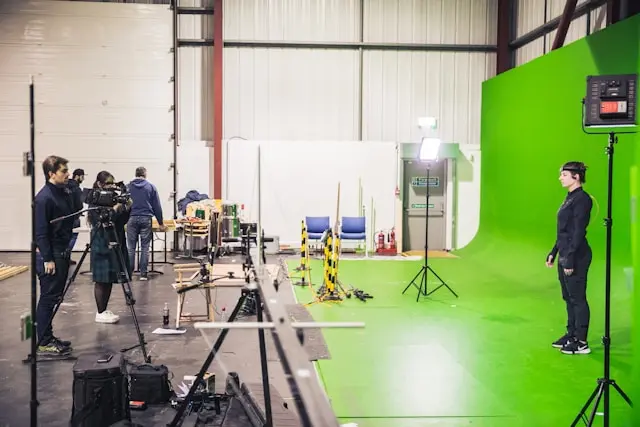
Santa Fe County's immersive entertainment and film production sector directly employs between 1,200 and 1,500 people. That figure represents less than 2% of total county employment. It is a small market by any national measure. Yet three specialist roles within it have become among the hardest to fill anywhere in the American Southwest, with average days-to-fill exceeding 100 days and effective unemployment at zero in at least one critical category.
The Meow Wolf restructuring of 2023 and 2024 created a widespread impression that Santa Fe's creative sector had surplus talent available. Public reporting on the layoffs, which reduced the company's nationwide headcount by roughly 20%, suggested a correction was underway. The impression was wrong. The layoffs targeted administrative and expansion-oriented positions. The specialists this market actually needs, interactive technologists, certified production accountants, and senior scenic fabricators, were either retained or left New Mexico entirely within weeks. The restructuring headlines masked a deepening technical scarcity that has not resolved heading into 2026.
What follows is a ground-level analysis of where the hiring gaps are most acute in Santa Fe's immersive entertainment and film production ecosystem, what is driving them, what they cost, and what organisations operating in this market must do differently to reach the candidates who can fill them.
The False Signal: Why Meow Wolf's Contraction Did Not Release the Talent You Expected
The most important thing to understand about Santa Fe's creative talent market in 2026 is that the public narrative and the hiring reality point in opposite directions. Meow Wolf Entertainment, which maintains its corporate headquarters and the House of Eternal Return in Santa Fe, reduced its local workforce from previous highs to approximately 150 to 200 employees across administrative, creative, and operations roles. According to reporting in The Hollywood Reporter and the Santa Fe New Mexican, the company underwent multiple rounds of layoffs through 2023 and 2024, closed its Denver administrative offices, and pivoted away from rapid expansion toward sustaining its existing installations.
A hiring leader reading those headlines might reasonably assume that experienced immersive designers, fabricators, and creative technologists were available in Santa Fe's creative market. That assumption would be mistaken for a specific reason.
The administrative cut versus the technical drain
The restructuring affected roles tied to Meow Wolf's growth ambitions: project managers for unbuilt installations, expansion-focused business development staff, and administrative overhead associated with operating multiple satellite offices. Core technical craft roles, the interactive developers, scenic fabricators, and installation technologists who build and maintain immersive experiences, were either retained or, where they were let go, exited the Santa Fe market entirely. LinkedIn migration data from 2023 and 2024 shows a net outflow of mid-career immersive designers and fabricators from Santa Fe to Denver. The talent did not pool locally. It dispersed to markets paying 15 to 25% more.
This is the analytical claim that anchors this article: the restructuring headlines created a false impression that qualified technical talent was available in Santa Fe. The layoffs and the shortage are not contradictory. They describe different populations within the same sector. Administrative staff were shed. Technical specialists were lost. The result is a market that appears softer than it is, which means organisations hiring in it are calibrating their urgency, their compensation, and their search methods incorrectly.
Three Roles, Three Shortages: Where Santa Fe's Hiring Problem Is Most Acute
The scarcity is not evenly distributed. Three roles account for the majority of unfilled positions and the longest vacancy durations in the market. Each has a distinct cause, and each requires a different response from hiring leaders.
Immersive experience designers with interactive technology skills
Demand for professionals who can integrate projection mapping, sensor-based interactive systems, and spatial audio into permanent installations rose 40% year over year through 2024, according to Lightcast job posting analytics for the Santa Fe metropolitan area. Local supply remained flat over the same period. The result is a 145-day average time to fill for interactive technologist roles in Santa Fe, compared to 68 days in Denver for equivalent positions.
The poaching dynamic is concrete. In 2024, three senior interactive developers were recruited from Santa Fe-based fabrication shops to Meow Wolf's own Convergence Station in Denver, with relocation packages and salary premiums of 25 to 30% over Santa Fe market rates. The vacancies those departures created at local vendors remained open for four to six months. The talent moved to a city that paid more, offered a larger creative community, and had lower housing costs relative to wages.
Certified production accountants specialising in film tax credits
New Mexico's 25 to 30% refundable film production tax credit is among the most generous in the United States. It is also among the most complex to administer. The audit trail and state compliance requirements demand specialised accounting expertise that fewer than 60 certified production accountants in the entire state possess. Fewer than 10 are based in Santa Fe.
According to industry compensation data from Entertainment Partners, Netflix's ABQ Studios recruited two senior production accountants from Santa Fe-based service companies in early 2024, offering base salaries of $125,000 to $140,000 plus completion bonuses. Santa Fe production services firms cannot match those figures. The resulting vacancies at local vendors were listed for over 120 days before being filled by less experienced candidates who required additional training.
Senior scenic fabricators working across multiple materials
The third shortage is the most absolute. Unemployment among senior scenic fabricators capable of working simultaneously with steel, acrylics, electronics, and traditional scenic materials is effectively zero percent in Santa Fe County, according to Bureau of Labor Statistics occupational data and IATSE Local 480 reporting. These roles remain open an average of 98 days in Santa Fe versus 34 days in Denver. Local shops report that candidates with five or more years of mixed-material construction experience receive multiple offers within 72 hours of entering the market. The problem is not that they are hard to attract. The problem is that they are not visible through conventional hiring channels at all.
The Compensation Mismatch That Drives the Talent Drain
Santa Fe's immersive entertainment and film production wages sit 20 to 40% below equivalent roles in every competing market. This is not a new observation. What makes it consequential in 2026 is that Santa Fe's cost of living, particularly housing, now matches or exceeds the cities offering those higher wages.
The median home price in Santa Fe reached $605,000 as of the fourth quarter of 2024, an 8% year-over-year increase. Creative sector wages over the same period remained flat. Denver's median home price is $550,000, yet an immersive experience designer in Denver earns $170,000 to $210,000 at the VP level compared to $135,000 to $165,000 in Santa Fe. A senior interactive technologist earns $85,000 to $105,000 in Santa Fe versus $95,000 to $130,000 in Denver. Austin offers 30 to 40% premiums over Santa Fe for creative technologists, with no state income tax to absorb. Los Angeles commands 50 to 70% premiums for senior creative roles.
The arithmetic is straightforward. A senior fabricator earning $55,000 to $72,000 in Santa Fe can earn $85,000 to $110,000 in Denver while paying less for housing. A production accountant earning $75,000 to $95,000 in Santa Fe can earn $125,000 or more in Albuquerque, 60 miles away, at a studio with six sound stages and a Netflix contract.
This creates what the research describes as a holding pattern. Some Santa Fe-based workers accept below-market wages because of lifestyle factors: the artistic community, the physical environment, non-monetary prestige. Others supplement creative sector income with remote technology work or participation in the tourism economy. Neither dynamic is stable. If housing costs continue to appreciate at 8% annually while wages remain flat, the holding pattern breaks. The professionals who stay for lifestyle will eventually be priced out of that lifestyle.
For hiring leaders, the implication is direct. Any search in this market that relies on posted salary bands calibrated to Santa Fe's historical norms will fail. The salary negotiation a candidate runs in their own head compares your offer to Denver, Albuquerque, and Austin, not to other Santa Fe employers.
The Infrastructure Gap: Why Santa Fe Captures 7% of a $830 Million Market
New Mexico's film and television sector generated $830 million in direct production spending in fiscal year 2024 across 95 productions. Santa Fe County captured approximately $45 to $60 million of that total, roughly 7%. The rest flowed to Albuquerque and Las Cruces.
The reason is physical infrastructure. Albuquerque hosts Netflix's ABQ Studios with over 300,000 square feet across six sound stages. Santa Fe's primary studio facility, formerly known as Garson Studios, operates at reduced capacity with two sound stages totalling approximately 20,000 square feet. No stage in Santa Fe exceeds 10,000 square feet. Any production requiring larger facilities bases in Albuquerque by default.
This infrastructure gap shapes the talent market in two ways. First, it limits the volume of work available in Santa Fe, which limits the number of full-time production jobs the local market can sustain. Second, it creates the bedroom community dynamic documented in commuting data from the New Mexico Department of Workforce Solutions: many Santa Fe residents commute 60 miles to Albuquerque for studio work. Santa Fe loses tax revenue and daytime economic activity. The creative professional living in Santa Fe for its quality of life works in Albuquerque for its production volume.
The proposed Creative Corridor development on Santa Fe's Southside, which would add 150,000 square feet of production and fabrication space, represents the first meaningful expansion of dedicated immersive and film infrastructure since 2019. Groundbreaking was anticipated in late 2025, contingent on financing. Two new sound editing facilities in the Railyard District were approved by Santa Fe City Council in the third quarter of 2024. These investments address the post-production and fabrication sides of the pipeline. They do not solve the sound stage deficit.
For hiring leaders, the infrastructure picture determines which roles Santa Fe can credibly support. Post-production, visual effects, creative design, and fabrication are sustainable local functions. Principal photography on major features is not, and the talent pipeline for production-intensive roles flows toward Albuquerque accordingly.
The Legislative Variable: Film Incentives and the 2026 Sunset
New Mexico's film production tax credit, offering 25 to 30% refundable credits on qualified production expenditures, is the engine that drives the state's entire production economy. That credit faces sunset provisions requiring legislative renewal by July 2026. Current political consensus, based on Legislative Finance Committee analysis from 2024, suggests renewal at current rates is likely. But likely is not certain.
The scenario modelling for this market is stark. In the baseline scenario, which carries a 60% probability according to industry analysts, incentive renewal at current rates combined with Meow Wolf stabilisation produces modest growth to approximately 1,550 sector employees. In the optimistic scenario at 15% probability, enhanced incentives at 35% attract a major studio tenant and employment reaches 1,800. In the contraction scenario at 25% probability, incentive reduction or further Meow Wolf downsizing drops employment below 1,000.
The 25% contraction probability is not a background risk. It is a one-in-four chance that the foundation beneath every hiring plan in this sector shifts materially within the next twelve months. Any organisation making senior hires in Santa Fe's creative sector without accounting for legislative risk is building on uncertain ground.
This uncertainty amplifies the passive candidate problem. A senior production accountant or creative director considering a move to Santa Fe must weigh the possibility that the incentive programme underpinning their employer's revenue could be reduced before they complete their first year. The counteroffer calculus for a candidate currently employed in Denver or Los Angeles now includes a regulatory risk premium that Santa Fe employers must overcome.
The 80% Problem: Why These Candidates Cannot Be Found Through Job Boards
The passive candidate ratios in Santa Fe's immersive entertainment sector make conventional hiring methods structurally inadequate.
Approximately 75 to 80% of senior immersive designers in the Southwest are employed and not actively seeking new roles, according to LinkedIn Talent Solutions data. Average tenure at current positions exceeds 3.5 years. Senior talent in this category moves through direct recruitment or project-based freelance contracting, not through applications.
The production accountant market is even more constrained. With fewer than 75 qualified individuals statewide and an effective unemployment rate of zero percent, these specialists experience near-constant recruitment outreach. They transition roles through industry relationships or in response to material compensation premiums of 20% or more.
Senior scenic fabricators at the lead level are predominantly passive. SFREDI employer survey data shows that 85% of senior fabricator hires come from referral networks rather than open applications. Movement occurs through word of mouth or seasonal project peaks, not through job board postings.
A market where 75 to 85% of the qualified candidates for your most critical roles are not looking, not applying, and not visible on any recruitment platform is a market where the conventional search playbook fails before it begins. Posting a role and waiting for applications reaches, at best, the bottom 15 to 25% of the available talent pool. The professionals you actually need must be identified, approached, and persuaded individually.
This is not a market where a wider net solves the problem. It is a market where direct identification of passive talent is the only method that reaches the candidates who can actually do the work. The fabricator earning $72,000 in Santa Fe and weighing a Denver offer at $95,000 will not see your job posting. She will need to be found, contacted directly, and presented with a proposition that addresses compensation, housing affordability, creative opportunity, and career trajectory simultaneously.
What Hiring Leaders in This Market Must Do Differently
The convergence of factors described in this article, a false perception of talent availability, a compensation structure that cannot match competitor markets on base salary alone, infrastructure limitations, legislative uncertainty, and a predominantly passive candidate population, creates a hiring environment where standard approaches consistently fail.
Three adjustments are necessary for any organisation making senior creative or production hires in Santa Fe's immersive entertainment sector in 2026.
First, compensation packages must be designed against Denver and Austin benchmarks, not Santa Fe historical norms. The candidate you want is comparing your offer to those markets. A VP of Creative Production role listed at $135,000 is competing against $170,000 to $210,000 in Denver and $200,000 to $260,000 in Los Angeles. If base salary cannot close the gap, the package must include project completion bonuses, housing allowances, creative autonomy provisions, or equity-equivalent structures that make the total proposition competitive.
Second, search timelines must account for 100-plus-day fill periods in technical roles. A search for a senior interactive technologist or a certified production accountant in this market is not a 30-day process. Organisations that need these roles filled by a specific production date or installation milestone must begin the search three to four months earlier than they would in a conventional market. The cost of starting late is not a minor delay. It is a missed production window or a stalled installation.
Third, the search method must reach passive candidates. In a market where 85% of senior hires come through referral networks and direct recruitment, any process that depends on inbound applications is reaching a fraction of the available talent. AI-enhanced talent mapping that identifies qualified professionals across Santa Fe, Denver, Albuquerque, Austin, and Los Angeles, and approaches them with a specific, well-structured proposition, is not a premium option. It is the baseline requirement.
KiTalent works with organisations in immersive entertainment, creative technology, and related production sectors to identify and deliver interview-ready candidates within 7 to 10 days, even in markets where 80% of qualified professionals are not actively looking. With a pay-per-interview pricing model that eliminates upfront retainer risk and a 96% one-year retention rate for placed candidates, the approach is designed for precisely the conditions Santa Fe's creative sector presents: small talent pools, passive candidates, and roles where the cost of a failed hire is measured in stalled productions and missed deadlines.
For organisations competing for immersive design, production accounting, or fabrication leadership talent in New Mexico's creative sector, where the candidates you need are employed, not looking, and being courted by Denver and Albuquerque simultaneously, speak with our executive search team about how we approach this market.
Frequently Asked Questions
What is the average salary for an immersive experience designer in Santa Fe?
Senior interactive technologists in Santa Fe's immersive entertainment sector earn $85,000 to $105,000 in base salary as of 2025 data, with lead or manager-level roles reaching $95,000 to $115,000. Executive-level Technical Directors, though rare in the Santa Fe market, command $120,000 to $140,000. These figures represent a 20 to 25% discount compared to Denver and a 35 to 40% discount compared to Los Angeles for equivalent roles. Compensation benchmarking against competitor markets is essential for any organisation trying to attract or retain senior creative technologists in Santa Fe. KiTalent provides detailed market benchmarking for specialist roles to help hiring leaders build competitive packages.
Why is it so hard to hire production accountants in New Mexico?
New Mexico's 25 to 30% refundable film production tax credit requires specialised accounting expertise to manage audit trails and state compliance. Fewer than 60 certified production accountants reside in the entire state, with fewer than 10 based in Santa Fe. Unemployment in this specialisation is effectively zero percent. These professionals experience constant recruitment outreach and typically move roles only through industry relationships or salary premiums of 20% or more. Posted roles average 120 or more days to fill, often resulting in less experienced hires requiring additional training.
What film incentives does New Mexico offer for productions in Santa Fe?
New Mexico offers a 25 to 30% refundable tax credit on qualified production expenditures. The programme is among the most generous in the United States and has attracted $830 million in direct production spending statewide in fiscal year 2024. Santa Fe County captured approximately $45 to $60 million of that total. The tax credit faces sunset provisions requiring legislative renewal by July 2026, creating uncertainty for productions and hiring plans extending beyond that date.
How does Santa Fe's immersive entertainment sector compare to Denver's?
Denver offers 15 to 25% higher base salaries for equivalent immersive entertainment roles, a larger creative workforce pool, and lower housing costs relative to wages. Denver's median home price of $550,000 sits below Santa Fe's $605,000, while compensation runs materially higher. LinkedIn migration data shows a net outflow of mid-career immersive designers and fabricators from Santa Fe to Denver through 2023 and 2024. Santa Fe's advantages include Meow Wolf's corporate headquarters, the artistic community's prestige, and lifestyle factors that retain some talent at below-market rates.
How can employers find senior scenic fabricators in Santa Fe when unemployment is at zero?
With 0% unemployment among senior multi-material scenic fabricators in Santa Fe County and 85% of senior hires coming through referral networks rather than open applications, conventional job postings reach almost none of the qualified candidates. The average time to fill for these roles is 98 days in Santa Fe versus 34 days in Denver. Success requires direct headhunting methods that identify and approach passive candidates across multiple markets, including Denver, Albuquerque, and Los Angeles, with propositions structured to address compensation, relocation, and career development simultaneously.
What is the outlook for Santa Fe's film production sector in 2026?
The baseline scenario, estimated at 60% probability, projects sector employment growing modestly to approximately 1,550 from a current base of 1,200 to 1,500. This assumes film incentive renewal at current rates and Meow Wolf stabilisation. A contraction scenario at 25% probability sees employment dropping below 1,000 if incentives are reduced or Meow Wolf downsizes further. New infrastructure including the proposed Creative Corridor and Railyard District sound editing facilities could strengthen the post-production segment, but principal photography capacity remains limited by a lack of large sound stages.