Berat's Agro-Food Modernisation Is Creating Two Markets and the Talent for Neither
Berat County exported 18% more olive oil through the first three quarters of 2024 than in the same period the year before. In that same window, registered processing employment in the county fell by 3%. These two figures tell a story that EU accession optimism and IPARD funding announcements tend to obscure: the investment is arriving, the automation is advancing, and the workforce capable of operating the result does not yet exist in sufficient numbers.
The tension at the centre of Berat's agro-food sector in 2026 is not a simple shortage. It is a bifurcation. EU pre-accession funding is pushing one tier of the market toward industrial-scale, export-certified processing. The traditional tier, built on 0.6-hectare family holdings and stone-mill olive oil with PDO credentials, operates by a different logic entirely. Both tiers need talent. Neither tier produces it. And the specialists who could bridge the gap are overwhelmingly passive, employed in Tirana or across the Adriatic in Puglia and Calabria, and unresponsive to conventional recruitment.
What follows is an analysis of the forces reshaping Berat's olive oil, wine, fruit, and dairy processing sector, the specific talent categories where hiring has stalled, and what organisations operating in or entering this market need to understand before they commit to their next senior appointment.
A Sector Caught Between Two Operating Models
Berat County accounts for roughly 18% of Albania's olive oil output, producing approximately 14,500 tonnes annually. The processing infrastructure behind that figure is overwhelmingly small-scale: 87 registered mills, 80% of which still use traditional hydraulic presses running at less than 30% capacity utilisation. Seasonal raw material shortages keep the equipment idle for most of the year, and the economics of maintaining a certified facility on a few months of throughput are punishing.
The wine picture is similarly fragmented. Twelve commercial wineries and more than 200 home producers operate under the Berat IGP designation, producing around 850,000 litres annually. Sixty-five per cent of that volume is consumed domestically. Fruit processing remains largely informal. Only three HACCP-certified dairy processors serve the broader county.
The industrial tier pulls away
Against this backdrop, a handful of mid-scale operators are pulling sharply away from the pack. Agro-Mapo, the county's largest private-sector employer in the sector, runs roughly 85 permanent staff and 200 seasonal workers. Çobo Winery employs 45 permanent staff and 120 seasonal vineyard workers as it transitions from family operation to industrial scale. Kantina Duka and the Kaloshi Cooperative Union round out the short list of employers operating at a level where EU export compliance and modern food safety management are not aspirational but operational requirements.
The gap between these four and the remaining 80-plus processors is not closing. It is widening, and the IPARD III funding cycle is accelerating the divergence.
The traditional tier holds its ground on different terms
The Kaloshi PDO, which commands premium pricing specifically because of traditional stone-mill processing and small-scale family cultivation, illustrates the counter-logic. Industrial investment in Berat rose through 2023 and 2024, with €4.2 million in IPARD III funding disbursed to local operators. Yet the number of traditional mills remained stable. This is not inertia. It is a market signal. The premium tier and the commodity tier are diverging rather than converging, and the talent requirements for each are diverging with them.
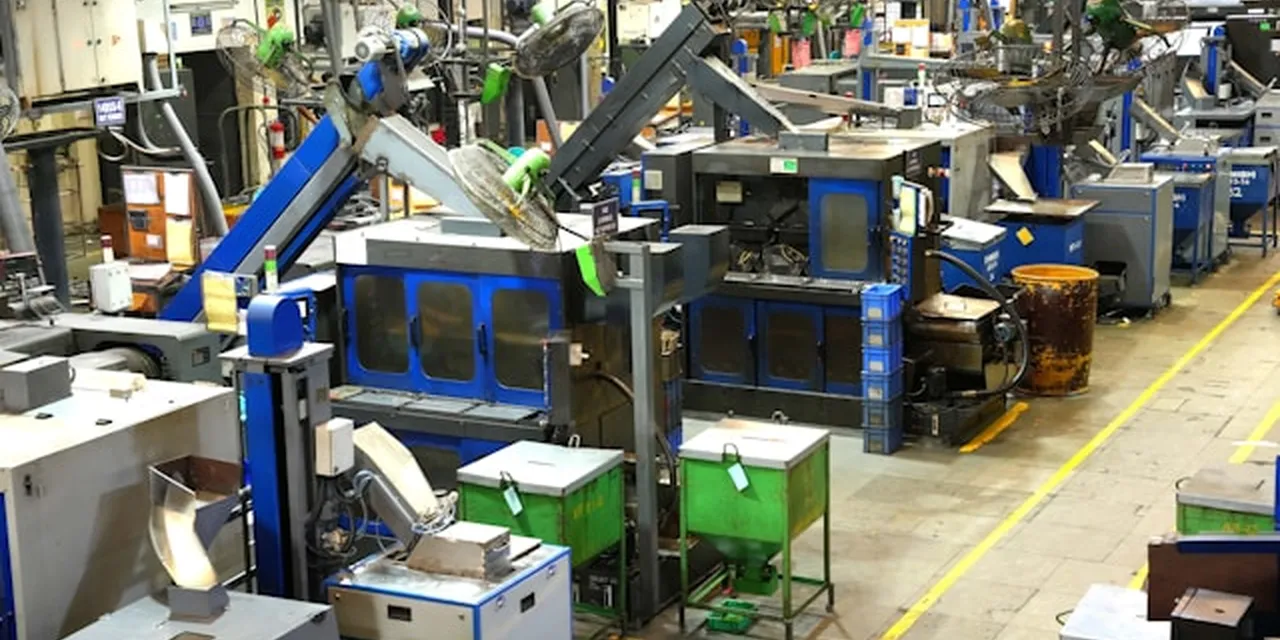
The industrial tier needs food safety managers, export compliance officers, and operations directors who can manage automation integration. The premium tier needs agronomists with olive oil chemistry expertise, sensory analysts, and professionals who understand PDO governance. Neither category is well supplied by Berat's existing workforce, where only 12% of agro-processing employees hold tertiary qualifications.
Where the EU Money Is Going and What It Demands
The EU's IPARD III programme allocated approximately €22 million for Albanian agro-processing modernisation, with Berat designated as a priority region for olive oil infrastructure. The money is real. It is also conditional.
To qualify for IPARD III reimbursement, processors must meet mandatory EU hygiene standards, principally HACCP certification. That certification costs €15,000 to €30,000 per facility, with ongoing audit maintenance on top. For the 80% of Berat's mills still running on hydraulic presses and seasonal throughput, this is prohibitive capital expenditure. The Albanian Investment Development Agency projects that 15 to 20 traditional olive mills in Berat will cease operations or merge by the end of 2026, unable to meet these standards.
The consolidation is not hypothetical. It is the direct, funded policy objective of the pre-accession process. And it creates a hiring problem that policy documents tend to understate: every mill that modernises needs a compliance function it has never had before. Every cooperative that absorbs a failing mill needs integration management. Every exporter that gains HACCP certification needs someone who can operate the EU's TRACES database for trade documentation.
These are not roles that Berat's labour market has historically supplied. They are roles that barely existed in this county two years ago.
The Talent Categories That Cannot Be Filled Locally
The employment base in Berat's agro-food sector, approximately 3,200 permanent direct jobs and 8,500 seasonal positions concentrated in the October-to-January olive harvest, is structured around low-skill seasonal labour. That labour is abundant. The acute scarcity sits in the technical and compliance functions that EU accession and export certification now demand.
Food safety managers with dual certification
Job postings for quality control and food safety roles in Berat County rose 34% between January and October 2024 compared to the prior year. The constraint is not volume of openings. It is the specificity of what employers need. A food safety manager holding both HACCP and IFS (International Featured Standards) certification faces a typical vacancy period of four to six months in this market. The national average for general management roles is 45 days.
That differential tells you everything about the mismatch between what Berat's modernising processors require and what the local talent pool contains.
Export documentation and TRACES specialists
The most acute single-role shortage is in export documentation. The EU's TRACES system governs the movement of food products into and within the single market. Operating it competently requires specific training and experience that almost no professional in Berat currently possesses. The role of Director of Export Compliance, a category that barely existed in Albanian agro-processing before 2023, is now a named requirement at every IPARD-funded facility with export ambitions.
Agronomists with olive oil chemistry expertise
Recruitment agencies report that approximately 60% of executive searches for olive oil quality specialists fail to close due to candidate scarcity. When closures do occur, they frequently involve poaching from Tirana-based firms with salary premiums of 25 to 35%. This is not a market where posting a vacancy and waiting produces results.
The original synthesis: capital moved faster than human capital could follow
The core analytical tension in Berat's agro-food sector is this: the €22 million IPARD III allocation and the 18% export growth have not reduced the workforce. They have replaced one kind of worker with another that does not yet exist in sufficient numbers. The investment cycle moved faster than the human capital cycle could follow.
The consolidation wave, projected at 15 to 20 mill closures or mergers by end of 2026, will release seasonal labourers. It will not release food safety auditors, TRACES operators, or enologists trained on Mediterranean varietals like Shesh i Bardhë and Kalinjot. The vocational education system produces general agricultural labourers. Industry demand has shifted toward compliance officers and food safety auditors. Only 12% of the existing workforce holds the tertiary qualifications that the modernised tier requires.
This is not a gap that wage increases alone can close. It is a gap between what the education system outputs and what the regulatory environment now demands. And every month of delay in filling these roles is a month of IPARD reimbursement eligibility at risk.
Compensation: What the Market Actually Pays and Why It Leaks Talent
Berat-specific executive compensation data is limited, but national agro-processing benchmarks adjusted for regional cost differentials (Berat runs approximately 15% below the Tirana capital region) give a clear enough picture.
A senior food safety or quality assurance manager in Berat earns €18,000 to €28,000 annually. An operations director or VP of manufacturing earns €35,000 to €55,000, with firms holding EU export operations pushing to €65,000 in retention premiums aimed at stemming emigration.
Those figures need to be read against two competitor benchmarks. Tirana offers 40 to 60% higher compensation for equivalent quality assurance and export roles, with career progression into multinational food companies that Berat simply cannot offer. Across the Adriatic, experienced olive oil millers and enologists earn €25,000 to €40,000 for technician-level roles in Puglia and Calabria, paid in euros with the stability that denomination implies. A Berat processor offering €18,000 in Albanian lek for a role that commands €30,000 in Lecce is not competing on a level field.
Durres, Albania's primary port city, adds a third pressure point. Logistics and cold-chain managers can earn a 20% premium over Berat equivalents while gaining proximity to export infrastructure that landlocked Berat cannot replicate. For a supply chain professional weighing their options, the calculation is straightforward.
Berat County's 1.2% annual population decline, concentrated in the 25-to-40 age cohort that constitutes the natural pool for middle management, compounds every one of these competitive disadvantages. The talent is not just expensive to attract. The demographic base from which it might be grown is shrinking.
Why 80% of the Candidates This Market Needs Are Not Visible
The market for export compliance managers and senior food technologists with EU organic certification in Albania is overwhelmingly passive. Active jobseekers constitute roughly 20% of the qualified talent pool. The other 80% are employed: in Tirana-based exporters, in international inspection firms like SGS and Bureau Veritas, or in Italian olive oil operations. They are not browsing Albanian job boards. They are not responding to vacancy postings.
The unemployment rate for certified food technologists nationally sits below 3%. In practical terms, this means that nearly every qualified professional is already working, and the ones working in Berat are already known to every local employer. A conventional job advertising approach reaches, at best, the 20% of the pool that is either between roles or actively dissatisfied. The remaining 80% require direct identification and approach.
This dynamic is familiar to anyone who has hired senior professionals in a specialised market. What makes Berat unusual is the combination of extreme specialism (HACCP plus IFS certification, TRACES fluency, organic audit experience) with extreme geographic disadvantage. The candidate who holds these qualifications and is willing to relocate to a secondary Albanian city with intermittent rural electricity and limited urban amenities is a very specific individual. Finding that individual through a job posting is, statistically, implausible.
The search methodology that works in this market is direct headhunting supported by talent mapping: identifying every professional in Albania and the wider Mediterranean region who holds the required certifications, assessing which of them might be open to a conversation, and building a proposition that addresses the specific barriers to relocation and lifestyle change that this market presents.
The Structural Barriers No Single Employer Can Solve Alone
Three systemic constraints shape the hiring environment in Berat's agro-food sector, and none of them can be resolved by an individual company offering a higher salary.
Land fragmentation forces aggregation complexity
The average agricultural holding in Berat County is 0.6 hectares. This forces processors to aggregate raw material from dozens of smallholders, each with their own quality variability, delivery reliability, and contractual informality. The operations director of a modernising Berat processor is not managing a supply chain. They are managing a network of bilateral relationships with individual farmers, many of whom lack formal land titles. This is a management challenge that requires diplomatic skill alongside technical competence, and it is not a skillset that any Albanian vocational programme currently teaches.
Infrastructure deficits raise the difficulty of every role
Intermittent rural electricity and poor mountain road networks increase post-harvest losses by an estimated 15 to 20%, particularly in fruit and dairy. According to the World Bank's Albania Systematic Country Diagnostic, these infrastructure gaps directly constrain the productivity of even well-managed operations. A cold-chain logistics manager working in Berat faces problems that an equivalent professional in Durres or Tirana does not encounter. The role is harder here. The compensation is lower. The career progression is less visible. Attracting talent under these conditions requires a proposition built on purpose, autonomy, and the specific appeal of building something from a low base, not just a salary figure.
The vocational system outputs the wrong profile
Albania's agricultural vocational education produces general labourers. The Berat extension centre of the Agricultural University of Tirana processes approximately 400 farmer consultations annually, providing technical assistance and soil analysis. But the gap between farmer advisory services and the production of HACCP auditors, TRACES operators, and senior food technology professionals is vast. The 12% tertiary qualification rate in Berat's agro-processing workforce is not a statistic that improves in a single hiring cycle. It is a generational constraint that shapes what the local market can supply for the next decade.
What Hiring Leaders in This Market Need to Do Differently
The standard recruitment approach in Albanian agro-processing, posting a vacancy on a domestic job board and waiting for applications, was adequate when the sector needed seasonal labourers and general managers. It is not adequate when the sector needs HACCP-IFS dual-certified food safety managers, EU TRACES specialists, and operations directors capable of managing automation integration in a facility that ran on hydraulic presses last year.
The hiring strategy that produces results in Berat's modernising agro-food tier has three components.
First, the search must be international from the outset. The qualified candidate pool for these roles extends to Tirana, Durres, Puglia, Calabria, and the Mediterranean inspection firm circuit. A search confined to Berat County or even to Albania will consistently underperform. International executive search capability is not a luxury in this market. It is the minimum requirement.
Second, the proposition must address the relocation calculus directly. A passive candidate earning €30,000 in Italy will not move to Berat for €28,000 and a vague promise of career growth. The proposition needs to include housing support, defined progression toward a country or regional leadership role, and a credible narrative about what the candidate will build. The role itself must be the draw.
Third, speed matters disproportionately. In a market where 60% of olive oil quality specialist searches fail to close, the difference between a 30-day search process and a 90-day search process is often the difference between placing a candidate and losing them to a Tirana competitor mid-process. The firms in this sector that have adapted to delivering interview-ready shortlists within days rather than months are the firms closing these roles.
KiTalent's approach to agro-food and industrial manufacturing executive search is built for exactly this pattern: a specialised, thin talent pool dispersed across multiple geographies, dominated by passive candidates, and requiring direct identification rather than advertising. With a 96% one-year retention rate across 1,450-plus placements and a pay-per-interview model that eliminates upfront retainer risk, the methodology is designed for markets where conventional search consistently fails.
For organisations in Berat's agro-food sector competing for the compliance, export, and technical leadership talent that EU accession now demands, where the candidates you need are employed elsewhere and unresponsive to job postings, start a conversation with our executive search team about how to reach them.
Frequently Asked Questions
What are the most in-demand agro-food processing roles in Berat, Albania in 2026?
The most acute demand is for food safety managers holding dual HACCP and IFS certification, export documentation specialists fluent in the EU TRACES system, agronomists with olive oil chemistry expertise, and operations directors capable of managing automation integration. These roles emerged as critical categories in 2023 and 2024 as IPARD III funding accelerated modernisation. Vacancy periods for dual-certified food safety managers typically run four to six months in Berat, well above the 45-day national average for general management positions. Seasonal labour remains abundant; the constraint sits entirely in technical and compliance functions.
Why is it so hard to hire food safety and compliance professionals in Berat?
Three factors converge. First, only 12% of Berat's agro-processing workforce holds tertiary qualifications, and the vocational system produces general agricultural labourers rather than compliance specialists. Second, Tirana offers 40 to 60% higher compensation for equivalent roles alongside career progression into multinational firms. Third, 80% of qualified candidates are passive, already employed in Tirana, international inspection firms, or Italian operations. A conventional job posting reaches a fraction of the viable pool. Direct headhunting through structured talent mapping is the method that consistently closes these searches.
What does a senior agro-food processing role pay in Berat compared to Tirana?
A senior food safety or QA manager in Berat earns approximately €18,000 to €28,000 annually. An operations director earns €35,000 to €55,000, with EU export operators offering retention premiums reaching €65,000. Tirana equivalents pay 40 to 60% more for the same functions. Across the Adriatic, technician-level roles in Puglia and Calabria pay €25,000 to €40,000 in euros. This compensation gap, combined with Berat's limited urban amenities and 1.2% annual population decline, makes salary negotiation and total proposition design critical to any successful hire.
How is EU IPARD III funding affecting Berat's agro-food sector?
IPARD III allocated approximately €22 million for Albanian agro-processing modernisation, with Berat as a priority olive oil region. €4.2 million was disbursed to Berat operators in 2023 and 2024. The funding requires HACCP certification, costing €15,000 to €30,000 per facility. This condition is projected to drive 15 to 20 traditional mill closures or mergers by end of 2026, accelerating consolidation toward fewer, larger, better-equipped processors. The result is rising demand for compliance and export professionals in a market that has never previously needed them at scale.
How can companies in Berat attract agro-food talent from Tirana or abroad?
The proposition must go beyond salary. Candidates in Tirana or Italy weigh lifestyle factors, career trajectory, and role scope alongside compensation. Successful offers typically include housing support, a defined path toward regional or country leadership, and a narrative about building a modernised operation from its foundations. Speed also matters: in a market where 60% of specialist searches fail to close, a structured executive search process that delivers candidates within days rather than months materially improves closure rates. KiTalent's pay-per-interview model and passive candidate methodology are designed for exactly this kind of dispersed, specialised talent market.
What is the outlook for Berat's olive oil and wine exports in 2026?
Export volumes grew 18% year-on-year through the first three quarters of 2024, with 85% of current exports going to Italy, 10% to the USA, and 5% to Germany. The outlook for 2026 includes diversification toward Northern European markets as organic certification volumes increase. Wine is projected to see 12% growth in direct-to-consumer cellar door sales, driven by Berat's UNESCO designation and improved A2 motorway access. However, this export growth is not translating proportionally into employment growth, as automation and consolidation are displacing labour faster than new export revenue creates positions.