Berat's Heritage Tourism Boom Is Pricing Out the Workforce It Needs to Survive
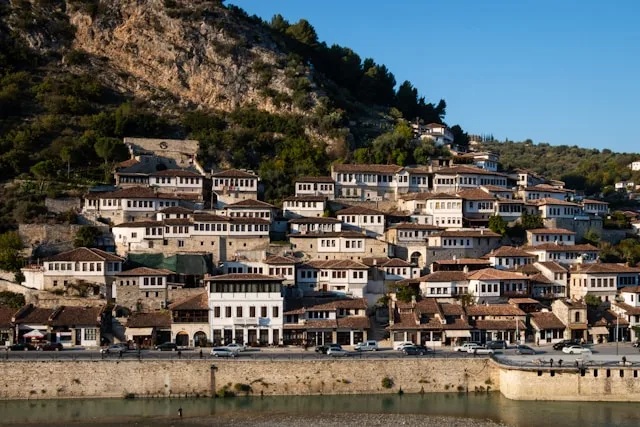
Berat's Mangalem quarter charged guests up to €120 per night through the 2025 peak season. Room rates for heritage properties rose 12% year on year. Occupancy hit 89% in July and August. By every revenue metric that matters, the "City of a Thousand Windows" is succeeding. Property values inside the UNESCO buffer zone have climbed 40% since 2020. Investors are queuing to convert Ottoman stone houses into boutique guesthouses. The numbers look like a destination on the rise.
The workforce tells a different story. Wages in Berat's hospitality sector grew just 4.5% through 2025, below the national inflation rate of 5.2%. Specialised roles sit open for months. A heritage property needing a bilingual general manager with UNESCO compliance experience competes against a talent pool of perhaps 80 qualified professionals shared across two cities. A maintenance manager certified in traditional lime mortar techniques took six months to recruit for a single 12-room property. The revenue is growing. The team to deliver it is not.
What follows is an analysis of the forces pulling Berat's heritage tourism sector in opposite directions. Revenue growth and regulatory scarcity are creating premium pricing power for property owners, while the same regulatory constraints, extreme seasonality, and compensation stagnation are making it progressively harder to staff these properties with qualified professionals. For hiring leaders in Albanian hospitality, and for international operators considering this market, the dynamics shaping Berat in 2026 carry implications that extend well beyond one small city on the Osum River.
The Market Structure Behind the Numbers
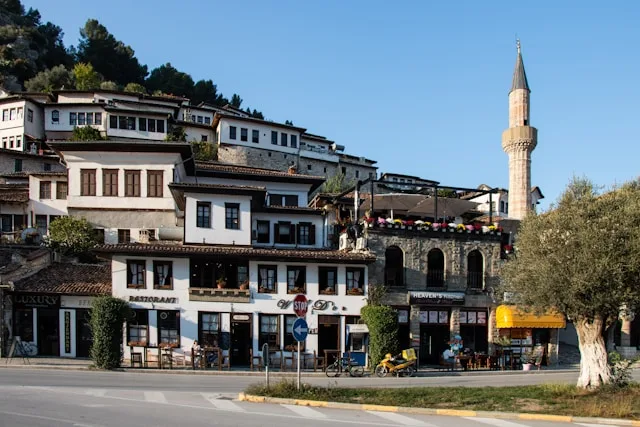
Berat's heritage hospitality cluster is not structured like a conventional hotel market. It is a collection of 140 registered accommodation providers, most of them family-run guesthouses with four to twelve rooms, physically concentrated within walking distance of the Lead Mosque in Mangalem. Three boutique hotels anchor the quarter. Two properties operate inside the castle walls. The entire sector employs roughly 1,200 full-time equivalents year round, swelling to 2,400 during peak season through informal seasonal labour.
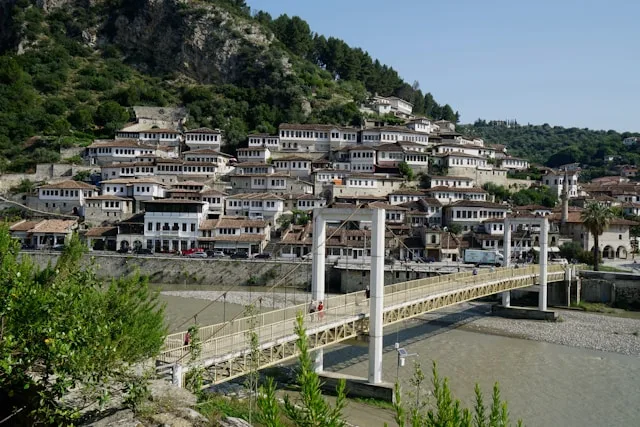
Mangalem holds 65% of Berat's registered guesthouses and three of the five boutique hotels within the UNESCO buffer zone. Gorica, the Christian quarter across the river, hosts just 12 registered hospitality establishments to Mangalem's 47. That 4:1 concentration disparity is narrowing. Gorica's bed capacity grew 18% annually between 2022 and 2024, compared to 7% in Mangalem. Mangalem is approaching physical saturation. The completion of the Gorica Bridge restoration, scheduled for March 2026, is expected to shift 15 to 20% of new hospitality investment across the river.
The Castle district contains virtually no overnight capacity. Only two properties operate within the citadel walls, offering a combined 28 rooms. UNESCO restrictions on overnight stays and the absence of vehicle access for supply logistics make expansion inside the castle functionally impossible.
This geography matters for hiring because it concentrates nearly all employment demand into a corridor roughly 300 metres long. Every property competes for the same small labour pool. Every seasonal surge hits the same narrow streets simultaneously. And every new guesthouse conversion adds demand without meaningfully expanding the catchment area from which workers can be drawn.
The Pricing Paradox: Revenue That Never Reaches Wages
Here is the analytical claim that the data supports but that none of the individual statistics state directly: Berat's heritage hospitality sector has decoupled its pricing from its labour costs not because the market is efficient, but because family ownership structures are absorbing revenue gains through unpaid family labour rather than channelling them into competitive wages. The sector is professionalising its product while refusing to professionalise its workforce. This is not sustainable, and it is the root cause of every hiring difficulty the market now faces.
The evidence is clear in the gap between revenue growth and wage growth. Heritage property ADRs rose 12% in a single year. Occupancy during peak months stands at 89%. Yet hospitality wages in Berat grew at just 4.5%, below the 5.2% national inflation rate. In real terms, workers earned less in 2025 than in 2024.
Standard labour economics predicts that revenue growth at this level, combined with documented talent scarcity, should push wages upward. The mechanism that prevents this is the family labour model. When demand spikes in July, property owners do not hire at competitive rates. They work family members through the peak. The Albanian Labour Code caps seasonal overtime at 48 hours per week averaged over three months. Peak season demands routinely reach 60 hours per week. According to the ILO's Albania Informal Economy Study, roughly 40% of hospitality work is pushed into grey-market arrangements during these months.
The result is a sector that can charge international tourists €120 per night but cannot offer a qualified general manager more than €1,800 per month. The pricing power exists. The willingness to convert it into professional compensation does not. And the consequences are becoming visible in vacancy durations, talent flight to Tirana, and the slow erosion of service quality that threatens the very brand premium these properties depend on.
Where the Shortages Are Most Acute
Heritage Property Managers: A Pool of 80 Shared Across Two Cities
The most critical shortage is at the general manager level. The role requires fluency in Albanian and English (with Italian highly valued, given that 35% of Berat's tourists are Italian), working knowledge of UNESCO buffer zone regulations, and familiarity with traditional Albanian hospitality protocols. According to the National Tourism Agency's 2024 Training Needs Assessment, approximately 15 to 20 qualified candidates exist for 40 open positions across the Berat and Gjirokastra region.
This creates what the GIZ Cultural Heritage for Employment Project described as a "two-city talent pool": roughly 80 qualified heritage hospitality professionals circulating between Berat and Gjirokastra, Albania's two UNESCO heritage cities. The pool is almost entirely passive. Qualified candidates with five or more years of UNESCO-zone experience and trilingual capabilities hold stable positions with average tenure of 4.2 years. The estimated ratio is one active candidate for every seven passive candidates in heritage-specialised GM roles, according to Michael Page Balkans.
Active job seekers at this level typically signal career distress rather than voluntary mobility. For properties seeking to hire, the conventional approach of posting a vacancy and waiting yields candidates from the wrong end of the quality spectrum. The candidates these properties actually need must be identified and approached individually. Several Mangalem boutique properties have resorted to offering profit-sharing equity stakes of 5 to 10% to secure bilingual general managers. One 14-room property reportedly offered a 15% equity stake plus accommodation to a candidate combining Albanian and English fluency with heritage restoration project experience. These are compensation structures that belong in a startup equity negotiation, not a small hotel in southern Albania. They reflect desperation, not strategy.
Conservation-Certified Maintenance and Traditional Craftsmen
Below the management level, an equally acute shortage exists in conservation-certified maintenance. Heritage properties in the UNESCO zone cannot simply hire a standard maintenance manager. The role requires certification in traditional building techniques, including lime mortar application and stone masonry, alongside understanding of UNESCO compliance protocols.
According to the Berat Chamber of Commerce, a Gorica property delayed its 2024 renovation opening by six months because it could not find a maintenance manager meeting these requirements. The property ultimately recruited from Gjirokastra at a 40% wage premium above standard maintenance manager rates.
The market for master craftsmen in traditional restoration is not just passive. It is functionally closed. The Guild of Traditional Builders comprises approximately 35 master craftsmen in Berat specialising in traditional stone, wood, and lime mortar techniques. They are self-employed or contracted long-term by the National Restoration Centre. They do not respond to job postings. Recruitment occurs through guild networks and family lineage. The Regional Development Agency's 2024 Artisan Survey described this segment as exhibiting "zero unemployment, zero active search behaviour."
Executive Chefs and Licensed Cultural Guides
Two additional shortages compound the staffing challenge. Executive chefs specialising in traditional Berat cuisine (tavë kosi, çorba, dried fig preparations) combined with international kitchen management standards are recruited through culinary competition networks rather than job boards. Only three culinary schools in Albania offer heritage cuisine modules. Average time to fill this role in Berat runs 4.5 months.
Licensed cultural tour guides face a simpler but equally binding constraint. Current licensed guides in Berat number 42. The estimated need for 2026 is 65 to 70. The licensing requirement includes a Ministry of Tourism Guide License plus specialised knowledge of Ottoman architecture and Byzantine iconography. The supply pipeline cannot produce 25 additional qualified guides in a single year.
The Competitive Pull That Drains Berat's Talent
Berat does not lose talent to international markets. It loses talent to Tirana and to the Albanian coast. Understanding the specific mechanics of each pull is essential for any organisation attempting to build and retain a team in this market.
Tirana offers hospitality management professionals a 35 to 45% compensation premium for equivalent roles. A general manager earning €1,800 per month in Berat can expect €2,400 to €2,600 for a comparable position in the capital. The gap is not just monetary. Tirana hosts international hotel chains including Marriott, Hilton, and Meliá, offering career advancement paths that Berat's independent boutique market simply cannot match. A talented hospitality executive in Berat has nowhere to be promoted to. The same executive in Tirana can move from a national chain property to a regional management role with international exposure.
The cost-of-living differential partially offsets this. Tirana housing costs run 60% above Berat. But for skilled hospitality workers, net disposable income remains higher in the capital even after adjustment. The trade-off only favours Berat for professionals who place substantial personal value on heritage work or small-city living.
Coastal Albania creates a different kind of competition. Saranda, Ksamil, and Durrës compete specifically for seasonal labour and food and beverage staff, offering 15 to 20% wage premiums during the May to September window. This generates a "seasonal migration" pattern documented in the World Bank's Albania Labor Mobility Study: Berat workers temporarily relocate to coastal resorts, creating simultaneous labour shortages in both markets during overlapping peak periods. The irony is that Berat's peak season and the coast's peak season are the same months. The two markets cannibalise each other's workforce at precisely the moment both need it most.
Gjirokastra presents the most nuanced competitive dynamic. It offers similar wages and lower cost of living, attracting candidates who prefer a smaller city but want to remain in heritage hospitality. The competition between Berat and Gjirokastra is not about compensation. It is about the limited number of professionals who hold the specific regulatory knowledge, language skills, and cultural interpretation abilities that both cities require. When one city recruits, it literally subtracts from the other's candidate pool.
Regulation as Both Moat and Cage
The UNESCO World Heritage designation simultaneously protects Berat's competitive position and prevents it from scaling. This tension is the defining feature of the market.
The Moat: Scarcity Premiums and Natural Barriers to Entry
Any physical modification to a property in Mangalem or Gorica requires approval from both the National Restoration Centre and the National Council of Restoration. The average approval timeline runs 8 to 14 months. New construction is effectively prohibited. Supply expansion occurs exclusively through conversion of existing Ottoman-era stone houses.
For existing operators, this is a powerful competitive advantage. It prevents oversupply, sustains pricing power, and creates barriers to entry that would be the envy of any hotel market worldwide. The 40% increase in Mangalem property values since 2020 reflects the scarcity premium that UNESCO protection creates.
The Cage: Compliance Costs and Operational Constraints
The same regulatory framework that protects pricing is strangling operational viability for smaller operators. A 2023 Ministry of Interior directive requires all heritage accommodations to install modern fire suppression systems by 2026. Sprinkler installation is structurally impossible in many stone Ottoman houses without damaging frescoes or wooden ceilings. Estimated compliance cost runs €15,000 to €40,000 per small guesthouse. According to the Berat Municipality's 2024 Compliance Assessment, this threatens closure of 20 to 30% of micro-enterprises.
Preservation rules also restrict facade modifications, limiting ADA compliance and modern HVAC installation. Narrow cobblestone streets prevent tour bus access, capping group tourism logistics. The historic centre's sewage system, last upgraded in 2018, handles 140% of designed capacity during summer peaks, forcing water rationing.
A pending UNESCO reactive monitoring mission may impose stricter visitor management protocols for 2026. The potential limit of 3,000 daily visitors to the castle district, down from a current peak of 4,200, would directly affect tour operator revenue models and the employment they support.
For hiring leaders, the regulatory environment creates a specific challenge: the roles most needed are roles that require regulatory expertise as a core competency. A general manager in Berat does not just manage a hotel. They manage a hotel inside a regulatory framework that touches every physical modification, every renovation timeline, every compliance deadline, and every interaction with municipal preservation authorities. This compounds the talent shortage because it adds regulatory competency requirements to roles that, in a normal hotel market, would be staffed on operational experience alone.
The Seasonality Trap and Its Workforce Consequences
Berat's heritage hospitality sector generates 73% of its annual revenue in a four-month window from June to September. Occupancy drops from 89% in August to 34% in February. This is not a mild seasonal pattern. It is an operating model where six months of the year are economically marginal.
The financial consequences are severe. Average debt-to-equity ratios in Berat hospitality stand at 1.8:1, compared to 0.9:1 in Tirana, according to the Bank of Albania's Credit Registry. Winter closure from January to March creates cash flow crises that prevent operators from investing in year-round staff retention, professional development, or competitive compensation packages. The seasonal model makes it rational for individual operators to hire informally, rely on family labour, and avoid fixed payroll commitments.
But what is rational for individual operators is collectively destructive for the talent market. When no single employer offers year-round stability, the entire sector becomes unattractive to the skilled professionals it most needs. A trilingual heritage property manager with UNESCO compliance expertise will not accept a role that effectively pays for eight months of the year. They will move to Tirana, where employment is continuous and career progression is visible.
Berat lacks the business tourism infrastructure that other heritage destinations use to flatten seasonality. There is no modern convention centre. The nearest international airport is 122 kilometres away in Tirana, a 2.5-hour drive that eliminates the weekend-break market from major European cities. Without a credible off-season revenue stream, the sector cannot justify the year-round payroll that would solve its talent problem.
This is the trap. Seasonality prevents professionalisation. Lack of professionalisation prevents service quality improvements. Service quality stagnation prevents the premium positioning that could attract higher-spending, off-season visitors. The cycle reinforces itself. Breaking it requires investment in year-round programming and infrastructure that no individual 12-room guesthouse can afford alone.
What This Means for Organisations Hiring in This Market
The implications for hiring leaders considering Berat, whether as property operators, DMC founders, or international hospitality groups exploring Albanian heritage markets, are specific and actionable.
First, conventional recruitment will not work here. The candidates you need for heritage property management, conservation-certified maintenance, and traditional cuisine leadership are overwhelmingly passive. The ratio of one active candidate to seven passive candidates for heritage-specialised GM roles means that job postings reach a fraction of the viable talent. The closed guild networks for traditional craftsmen are entirely invisible to standard recruitment channels. Any talent mapping exercise must begin with the understanding that the addressable market through active channels is less than 15% of the qualified population.
Second, compensation must account for the competitive pull of Tirana and the coast. A heritage property offering €1,500 per month for a general manager is not competing against other Berat properties. It is competing against €2,400 in Tirana with international career progression, against seasonal premiums on the coast, and against Gjirokastra's lower cost of living. The equity-sharing arrangements that some Mangalem properties have adopted are creative, but they are symptomatic of a market where cash compensation alone cannot close the gap.
Third, the regulatory expertise requirement means that executive search in this market must be sector-specific. A general hospitality recruiter sourcing from Tirana's modern hotel market will produce candidates who lack the UNESCO compliance knowledge, traditional building awareness, and preservation-authority relationships that Berat roles demand. The two-city talent pool of Berat and Gjirokastra is the primary sourcing ground. International heritage hospitality markets in Montenegro, North Macedonia, and southern Italy represent secondary pools for candidates willing to relocate.
For organisations competing for heritage tourism leadership in Albania's most constrained talent market, where the cost of a failed search is measured in delayed renovation openings and lost peak-season revenue, KiTalent delivers interview-ready candidates within 7 to 10 days through AI-powered identification of passive professionals who are not visible on any job board. With a 96% one-year retention rate and a pay-per-interview model that eliminates upfront retainer risk, start a conversation with our executive search team about how we source leadership talent for heritage and cultural tourism markets.
Frequently Asked Questions
What is the average salary for a heritage hotel general manager in Berat, Albania?
A heritage boutique hotel general manager in Berat earns €1,200 to €1,800 per month at senior specialist level, with accommodation often provided during peak season. This represents a 25 to 30% premium over equivalent roles in modern Tirana hotels, reflecting the regulatory complexity and seasonal intensity of managing a property inside a UNESCO World Heritage buffer zone. Regional director roles overseeing multiple properties command €2,500 to €3,500 per month, though only two such positions exist in the immediate Berat market. Some properties now offer equity stakes of 5 to 15% to attract qualified bilingual candidates.
Why is it so hard to hire hospitality staff in Berat?
Berat's hiring difficulty stems from three converging pressures. The qualified talent pool for heritage-specialised roles is extremely small, with roughly 80 professionals circulating between Berat and Gjirokastra. Tirana offers 35 to 45% higher wages with international career progression, and coastal resorts draw seasonal workers with 15 to 20% premiums during overlapping peak months. Extreme seasonality, with 73% of revenue concentrated in four months, prevents operators from offering the year-round employment stability that attracts and retains skilled professionals.
How does UNESCO designation affect hiring in Berat's hospitality sector?
UNESCO World Heritage status creates both premium pricing power and severe operational constraints. Property modifications require dual regulatory approval averaging 8 to 14 months. New construction is prohibited, limiting supply expansion to conversions of existing Ottoman houses. This makes roles in Berat uniquely demanding: general managers need UNESCO compliance expertise, maintenance staff need conservation certification, and renovation timelines depend on regulatory relationships. These additional skill requirements shrink the qualified candidate pool while increasing time to hire.
What roles are most difficult to fill in Berat's heritage tourism sector?
The four hardest roles to fill are heritage property managers requiring trilingual fluency and UNESCO regulatory knowledge (15 to 20 candidates for 40 open positions), conservation-certified maintenance managers trained in traditional lime mortar and stone masonry techniques, executive chefs specialising in traditional Berat cuisine with international kitchen management standards (4.5-month average time to fill), and licensed cultural tour guides with Ottoman architecture and Byzantine iconography expertise (42 currently licensed versus 65 to 70 needed for 2026).
How can international hospitality groups find executive talent for Albanian heritage markets?
Conventional job advertising reaches less than 15% of qualified candidates in this market. Heritage property management talent is predominantly passive, with a 1:7 active-to-passive candidate ratio. Effective recruitment requires direct identification and approach through specialist networks, guild relationships, and AI-powered talent pipeline development. KiTalent's methodology maps passive candidates across niche markets and delivers interview-ready shortlists within 7 to 10 days, with clients paying only when they meet qualified candidates.
Is Berat's heritage tourism sector a good investment for 2026?
Berat offers strong revenue fundamentals: 89% peak occupancy, 12% ADR growth, and UNESCO-enforced supply scarcity creating natural pricing power. However, investors must account for extreme seasonality (34% occupancy in winter), regulatory compliance costs that may force 20 to 30% of micro-enterprises to close, and a talent market where specialised roles take two to three times longer to fill than equivalent positions in Tirana. The market favours operators who can secure qualified management before acquisition and who have a credible off-season revenue strategy beyond cultural leisure tourism.