Berat Heritage Construction in 2026: A 340% Investment Surge Meets a Workforce That Is Disappearing
The World Bank's Albania Cultural Heritage Site Management programme began physical works in Berat during the second quarter of 2026, injecting €8.5 million into conservation construction in a municipality that spent roughly €2 million on comparable projects two years earlier. That is a 340% increase in public heritage investment. It arrives in a city where 64% of certified master craftspeople are over fifty, where more than half of recent vocational graduates in traditional construction left the country within six months, and where only two operational lime kilns remain to supply authentic restoration materials for approximately 1,200 verified historic buildings.
The money is not the problem. Berat's UNESCO World Heritage status, inscribed in 2008, has attracted a reliable stream of multilateral funding. EU IPA programmes, bilateral Italian funds, and now one of the World Bank's largest Albanian conservation allocations ensure that project pipelines remain full through the end of the decade. The problem is that the human infrastructure required to convert this funding into completed restoration work is contracting at precisely the moment the project pipeline is expanding. Capital moved faster than human capital could follow.
What follows is an analysis of the forces reshaping Berat's heritage construction sector, the workforce dynamics that determine whether investment translates into executed projects, and what organisations operating in this market need to understand before they commit to hiring timelines they cannot meet.
The Market That UNESCO Built: Berat's Heritage Construction Economy
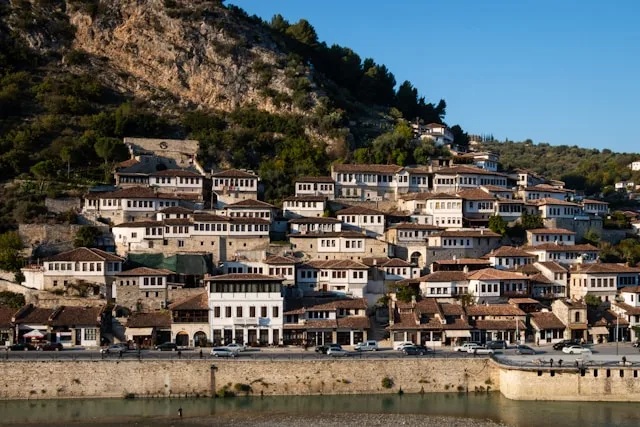
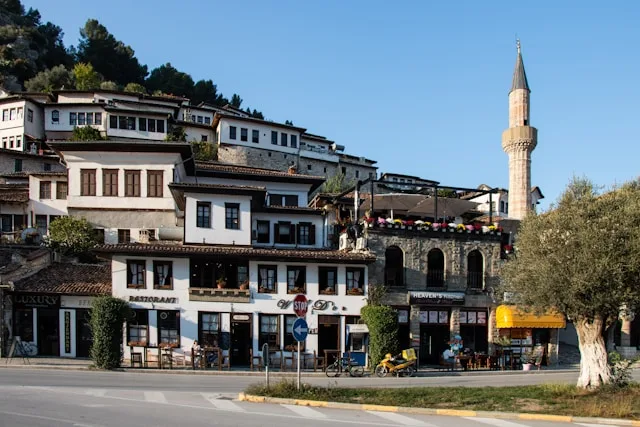
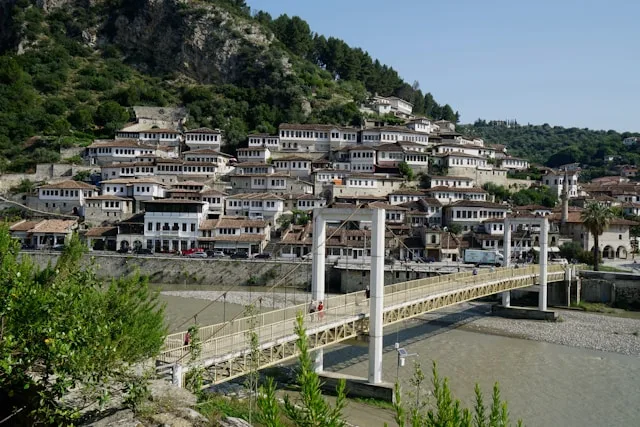
Berat's historic centre spans three quarters: Mangalem, Gorica, and Kalaja. Together they contain roughly 1,200 verified historic buildings requiring periodic restoration, according to the UNESCO World Heritage Centre's 2023 Periodic Report. The Albanian National Restoration Centre identifies Berat as hosting 34% of Albania's Category I heritage structures requiring urgent intervention. That concentration makes Berat the single most important heritage construction market in the country by volume of protected fabric.
The sector directly employs an estimated 380 to 420 full-time equivalent workers, with an additional 150 to 200 seasonal positions during the April to October tourist preparation cycle. Heritage-specialised trades account for 12% of Berat's formal construction employment. Nationally, that figure is 3.2%. The disproportion tells you something about the city's economic identity. Heritage construction is not a niche within Berat's economy. It is a structural pillar.
Tourism-Driven Private Investment
Tourism accommodation stock in the municipality grew 23% between 2019 and 2023, with 68% of new developments involving adaptive reuse of historic fabric. Boutique hotel conversions drove most of this activity. In 2024, the National Territorial Planning Agency's Berat Regional Directorate issued approximately 18 renovation permits requiring traditional stonework compliance. These are not cosmetic refurbishments. UNESCO compliance means authentic materials, traditional methods, and craftspeople who know how to use both.
Private hospitality investment is projected to moderate following the 40% increase in accommodation units since 2020. However, the shift is from quantity to quality. Existing properties are upgrading from basic guesthouse standards to three- and four-star specifications. The American Chamber of Commerce in Albania's Tourism Investment Outlook estimated 25 to 30 major renovation projects requiring specialised masonry through 2026. Each of these projects needs conservation carpenters, master stonemasons, and heritage project managers who can satisfy both UNESCO technical guidelines and Albanian building codes simultaneously.
The Public Pipeline
Current active restoration projects include Phase II of the Mangalem Waterfront Rehabilitation, a €2.4 million initiative funded by the IPA III Cross-Border Cooperation Programme running through 2026. Fourteen traditional houses are under conservation through the government's "100 Villages" Programme. And the World Bank's €8.5 million Phase I physical works represent the largest single injection of heritage construction funding Berat has received. The pipeline is full. The question is whether anyone is available to work it. That question leads directly to the workforce numbers, and the numbers are not encouraging.
The Workforce Is Shrinking While the Pipeline Grows
Albania's construction sector lost approximately 18,000 skilled workers to EU markets between 2020 and 2024, according to INSTAT migration statistics compiled with IOM Albania. Heritage crafts were disproportionately affected. The skills that make a stonemason valuable in Berat's Ottoman-era terraces transfer directly to restoration work in Puglia, the Ionian Islands, and Lecce's baroque quarter. Italian and Greek employers know this, and they recruit accordingly.
The Berat Vocational Training Centre reported that only 34% of its 2024 graduates in Traditional Construction Crafts accepted employment within the municipality. Fifty-two percent emigrated to Italy or Greece within six months. The remaining 14% either left the trade or moved to Tirana. This is not a pipeline that is producing enough workers to replace the ones leaving, let alone the ones retiring.
The Emigration Economics
The pull factors are not subtle. Italian construction firms offer net wages 3.2 times higher than Berat market rates for dry-stone specialists, according to figures derived from the Italian Ministry of Labour's Flussi Decree Statistics and INSTAT wage data. Greek employers on Corfu and in Ioannina offer 2.8 times the local wage and provide temporary residence permits under EU mobility frameworks. Even Tirana, the domestic competitor, offers 35% to 45% salary premiums for equivalent conservation roles.
Sixty percent of Albanian construction workers with heritage conservation skills report receiving regular recruitment approaches from Italian or Greek employers, according to IOM Albania's Migration Trends Report. These approaches arrive via WhatsApp networks and diaspora referrals. They are informal, persistent, and effective. A master stonemason in Berat earning €600 per month faces a standing offer of €1,900 from a firm in Lecce. The rational economic response is obvious.
Berat's cost of living is roughly 28% lower than Tirana's. But the Tirana premium partially offsets this, and the Italian or Greek premium overwhelms it entirely. The wage gap is not closing. It is widening fastest at exactly the seniority level where the most critical skills reside. This is the pattern that organisations relying on passive candidate identification in this market need to understand before they begin a search.
Why the Passive Candidate Dynamic Makes This Market Harder Than It Appears
Master-level traditional stonemasons and conservation carpenters in Berat are a textbook passive candidate population. Average sector tenure is 14 years. Unemployment among certified master craftspeople is 1.2%, compared to 11.3% for general construction. Seventy-eight percent of heritage construction SMEs in southern Albania source skilled trades through informal networks rather than advertised vacancies, according to the EBRD's Business Environment and Enterprise Performance Survey.
National vacancy data for construction and built environment heritage technicians shows that 47% of advertised positions in Albania's southern economic region remain unfilled after 90 days. The comparable figure for general construction trades is 23%. The gap tells you that posting a vacancy for a master stonemason in Berat is roughly twice as likely to fail as posting one for a general builder. Job boards do not reach this market. The candidates are employed, embedded, and connected through networks that predate the internet.
The Informal Network Problem
The reliance on informal hiring networks is both a feature and a vulnerability of Berat's heritage construction sector. It works when the market is stable. Master stonemasons know other master stonemasons. Word travels through the Gorica Bridge district workshops where artisans maintain traditional premises. When a project needs a team, the team assembles through reputation and relationship.
But informal networks fail under two conditions: rapid demand increases and demographic contraction. Berat is experiencing both simultaneously. When a World Bank programme needs 80 to 100 additional qualified traditional craftspeople within a twelve-month window, the informal network cannot produce them because they do not exist in sufficient numbers within the municipality. The network is efficient at allocating existing supply. It cannot create new supply. And the formal training pipeline, as the vocational centre data shows, is a net exporter of talent rather than a net producer for the local market.
This is why organisations entering this market face a hiring challenge that conventional recruitment methods cannot solve. The candidates are not looking. The ones who are qualified are already working. And the most talented among them are fielding offers from employers who can pay three times what the local market supports.
Compensation: The Gap That Donor Budgets Cannot Bridge
Heritage construction compensation in Berat operates within a narrow band that reflects both the municipality's cost of living and the project-based nature of most employment. A senior specialist heritage project manager earns between €650 and €850 per month. At executive or director level, with ten or more years of experience and bilingual capability for donor reporting, the range extends to €1,200 to €1,600. A master stonemason earns €450 to €600 monthly in permanent roles, or €25 to €35 per day for project work. Lead stonemasons commanding teams on major restoration sites can reach €750 to €950.
Conservation architects represent the highest-compensated technical role. Senior architects with ICOMOS compliance experience earn €800 to €1,100 monthly. Studio principals with international project portfolios command €1,800 to €2,500.
The Real Wage Erosion
These figures tell only part of the story. Aggregate wage data for Berat's construction sector shows annual growth of 4.2% between 2020 and 2024. Over the same period, Albania's inflation rate ran at 11%, according to the Bank of Albania's inflation statistics. Heritage construction wages are falling in real terms. A master stonemason who earned €500 in 2020 and €600 in 2024 has not received a raise. In purchasing power terms, that stonemason is earning less than four years ago.
This creates what economists call a wage suppression anomaly. In a genuinely passive candidate market with 1.2% unemployment, wages should be rising aggressively. They are not. The most likely explanation is that the project-based, informal nature of SME employment prevents wage clearing at market equilibrium. Seventy-two percent of registered construction SMEs in Berat operate as project-based consortia rather than permanent employers, with average project tenure of 4.7 months. Workers cannot negotiate long-term salary increases when their employment relationship dissolves every five months.
The implication for executive search and talent acquisition in this sector is that headline salary comparisons understate the real challenge. Competing with Italian employers offering €1,900 per month is not a matter of matching the number. It requires addressing the structural employment instability that makes the local offer less attractive even beyond the wage differential. A permanent role with benefits and continuity carries a premium that project-based consortia cannot provide.
The Original Synthesis: Capital Arrived Faster Than Human Capital Could Follow
The analytical claim that emerges from this data is not that Berat has a talent shortage. That is obvious. The deeper observation is this: the heritage investment model that UNESCO status enables has created a structural timing mismatch between capital deployment and workforce formation that no single hiring cycle can resolve.
International donors and development banks operate on three- to five-year disbursement cycles. A World Bank programme moves from appraisal to first disbursement in roughly 24 months. A master stonemason requires 10 to 14 years of practice to reach full proficiency. The training pipeline for conservation carpenters at Berat's vocational centre produces graduates who leave the country within six months at a rate of 52%. The gap between the speed at which money enters the market and the speed at which qualified workers can be produced, retained, and deployed is not a cyclical problem. It is embedded in the structure of how heritage conservation is funded and how traditional craftsmanship is transmitted.
This means that every new funding announcement for Berat's heritage sector simultaneously increases the urgency of the talent problem and decreases the probability that existing approaches will solve it. More money chasing fewer craftspeople does not produce more craftspeople. It produces higher wages in competing markets, faster emigration, and longer project timelines. The €8.5 million World Bank allocation is good news for Berat's built heritage. It is a serious challenge for anyone responsible for assembling the team to execute it.
The organisations that will succeed in this market are not the ones with the largest budgets. They are the ones that understand why conventional search processes fail in candidate-short markets and adapt their approach to the reality that 78% of the talent they need will never respond to an advertisement.
The Risks That Could Accelerate the Crisis
The Funding Cliff
Berat's heritage construction economy is dependent on multilateral funding cycles. The current pipeline is strong, but it is not permanent. World Bank implementation reports identify a "funding cliff" risk if subsequent financing phases experience delays. A gap between the completion of current EU IPA commitments and the disbursement of successor programmes could idle up to 40% of the specialised workforce. In a market where emigration pressure is constant, idle workers do not wait. They leave.
Heritage Permitting as a Hiring Barrier
The dual approval system for restoration projects requires both National Restoration Centre technical approval and a Municipality building permit. This creates average delays of 8.4 months for restoration projects, compared to 3.2 months for new construction. For SMEs deciding whether to invest in permanent workforce development, this uncertainty is decisive. Why hire a master stonemason on a twelve-month contract when your project might not receive its second approval for another eight months?
The 2023 UNESCO reactive monitoring mission identified inappropriate alterations in 12% of private restoration projects. The resulting stricter technical review requirements extended project timelines by an average of 35%. Compliance quality improved. Employment stability deteriorated. These two outcomes are not contradictory. They are the same policy producing different effects on different stakeholders.
The Demographic Clock
Sixty-four percent of certified master craftspeople in Berat are over fifty. The vocational training system is not producing replacements at a rate sufficient to offset either retirements or emigration. Albania's National Agency for Vocational Education and Training projects a deficit of 80 to 100 qualified traditional craftspeople in Berat by the end of 2026. That projection assumed current training pipeline outputs against projected demand. If the World Bank programme accelerates its hiring timeline, the deficit could materialise sooner.
Climate vulnerability adds a further dimension. Increased flooding of the Osum River basin threatens historic masonry foundations, potentially generating reactive repair demand that would further strain already insufficient capacity. The workforce needed to prevent damage is the same workforce needed to repair it, and there are not enough of either.
What This Means for Organisations Hiring in Berat's Heritage Sector
The market intelligence in this article points to a set of practical implications for any organisation attempting to build or maintain a team in Berat's heritage construction sector.
First, the talent pool for master stonemasons, conservation carpenters, and bilingual heritage project managers is almost entirely passive. Active recruitment channels reach a fraction of the viable candidates. Seventy-eight percent of employers in the sector already rely on informal networks, and those networks are thinning as their members age or emigrate. Any search strategy that begins with a job posting has already conceded 90% of the available market.
Second, compensation alone will not solve the retention challenge. The wage differential between Berat and Italian markets is not a gap that Albanian employers can realistically close. Retention strategies must address employment continuity, career development, and the quality of the working relationship. A twelve-month contract with a clear pipeline of subsequent projects is worth more than a 15% salary increase on a 4.7-month engagement.
Third, the permitting and funding cycle volatility means that talent pipeline planning must extend beyond individual project timelines. Organisations that hire reactively when a project is approved and release staff when it completes are contributing to the emigration dynamic that makes each subsequent hire more difficult.
For organisations navigating executive and specialist hiring in heritage construction and related sectors, where the candidates who matter most are not visible through conventional channels and the cost of a failed senior hire compounds across an entire project timeline, KiTalent's AI-enhanced talent mapping identifies qualified professionals across passive networks. With a 96% one-year retention rate and interview-ready candidates delivered within 7 to 10 days, start a conversation with our executive search team about how we approach specialist markets where traditional recruitment consistently falls short.
Frequently Asked Questions
What is the size of Berat's heritage construction workforce?
Berat's heritage construction and traditional crafts sector employs an estimated 380 to 420 full-time equivalent workers, with an additional 150 to 200 seasonal positions during the April to October peak. This represents 12% of the municipality's formal construction employment, nearly four times the national average of 3.2% for heritage-specialised trades. The workforce is concentrated among micro-enterprises averaging three to five employees, most operating as project-based consortia rather than permanent employers.
Why is it so difficult to hire master stonemasons in Berat?
Master stonemasons in Berat represent a passive candidate market with 1.2% unemployment and average sector tenure of 14 years. Forty-seven percent of heritage technician vacancies in southern Albania remain unfilled after 90 days. Italian and Greek employers actively recruit Albanian stonemasons at 2.8 to 3.2 times local wages through WhatsApp networks and diaspora referrals. KiTalent's direct headhunting methodology reaches these passive professionals through AI-powered identification rather than relying on job advertisements that this population does not engage with.
What do heritage construction professionals earn in Berat?
Compensation varies by role and seniority. Master stonemasons earn €450 to €950 monthly depending on team leadership responsibilities. Heritage project managers range from €650 at senior specialist level to €1,600 at executive level. Conservation architects command €800 to €2,500, with studio principals at the top of the range. These figures have grown at 4.2% annually, but against 11% inflation, real wages have declined since 2020.
How much heritage investment is flowing into Berat in 2026?
The World Bank's Albania Cultural Heritage Site Management programme initiated €8.5 million in Phase I physical works in Berat during Q2 2026, representing a 340% increase over 2024 public heritage investment levels. Additional active projects include the €2.4 million Mangalem Waterfront Rehabilitation and 14 traditional house conservations under the 100 Villages Programme. Private sector activity adds an estimated 25 to 30 major renovation projects requiring specialised masonry.
What are the biggest risks facing Berat's heritage construction sector?
Three risks dominate. First, emigration: 52% of recent vocational graduates left Albania within six months, and 60% of heritage-skilled workers receive regular recruitment approaches from Italian and Greek employers. Second, demographic aging: 64% of certified master craftspeople are over fifty. Third, funding cycle dependency: the sector relies on multilateral disbursement cycles, and gaps between programmes can idle 40% of the specialised workforce. KiTalent works with organisations facing these structural workforce challenges to identify and secure talent before competitors do.
How does heritage permitting affect hiring timelines in Berat?
Berat's dual approval system requires both National Restoration Centre technical clearance and a Municipality building permit. This creates average project delays of 8.4 months, compared to 3.2 months for new construction. UNESCO's 2023 monitoring mission added stricter review requirements that extended timelines by a further 35%. These delays discourage SMEs from maintaining permanent workforces, reinforcing the project-based employment model that contributes to talent instability.