Subotica's Manufacturing Boom Is Building the Future with Yesterday's Workforce: What Hiring Leaders Need to Know
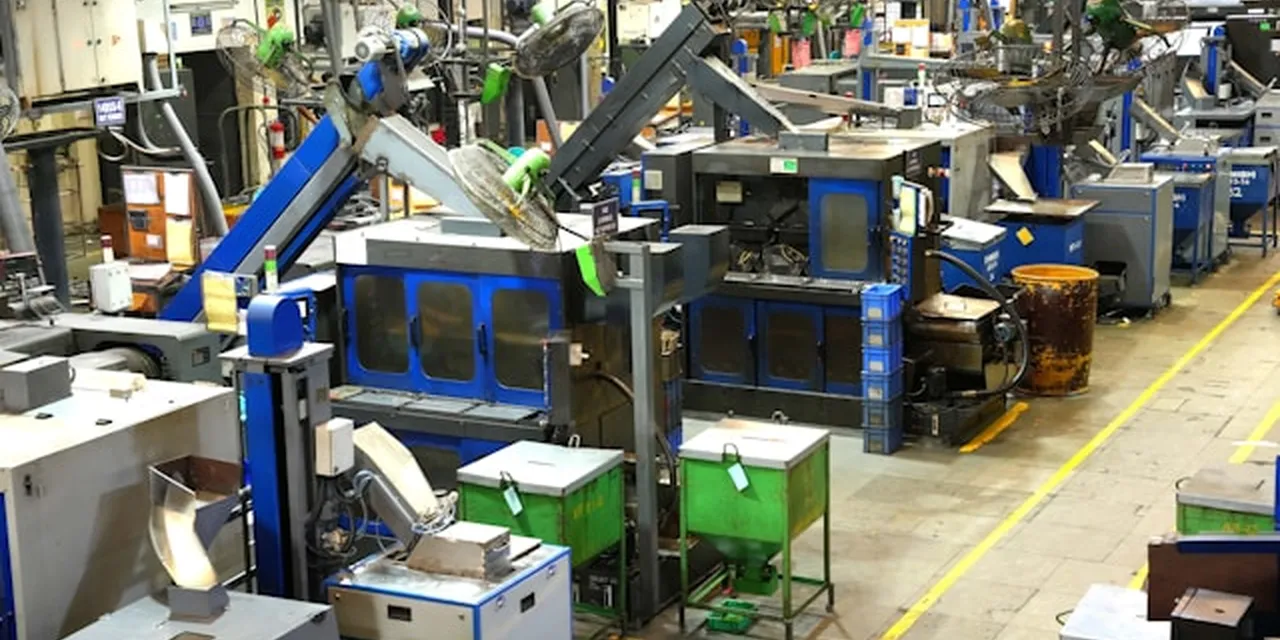
Subotica's automotive supply chain generated €1.42 billion in export revenue in 2024. That figure, a 12.3% year-on-year increase, places this city of 100,000 near Hungary's border among Serbia's most productive industrial zones. ZF Friedrichshafen has committed another €45 million to expand EV transmission production here through 2026. Two additional German Tier-2 suppliers have signed memoranda to build stamping and hybrid component facilities in the Subotica Industrial Park. The investment pipeline is real, it is funded, and it is accelerating.
Yet the city's primary vocational school, Technical School "Ivan Sarić", graduates 220 students per year in machining, mechatronics, and toolmaking. Only 35% of those graduates enter local manufacturing. The rest leave for university or emigrate. Meanwhile, the vacancy rate in manufacturing stands at 8.4%, nearly double the municipal average. The average time to fill a 5-axis CNC programmer role across Vojvodina's Tier-1 suppliers is 142 days. For certified tool and die makers, 54% of local firms report vacancies lasting over 90 days.
The paradox is specific and consequential. Capital is arriving faster than the workforce can absorb it. The investment is not in the factories Subotica has always run. It is in robotic welding cells, automated guided vehicles, and EV transmission lines that require mechatronics skills the existing training pipeline does not produce at scale. What follows is an analysis of the forces reshaping this sector, the employers driving that change, and what senior leaders need to understand before they make their next hiring or retention decision in Subotica's industrial and manufacturing market.
The Cluster That Anchors a Region
Subotica's metalworking cluster is not an abstraction. It is 62 active manufacturing entities concentrated in and around the Subotica Industrial Park, with automotive supply chain firms accounting for 34% of total industrial employment in the municipality. The SIP itself sits at 94% occupancy, with only 14 hectares of expansion land remaining under the "Subotica Metal Valley" initiative managed by the Regional Development Agency Subotica.
The structure operates in three tiers. Global Tier-1 anchors, including ZF Serbia (2,800 to 3,200 workers), Lear Corporation (1,100 employees), Kromberg & Schubert (1,400 employees), and Adient (850 employees), dominate precision manufacturing and high-voltage wiring systems. Mid-tier suppliers such as Metalac and Yura Corporation occupy the intermediate layer. Beneath them sit approximately 85 registered SMEs in metal stamping, CNC machining, and tool-and-die production, typically employing 15 to 80 workers each.
The export orientation of this cluster is extreme. Automotive suppliers in the region direct 94% of output to EU markets, primarily Germany, Hungary, and Romania. That dependency is both a strength and a vulnerability. According to Germany's VDA, German automotive production declined 8% in 2024, creating pricing pressure that ripples directly into Subotica's Tier-2 and SME suppliers. Sixty-eight per cent of Subotica's automotive exports target German OEMs specifically.
ZF's Expansion and the Gravitational Pull of Tier-1 Employers
ZF Friedrichshafen's Subotica operation is the single largest employer in the cluster. Its 2024 investment in 50 new robotic cells and the committed €45 million expansion through 2026 are projected to add 400 to 500 technical positions. These are not assembly line jobs. They are roles in automation maintenance, quality engineering, and EV-specific precision forging.
Lear Corporation is on a parallel trajectory, having expanded its foam-in-place seating line and announced plans to hire 150 technicians through 2025. Kromberg & Schubert, producing high-voltage wiring harnesses for Mercedes and BMW EV platforms, occupies a critical node in Europe's electrification supply chain.
The gravitational pull of these anchors shapes the entire local labour market. When ZF posts 400 new technical roles, the pool from which every other employer in the cluster recruits becomes materially smaller. This is not a theoretical concern. It is the mechanism driving the hidden cost of prolonged executive and specialist searches across the region.
The SME Layer Under Pressure
Beneath the Tier-1 anchors, a different reality is emerging. Traditional internal combustion engine component suppliers in the SME layer report order volume declines of 15 to 20% as OEMs pivot to EV platforms. Retooling is the obvious response. But 40% of local SMEs report they cannot finance the transition without external capital. Average interest rates for investment loans available to domestic SMEs run between 6.5% and 8.2%, compared to 4 to 5% in EU competitor regions, according to the World Bank's Serbia Economic Monitor.
Forty-five per cent of Subotica metalworking SMEs cite insufficient collateral as their primary barrier to automation investment. The SUB METAL cluster, which comprises 42 member companies representing 3,800 employees collectively, provides shared tooling libraries and joint EU fund applications. But shared tooling does not replace the capital required to install a new CNC line or achieve IATF 16949 certification.
The net employment projection for 2026 reflects this bifurcation: 600 to 750 additional positions in automation maintenance and quality engineering, offset by 200 to 300 job losses in low-value stamping and manual assembly. The sector is growing. The sector is also shedding. These are not contradictions. They describe different layers of the same market.
The Skills Mismatch No One Has Solved
This is the analytical core of Subotica's talent challenge. The investment in automation has not reduced the workforce in aggregate. It has replaced one kind of worker with another that does not yet exist in sufficient numbers. Capital moved faster than human capital could follow.
Technical School "Ivan Sarić" graduates 220 students annually. Its curriculum covers machining, mechatronics, and toolmaking. These are valuable credentials. But ZF and Lear are deploying collaborative robots, automated guided vehicles, and Industry 4.0 monitoring systems that demand hybrid mechatronics skills: PLC troubleshooting on Siemens TIA Portal, robot programming for KUKA and ABB systems, and digital twin proficiency. The school's output remains weighted toward conventional machinists and manual welders.
The numbers are stark. ZF projects a 12% headcount reduction per unit of output through 2026 as automation scales. The roles eliminated are semi-skilled machine operator positions. The roles created require PLC expertise, robotic welding programming, and GD&T (Geometric Dimensioning and Tolerancing) proficiency. Subotica's vocational infrastructure is supplying human capital for a 2010s manufacturing model while FDI investors automate for the 2030s.
This creates a peculiar form of underemployment. The headline vacancy rate of 8.4% coexists with graduates who cannot find roles matching their training. The shortage is not general. It is specific, and it concentrates in exactly the skill sets that command the highest premiums.
For senior leaders responsible for talent acquisition in industrial settings, this mismatch means that traditional recruitment channels, including job boards, vocational school pipelines, and even local employment services, reach a shrinking share of the candidates who actually match the requirements. The 80% of qualified professionals who are not actively looking for new roles become not just the majority but effectively the only viable candidate pool.
Where the Shortages Are Deepest
Three role categories define Subotica's most acute hiring pain. Each operates as a predominantly passive candidate market, where qualified professionals are employed, tenured, and not responding to postings.
5-Axis CNC Programmers
The average time to fill a 5-axis CNC programmer role across Vojvodina's Tier-1 suppliers is 142 days. That is nearly five months. Sixty-eight per cent of employers report poaching talent from direct competitors within the past 12 months, typically offering wage premiums of 18 to 28% above standard scales.
Senior CNC programmers with 5-axis capability and proficiency in Siemens NX or Mastercam command €28,000 to €40,000 annually in Subotica, a meaningful premium over the €18,000 to €22,000 earned by standard operators. But the absolute figure still trails Belgrade by 15 to 25% and Szeged, Hungary, by 45 to 55%. The candidate who has the skills you need can earn substantially more by driving 40 kilometres northwest.
Tool and Die Makers with IATF 16949 Experience
Unemployment in this cohort is below 2%. Effectively, full employment. The qualified population in the Subotica region is estimated at 180 to 220 individuals, with average tenure exceeding seven years at current employers. The ratio of active to passive candidates is approximately 1:9.
Fifty-four per cent of SUB METAL cluster member firms report "severe difficulty" in hiring certified toolmakers with automotive IATF 16949 experience. That difficulty is defined as vacancies lasting over 90 days. Forty per cent of firms report relocating non-critical functions to shop-floor spaces to accommodate extended recruitment timelines. The standard recruitment playbook fails in a market this tight. When nine out of ten qualified candidates are employed and not looking, a posted vacancy reaches almost no one.
Automation Maintenance Technicians
Demand for mechatronics technicians with PLC and robot programming expertise exceeds supply by an estimated 3:1 ratio. Rather than recruiting externally, firms across the region are reclassifying senior electricians as "automation technicians" with 20 to 30% wage premiums to partially fill the gap.
This is a workaround, not a solution. A reclassified electrician may maintain a robotic welding cell adequately. They are unlikely to programme a new AGV route or integrate a KUKA arm into a digital twin environment. The gap between the label and the capability widens as automation and AI-driven manufacturing systems grow more complex.
The Talent Drain Subotica Cannot Plug with Money Alone
Subotica's manufacturing compensation has risen. Plant Directors at Tier-1 automotive suppliers now command €75,000 to €110,000 annually. Operations Managers earn €60,000 to €82,000. Quality Directors in IATF 16949 environments reach €55,000 to €75,000. These figures exceed Serbian national manufacturing averages by 10 to 12%, driven by FDI wage pressure.
But the competition is not national. It is geographic, and the differentials are stark.
Belgrade offers manufacturing executives and senior engineers 25 to 30% salary premiums over Subotica, combined with career diversification into pharma and IT that a single-sector city cannot match. Novi Sad, 120 kilometres south, combines manufacturing with a booming IT sector, attracting mechatronics and automation engineers with "tech-adjacent" career options and 15 to 20% wage premiums. Subotica loses approximately 15% of Technical School "Ivan Sarić" graduates to Belgrade employers annually.
The most damaging drain, however, crosses a border. Szeged, Hungary, sits 40 kilometres northwest. EU membership provides access to manufacturing wages of €2,000 or more per month for skilled toolmakers, compared to €1,200 to €1,400 in Subotica. It also provides Schengen mobility, stronger social protections, and access to a broader European labour market. An estimated 200 to 250 Serbian toolmakers from the Subotica region have relocated to or commute to Szeged.
This is not a problem that compensation adjustments alone can solve. The negotiation required to move a passive candidate in this market involves more than salary. It involves career trajectory, geographic stability, and sometimes EU access. A firm offering €36,000 for a Tool Room Manager in Subotica competes not only against a €45,000 offer in Belgrade but against a €50,000-equivalent package in Szeged with EU residency attached. The proposition must address dimensions beyond the payslip.
A third competitive vector is emerging. Senior automation engineers increasingly serve German industrial clients remotely from Belgrade and Novi Sad, earning near-EU wages while bypassing Subotica's plants entirely. The talent pipeline for advanced manufacturing roles is leaking at every level: graduates leave before entering the workforce, mid-career specialists cross the border, and senior engineers decouple from the local market through remote work.
Regulation and Infrastructure Are Compressing the Window
The external pressures on Subotica's manufacturing cluster extend beyond talent. Two regulatory forces and two infrastructure constraints are converging to narrow the window in which hiring decisions can be delayed.
CBAM Compliance and Environmental Permitting
From 2026, Serbian steel and aluminium exporters to the EU must report embedded carbon emissions under the EU's Carbon Border Adjustment Mechanism. For Subotica's foundries and metal processors, the initial compliance costs for monitoring equipment and certification run between €50,000 and €200,000. For an SME with 30 employees and compressed margins, this is existential.
Simultaneously, new EU-aligned environmental impact assessment procedures introduced in 2024 have extended permitting timelines for industrial expansions from 6 to 9 months to 12 to 18 months. Two planned Subotica facility expansions have already been delayed. The regulatory burden is real, and it requires a specific skillset: professionals who understand EU compliance reporting at a technical level and can implement monitoring systems within manufacturing environments.
Lean Six Sigma Black Belt certification is scarce in Vojvodina. Sixty per cent of Subotica manufacturers report difficulty sourcing certified practitioners. Supply chain resilience management and CBAM compliance reporting are skills that barely existed in this market three years ago. You cannot recruit experience that does not yet exist in sufficient quantity.
Logistics and Utility Constraints
The infrastructure gap is less dramatic but equally material. While Subotica lies on Pan-European Corridor X, last-mile road quality in industrial zones inflates just-in-time delivery timelines. Average truck turnaround time at Subotica SIP is 4.2 hours, double the 2.1 hours achievable at Novi Sad industrial zones.
Industrial electricity rates increased 18% in 2024. Energy now represents 12 to 14% of operating costs for Subotica manufacturers, up from 8% in 2021. For energy-intensive metal fabrication, this compresses margins further and makes the economics of retooling even harder for under-capitalised SMEs.
Water supply capacity constraints emerged in Q3 2024, with RAS imposing temporary moratoria on new high-volume water users in SIP pending infrastructure upgrades. For firms planning expansion, every month of delay in securing utilities is a month in which talent market conditions may deteriorate further.
The Dual Economy Problem
The most important dynamic in Subotica's manufacturing sector is not captured by either the headline export figure or the headline vacancy rate. It sits in the tension between them.
Exports reached record highs. But the value captured locally may be diminishing. Tier-1 anchors are increasingly sourcing high-precision components, including gear blanks and specialised stampings, from existing EU suppliers in Hungary and the Czech Republic rather than developing Subotica's SME tier. The cited reason is quality inconsistency risk.
This creates a dual economy. The FDI anchors export at record volumes. The domestic SME layer stagnates. The export statistics mask a structural question: is Subotica deepening local industrial capability, or is it functioning as low-cost assembly space integrated into supply chains managed and supplied from elsewhere?
For hiring leaders, the implication is direct. The executive who can bridge this gap, a Plant Director or Operations Manager who can raise SME quality standards to Tier-1 expectations while managing IATF 16949 certification and CBAM compliance simultaneously, is the scarcest profile in the market. This person combines manufacturing depth with regulatory fluency and supply chain strategy. They are not responding to job postings. They are employed, performing, and visible only to firms that know where to look.
Identifying such candidates requires more than a database search. It requires systematic talent mapping across a market where the total population of qualified professionals may number in the low hundreds and the active jobseeker subset is vanishingly small.
What This Means for Organisations Hiring in Subotica
The organisations that will build effective leadership teams in Subotica's manufacturing sector over the next twelve months share several characteristics. They understand that the visible candidate market represents a fraction of available talent. They recognise that compensation is necessary but not sufficient. And they move fast enough to engage candidates before the 142-day average drags a critical role past the point where production schedules absorb the damage.
KiTalent works with industrial and manufacturing organisations facing precisely these conditions. In markets where 85% of qualified automation engineers are employed at three firms, where certified tool and die makers number fewer than 220 across an entire region, and where the passive candidate ratio exceeds 9:1, direct headhunting methodology is not a preference. It is the only approach that reaches the candidates who matter.
KiTalent's AI-enhanced talent mapping identifies interview-ready candidates within 7 to 10 days, even in markets as concentrated as Subotica's. The model is pay-per-interview: no upfront retainer, with payment only when clients meet qualified candidates. Across 1,450 executive placements globally, placed candidates achieve a 96% one-year retention rate.
For organisations competing for Plant Directors, Quality Managers, or senior automation specialists in Subotica's compressed talent market, open a conversation with our executive search team about how we approach executive search across industrial manufacturing sectors where conventional methods consistently fall short.
Frequently Asked Questions
What are the most in-demand manufacturing roles in Subotica in 2026?
The three most acute shortages are 5-axis CNC programmers (averaging 142 days to fill), tool and die makers with IATF 16949 automotive certification (vacancies exceeding 90 days at 54% of local firms), and automation maintenance technicians with PLC and robotics expertise, where demand outstrips supply by 3:1. These roles sit at the intersection of Subotica's EV transition investment and the limitations of local vocational training output. Qualified candidates are overwhelmingly passive, with active-to-passive ratios as extreme as 1:9 for senior toolmakers.
What does a Plant Director earn in Subotica's automotive sector?
Plant Directors at Tier-1 automotive suppliers in Subotica earn €75,000 to €110,000 gross annually, including estimated bonuses. This trails Belgrade equivalents by 15 to 25%, where the range is €95,000 to €140,000. Operations Managers earn €60,000 to €82,000, and Quality Directors in IATF 16949 environments command €55,000 to €75,000. Compensation has risen 15 to 25% above 2023 levels to counter talent leakage to Belgrade, Novi Sad, and across the Hungarian border to Szeged.
Why is hiring so difficult in Subotica's manufacturing sector?
Three forces converge. First, the vocational training pipeline produces conventional machinists while employers need mechatronics hybrid skills. Second, geographic competition from Belgrade (25 to 30% wage premiums), Novi Sad (IT-adjacent career options), and Szeged, Hungary (EU wages and Schengen mobility) drains qualified talent. Third, the total qualified population for critical roles is extremely small. Subotica's senior tool and die maker pool numbers 180 to 220 people regionally. Traditional job advertising reaches almost none of them.
How does the EV transition affect Subotica's automotive supply chain?
ZF Friedrichshafen's €45 million expansion is creating 400 to 500 new technical positions in EV transmission components. Simultaneously, traditional ICE component suppliers in the SME layer face 15 to 20% order volume declines. The net effect is 600 to 750 new roles in automation and quality engineering, offset by 200 to 300 losses in manual assembly. The transition demands talent pipeline strategies that target passive specialists in mechatronics and EV-specific precision manufacturing.
What regulatory changes affect manufacturers hiring in Subotica?
Two regulatory shifts are material. The EU's Carbon Border Adjustment Mechanism requires Serbian exporters to report embedded carbon emissions from 2026, with compliance costs of €50,000 to €200,000 for monitoring and certification. EU-aligned environmental impact assessment procedures have extended facility expansion permitting from 6 to 9 months to 12 to 18 months. Both require specialised compliance talent that is scarce across Vojvodina.
How can executive search firms help manufacturers in Serbia's automotive sector?
In a market where passive candidate ratios exceed 75% for most critical roles, traditional recruitment methods reach a diminishing share of qualified professionals. KiTalent's AI-powered direct search methodology identifies and engages candidates who are employed, performing, and not visible on any job board. With interview-ready candidates delivered within 7 to 10 days and a pay-per-interview model requiring no upfront retainer, this approach is designed for markets where speed and precision determine whether a search succeeds or a production line absorbs the cost of vacancy.