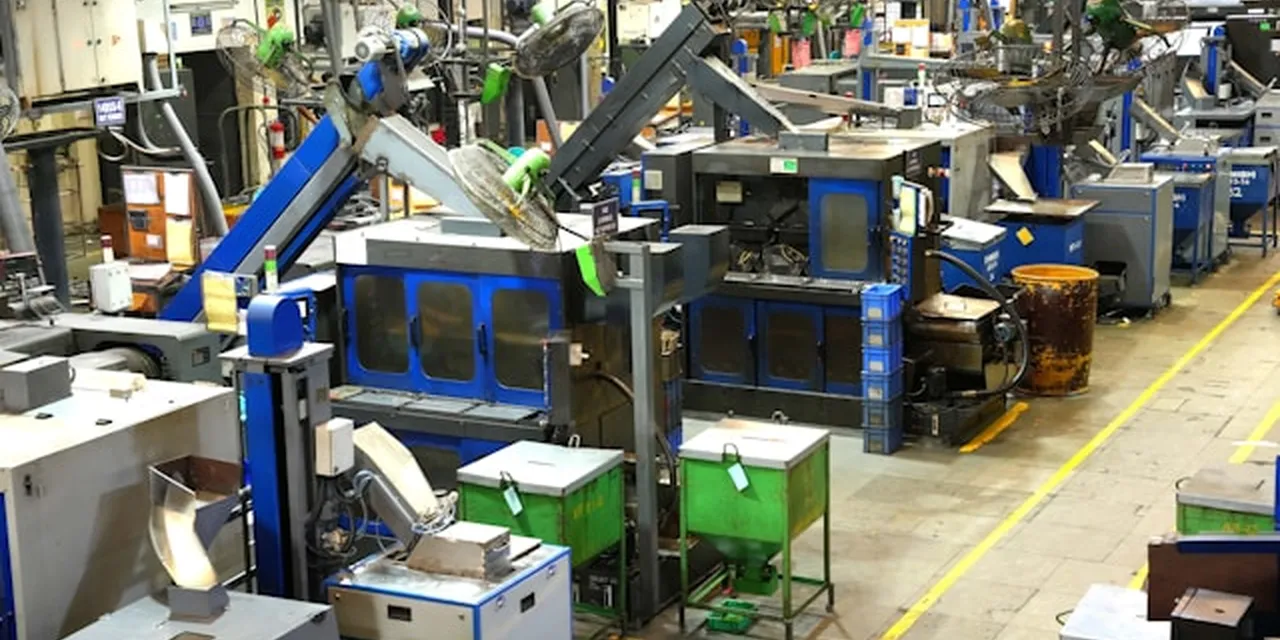
Subotica's Food Processors Are Investing in Automation They Cannot Operate: Inside the Talent Trap Stalling Serbia's Agro-Export Engine

Subotica's food processing cluster generated an estimated €890 million in turnover in 2024, a 12% increase on the previous year. Capacity expansion plans are funded. EU export channels are open and growing. The A1 motorway link to Hungary's M5, completed in 2023, has removed the logistics bottleneck that constrained this market for a decade. On paper, the trajectory into 2026 looks unambiguous.
The reality on the ground tells a different story. Capacity utilisation across meat and oilseed processing sits at 78% and 82% respectively, both below the 2019 baseline of 85%. The constraint is not demand. It is not capital. It is people. Specifically, it is the absence of automation technicians capable of running the equipment that €34 million in recent investment has paid for, the food safety managers required to maintain EU export certification, and the supply chain coordinators who keep refrigerated product moving across a border that Serbia does not yet share with the single market.
What follows is an analysis of the structural forces reshaping Subotica's agro-industrial cluster, the specific roles that cannot be filled through conventional methods, and what the widening gap between capital investment and human capital availability means for every senior leader responsible for keeping this sector competitive through 2026 and beyond.
The Automation Paradox: Capital Moving Faster Than the Workforce Can Follow
The core tension in Subotica's food processing sector is not a simple shortage. It is a circular trap. Processors facing labour gaps in manual trades have invested in automation to reduce their dependence on workers they cannot find. But the automation itself requires a different category of worker, one that is even scarcer than the manual labour it was meant to replace.
Matijević Company, Serbia's second-largest pork processor with approximately 2,100 employees, announced a €20 million slaughterhouse modernisation scheduled for the second quarter of 2026. The investment is projected to reduce manual labour requirements by 15%. It will simultaneously increase demand for mechatronics technicians and food safety auditors by 40%. Sojaprotein, operating from its Subotica crushing and isolation plant with 480 to 520 workers, plans to expand isolate production capacity by 30% by mid-2026, requiring 60 to 80 additional chemical engineers and process operators.
These are not abstract projections. They describe the conditions now arriving. The investment has been committed. The equipment is being installed. The people to run it do not exist in sufficient numbers anywhere within Subotica's labour catchment area.
Only Three Universities Produce the Graduates This Sector Needs
The supply constraint is structural, not cyclical. Serbia produces relevant automation and food technology graduates from only three technical universities: Belgrade, Novi Sad, and Niš. Food-industry automation requires specific hygienic design knowledge that general engineering programmes do not cover. According to ManpowerGroup Serbia's 2024 Talent Shortage Survey, 85% of qualified automation engineers in the food sector are already employed and receive multiple competing offers annually. Average tenure in role is 4.2 years, with moves triggered almost exclusively by direct recruitment approaches rather than job advertisements.
Vocational school enrolments in food technology and mechanical trades have contracted by 12% since 2020. The pipeline is not just insufficient for current demand. It is shrinking. The sector's workforce median age of 48.5 years, with 28% of employees over 55, means that 280 retirements in skilled trades are expected across 2025 alone. The people leaving are not being replaced at anything close to a one-to-one ratio.
This is the paradox that defines the market in 2026. Automation was the answer to the labour shortage. The labour shortage is now the obstacle to automation. Capital has moved faster than human capital can follow, and the firms that committed investment earliest are now the ones most exposed to the gap.
A Sector Running at Three-Quarters Capacity in a Growing Market
The 340 open positions recorded across Subotica's food processing sector at the start of 2025 may appear manageable in a municipality with over 36,000 industrial workers. The aggregate number obscures the severity. Fifty-five percent of those vacancies require technical vocational or engineering qualifications. The vacancy rate for technical positions stands at 14.2%, compared to 6.8% for administrative roles.
The operational consequence is measurable. Meat processors are running at 78% capacity utilisation. Oilseed processors are at 82%. Both figures sit meaningfully below the pre-pandemic baseline of 85%. For a sector where 67% of output is destined for EU markets in Germany, Hungary, and Italy, the gap between what these facilities could produce and what they actually produce represents lost export revenue. Sector turnover is projected to reach €980 million to €1.02 billion through 2026, but that projection is explicitly contingent on resolving 400 to 500 unfilled technical positions.
The constraint is not seasonal or temporary. It is embedded in the demographic structure of the workforce and the educational pipeline that feeds it. A firm that cannot fill a PLC programmer role today has no reason to expect the candidate pool will be larger in twelve months. It will almost certainly be smaller.
The Bifurcated Compensation Market Aggregate Statistics Cannot See
National data from the Statistical Office of the Republic of Serbia shows average wage growth in Serbian manufacturing slowing to 8.5% in 2024, down from 15% the year before. A reader scanning that headline might conclude that labour market pressure is easing. In Subotica's food processing sector, the opposite is true at the levels that matter most.
Executive compensation data tells a sharply different story. Operations Director and Technical Director roles in the food sector saw 18 to 22% compensation inflation in 2024, according to compensation studies from Pedersen & Partners and EY Serbia. Sign-on bonuses, historically rare in Serbian industrial hiring, have become standard for critical hires at Plant Director level and above. A General Manager or Plant Director at a large meat processing facility now commands €85,000 to €140,000 annually, with top-tier meat processing roles attracting premiums of 20 to 25% above general food manufacturing.
The Gap Between Senior and General Compensation Is Widening
At the specialist and manager tier, the picture is less extreme but still well above the national average. Production Managers earn €28,000 to €42,000. QA Managers sit at €26,000 to €38,000. Maintenance Managers range from €24,000 to €36,000. These figures reflect the local market. They do not reflect what it costs to retain these professionals against competition from Novi Sad, Belgrade, or Zagreb.
The disconnect between aggregate manufacturing wage data and executive-level compensation inflation is the clearest indicator that this market has bifurcated. General labour markets may be stabilising. The specific executive and specialist talent required for EU compliance and automation transitions remains in acute shortage, and the compensation required to attract it is climbing at more than double the manufacturing average.
For hiring leaders relying on national benchmarks to set offer packages, the implication is direct. The benchmark is wrong. It describes a market that does not exist at the seniority level where the most consequential hiring decisions are made. Organisations that need accurate compensation intelligence for senior industrial roles in this region must look at function-specific data, not sectoral averages.
Four Competing Markets Are Pulling Talent Away From Subotica
Subotica's talent challenge would be difficult enough if the city were the only employer competing for these profiles. It is not. The city sits within easy reach of four competitor markets, each offering something Subotica cannot match for specific categories of professional.
Novi Sad, 60 kilometres south and 45 minutes by motorway, offers 20 to 35% salary premiums for engineering and QA roles. It hosts multinational headquarters including Coca-Cola HBC and Nestlé regional offices, providing career progression paths to regional and international roles that Subotica's largely domestic employers cannot replicate. The motorway connection has enabled a specific pattern of salary arbitrage: talent resides in Subotica, where housing costs are 30% below Novi Sad, but commutes south for the higher salary. The worker lives locally. The productivity leaves.
Zagreb represents a different category of competition. For executive-level food safety and regulatory affairs professionals, Croatia's capital offers 60 to 80% compensation premiums and the structural advantages of EU membership: freedom of movement, Eurozone stability, and access to a regulatory framework that Serbian professionals spend their careers preparing for but cannot yet operate within domestically. Serbian nationals with dual citizenship or work permits increasingly migrate to Croatian food exporters such as Podravka and Vindija.
Timișoara and Belgrade Complete the Competitive Circle
Timișoara, 130 kilometres east in Romania, draws maintenance technicians and automation specialists with average industrial wages of €1,200 or more per month, compared to Subotica's €900, according to Eurostat's regional labour cost statistics. Hungarian language skills, common in Subotica's ethnically mixed population, are valued in Timișoara's cross-border manufacturing corridor. Belgrade, 180 kilometres south, competes for senior technical and executive talent by offering the deepest corporate job market in Serbia and the international exposure that comes with it.
Subotica's retention advantage is real but narrow. Housing costs 40% below Belgrade. Strong community ties in a mid-sized city with a high quality of life. Proximity to the Hungarian border for cross-border services. These factors hold a certain category of professional. They do not hold the ambitious specialist or executive who has outgrown what the local market offers.
The practical consequence for hiring leaders is that any search for a senior role in Subotica's food sector must assume the candidate pool extends well beyond the city, and the offer package must account for what that candidate could earn in any of four competing geographies. A search that only looks in Subotica is a search that will fail.
The EU Compliance Squeeze: A Dual-Speed Market With an Expiry Date
Among the 142 registered legal entities in Subotica's food processing sector, the regulatory environment has created a sharp division. Full implementation of EU hygiene package standards (EC 852/2004) is 94% complete among large enterprises with more than 250 employees. Among SMEs, the figure is 61%.
This is not a minor gap. It is an existential one. For SMEs that export to EU markets, and the majority of the sector's output crosses the border, compliance is not optional. It is the price of access. The dairy sub-sector, where no major greenfield investments are anticipated through 2026, illustrates the dynamic most clearly. According to a NALED dairy sector viability study from 2024, SME dairy processors face capital investment requirements of €2 to €5 million per facility to meet EU hygienic standards. For businesses at this scale, the investment is prohibitive without external support.
That support is becoming harder to access. The expiration of certain IPA (Instrument for Pre-Accession Assistance) grants in late 2025 has slowed SME modernisation at precisely the moment when the compliance deadline is approaching. Meanwhile, the EU Carbon Border Adjustment Mechanism Phase 2 in 2026 will impose new compliance costs on energy-intensive sub-sectors including meat rendering and spray drying. The Serbian Chamber of Commerce's CBAM impact assessment estimates these costs at 3 to 5% of export value.
The Compliance Talent Problem Is a Knowledge Problem
The regulatory pressure creates a specific and urgent talent requirement. Food safety managers with EU audit experience are the professionals who keep export channels open. Their unemployment rate among candidates with eight or more years' experience and EU audit qualifications sits below 2%. The ratio of passive to active candidates is approximately four to one. They are not on job boards. They are not looking. They must be found and approached directly.
It is typical for mid-sized dairy and meat processors in the region to lose qualified food safety managers to competitors in Novi Sad or to multinational exporters relocating staff to Zagreb, according to the Serbian Association of Food Industry's 2024 HR Benchmarking Survey. Compensation premiums of 25 to 35% above Subotica market rates are routinely required to retain QA managers with the EU audit experience that keeps export certification intact.
The compliance talent shortage is not simply a hiring problem. It is a knowledge problem. You cannot recruit experience that does not yet exist in sufficient quantity. Serbia is a candidate country working toward EU standards. The professionals who already operate at those standards are a finite group, and every food processor in the Western Balkans is competing for the same individuals.
What the Aggregate Data Hides: The Real Executive Market in Subotica's Food Sector
The most important analytical finding in this market is the degree to which aggregate labour statistics misrepresent the conditions facing senior hiring leaders. National manufacturing wage data suggests a cooling market. Sectoral vacancy data suggests a manageable number of open positions. Both impressions are wrong at the levels where hiring decisions are most consequential and most difficult.
The bifurcation operates on two axes simultaneously. The first is seniority: general labour markets are stabilising while executive and specialist markets are tightening. The second is capability: the skills the sector needs going forward (mechatronics, food safety auditing, EU regulatory affairs, process automation) are fundamentally different from the skills that built the sector historically (manual trades, traditional butchery, basic maintenance).
Forty percent of retained searches for Plant Director-level roles in this sector fail to produce suitable local candidates, according to Adecco Serbia's 2024 Industrial Sector Hiring Report. These searches must then expand to Belgrade or regional markets including Croatia and Bosnia, adding six to nine months to the onboarding timeline. For a sector where a single unfilled Plant Director role can constrain the output of an entire facility, that delay has a direct revenue cost.
The standard executive search approach, posting a role and waiting for applications, reaches at most the 15% of senior candidates who happen to be actively looking. In Subotica's food processing sector, the most critical profiles are overwhelmingly passive. Supply chain directors managing EU export logistics are 90% passive candidates, recruited exclusively through sector-specific headhunters or internal referral networks. Automation engineers are 85% passive. Food safety managers with EU credentials are at a four-to-one passive-to-active ratio.
A hiring process that relies on active candidates will consistently produce either no shortlist at all or a shortlist of people who are available for a reason. In this market, the method of search determines the quality of the outcome more than any other variable.
What Senior Hiring Leaders in This Sector Need to Do Differently
The structural conditions described above are not temporary. The demographic contraction, the educational pipeline shrinkage, the compensation bifurcation, and the geographic competition for talent are all embedded trends that will intensify through 2026 and beyond. Waiting for the market to ease is not a viable strategy.
Three priorities matter for organisations hiring at senior and specialist levels in Subotica's food processing sector.
First, compensation benchmarking must be function-specific and geography-adjusted. An offer calibrated to the national manufacturing average or even the Subotica local average will lose candidates to Novi Sad, Belgrade, and Zagreb. The relevant benchmark is what a QA manager with EU audit experience earns in any of the four competing markets, not what the average QA manager earns locally. The difference can be 35 to 80% depending on the competitor geography.
Second, search methodology must be built for a passive candidate market. When 85 to 90% of qualified candidates for the most critical roles are not actively looking, a direct identification and approach strategy is not a luxury. It is the only method that reaches the viable candidate pool. Job boards and postings will fill production operative roles. They will not fill the roles that determine whether a facility runs at 78% capacity or 95%.
Third, the timeline expectation for senior hires must be realistic. Six to nine months for a Plant Director search that begins locally and expands regionally is not unusual in this market. It is typical. Organisations that begin the search process three months before they need the person in the role are building failure into the plan.
KiTalent works with food and industrial manufacturing businesses across markets where the candidate pool is small, overwhelmingly passive, and under constant competitive pressure. Through AI-enhanced talent mapping and direct identification of candidates who are not visible on any job board, KiTalent delivers interview-ready shortlists within 7 to 10 days. The pay-per-interview model means clients invest only when they meet qualified candidates, and a 96% one-year retention rate reflects the quality of the match, not just the speed of the process.
For organisations competing for Plant Directors, food safety leaders, and automation specialists in Serbia's agro-industrial corridor, where the candidates you need are employed, not looking, and receiving competing approaches from four different markets, speak with our executive search team about how we approach this sector.
Frequently Asked Questions
What are the hardest roles to fill in Subotica's food processing sector in 2026?
The three most acute shortages are automation and mechatronics technicians with food-industry hygienic design knowledge, food safety and QA managers with EU audit experience (particularly BRC/IFS and EC 852/2004 compliance), and supply chain coordinators managing temperature-controlled EU export logistics. Technical vacancy rates stand at 14.2%, more than double the rate for administrative positions. Senior roles in these categories routinely remain unfilled for six months or longer when conventional recruitment methods are used, and passive candidate identification through direct search is typically the only method that produces viable shortlists.
What do senior food processing executives earn in Subotica?
Compensation varies substantially by role and seniority. Production Managers earn €28,000 to €42,000 annually. QA Managers range from €26,000 to €38,000. At executive level, Operations Directors command €65,000 to €95,000, Technical Directors €58,000 to €85,000, and General Managers or Plant Directors at large facilities €85,000 to €140,000. Meat processing roles carry premiums of 20 to 25% above general food manufacturing. Sign-on bonuses have become standard for critical executive hires, reflecting compensation inflation of 18 to 22% at VP level during 2024.
Why is Subotica losing food industry talent to competing cities?
Subotica competes with four markets for senior food processing professionals. Novi Sad offers 20 to 35% salary premiums and multinational career paths 45 minutes south. Zagreb provides 60 to 80% compensation premiums plus EU membership advantages for regulatory affairs professionals. Timișoara draws automation specialists with industrial wages 30% above Subotica levels. Belgrade attracts executive talent with deeper corporate markets and international exposure. Subotica retains workers through lower living costs and community ties but struggles to hold ambitious specialists and senior leaders.
How does EU accession preparation affect hiring in Serbia's food sector?
EU accession preparation creates simultaneous demand for compliance expertise and cost pressure on businesses investing in standards alignment. Full EU hygiene package implementation is 94% complete among large employers but only 61% among SMEs. The 2026 introduction of CBAM Phase 2 adds 3 to 5% to export costs for energy-intensive sub-sectors. The professionals who understand EU regulatory frameworks at an operational level are in acute shortage, with fewer than 2% of experienced food safety managers with EU audit qualifications currently unemployed.
What is the best approach to executive hiring in Subotica's food processing sector?
The most critical roles in this sector are filled by passive candidates. Eighty-five percent of qualified automation engineers and 90% of supply chain directors managing EU exports are employed and not actively seeking new positions. Job board postings and inbound applications reach at most 15% of the viable candidate pool. Effective executive hiring in this market requires direct identification and approach through specialist headhunting methods, function-specific compensation benchmarking against four competitor geographies, and realistic timelines that account for six to nine month search cycles at Plant Director level and above.
What impact will automation investment have on Subotica's food industry workforce?
Automation investment is reshaping workforce requirements rather than reducing headcount. Matijević Company's €20 million slaughterhouse modernisation will cut manual labour needs by 15% while increasing demand for mechatronics technicians and food safety auditors by 40%. The net effect is not fewer workers but different workers. Serbia's three relevant technical universities produce insufficient graduates to meet this shifting demand, and vocational enrolments in food technology have fallen 12% since 2020. KiTalent supports organisations facing this kind of workforce transition through proactive talent mapping and pipeline development that identifies candidates before roles become critical vacancies.