Wolfsburg's Automotive Talent Paradox: 35,000 Jobs Disappearing While 800 Roles Go Unfilled
Volkswagen AG announced plans to cut 35,000 positions across the Group by 2030. The headlines told a simple story: Europe's largest automaker was shrinking, and Wolfsburg, the company town built around its largest plant, would bear the heaviest cost. For any senior hiring leader reading those headlines from Munich, Stuttgart, or Berlin, the natural conclusion was that Wolfsburg had become a buyer's market for automotive talent.
That conclusion is wrong. Beneath the restructuring narrative, Wolfsburg's labour market has split into two economies operating in opposite directions. General assembly and ICE powertrain roles face genuine surplus. But high-voltage battery engineers, embedded software architects, and automation specialists remain acutely scarce, with vacancy rates exceeding 40% and search durations stretching past seven months. The restructuring has not released these specialists onto the market. It has made them harder to find, because the public perception of decline discourages the very candidates Wolfsburg needs from considering a move there.
What follows is an analysis of the forces pulling Wolfsburg's automotive sector apart, the specific roles where scarcity is most severe, what those roles pay, and what organisations hiring in this market need to understand before they commit to a search strategy that will not reach the candidates they need.
A Company Town Facing Two Labour Markets at Once
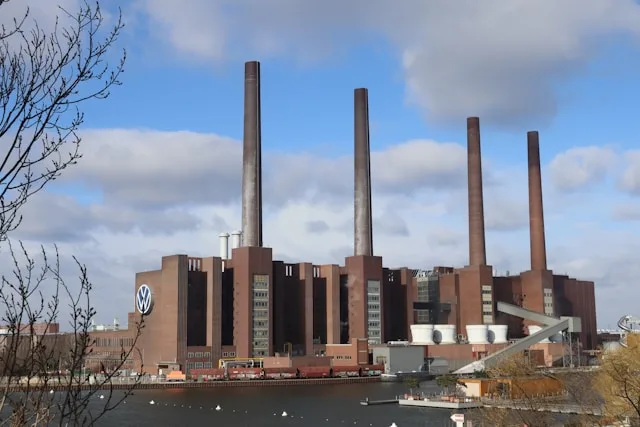
Wolfsburg is not merely influenced by Volkswagen. It is, in economic terms, a subsidiary of it. Approximately 62,000 VW personnel work at the Wolfsburg site, representing roughly 72% of the city's total employed workforce. Municipal tax revenue derives 68% from Volkswagen AG and its direct suppliers. The supplier network across the broader Wolfsburg-Braunschweig-Salzgitter-Gifhorn region encompasses roughly 180 Tier-1 and Tier-2 firms generating an estimated €8.2 billion annually in revenue tied directly to Wolfsburg production schedules.
This concentration creates a monopsonistic structure with no parallel among major European automotive cities. Munich has BMW but also Siemens, Allianz, and a deep technology startup ecosystem. Stuttgart has Mercedes-Benz but also Bosch, Porsche, and a diversified Mittelstand base. Wolfsburg has Volkswagen. When VW expands, the city thrives. When VW contracts, the city contracts with it.
The current moment is more complex than either expansion or contraction. Capacity utilisation at Wolfsburg's vehicle plants stood at approximately 65 to 70% through early 2025, reflecting weakening European demand and the ramp-down of Golf 8 production ahead of the model year transition. Production volumes for 2026 are forecast to stabilise at 450,000 to 480,000 units against an installed capacity of 800,000. That gap represents not just idle machinery but idle workers, idle supplier capacity, and a fiscal hole in the city's budget.
Yet at the same time, VW's Wolfsburg operations are budgeted to recruit approximately 800 specialists in high-voltage systems, battery management software, and industrial automation during 2026. The Wolfsburg-Braunschweig employment agency registered 1,400 unfilled vacancies in mechatronics, electrical engineering, and automotive technology classifications through early 2025, with an average time-to-fill of 142 days. The plant is simultaneously too large and too small, overstaffed in skills the market no longer needs and desperately short of skills the market now demands.
This is the tension that defines every hiring decision in Wolfsburg today. And it is the tension that aggregate employment statistics completely obscure.
The Electrification Investment That Outran Its Own Workforce
Volkswagen committed €1.2 billion in electrification-specific retooling at the Wolfsburg site, including the conversion of Hall 25 for MEB-platform flexibility and the installation of battery pack assembly lines for the ID.3 and ID.4 models. The capital arrived. The equipment was installed. The specialists required to operate and optimise that equipment did not arrive in sufficient numbers.
A Three-Tier Shortage with No Single Fix
The talent gap in Wolfsburg's electrification push operates on three distinct levels, each requiring a different recruitment approach.
The first tier is high-voltage battery engineers. Demand for professionals with expertise in lithium-ion cell chemistry, thermal runaway management, and battery management systems exceeds local supply by an estimated 4:1 ratio. Senior battery system engineers at Tarifgruppe E14-E15 equivalent face typical recruitment cycles of seven to nine months in Wolfsburg-based operations, compared to a national manufacturing average of 3.4 months. Qualified candidates entering this market receive multiple competing offers within 14 days.
The second tier is embedded software architects. Roles requiring AUTOSAR Classic and Adaptive expertise, functional safety certification under ISO 26262, and cybersecurity knowledge under ISO/SAE 21434 sit at the intersection of automotive engineering and software development. An estimated 85% of qualified candidates for these roles are passive, meaning they are not responding to job advertisements and must be identified through direct headhunting methods or internal referral networks.
The third tier is automation and robotics specialists. Engineers capable of programming KUKA and Fanuc systems for flexible body-in-white assembly are essential for the retooled production lines but remain scarce as demand from non-automotive sectors, logistics, and semiconductor manufacturing, competes for the same talent pool.
The Demographic Accelerant
The shortage is not static. It is worsening on a known timeline. The Wolfsburg workforce aged 55 and above increased to 31% in 2024, creating imminent retirement waves in specialised trades including toolmaking and measurement technology. Apprentice pipelines, even those running through the Volkswagen Academy Wolfsburg which trains approximately 1,200 apprentices annually across 22 vocations, cannot replace the volume of experience that will exit the system over the next five years. The knowledge walking out the door took decades to accumulate. The knowledge walking in has not yet had time to develop the depth of expertise that critical roles demand.
This is where the original synthesis of this market becomes clear. The restructuring headlines created a false impression that qualified talent was available in Wolfsburg. The 35,000-position reduction targets administrative, general production, and commodity roles. The simultaneous shortage in electrification functions deepened precisely because the restructuring narrative made Wolfsburg appear to be a declining market, discouraging the inbound mobility of the very specialists the city most needs. Capital investment in automation and electrification moved faster than human capital could follow, and the public perception of decline has now become a recruiting liability compounding the gap.
What Electrification Roles Actually Pay in Wolfsburg
Compensation in Wolfsburg operates within the IG Metall tariff framework, which provides a structured but less flexible system than the individually negotiated packages common in Berlin's tech sector or the equity-heavy models used by Tesla and international competitors. Understanding these numbers is essential for any organisation running a search in this market.
At the senior specialist and manager level, a Senior Battery Engineer in a team lead position commands base compensation of €95,000 to €118,000 annually, plus IG Metall tariff bonuses of roughly €15,000 to €22,000 and company pension contributions. Total cash compensation typically falls between €110,000 and €140,000. A Senior Software Architect in automotive applications earns €105,000 to €130,000 base, with premiums of 15 to 20% for cybersecurity specialisations, bringing total compensation to €120,000 to €155,000.
At the executive and VP level, the numbers shift materially. A VP of Manufacturing Operations for the Wolfsburg plant earns total annual compensation of €280,000 to €420,000. A VP of Engineering for electric platforms commands €320,000 to €480,000, with stock option or virtual share components at VW AG holding company level. A Plant Director at Wolfsburg Vehicle Plants, aligned with VW AG Senior Executive grades E3-E4, earns total compensation exceeding €500,000 including performance bonuses.
These figures are competitive within the German automotive market. They are not competitive against the full compensation picture offered by international competitors and emerging EV manufacturers. Senior battery specialists and executive manufacturing leaders face active recruitment from CATL, BYD, Rivian, and Lucid, with total compensation packages running 40 to 60% above German levels. Acceptance rates for these international offers remain low due to relocation reluctance, but the offers themselves set an expectation that erodes the perceived value of a Wolfsburg tariff package. When a candidate knows what a comparable role pays in Shanghai or Detroit, the negotiation dynamic changes even if they have no intention of leaving Germany.
Three Geographic Competitors Pulling Talent Away from Wolfsburg
Wolfsburg does not lose talent to a single destination. It loses different types of talent to different places, for different reasons. Each competitor exploits a specific weakness in Wolfsburg's proposition.
Berlin-Brandenburg and the Tesla Effect
Tesla Deutschland at the Grünheide Gigafactory offers software and battery engineering roles with cash compensation premiums of 18 to 25% above Volkswagen tariff scales, plus restricted stock unit packages valued at €40,000 to €80,000 annually for senior engineers. According to IG Metall documentation, approximately 300 skilled technicians and engineers moved from Wolfsburg-region suppliers to Tesla since 2022. Berlin's appeal extends beyond compensation. It offers a metropolitan lifestyle, an international tech community, and a cultural proposition that Wolfsburg, a city of 127,000 inhabitants built around a single factory, cannot match.
Munich and Stuttgart: The Premium OEM Pull
BMW Group and Mercedes-Benz Group offer 12 to 18% higher base salaries for equivalent electrification roles, combined with stronger cost-of-living adjustments and hybrid-remote work policies. Both cities operate a 3:2 office-home split that Volkswagen Wolfsburg has been slower to implement due to works council negotiations. For a mid-career engineer weighing two identical roles, one in Wolfsburg requiring five days on-site and one in Munich allowing two days remote, the Munich offer is structurally more attractive even before the salary premium is factored in.
The International Recruitment Pressure
The international dimension is less about actual departures and more about the distortion it creates in candidate expectations. When CATL or BYD approaches a senior battery specialist with a package 50% above their current Wolfsburg compensation, most will decline the move. But the approach itself recalibrates what the candidate believes they are worth. The next time a Wolfsburg employer offers a standard tariff-based package, the candidate's internal benchmark has already shifted. International competition does not need to succeed in recruiting to succeed in inflating expectations across the entire market.
The Remote Work Paradox That Is Shrinking the Candidate Pool
Wolfsburg faces a location-specific recruiting constraint that most other German automotive hubs do not. The city's physical plant infrastructure, traditionally its competitive advantage for vertical integration, is becoming a liability for talent attraction in software-centric roles.
Volkswagen AG and Wolfsburg suppliers increasingly require on-site presence for electrification and software development work. The rationale is legitimate: IP protection concerns, hardware-in-the-loop testing requirements, and the integration complexity of battery systems all favour physical co-location. But competitors in Berlin and Munich are successfully recruiting Wolfsburg-area talent through permanent remote or hybrid arrangements, specifically exploiting the gap between what Wolfsburg requires and what the market now expects.
According to Continental AG's Q3 2024 quarterly report and reporting by Automobilwoche, Continental's Powertrain division restructured its recruitment strategy for embedded software engineers after being unable to fill 12 critical vacancies over six months. The solution was not to increase compensation. It was to establish a remote-first satellite office in Berlin to access talent unwilling to relocate to Wolfsburg.
This pattern will repeat across the supplier base. For roles that are genuinely hardware-dependent, Wolfsburg's on-site requirement is defensible and candidates will accept it. For roles where co-location is organisationally mandated but technically unnecessary, the requirement functions as a filter that excludes the majority of the qualified candidate pool. An estimated 85% of qualified automotive software architects are passive candidates. Requiring them to relocate to a small city in Lower Saxony for a role they could perform from Berlin, Hamburg, or Munich reduces the addressable talent pool to a fraction of its actual size.
The firms that will hire successfully in Wolfsburg through 2026 are those that can distinguish between roles requiring genuine physical presence and roles where the on-site mandate is inherited rather than necessary. That distinction is now a competitive advantage in itself.
Structural Risks That Shape Every Search in This Market
Any hiring leader considering a senior appointment in Wolfsburg's automotive sector needs to understand the external forces compressing the market from multiple directions simultaneously.
The Euro 7 Regulatory Cliff
The proposed EU Euro 7 emissions standards, if finalised in the stringent form proposed by the European Commission, would impose €3,000 to €5,000 in additional hardware costs per ICE vehicle produced at Wolfsburg. According to the Verband der Automobilindustrie, this would render compact car production economically unviable without state subsidies. The regulatory timeline creates downstream talent implications: if specific ICE component lines close earlier than planned, the overlap period during which experienced powertrain engineers could transition to electrification roles shortens. Hiring for electrification functions becomes even more urgent because the internal pipeline of retrained talent shrinks.
The Trinity Delay and Its Employment Consequences
Volkswagen confirmed that the Trinity project, originally slated for 2026 production start at Wolfsburg, has been delayed to 2028 or 2029. This removes a critical volume commitment from the Wolfsburg master plan and leaves a two-to-three year gap in which the plant operates without a next-generation anchor product. For executive candidates evaluating a VP or Plant Director role, the Trinity delay introduces strategic uncertainty. The role is not just about running current production. It is about leading through a period where the plant's future product allocation is not yet confirmed.
Energy Costs as a Permanent Disadvantage
Industrial electricity prices in Germany averaged €0.26 per kWh in 2024, compared to €0.12 in France and €0.08 in the United States, according to the Bundesnetzagentur's monitoring report. For energy-intensive stamping and foundry operations at Wolfsburg, this creates a cost gap that cannot be closed through operational efficiency alone. The implication for hiring is indirect but real: every efficiency programme designed to offset these costs requires specialists in automation, digital twin implementation, and production optimisation, the same specialists already in short supply.
What This Means for Organisations Hiring in Wolfsburg
The Wolfsburg automotive talent market in 2026 is not a market where conventional recruitment methods will deliver results for critical roles. The numbers make this explicit. A 75 to 85% passive candidate ratio for battery and software roles means that job postings, whether on corporate career pages or aggregator platforms, reach at most 15 to 25% of the qualified population. A seven-to-nine month average search duration for senior battery engineers means that organisations relying on standard processes are losing candidates to faster-moving competitors before their shortlists are complete.
The specific challenge of Wolfsburg compounds these dynamics. Unlike Munich or Berlin, the city cannot attract passive candidates through lifestyle appeal. Unlike Stuttgart, it does not host multiple major employers creating a dense local talent ecosystem. Every search in Wolfsburg for an electrification specialist is, in practice, a relocation search or a retention search. The candidate either must be persuaded to move to a small city in Lower Saxony, or must already be there and must be persuaded to stay. Both require a search methodology that identifies and engages individuals directly, not one that waits for applications to arrive.
For organisations facing these conditions across automotive and industrial manufacturing sectors, KiTalent delivers interview-ready executive candidates within 7 to 10 days through AI-enhanced talent mapping that reaches the passive specialists no job board can surface. With a 96% one-year retention rate across 1,450 executive placements and a pay-per-interview model that eliminates upfront retainer risk, KiTalent's approach is built for markets where the cost of a slow or failed search is measured in delayed production timelines and lost competitive position.
For hiring leaders competing for battery engineers, software architects, or manufacturing executives in Wolfsburg's bifurcated market, speak with our executive search team about how we approach this specific talent challenge.
Frequently Asked Questions
Why is it so difficult to hire battery engineers in Wolfsburg despite Volkswagen's restructuring?
The restructuring targets general production and administrative roles, not electrification specialists. High-voltage battery engineers with expertise in cell chemistry, thermal management, and battery management systems remain acutely scarce, with local demand exceeding supply by an estimated 4:1 ratio. These candidates are overwhelmingly passive, with approximately 75% not actively looking for new roles. Search durations for senior battery positions in Wolfsburg extend to seven to nine months, more than double the national manufacturing average. The restructuring headlines actually make recruitment harder by creating the perception that Wolfsburg is a declining market.
What do senior automotive engineering roles pay in Wolfsburg in 2026?
Senior Battery Engineers in team lead positions earn total cash compensation of €110,000 to €140,000 including IG Metall tariff bonuses. Senior Software Architects command €120,000 to €155,000, with cybersecurity specialisation premiums of 15 to 20%. At the executive level, VP Manufacturing Operations roles pay €280,000 to €420,000 total, while VP Engineering for electric platforms reaches €320,000 to €480,000 with equity components. Plant Director roles exceed €500,000. These figures are competitive within Germany but sit 40 to 60% below international competitors such as CATL and BYD.
How does Wolfsburg compare to Munich and Berlin for automotive talent recruitment?
Munich and Stuttgart offer 12 to 18% higher base salaries and more flexible hybrid work policies. Berlin offers a 18 to 25% compensation premium through Tesla plus metropolitan lifestyle appeal. Wolfsburg's advantage is the depth of its production infrastructure and the sheer scale of VW's operations. Its disadvantage is location appeal and the slower adoption of remote work options. Effective recruitment in Wolfsburg typically requires relocation packages and direct candidate engagement rather than reliance on inbound applications. KiTalent's AI-enhanced talent mapping methodology is specifically designed to reach passive candidates in markets with these characteristics.
What are the biggest risks facing Wolfsburg's automotive sector in 2026?
Four risks dominate. First, the Trinity platform delay to 2028-2029 removes a critical production volume commitment. Second, Euro 7 emissions standards could render compact ICE production unviable without subsidies. Third, German industrial electricity costs at €0.26 per kWh create a permanent competitive disadvantage against French and American facilities. Fourth, a demographic transition with 31% of the workforce aged 55-plus threatens imminent knowledge loss in specialised trades where apprentice pipelines are insufficient to replace departing experience.
How can organisations fill critical electrification roles in Wolfsburg faster?
The key is accessing the 75 to 85% of qualified candidates who are not responding to job advertisements. Standard recruitment processes averaging seven to nine months for senior battery roles are too slow in a market where candidates receive competing offers within 14 days. Organisations should engage specialist executive search partners with direct sourcing capabilities and pre-mapped candidate pools in the automotive electrification space. Clear differentiation on role scope, not just compensation, matters in a market where multiple employers offer similar tariff-based packages.
What skills are most in demand in Wolfsburg's automotive manufacturing sector?
The highest-demand technical competencies include high-voltage safety certification with practical 800V architecture experience, solid-state battery development and silicon-anode integration, software-defined vehicle expertise covering VW.OS and over-the-air update architectures, and industrial digital twin implementation using platforms such as NVIDIA Omniverse or Siemens Xcelerator. Beyond technical skills, Wolfsburg urgently needs leaders who can manage the transition from ICE to electric production while retaining institutional knowledge from an ageing workforce. Roles requiring this combination of transformation leadership and technical depth are among the hardest to fill anywhere in European manufacturing.