Wolfsburg's Automotive Supplier Cluster: Why Germany's Richest City Cannot Staff Its Own Transformation
Wolfsburg produced more GDP per inhabitant than any other city in Germany in 2023. At €121,000 per person, it outpaced Munich, Stuttgart, and Frankfurt by a wide margin. It is also the city where a mid-sized tooling supplier cannot retain a master craftsman, where a battery logistics search runs 3.5 times longer than a standard transport hire, and where a software architect vacancy sits open for the better part of a year. The wealth and the scarcity are not separate phenomena. They share the same cause.
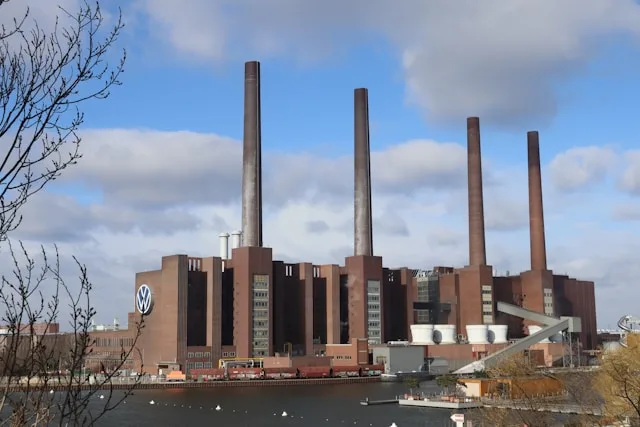
The cause is Volkswagen. The Wolfsburg-Werk, with its 65,000 employees and IG Metall tariff rates that no local SME can match, functions simultaneously as the region's economic engine and its talent vacuum. Every supplier within a 50-kilometre radius competes for workers against an employer that offers 15 to 20 per cent salary premiums, superior benefits, and institutional stability. When VW's in-house Werkzeugbau division needs three master toolmakers, it takes them from the supplier next door. When the supplier loses those toolmakers, it declines new contracts. The cluster's anchor institution is also its most destabilising competitive force.
What follows is an analysis of the structural forces reshaping Wolfsburg's automotive supplier, tooling, and logistics cluster as the EV transition accelerates. It examines where the hiring gaps are most acute, why VW's restructuring headlines have not loosened the technical talent market, and what the convergence of land constraints, regulatory burden, and wage competition means for organisations trying to hire and retain the leaders who will manage this transition.
The Wolfsburg Paradox: Wealth That Weakens Its Own Supply Chain
The dynamic at the centre of Wolfsburg's automotive talent market is one that does not exist in any comparable German cluster. Stuttgart has multiple anchor employers of roughly similar scale: Porsche, Mercedes-Benz, Bosch. Munich has BMW alongside a diversified economy. Wolfsburg has VW and, functionally, everything else.
This concentration produces what local analysts call the "Wolfsburg Paradox." The city's extraordinary GDP figure reflects VW's output, not broad-based prosperity. SME suppliers, tooling shops, and logistics operators exist in VW's economic shadow. They serve VW. They depend on VW. And they lose their best people to VW with metronomic regularity.
The ZDH Handwerksreport for the Braunschweig region documented the pattern in its 2024 edition. A typical mid-sized tooling supplier with 20 to 50 employees reported losing master toolmakers to VW's in-house operations at premiums of 15 to 20 per cent above SME market rates. The supplier's response was not to raise wages further. It could not. It was to decline new tooling contracts due to insufficient qualified supervision. The talent loss did not just cost the supplier a worker. It cost the supplier its ability to accept new business.
This is not a recruitment problem. It is a systemic constraint that no individual firm can solve on its own. The cluster's competitiveness depends on a network of independent suppliers able to deliver sequenced components within four-hour windows. When those suppliers cannot staff their own operations because the anchor employer absorbs the available talent, the cluster's reliability erodes from within.
IG Metall tariff rates in Niedersachsen put skilled workers at VW on €25 to €30 per hour before bonuses. An SME operating outside the tariff framework or at a lower band simply cannot match this. The result is persistent, structural talent drainage that worsens with every wage negotiation cycle. The paradox sharpens: VW needs a healthy supplier network to operate, but its own compensation gravity hollows that network out.
Restructuring Headlines Versus Technical Reality
Anyone reading German automotive press through late 2024 and into 2025 would be forgiven for thinking Wolfsburg's talent market had loosened. VW's "Accelerate Forward/Road to Z10" restructuring announced a 20 per cent reduction in Group administrative staff by end of 2026. The "Zukunftspakt" framework targets 20,000-plus administrative roles Group-wide by 2030. Headlines spoke of thousands of positions being cut.
The assumption that follows, for anyone outside the market, is straightforward: if VW is cutting staff, there must be talent available. Suppliers and logistics operators should be able to hire.
The assumption is wrong. The restructuring targets administrative and legacy manufacturing functions. The roles being shed are in areas where VW is consolidating, automating, or eliminating redundancy. Meanwhile, the roles that Wolfsburg's suppliers, logistics operators, and VW itself desperately need are in categories the restructuring does not touch. High-voltage battery integration engineers, AI-driven production planners, embedded software architects, and hazardous goods logistics specialists are all in acute shortage with vacancy durations exceeding six months.
Embedded Software: The Eight-Month Search
The most severe scarcity sits in embedded systems and ADAS software architecture. Aggregated job board data from StepStone's Automotive Jobmarktreport 2024 shows that requisitions for "Software Architect E/E Architecture" at major Tier-1 suppliers in the Wolfsburg catchment remain open for 180 days or more on average. Hays Deutschland reports typical time-to-fill for these roles at eight to eleven months, with 40 per cent of searches failing to close within a year.
These are not junior positions. They require ISO 26262 functional safety certification, deep experience with high-voltage architectures from 300V to 800V, and fluency in the specific tool chains that automotive OEMs use. The candidate pool is overwhelmingly passive. LinkedIn Talent Solutions data for Germany in 2024 indicates that 75 to 80 per cent of qualified automotive software architects are currently employed and not actively seeking new roles. A traditional job posting will not reach them.
Battery Logistics: A New Specialism With No Existing Workforce
The second critical gap has no historical precedent in this cluster. With PowerCo's gigafactory in Salzgitter, 50 kilometres south of Wolfsburg, ramping production, the region now needs hazardous goods logistics specialists certified for lithium-ion battery transport. This role did not exist at meaningful scale in the Wolfsburg logistics ecosystem two years ago.
DB Schenker and regional third-party logistics providers are offering sign-on bonuses of €5,000 to €10,000 for certified profiles, according to the Bundesagentur für Arbeit's Engpassanalyse for Niedersachsen. Vacancy rates for these specialists run 3.5 times higher than for standard automotive logistics roles. The problem is not that firms are failing to offer competitive packages. The problem is that the certified workforce barely exists.
This is the analytical point that the restructuring headlines obscure entirely. The market is experiencing two things simultaneously: structural unemployment in legacy administrative functions and severe scarcity in transformation-critical specialisms. One does not solve the other. The people being made redundant in corporate functions cannot fill the roles that remain open in battery logistics and software architecture. The skills are not transferable on any reasonable timeline.
The Supplier Cluster Is Shrinking and Dispersing at the Same Time
Wolfsburg's supplier count has fallen from 205 automotive-specific firms in 2019 to roughly 180 as of 2024, a decline of approximately 12 per cent documented in Wolfsburg AG's Strukturdaten 2024. The VDA forecasts a further 10 to 15 per cent reduction in small mechanical tooling shops by 2026, driven by reduced component complexity in electric vehicles.
The shrinkage is not uniform. Large Tier-1 suppliers with diversified product lines are stable or growing. Continental maintains approximately 1,200 employees in its Wolfsburg chassis and safety divisions. HBPO operates 400 employees producing front-end modules from the Lieferantenpark Nord. These firms have the scale to absorb regulatory costs, invest in EV-specific capabilities, and compete for talent against VW's gravitational pull.
The firms disappearing are smaller: tooling shops with 20 to 50 employees, specialist component manufacturers without the capital to retool for EV platforms, and logistics micro-operators squeezed between rising wages and fixed-price contracts. Insolvency rates for tooling shops in the district reached 8 per cent annually through 2024, according to the IHK Braunschweig Konjunkturbericht. The KfW Mittelstandspanel reported that 22 per cent of local tooling SMEs face liquidity constraints due to stranded assets: EV-specific equipment purchased in anticipation of VW's Trinity platform, which has now been delayed to post-2027.
The Trinity Delay and Its Supplier Consequences
The Trinity next-generation EV platform was originally slated for Wolfsburg production in 2026. According to Handelsblatt's November 2024 reporting, it has been pushed beyond 2027, with Scout brand production relocated to South Carolina. For suppliers who pre-invested in tooling and process modifications for Trinity components, this delay is not merely an inconvenience. It is a cash-flow crisis. Equipment sits idle. Return on investment timelines stretch. And the hiring decisions that accompanied the investment, including bringing on engineers and production supervisors to manage the new line, now sit in limbo.
At the same time, the cluster's physical footprint is dispersing. JIT logistics constraints theoretically enforce geographic concentration: suppliers must locate within 50 kilometres to meet four-hour sequencing windows. But battery supply chains stretch toward Salzgitter, EV platform production runs through Zwickau, and cost pressures push component manufacturing toward Eastern Europe. The cluster is simultaneously contracting in firm count and expanding in geographic reach, which complicates every assumption about where talent needs to be located.
Yet compensation data reveals that the economic gravity of the Wolfsburg plant persists even as facilities disperse. Identical logistics roles in Wolfsburg command a 12 to 15 per cent premium over Hanover, 30 kilometres away. The plant's pull on wages is not diminishing with physical distance. It is radiating outward, raising costs for employers across the region without guaranteeing them access to the workers who justify those costs.
Compensation: What the Market Actually Pays and Why It Is Not Enough
The compensation structure in Wolfsburg's automotive cluster reflects the distortion created by VW's dominance. For executive and senior specialist roles, the data from multiple salary surveys paints a consistent picture.
A senior embedded software architect or specialist at a Tier-1 supplier or OEM earns between €95,000 and €125,000 in total compensation. The same role at an SME supplier sits at €85,000 to €110,000 base. The gap is meaningful but not, on its own, the deciding factor. The deciding factor is the total package: VW's profit-sharing, its pension scheme, and its job security reputation create a compensation differential that pure salary comparisons understate.
At the executive level, a VP Engineering or Chief Digital Officer at a Tier-1 supplier with more than 1,000 employees commands €180,000 to €250,000 base plus 30 to 50 per cent in bonus and long-term incentive potential. An Operations Director or Plant Manager sits at €150,000 to €200,000 base plus bonus. A VP Operations or Supply Chain Director earns €160,000 to €220,000 base. These figures are competitive with Stuttgart and Munich in nominal terms, but Wolfsburg's lower housing costs (30 to 40 per cent below Munich and Stuttgart per square metre, according to CBRE and Empirica data) make the real purchasing power considerably higher.
The Geographic Competitors Hiring Leaders Underestimate
The compensation challenge is not only vertical, between VW and local SMEs. It is also horizontal, across geographies.
Stuttgart and Munich offer 10 to 15 per cent salary premiums for automotive executives and senior software talent. These markets absorb that premium into higher housing costs, but for a single engineer or a dual-income household without children, the lifestyle calculus can favour the larger city. More critically, Berlin competes for battery and software talent through a mechanism Wolfsburg cannot replicate: equity participation. Tesla's Gigafactory and the city's mobility startup ecosystem offer ownership stakes and 100 per cent remote work policies. For a software architect weighing a Wolfsburg Tier-1 supplier against a Berlin mobility company, the comparison is not salary against salary. It is salary against equity plus flexibility.
Hanover and Braunschweig present a different threat. They poach mid-level engineering talent not through higher pay but through convenience. Commutes are shorter. Residential costs are 20 per cent lower than Wolfsburg's constrained housing market. Continental's headquarters in Hanover and TU Braunschweig's research ecosystem create credible career pathways that do not require relocating to a company town.
For organisations running executive searches in this region, the implication is that compensation benchmarking against local competitors alone is insufficient. The competitive set includes cities that offer fundamentally different value propositions, not just different salary bands.
The Regulatory Layer: CSDDD and Its Disproportionate Impact on SMEs
The EU Corporate Sustainability Due Diligence Directive takes effect for large firms in 2026 and cascades to their SME suppliers through contractual requirements. For a Wolfsburg tooling shop with 60 employees, this is not an abstract policy development. The BDI's 2024 survey on supply chain due diligence compliance estimated annual compliance costs at €150,000 to €250,000 per firm for sub-100-employee suppliers.
That figure represents a dedicated sustainability officer, audit infrastructure, documentation systems, and external advisory support. For a firm generating €8 million to €15 million in annual revenue, it is a material burden. For a firm already facing liquidity constraints from stranded Trinity-related tooling investments, it may be the tipping point.
The hiring implication is direct. These firms now need compliance and sustainability professionals they have never employed before. They need them at salary levels that compete with VW's own sustainability department. And they need them in a market where the available pool of qualified candidates with both automotive supply chain knowledge and sustainability audit experience is vanishingly small.
This is where the consolidation trend and the regulatory trend reinforce each other. Smaller suppliers that cannot afford compliance staff will either merge, close, or lose contracts to larger competitors who can absorb the cost. Each closure removes capacity from the cluster. Each merger concentrates purchasing power in fewer hands. The regulatory framework accelerates the consolidation that was already underway.
What This Means for Hiring Leaders in the Wolfsburg Cluster
The Wolfsburg market presents a hiring challenge that is unlike any other German automotive cluster. It is not simply a shortage. It is a structural mismatch between where the talent is, what it costs, and what the hiring organisations can offer.
Three executive roles face the most acute pressure. The first is the COO at a Tier-1 supplier navigating the ICE-to-EV transition, a leader who must manage simultaneous ramp-down of combustion engine production and ramp-up of electric vehicle components. The second is the VP Procurement managing supplier consolidation and nearshoring strategies across Eastern Europe. The third is the Plant Manager capable of running hybrid ICE and EV production lines in parallel, a capability that barely existed as a career specialism five years ago.
All three roles require candidates who are currently employed, currently performing well, and not looking. The passive candidate ratio in these categories runs at 75 to 80 per cent. A job advertisement on StepStone or LinkedIn will reach, at best, the 20 to 25 per cent of the market that is actively looking. The other 75 to 80 per cent must be identified, approached, and given a reason to move that extends beyond salary.
Why Traditional Methods Fail in a Company Town
The company-town dynamic compounds the difficulty. In Stuttgart or Munich, a senior automotive executive can change employers without changing cities. In Wolfsburg, the realistic employer set for a COO-level candidate consists of VW, a handful of Tier-1 suppliers, and a shrinking pool of mid-sized specialists. If the candidate is already at VW, the proposition to move to a smaller supplier must overcome not just compensation but perceived career trajectory, institutional prestige, and job security. If the candidate is outside Wolfsburg, the proposition must overcome the city's reputation as a single-employer town with limited cultural infrastructure.
This is where method matters more than budget. A direct headhunting approach that maps the full candidate universe across Wolfsburg, Stuttgart, Munich, and adjacent clusters, and then builds individual propositions for each target candidate, reaches a fundamentally different talent pool than a posted vacancy. The 8-to-11-month search timelines reported by Hays for embedded software architects are not inevitable. They are the natural consequence of using passive methods to reach passive candidates.
KiTalent's approach to talent mapping in the automotive and industrial sector begins with precisely this kind of market intelligence: who holds the capabilities you need, where they sit today, what would need to be true for them to move, and how quickly a credible shortlist can be assembled. With a model that delivers interview-ready candidates within 7 to 10 days and a pay-per-interview structure that eliminates upfront retainer risk, the approach is built for markets where speed and precision both matter.
The Synthesis: Capital Moved Faster Than Human Capital Could Follow
The investment in Wolfsburg's EV transformation has been enormous. PowerCo's gigafactory in Salzgitter, VW's own reskilling programmes, the Wolfsburg Digital tech transfer initiative, Ostfalia's pipeline of automotive engineering and mechatronics graduates. None of it has been small or half-hearted.
But the investment targeted infrastructure and equipment. It built battery plants, retooled production lines, and purchased software licences. What it did not do, and what no capital investment alone can do, is produce a workforce of battery logistics specialists certified for lithium-ion hazardous goods transport. Or a cohort of embedded software architects with ISO 26262 functional safety certification. Or a generation of plant managers who have actually run hybrid ICE and EV lines simultaneously.
The capital moved faster than the human capital could follow. This is the central tension of Wolfsburg's automotive cluster in 2026. The physical infrastructure for the EV transition is being built. The regulatory framework is being imposed. The supplier consolidation is accelerating. But the people required to operate the new infrastructure, comply with the new regulations, and manage the consolidation are not available in sufficient numbers. They must be found individually, often outside the region, and persuaded to join organisations that cannot match VW's compensation or Berlin's flexibility.
For organisations competing for transformation-critical leadership in Wolfsburg's automotive cluster, where 80 per cent of the candidates you need are not visible on any job board and the cost of a prolonged vacancy is measured in delayed production milestones and lost contracts, speak with our executive search team about how we approach this market. KiTalent has completed over 1,450 executive placements globally, with a 96 per cent one-year retention rate and an average client relationship lasting over eight years. In a market defined by the gap between investment and available talent, the method of finding that talent determines everything.
Frequently Asked Questions
What makes Wolfsburg's automotive talent market different from Stuttgart or Munich?
Wolfsburg's defining characteristic is single-employer dominance. Volkswagen's Wolfsburg-Werk employs approximately 65,000 people, dwarfing every other employer in the region. This creates a wage floor that smaller suppliers and tooling shops cannot match, with IG Metall tariff rates of €25 to €30 per hour for skilled workers before bonuses. Stuttgart and Munich offer multiple large employers of comparable scale, giving candidates lateral career options without relocation. In Wolfsburg, moving away from VW often means moving away from the city entirely, which constrains both retention and recruitment.
Which executive roles are hardest to fill in Wolfsburg's automotive supplier cluster?
Three roles face the most acute scarcity. COOs at Tier-1 suppliers managing simultaneous ICE ramp-down and EV ramp-up require a combination of lean manufacturing expertise and transformation leadership that few candidates possess. VP Procurement roles managing supplier consolidation and Eastern European nearshoring strategies are equally constrained. Plant Managers capable of running hybrid ICE and EV production lines represent a specialism that barely existed five years ago. Executive search firms specialising in automotive leadership report that 75 to 80 per cent of qualified candidates for these roles are passive and must be directly approached.
How long does it take to fill a senior automotive software architect role in Wolfsburg?
Aggregated vacancy data shows that requisitions for Software Architect E/E Architecture roles at Tier-1 suppliers in the Wolfsburg catchment remain open for 180 days or more on average. Hays Deutschland reports typical time-to-fill at eight to eleven months, with 40 per cent of searches failing to close within twelve months. The primary driver is that qualified candidates require ISO 26262 functional safety certification, high-voltage system experience, and automotive-specific tool chain fluency. Approximately 75 to 80 per cent of these candidates are not actively seeking new roles.
What salary does a Plant Manager or Operations Director earn in the Wolfsburg automotive cluster?
An Operations Director or Plant Manager at a Tier-1 supplier in the Wolfsburg region earns €150,000 to €200,000 in base salary plus performance bonus. A VP Operations or Supply Chain Director commands €160,000 to €220,000 base. These figures are nominally comparable to Stuttgart and Munich, but Wolfsburg's lower housing costs, 30 to 40 per cent below those cities per square metre, deliver materially higher purchasing power. For compensation benchmarking at the executive level, the total package including VW-adjacent benefits expectations must be factored into any competitive offer.
How is VW's restructuring affecting the Wolfsburg supplier talent market?
VW's Accelerate Forward restructuring targets a 20 per cent reduction in administrative staff by end of 2026, but production headcount at Wolfsburg is projected to hold at 60,000 to 63,000 through reskilling. The restructuring has not loosened the technical talent market. The roles being eliminated are administrative and legacy manufacturing positions. The roles in shortage, including battery integration engineers, embedded software architects, and hazardous goods logistics specialists, are unaffected by the cuts. The market is experiencing structural surplus in one category and acute scarcity in another simultaneously.
Why do traditional recruitment methods underperform in the Wolfsburg automotive market?
Wolfsburg's company-town dynamics mean the realistic employer set for senior candidates is narrow. A posted vacancy reaches only the 20 to 25 per cent of candidates actively looking, missing the 75 to 80 per cent who are employed and performing well at VW or Tier-1 suppliers. Job boards also fail to reach candidates in competing cities like Stuttgart, Munich, or Berlin who might relocate for the right proposition. KiTalent's direct headhunting methodology maps the full candidate universe across clusters and builds individual propositions for each target, delivering interview-ready shortlists within 7 to 10 days rather than the 8-to-11-month timelines typical of conventional searches.