Seville's Agri-Logistics Cluster: Why €45 Million in Port Investment Has Not Solved the Talent Problem
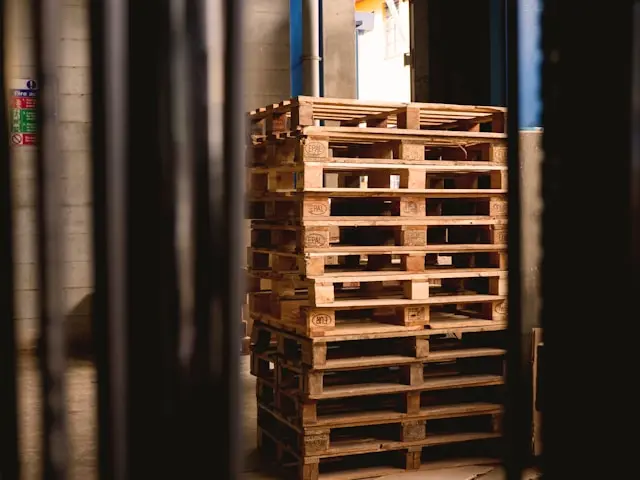
The Autoridad Portuaria de Sevilla has spent €45 million modernising the Muelle de las Delicias since 2023. New berthing infrastructure. State-of-the-art terminal capacity. A facility designed to anchor Seville's position as the inland gateway for Andalusian agri-food exports. During the same period, according to CCOO union statements from May 2024, 35% of trained port operations staff left for Valencia or Algeciras, drawn by deeper specialisation, better career paths, and higher pay. The physical infrastructure improved. The human infrastructure eroded.
This is not a paradox unique to Seville's port. It runs through the entire agri-logistics cluster that connects the Guadalquivir to global markets. Mercasevilla processes €1.2 billion in annual transactions. Andalusian agri-food exports reached €38.2 billion in 2024, up 4.3% year-on-year. Olive oil, citrus, and soft fruits flow through Seville-based intermediaries at growing volumes. Yet the professionals who manage cold chains, ensure EU regulatory compliance, and pilot vessels through a constrained river channel are leaving, retiring, or simply not entering the market in sufficient numbers. Capital investment is running ahead of the people required to operate what that capital has built.
What follows is an analysis of the forces reshaping Seville's agri-logistics talent market, the specific roles where shortages are most acute, and what organisations competing for leadership talent in this cluster must understand before they launch their next search. The gap between Seville's economic output and its ability to retain the executives who sustain that output is widening. Understanding why is the first step toward closing it.
The Cluster That Works as a Federation, Not an Ecosystem
Seville's agri-logistics sector is frequently described as a cluster. The label is generous. The port, Mercasevilla, the olive oil bottlers, the cold-storage operators, and the citrus exporters exist in proximity. They do not operate as an integrated system. Olive oil and citrus exporters increasingly bypass Seville entirely, routing through Algeciras for deep-water access or Valencia for containerised shipments. According to FEPEX's 2024 Foreign Trade Report, processed food manufacturers maintain Seville operations primarily for domestic distribution rather than export.
The Port of Seville handled 4.2 million tonnes in 2023. That figure represents less than 1% of total Spanish port traffic, according to Puertos del Estado annual statistics. Through Q3 2024, traffic tracked toward 4.0 to 4.1 million tonnes for the full year, a modest decline from the post-pandemic recovery peak. The port's structural constraint is the Guadalquivir itself. Current draft limitations at the Sevilla Nueva dock hold at 6.5 metres. The Dragado del Guadalquivir dredging project, which would deepen access to 7.5 metres and permit Post-Panamax vessels, has been stalled since 2022 due to environmental litigation.
What the Draft Limitation Means for Talent
This is not merely an infrastructure problem. It is a talent problem in disguise. Without deeper draft, exporters must use feeder services rather than direct loading. Per-unit export costs run 8 to 12% higher than Algeciras, according to the University of Seville's Maritime Economics Department. That cost differential makes Seville a less attractive base for senior logistics professionals whose career advancement depends on handling larger, more complex operations. Valencia's port processes 5.4 million TEU annually. Seville's container terminal handles 65,000. A Terminal Operations Manager in Valencia is managing global-scale containerised trade. The same title in Seville describes a materially different job with a materially narrower scope.
Mercasevilla's Digitisation and the Compliance Layer
Mercasevilla, the dominant wholesale food hub for Western Andalusia, distributes 550,000 tonnes annually across 1,200 registered companies. Its completion of Phase II digitisation in late 2024 brought blockchain traceability to 40% of produce. This was not a choice. It was a response to the EU Deforestation Regulation, which requires geolocation traceability for olive oil and citrus exports. The EUDR compliance deadline for large operators was delayed to December 2025, but the cost burden falls hardest on the 90% of Mercasevilla's registered companies that are SMEs. Cooperativas Agro-alimentarias estimated digitisation costs at €15,000 to €50,000 per firm.
The compliance requirement has created a new layer of executive demand in agribusiness and food sectors. Regulatory Affairs Managers with EUDR specialisation, quality directors who understand digital product passports, traceability officers who can bridge the gap between EU regulatory text and operational reality in a warehouse. This talent did not exist five years ago. It barely exists now. The professionals who hold these competencies are overwhelmingly passive, and the ratio of active to passive candidates for EUDR Compliance Manager roles is estimated at 1:4, according to Michael Page's 2024 Food and Agriculture Sector Analysis.
Three Roles the Market Cannot Fill
The agri-logistics cluster faces acute talent constraints across three domains. Each has different root causes, different competitive dynamics, and different implications for search strategy.
Cold Chain Engineering and Leadership
Seville sits at the centre of Andalusia's soft-fruit export corridor. Huelva's strawberry season generates peak demand that routinely exceeds local cold-chain capacity. Despite an 8% expansion in 2024, which added 12,000 pallet positions, the AEOF's 2024 Sector Report documented that 15 to 20% of regional soft-fruit exports still route through Algeciras during peak season because Seville cannot accommodate the volume.
The constraint is not only physical. It is human. The AEOF reports that 68% of Andalusian cold-storage operators cite difficulty filling technical maintenance roles, including refrigeration engineers and automated warehouse technicians. Average time-to-fill for these roles runs 94 days, more than double the 45-day average for standard logistics positions. At the executive level, the problem is worse. According to reporting in El Confidencial Digital, Grupo Alonso maintained a Supply Chain Director for Refrigerated Operations position open for 11 months during 2023 and 2024, eventually filling it through executive search from a direct competitor at a reported 25% salary premium above standard Seville market rates.
Andalusia's cold-chain infrastructure gap is stark. The region has 0.12 cubic metres of refrigerated warehouse space per capita, compared to 0.28 in Catalonia. The disparity is not shrinking fast enough to match the export growth it is supposed to serve.
Port Operations with Fluvial Expertise
Piloting a vessel through the Guadalquivir is not the same skill as docking a container ship at a deep-water terminal. The river's sedimentation patterns, tidal constraints, and navigation limits require specialised knowledge that is not transferable from open-water port operations. The Autoridad Portuaria de Sevilla restructured its pilotage service in 2024, creating three new River Pilot positions for specialised cargo following the introduction of wider vessel classes. According to Diario de Sevilla, two of the three positions remained unfilled after six months, forcing reliance on overtime from existing pilots.
This is a classic hidden talent pool problem. The qualified candidates exist, but they are employed, not searching, and not reachable through conventional job postings. AEOF data indicates that 82% of experienced professionals in related logistics specialisms across Andalusia are employed and not actively seeking roles. Vacancy fill rates through job postings alone fall below 30%.
EU Regulatory and Traceability Officers
The EUDR has created a compliance function that barely existed before 2023. Olive oil exporters, citrus producers, and soft-fruit logistics operators all now require traceability systems, geolocation documentation, and organic certification management. The Chief Compliance Officer or Quality Director role in agribusiness now commands €90,000 to €125,000, with candidates holding bilingual Spanish-English capability and direct EU regulatory experience attracting premiums of 12 to 15%, according to Morgan Philips Executive Search's Food and Beverage Practice data from 2024.
The challenge is not just finding these professionals. It is that many of the most qualified sit in Madrid or Brussels, embedded in regulatory consultancies or trade associations. Convincing them to relocate to Seville requires more than compensation. It requires a proposition that addresses career trajectory, institutional prestige, and quality of life in a market that does not yet have the critical mass of compliance roles to offer obvious next-step career paths.
Compensation: The 18% Discount That Shapes Every Search
Seville's agri-logistics compensation sits materially below competing markets. The gap is not uniform. It is sharpest at exactly the seniority level where the most critical roles sit.
At senior specialist and manager level, cold chain operations managers with 8 to 12 years of experience earn €55,000 to €72,000 in Seville. At executive and VP level, a Director of Logistics and Distribution with multi-site responsibility earns €95,000 to €130,000 base, with 15 to 20% bonus potential. Seville rates at this level run approximately 18% below Madrid equivalents, according to Hays Spain and PageGroup's 2024 salary data.
Port operations compensation follows a similar pattern. A Port Operations Manager earns €48,000 to €65,000 in Seville. Terminal Managers and Port Authority Operations Directors earn €85,000 to €115,000, but the local talent pool is so thin that recruitment frequently requires targeting candidates in Valencia or Barcelona and offering relocation packages, according to Korn Ferry's 2024 Spain Industrial Market Review.
Madrid's premium is not just financial. It is structural. Madrid hosts the headquarters of Mercadona, Carrefour Spain, DHL Supply Chain, and Ceva Logistics. The Adecco Institute's 2024 study on labour mobility in logistics documented that weekly rotational commuting from Seville to Madrid for management roles is increasingly common. Mid-level managers are not leaving Seville permanently. They are splitting their working lives between the two cities, creating a pattern where Seville retains the address but Madrid captures the career investment. For organisations trying to benchmark compensation against the right competitor set, this means the relevant comparison is not what Seville firms pay each other. It is what Madrid firms will pay to extract Seville's best people.
The compensation gap creates a compounding retention problem. Every senior professional who moves to Madrid or Valencia for a 20 to 25% raise becomes a visible example to their former colleagues. The signal travels fast in a market this small. The perception that Seville is a stepping stone rather than a destination deepens with every departure.
The Graduate Pipeline That Feeds Other Cities
Andalusian agri-food exports are growing. The University of Seville produces agricultural engineering and logistics graduates. These two facts should connect. They do not.
The University of Seville's Observatorio Universidad-Empresa reports that 62% of Agricultural Engineering graduates relocate to Madrid or Barcelona within three years of graduation. The sector is expanding on the backs of professionals trained locally but employed elsewhere. This tension between growing economic output and shrinking local talent supply suggests that current growth depends on either imported mid-career talent or process automation rather than a sustainable local workforce pipeline.
Lisbon has compounded the problem. Portugal's growing agri-tech ecosystem, supported by PACT investment incentives and the Non-Habitual Resident tax regime, competes for Portuguese-Spanish bilingual professionals. The NHR regime offers tax advantages that Seville cannot match through salary alone. For a bilingual agricultural engineer deciding between a role in Seville and a role in Lisbon, the net compensation calculation can favour Lisbon even when the gross salary is lower.
Cartuja 93, Seville's technology park, hosts the Agrotech Digital Innovation Hub, and the two local universities maintain relevant programmes. The infrastructure for developing technology-focused agri-logistics talent exists. The retention mechanisms do not. Without a critical mass of employers offering progressive career paths at competitive compensation, the pipeline will continue to fill other cities' talent pools.
Why the Investment Thesis Has Not Produced the Talent Outcome
Here is the analytical claim that the data supports but that no single report states directly: Seville's agri-logistics cluster has invested in physical infrastructure and digital compliance systems as though talent retention were a downstream consequence of facility quality. It is not. The €45 million Muelle de las Delicias modernisation, Mercasevilla's blockchain traceability rollout, and the expanded cold-chain capacity are all necessary investments. None of them address the reason professionals leave.
The reason is career architecture. A cold chain engineer in Seville operates within a narrow cluster of employers. The next career step often does not exist locally. A port operations director in Seville manages a 65,000 TEU terminal. The equivalent role in Valencia involves 5.4 million TEU and an entirely different scale of operational challenge. A compliance officer in Seville works on EUDR implementation for a mid-sized cooperative. The same professional in Madrid works for a multinational with pan-European scope. In each case, the professional is not choosing higher pay. They are choosing a career that goes somewhere.
Physical infrastructure improves throughput. It does not improve retention when the constraint is career progression. The organisations that understand this distinction are the ones that will hold their senior talent. The ones that do not will continue to build excellent facilities and staff them with whoever has not yet left.
This dynamic is compounded by olive oil price volatility. The 2024 harvest reached €8.50 per kilogram at origin, historical highs driven by drought. This compressed export volumes by 12% while increasing unit revenue. Production recovery forecasts for subsequent harvests suggest a potential 20% increase, which may reverse that dynamic and crash prices. For senior professionals weighing a career commitment to Seville's agri-logistics sector, this volatility introduces uncertainty that a Madrid-based headquarters role does not carry. The risk of a poor executive hiring decision is elevated in markets where the economic fundamentals can shift within a single harvest cycle.
What Organisations Must Do Differently
The conventional search approach in this market is failing. Vacancy fill rates through job postings sit below 30% for senior roles. The candidates who can fill the most critical positions, cold chain directors, fluvial navigation specialists, EUDR compliance leaders, are employed, not actively searching, and concentrated in a small number of organisations.
Three adjustments separate organisations that fill these roles from those that do not.
First, the search must be direct. In a market where 82% of target candidates are passive, the only viable approach is direct identification and outreach to professionals who are not looking. This is not a volume exercise. The qualified population for a River Pilot with Guadalquivir experience or a Supply Chain Director with refrigerated operations expertise is measured in dozens, not hundreds. A search firm that begins with a job posting and waits for applications will reach at most 18% of the viable pool.
Second, the proposition must address career trajectory explicitly. Compensation alone will not move a senior professional from Valencia to Seville when the scale differential is this large. The offer must articulate what the role becomes over three to five years. Does the port's strategic plan create a Terminal Director role that did not exist before? Does the compliance function expand to cover multiple cooperatives, creating a Chief Compliance Officer position with regional scope? If the answer is yes, that must be communicated during the search process, not after the hire.
Third, speed matters disproportionately in small talent pools. When the qualified candidate population for a role numbers fewer than fifty professionals in the entire region, the cost of a slow search is not merely delay. It is permanent loss. A competitor who moves faster captures the one or two candidates willing to consider a change, and the window may not reopen for years.
The Modal Shift Risk No One Is Pricing In
The challenges described above exist against a backdrop of potential structural disruption. ADIF's Central Rail Corridor, connecting Mediterranean and Atlantic routes, is projected for completion by 2026. If the corridor functions as planned, produce from Almería and Huelva may route directly to Algeciras for Asian exports, bypassing Seville entirely. The IMO 2023 sulphur regulations have already increased bunkering costs for river-sea vessels operating from Seville, reducing competitiveness against rail-feeder alternatives.
For senior professionals evaluating career options, this creates an additional calculation. A port operations career in Seville depends on the assumption that the Guadalquivir corridor remains competitive. If the dredging project continues to stall, if the rail corridor diverts volume, and if cold-chain capacity remains insufficient for peak season, the strategic case for the port weakens. Talent decisions follow investment signals. When organisations building talent pipelines for long-term competitiveness cannot articulate a credible growth trajectory, the professionals they need will interpret the silence as a signal.
For organisations competing for cold chain, port operations, and regulatory compliance leadership in Seville's agri-logistics cluster, where the qualified candidate pool is measured in dozens and 82% of viable professionals are not actively searching, speak with our executive search team about how KiTalent's AI-enhanced direct search methodology reaches the passive talent that job postings and conventional recruitment consistently miss. KiTalent delivers interview-ready executive candidates within 7 to 10 days, with a pay-per-interview model that eliminates upfront retainer risk, and a 96% one-year retention rate that reflects candidates who are placed for the right reasons, not just the fastest ones.
Frequently Asked Questions
Why is it so difficult to hire cold chain logistics executives in Seville?
Seville's cold-chain talent market is constrained by three intersecting factors. Andalusia has 0.12 cubic metres of refrigerated warehouse space per capita versus 0.28 in Catalonia, limiting the number of senior roles that develop local expertise. The AEOF reports that 68% of cold-storage operators in the region cite difficulty filling technical maintenance roles, with average time-to-fill running at 94 days. At executive level, the qualified population is small and overwhelmingly passive. Searches that rely on job postings reach fewer than 30% of viable candidates. Direct headhunting through specialist executive search is the only method that reliably reaches this population.
What do agri-logistics executives earn in Seville compared to Madrid?
Senior cold chain operations managers in Seville earn €55,000 to €72,000 base salary. At director level with multi-site responsibility, compensation ranges from €95,000 to €130,000 with 15 to 20% bonus potential. Seville rates at executive level run approximately 18% below Madrid equivalents. Port operations directors earn €85,000 to €115,000, though the thin local talent pool frequently requires relocation packages to attract candidates from Valencia or Barcelona. EUDR compliance directors command €90,000 to €125,000, with bilingual candidates attracting 12 to 15% premiums.
How does the EU Deforestation Regulation affect hiring in Seville's agri-logistics sector?
The EUDR requires geolocation traceability for olive oil and citrus exports. Compliance costs for Seville's SME exporters are estimated at €15,000 to €50,000 per firm for digitisation. This has created demand for Regulatory Affairs Managers and Chief Compliance Officers with specific EUDR expertise. The ratio of active to passive candidates for these roles is approximately 1:4. Most qualified professionals sit in Madrid or Brussels, requiring a compelling relocation proposition that addresses career trajectory and institutional scope, not just salary.
What is the impact of the Guadalquivir dredging delay on Seville's port competitiveness?
The suspended Dragado del Guadalquivir project limits vessel draft at Sevilla Nueva to 6.5 metres. Without the planned increase to 7.5 metres, Post-Panamax vessels cannot access the port. Exporters must use feeder services, increasing per-unit costs by 8 to 12% versus Algeciras. This constrains the port's operational scale and reduces its attractiveness to senior logistics professionals whose career growth depends on handling larger and more complex operations. The stall directly affects talent retention as trained staff seek progression in larger ports.
How can organisations in Seville attract passive agri-logistics talent from competing markets?
The key is a search methodology that reaches professionals who are employed and not actively looking. AEOF data shows 82% of experienced logistics professionals in Andalusia are passive candidates. KiTalent's AI-enhanced talent mapping and direct search approach identifies and engages these professionals individually. The proposition must go beyond compensation to address career architecture: what the role becomes over three to five years, what leadership scope it offers, and how the organisation's strategic investment plan creates growth that a candidate cannot find elsewhere.
What risks should hiring leaders consider when building agri-logistics teams in Seville?
Three risks require attention. First, olive oil price volatility can shift sector economics within a single harvest cycle, affecting employer stability and candidate confidence. Second, the planned Central Rail Corridor may divert Almería and Huelva produce to Algeciras, reducing Seville's throughput volumes. Third, the University of Seville reports that 62% of agricultural engineering graduates leave for Madrid or Barcelona within three years, creating a pipeline problem that proactive succession planning and talent pipeline development must address before it becomes a leadership vacuum.