San Francisco's Gene Therapy Boom Has a Manufacturing Problem No Job Board Can Solve
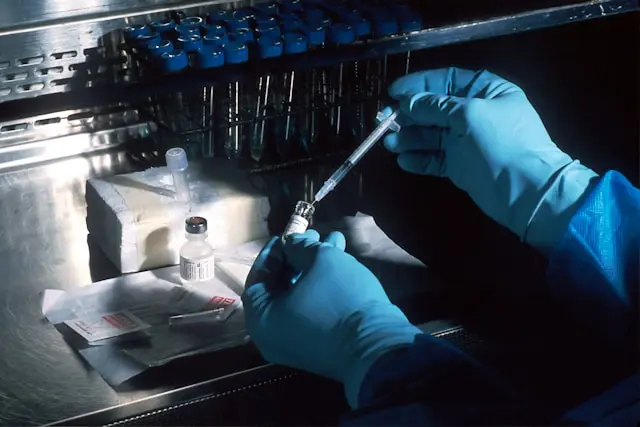
San Francisco's gene therapy and precision medicine corridor is producing more clinical candidates, more IND filings, and more translational research than at any point in its history. The density of Phase I/II precision medicine trials in Mission Bay and South San Francisco has climbed to approximately 14.7 trials per square mile as of late 2026, up from 11.2 through 2024. UCSF Medical Center projected a 22% increase in early-phase gene therapy trial initiations for 2026, driven by expanded GMP vector manufacturing partnerships. The science is accelerating.
The workforce required to manufacture, regulate, and commercialise these therapies is not. GMP Manufacturing Supervisor roles at mid-sized cell therapy companies in South San Francisco routinely remain open for 140 to 180 days. One-third of those searches fail to produce a qualified local candidate, forcing relocation packages from Boston or Research Triangle Park. Senior Process Development Scientists specialising in CAR-T vector optimisation command retention premiums of 25 to 35 per cent above base salary. Regulatory Affairs Director searches in gene therapy extend to an average of 6.5 months, more than double the 3.2-month average for equivalent small molecule roles. The Bay Area has invested heavily in the science of precision medicine. It has not invested equivalently in the operational talent required to bring that science to patients.
What follows is a ground-level analysis of why the gap between research ambition and manufacturing capability has become the defining challenge of this market, where the most acute shortages sit, what they cost, and what organisations operating in San Francisco's healthcare and life sciences sector must do differently to secure the leaders who can bridge it.
The Paradox of the Funding Winter: Why Layoffs Did Not Create Employer Leverage
The biotech funding contraction of 2023 and 2024 produced headlines that suggested a buyer's market for talent. Bay Area biotech employment fell by 4.2 per cent. Some 4,200 positions were eliminated between 2022 and 2024, according to the Biocom California Economic Impact Report. For CHROs and hiring leaders reading those numbers, the logical assumption was that the candidate pool had loosened. That assumption was wrong.
The layoffs were selective. They targeted discovery biology, platform research, and early-stage administrative functions. These are roles where project cancellations during funding downturns create immediate redundancy. The roles that remained in acute shortage throughout the contraction were structurally different: GMP manufacturing supervisors, cell therapy process development scientists, CMC leaders with Biologics License Application experience, and regulatory affairs directors specialised in gene therapy Chemistry, Manufacturing, and Controls submissions. Unemployment in CAR-T and cell therapy process development remained below 1.2 per cent nationally throughout the downturn.
This is the analytical tension at the centre of San Francisco's biotech talent market in 2026. The funding winter created a false impression that qualified manufacturing and regulatory talent was available. The people let go were not the people these companies need. The simultaneous shortage in clinical-phase manufacturing and regulatory expertise deepened during the very period when the broader market appeared to soften. Companies that paused their searches for CMC and regulatory leaders, expecting the talent market to cool, now find themselves 12 to 18 months behind competitors who continued to recruit throughout the downturn.
The data supports this: specialised gene therapy talent commands 8 to 12 per cent year-over-year salary inflation even as overall biotech headcount contracted. Pre-revenue companies report persistent difficulty bridging the compensation gap between what they can offer and what Genentech, Gilead, and Amgen pay at their established Bay Area operations. The market did not reset. It bifurcated.
Mission Bay and South San Francisco: Two Ecosystems With One Shared Constraint
Mission Bay: Where the Science Outpaces the Talent to Scale It
Mission Bay remains the densest concentration of precision medicine research in the western United States. UCSF's Helen Diller Family Comprehensive Cancer Center, the Bakar Computational Health Sciences Institute, and the Gladstone Institutes create an academic-commercial nexus that has produced 14 spin-out companies between 2022 and 2024 alone. The QB3 incubator at UCSF maintains 95 per cent occupancy across its wet-lab facilities, with an average tenant graduation-to-venture-funding timeline of 18 months. The pipeline of translational science feeding into commercial development is stronger than it has ever been.
The constraint is not discovery. It is the operational leadership required to move discoveries from bench to clinic to manufacturing suite. Clinical Operations Managers for complex gene therapy trials, which require specialised patient monitoring and long-term follow-up protocols unlike anything in small molecule development, are increasingly hard to find. Director-level Clinical Operations candidates become 65 per cent passive, meaning they do not apply to posted positions and can only be reached through direct headhunting and network-based outreach.
South San Francisco: The Manufacturing Heart With a Capacity Problem
South San Francisco retains its position as the operational headquarters for mature biopharmaceutical manufacturing. Genentech's 1.5 million square foot headquarters complex employs approximately 8,500 people. Amgen maintains 4,200 local employees. Gilead Sciences operates 4,800 employees in Foster City with South San Francisco manufacturing operations. The city hosts 219 life sciences companies occupying 12.4 million square feet of specialised space, with vacancy rates at 8.3 per cent. That figure sounds comfortable. It is not.
Only 340,000 square feet of new GMP biomanufacturing space is under construction across San Francisco and San Mateo counties. The projected shortfall by 2026 is 2.1 million square feet of specialised cell therapy manufacturing space, according to CBRE's Life Sciences Outlook. The physical constraint is driving a fragmentation of operations that has direct consequences for talent. Process development teams are being forced into "gigafactory" partnerships in suburban Tracy and Vacaville. Companies maintain expensive urban headquarters for research scientists while locating manufacturing talent in lower-cost regions hours away.
This fragmentation creates a recruitment problem that did not exist five years ago. A VP of CMC in 2026 must manage distributed manufacturing across multiple sites, negotiate with contract development and manufacturing organisations, and maintain quality systems across geographically separated teams. The job description has expanded. The candidate pool has not.
Where the Shortages Are Most Acute: Three Roles That Define the Market
GMP Manufacturing Leadership: 0.8 Candidates Per Opening
The most severe shortage in the Bay Area sits at the intersection of manufacturing operations and cell therapy experience. There are 0.8 qualified candidates per opening for GMP cell therapy roles in the Bay Area, compared to 2.4 candidates per opening for equivalent roles in Boston, according to the GQR Global Markets Life Sciences Talent Report. That ratio explains why searches for GMP Manufacturing Supervisors routinely run five to six months and why one-third fail entirely without relocation candidates.
This is not a shortage that hiring volume can solve. The total pool of professionals with both GMP certification and hands-on cell therapy viral vector production experience is structurally small. It was created by the relatively recent emergence of commercial-scale cell therapy manufacturing. Five years ago, most of these processes existed only in academic cleanrooms. The transfer from academic to commercial GMP has been faster than the talent pipeline could follow. Capital moved into manufacturing capacity. Human capital did not keep pace.
Senior GMP Manufacturing Supervisors in the Bay Area earn $125,000 to $150,000. Their counterparts in RTP earn $95,000 to $115,000 for equivalent roles, a gap that reflects both the Bay Area cost of living and the scarcity premium. For pre-revenue cell therapy companies competing against Genentech's compensation infrastructure, this gap becomes a strategic obstacle that no amount of equity can reliably close when candidates have multiple competing offers.
CMC and Regulatory Affairs: The Six-Month Search
Companies developing AAV vectors report that Regulatory Affairs Director searches require engagement of three or more executive search firms simultaneously. Typical time-to-fill extends to 6.5 months. The equivalent search for a small molecule regulatory role takes 3.2 months.
The reason is specificity. A Regulatory Affairs Director for gene therapy CMC must understand viral vector manufacturing processes, FDA biologics review pathways, and the particular documentation standards for Biologics License Applications. This is a convergence of manufacturing knowledge, regulatory strategy, and therapeutic-area expertise that very few professionals possess. The total addressable talent pool is small, and candidates with successful BLA submission experience are locked into retention packages with 18 to 24 month vesting cliffs. Active application rates in this segment run below 15 per cent. The remaining 85 per cent must be identified and engaged through methods that conventional recruitment cannot deliver.
At the Vice President level, CMC leaders in cell and gene therapy command $380,000 to $480,000 in base salary. Total compensation packages, including equity, reach $1.2 to $1.8 million at public companies and $900,000 to $1.4 million at late-stage private ventures. Executive Directors and Vice Presidents of Regulatory Affairs earn $320,000 to $410,000 in base salary, with pre-IPO equity packages representing 150 to 200 per cent of base value. These are the cost of a bad executive hire in reverse: the figures organisations must be prepared to invest in the right leader because the cost of not filling these roles, measured in delayed BLA submissions and lost commercial timelines, is higher still.
Bioinformatics and Computational Biology: The Tech Sector Collision
Demand for bioinformatics specialists in the Bay Area increased 41 per cent year-over-year through 2024. Senior Bioinformatics Scientists with PhD qualifications and five or more years of experience earn $165,000 to $205,000 in base salary. At the Vice President level, Computational Biology leaders command $340,000 to $420,000, with equity premiums 20 per cent above equivalent therapeutic biology roles.
That premium exists because of a specific competitive dynamic. Google Health, Apple Health, and other technology companies actively recruit computational biologists from the Bay Area's biotech sector. At entry and mid-level, 45 per cent of bioinformatics candidates are actively on the market. At Principal Scientist and above, the active percentage drops to 30 per cent. The best computational biologists are not looking for work. They are being courted by firms offering technology-sector compensation packages that most biotech companies cannot match on cash alone.
This creates a particular challenge for precision medicine companies that depend on single-cell sequencing analysis and CRISPR guide RNA optimisation. The skills are not interchangeable with general bioinformatics. A computational biologist who has spent five years at Google Health working on population-level data does not walk into a role optimising AAV vector tropism. The overlap in title obscures a gap in applicable experience.
The Geography of Competition: Why the Bay Area Is Losing Manufacturing Talent
San Francisco's cost structure is pushing manufacturing operations and the talent that runs them toward three competing geographies. This trend has accelerated through 2025 and into 2026, and it is reshaping how Bay Area biotech companies must think about their talent pipeline strategy.
Boston and Cambridge: The Compensation Escalation
Boston competes aggressively for CMC and Process Development talent. VP-level manufacturing roles in the Boston-Cambridge corridor pay $420,000 to $520,000 in base salary, a 15 to 20 per cent premium over San Francisco's $380,000 to $480,000 range. Cost-of-living indices between the two cities are comparable, which means the premium is a genuine increase in purchasing power. Boston also offers superior career trajectory density, with 34 per cent more Phase III cell therapy trials than the Bay Area, attracting senior clinical operations talent eastward.
For a senior Clinical Operations Manager or VP of CMC weighing two offers, Boston's combination of higher base pay and a deeper pipeline of late-stage clinical programmes is increasingly difficult for Bay Area companies to counter. The traditional Bay Area advantage of proximity to UCSF and the Gladstone ecosystem matters most at the discovery and translational stages. By the time a therapy reaches Phase III manufacturing, Boston's infrastructure is at least equivalent.
Research Triangle Park: The Cost Arbitrage
RTP offers commercial real estate at $28 per square foot for lab space, compared to $78 in South San Francisco. Compensation for GMP manufacturing roles runs 25 to 30 per cent lower. Bayer's gene therapy manufacturing expansion and Biogen's neurology focus in RTP create a credible career ecosystem for process development scientists willing to relocate from the Bay Area in exchange for housing affordability.
The numbers are persuasive. ArsenalBio and Lyell Immunopharma have both announced satellite manufacturing facilities outside California while maintaining San Francisco headquarters, according to reporting by the San Francisco Business Times. Twelve per cent of Bay Area biotech companies with manufacturing operations established secondary sites in RTP or Boston in 2024. Eight per cent indicated plans to move headquarters functions within 24 months. This is not a trickle. It is a systemic shift in how Bay Area companies configure their operational footprint, and it is pulling mid-level manufacturing talent out of the local market.
The Structural Challenge: Precision Medicine Needs People Who Do Not Yet Exist in Sufficient Numbers
Here is the original analytical claim that connects every data point in this article: the investment in precision medicine manufacturing capacity has not reduced the Bay Area's workforce challenge. It has replaced one category of worker with another category that does not yet exist in sufficient numbers. The sector needs GMP supervisors with cell therapy viral vector experience, CMC leaders who have taken a gene therapy through BLA submission, and regulatory directors who understand both AAV biology and FDA biologics review pathways. Five years ago, most of these job descriptions did not exist in their current form. The science created the roles faster than the education system, the postdoctoral pipeline, or industry career ladders could create the people to fill them.
This is not a cyclical shortage that will resolve when funding conditions improve. It is a production bottleneck in human capital. The 4,200 professionals laid off during the biotech funding contraction held different skills from the ones the market now demands. The postdoctoral researchers entering industry from UCSF and the Gladstone Institutes have deep scientific training but lack the GMP manufacturing exposure that hiring companies require. Companies are already compromising: according to aggregate market data, CAR-T process development searches that stall after 90 days are increasingly resolved by hiring PhD graduates with only academic postdoc experience, accepting a 12 to 18 month learning curve that did not previously feature in the job specification.
The implication for hiring leaders is direct. The Bay Area's precision medicine talent market cannot be recruited from. It must be built, sourced from adjacent disciplines, or accessed through systematic identification of passive candidates who are not visible on any job board and are not responding to any posted vacancy.
Regulatory and Operating Environment: What Hiring Leaders Must Factor In
Two regulatory dynamics are actively shaping the hiring environment for Bay Area precision medicine companies.
First, PDUFA VII reauthorisation has introduced uncertainty around FDA biologics review staff funding. Proposed reductions could extend BLA review timelines by four to six months for San Francisco-based cell therapy companies. This directly impacts hiring in regulatory affairs and clinical operations: companies report a 23 per cent increase in regulatory consulting budgets to manage FDA resource constraints. When review timelines stretch, the need for experienced regulatory leadership intensifies because every month of delay compounds cost and competitive risk for pre-revenue companies.
Second, urban biosafety regulations in San Francisco constrain BSL-3 capacity in Mission Bay. The San Francisco Department of Public Health requires additional permitting layers for certain viral vector applications, adding three to four months to facility approval timelines compared to suburban jurisdictions. This drives gene therapy companies to locate high-containment manufacturing in Oakland or out of state, fragmenting R&D and operations teams. The fragmentation is not just logistical. It creates a leadership challenge that requires executives who can manage distributed teams across regulatory jurisdictions, a capability that adds yet another requirement to already demanding job specifications.
For Chief Medical Officers in gene therapy, where base salaries range from $450,000 to $650,000 and total compensation reaches $1.5 to $2.2 million depending on prior BLA approval experience, the regulatory environment is not a background consideration. It is a central part of the job. Companies offering CMO roles in 2026 are competing not only on compensation but on the quality of their regulatory strategy and their ability to present a credible path to approval in a constrained FDA environment.
What This Means for Executive Hiring in the Bay Area's Precision Medicine Market
The conventional approach to filling these roles is failing on its own terms. A gene therapy Regulatory Affairs Director search that takes 6.5 months costs far more than the search fee. It costs programme timeline. It costs FDA interaction windows. It costs competitive position in a market where multiple companies are pursuing the same therapeutic targets with the same limited pool of qualified regulators.
The data makes the mechanism clear. In CAR-T and cell therapy process development, 80 to 90 per cent of qualified candidates are currently employed and not looking. In gene therapy regulatory strategy, 85 per cent of the relevant talent pool is locked into retention packages with vesting cliffs of 18 to 24 months. Posting a vacancy and waiting for applications reaches, at best, the 10 to 20 per cent of candidates who are actively available. In the Bay Area's precision medicine market, those active candidates are disproportionately early-career professionals without the GMP or BLA experience that hiring specifications demand.
The organisations filling these roles successfully are doing something different. They are using systematic talent mapping to identify passive candidates before a role opens. They are building compensation packages that address vesting cliffs directly, offering sign-on equity designed to offset what a candidate forfeits by leaving. They are running searches with a timeline discipline that treats 90 days as a deadline, not a checkpoint.
KiTalent works with organisations across the precision medicine and life sciences sector to deliver interview-ready executive candidates within 7 to 10 days. Our AI-enhanced talent mapping reaches the 80 per cent of qualified leaders who are not visible on job boards and are not responding to posted vacancies. With a 96 per cent one-year retention rate across 1,450 executive placements, we bring both speed and precision to searches where both are measured in programme timelines and regulatory windows.
For organisations competing for CMC, regulatory, and manufacturing leadership in the Bay Area's precision medicine market, where a six-month vacancy in a VP of CMC role can delay a BLA submission by a year, speak with our executive search team about how we approach this specific challenge.
Frequently Asked Questions
What are the hardest biotech roles to fill in San Francisco in 2026?
The most difficult roles to fill are GMP Manufacturing Supervisors with cell therapy experience, where the Bay Area has only 0.8 qualified candidates per opening. CMC Vice Presidents with Biologics License Application experience and Regulatory Affairs Directors specialising in gene therapy also present severe shortages, with typical time-to-fill exceeding six months. These roles require a combination of manufacturing knowledge, regulatory expertise, and therapeutic-area depth that very few professionals possess. KiTalent's direct executive search methodology is designed to identify and engage these passive specialists before competitors reach them.
How much do gene therapy executives earn in San Francisco?
Compensation varies materially by role. Vice Presidents of CMC in cell and gene therapy earn $380,000 to $480,000 in base salary, with total packages reaching $1.2 to $1.8 million at public companies. Chief Medical Officers in gene therapy earn $450,000 to $650,000 in base salary, with total compensation of $1.5 to $2.2 million depending on prior BLA approval experience. Regulatory Affairs Directors command $245,000 to $295,000 in base salary and $310,000 to $370,000 in total cash compensation.
Why is Boston competing so effectively with San Francisco for biotech talent?
Boston offers 15 to 20 per cent higher base salaries for VP-level manufacturing roles at comparable cost of living. It also provides 34 per cent more Phase III cell therapy trials than the Bay Area, giving senior clinical operations and CMC leaders a deeper pipeline of late-stage programmes. For professionals whose career value depends on BLA submissions and commercial launches, Boston's trial density is a meaningful draw that Bay Area companies must counter with other advantages.
What is driving biotech manufacturing out of the Bay Area?
Commercial real estate costs are the primary driver. Lab space in South San Francisco averages $78 per square foot, compared to $28 in Research Triangle Park and $38 in suburban Philadelphia. The region faces a projected shortfall of 2.1 million square feet of specialised cell therapy manufacturing space. Urban biosafety regulations add three to four months to facility approval timelines compared to suburban jurisdictions. These pressures have led 12 per cent of Bay Area biotech companies with manufacturing arms to establish secondary sites in lower-cost regions.
How does the biotech funding winter affect hiring for specialised roles?
The 2023 to 2024 funding contraction eliminated approximately 4,200 Bay Area biotech positions, but the layoffs concentrated in discovery biology and platform research. Specialised gene therapy roles in GMP manufacturing, CMC leadership, and regulatory affairs remained in acute shortage throughout, with unemployment below 1.2 per cent nationally for cell therapy process development. Salary inflation for these roles continued at 8 to 12 per cent year-over-year even as broader headcount contracted.
How can biotech companies access passive candidates in cell therapy and gene therapy?
Eighty to ninety per cent of qualified candidates in CAR-T process development and gene therapy regulatory strategy are currently employed and not actively seeking new roles. Reaching them requires AI-enhanced talent identification, network-based outreach, and compensation analysis that accounts for retention package vesting cliffs. KiTalent's passive candidate identification approach and pay-per-interview model are built for precisely this type of search, delivering qualified candidates in 7 to 10 days without upfront retainer fees.