Shanghai Advanced Manufacturing in 2026: Why Headline Layoffs Are Hiding the Worst Talent Shortage in the Sector
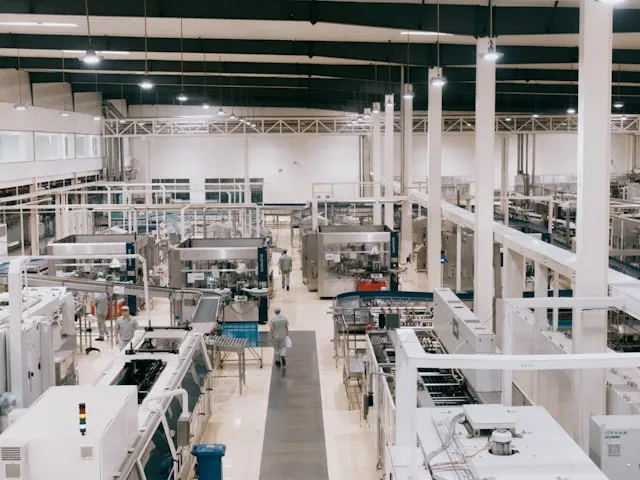
Shanghai produced 2.15 million passenger vehicles in 2024. Its integrated circuit output reached RMB 325 billion, roughly 23% of China's total. Municipal funds exceeding RMB 30 billion have been committed to wafer fab expansion, and three new 300mm projects are under construction in Lingang alone. By every capital investment measure, Shanghai's advanced manufacturing sector is accelerating.
Yet inside the companies doing the hiring, a different story is playing out. The roles that define the next generation of electric vehicles and semiconductors are going unfilled for months. Principal battery management system architects sit open for over 120 days. Searches for senior etch process integration engineers are suspended entirely for lack of qualified candidates. Autonomous driving perception leads, functional safety engineers, and SiC epitaxy specialists exist in numbers so small that recruiters measure the citywide pool in hundreds, not thousands.
The disconnect between capital flowing in and talent flowing out is the defining feature of this market in 2026. What follows is a ground-level analysis of where Shanghai's advanced manufacturing talent gaps are most acute, what is driving them, and why the conventional hiring strategies used by most employers in this sector are structurally unable to close them.
The Layoff Headlines Created a False Market Signal
NIO's 2024 restructuring removed approximately 3,000 roles, roughly 10% of its workforce. Reports of an EV sector "bloodbath" and overcapacity in China's new energy vehicle market dominated trade press through much of 2024. For a hiring executive scanning headlines, the natural conclusion was that talent had loosened. Candidates should be available. Compensation pressure should be easing.
That conclusion is wrong. The layoffs targeted administrative, sales, and general engineering functions. They did not touch the specialisms that define competitive advantage in next-generation EV and semiconductor manufacturing. Level 4 autonomous driving perception engineers still face a 3:1 demand-to-supply ratio. Compensation inflation for job-switchers in the most constrained roles remains 25% to 35% annually, according to the Hays China Salary Guide 2024. The slack created by restructuring exists in one part of the labour market. The shortage exists in another.
This is the central analytical tension in Shanghai's advanced manufacturing sector as of 2026. The public narrative of overcapacity and consolidation masks a deepening inability to supply the specific electromechanical and AI software fusion skills required for next-generation architectures. An employer reading the macro data would expect a buyer's market. An employer trying to hire a senior autonomous driving engineer or semiconductor process specialist finds exactly the opposite.
The implications are material. A search for an Automotive Functional Safety Engineer certified to ISO 26262 ASIL-D typically runs 90 to 120 days in this market. A search for a Principal BMS Architect with 15 or more years of experience averaged 127 days through 2024, according to an investigation by 36Kr Technology. These are not job board timelines. These are timelines that cost product launches.
Where the Shortages Are Most Acute
Semiconductor Process Engineering: The Export Control Ceiling
U.S. Bureau of Industry and Security restrictions, updated in October 2023, continue to block Shanghai's fabs from accessing extreme ultraviolet lithography and leading-edge deep ultraviolet equipment. SMIC and Hua Hong operate at 28nm and above. This creates a paradox for talent strategy. The restriction limits the process nodes available in Shanghai, which should theoretically reduce the complexity of the engineering required. In practice, it has intensified demand for a very specific kind of engineer.
Without access to the latest equipment, Shanghai's fabs depend on domestic alternatives from NAURA and SMEE. These tools produce lower yields and require more complex process integration workarounds. The engineers who can make a 28nm HKMG process work reliably on non-standard equipment are rarer than the engineers who can run the same node on an ASML scanner. The constraint has not simplified the talent requirement. It has made it more specialised.
A specific search documented by Robert Walters China for a Lead Etch Process Integration Engineer at SMIC was suspended after six months. The role required expertise in 28nm HKMG integration. According to the Robert Walters Greater China Salary Survey 2024, only three qualified candidates were identified in the Greater Shanghai region. All three were already employed at Hua Hong or TSMC Nanjing. None would move for less than an 80% compensation increase.
The passive candidate ratio for advanced process integration engineers sits at approximately 65%. Active applicants, according to the Semiconductor Industry Human Resources Alliance Survey 2024, often lack continuous high-volume manufacturing experience or are exiting underfunded startups. Unemployment for these specialisations is effectively zero.
Automotive Software: The Convergence Problem
Shanghai's NEV production reached 1.25 million units in 2024, 58% of the city's total passenger vehicle output. The 2026 target is 1.4 million units, representing 65% of output. This trajectory is not driven by volume alone. It is driven by the intelligence embedded in each vehicle. Every unit requires more software, more sensor integration, and more functional safety validation than its predecessor.
Demand for automotive software engineers focused on autonomous driving and smart cockpit systems is projected to grow 35% by 2026, according to 51job's Shanghai Advanced Manufacturing Talent Forecast. The candidate pool for Level 4 autonomous driving perception leads has a passive ratio of approximately 70%. Active applicants typically lack the specific L4 fleet-testing experience required by Tesla FSD, NIO, or Pony.ai.
The convergence problem is this: the roles that matter most sit at the intersection of disciplines that were historically separate. An 800V power electronics architect must understand both semiconductor physics and vehicle-level thermal management. A BMS algorithm developer must combine electrochemistry with real-time embedded software. A functional safety engineer must hold both deep domain knowledge in ISO 26262 and practical experience with the specific ADAS stack being deployed. The candidate who combines two of these disciplines is uncommon. The candidate who combines three barely exists in Shanghai's labour market.
This convergence is what makes the shortage resistant to conventional solutions. Training programmes can produce competent single-discipline engineers. They cannot produce the cross-disciplinary integration expertise that takes a decade to build.
The Compensation Arms Race and Its Limits
Executive and senior specialist compensation in Shanghai's advanced manufacturing sector reflects the severity of the shortage. At the VP level, semiconductor process engineering commands RMB 2 million to 4 million base plus equity and long-term incentives. IC design leadership reaches RMB 2.5 million to 5 million base, with meaningful equity at startups. Automotive software leadership in ADAS and AI sits at RMB 1.8 million to 3.5 million base plus project bonuses.
These figures represent the current market, not aspirational ranges. According to 36Kr Technology's investigation into EV talent competition, Tesla Shanghai offered 40% to 50% salary premiums over CATL's Ningde headquarters rates when recruiting Senior BMS Engineers and Cell Quality Directors through 2024. Tesla added Lingang free trade zone housing allowances of RMB 8,000 monthly to sweeten the package further.
The premiums work in some cases. In aggregate, they are not solving the problem.
The reason is that compensation is not the primary constraint for the most senior candidates. An engineer with 15 years of process integration experience at SMIC's Zhangjiang fab faces a career ceiling imposed by export controls, not by salary. The most advanced work at the 7nm and 5nm nodes cannot be done in Shanghai. It can be done in Singapore, where GlobalFoundries and Micron offer 3x to 5x compensation multiples, permanent residency pathways, and the chance to work on leading-edge technology. According to reporting in The Straits Times, this dynamic produced a sustained outflow of senior process integration engineers from SMIC to Southeast Asian fabs through 2024.
For hiring leaders trying to benchmark compensation for these roles, the relevant comparison is not Shanghai versus Shenzhen. It is Shanghai versus Singapore. The compensation gap at senior levels is not closing. It is widening fastest at exactly the seniority level where the most critical roles sit. A firm offering RMB 4 million for a VP of semiconductor manufacturing is competing against SGD 600,000 to 800,000 packages in Singapore, combined with a technology roadmap that extends to 3nm and below.
The firms that succeed in this environment are not simply paying more. They are constructing propositions that address the career ceiling directly. SMIC's pivot toward advanced packaging and chiplet design is partly a technology strategy and partly a retention strategy. It offers senior engineers a frontier problem to solve without requiring access to restricted equipment. The cost of a failed senior hire in this context extends well beyond recruitment fees. It includes the project delays, the competitive intelligence lost, and the signal sent to remaining team members about the organisation's trajectory.
The Geographic Tug-of-War Reshaping Shanghai's Talent Pool
Shanghai's talent competition operates on three vectors simultaneously. Each pulls from a different segment of the workforce, and each requires a different strategic response.
The Shenzhen Premium
For mid-career engineers in the 30 to 40 age bracket, Shenzhen offers a compelling alternative. IC design and power electronics compensation runs 20% to 30% higher in total package terms, driven by equity upside at Huawei HiSilicon, BYD Semiconductor, and private AI chip firms such as Horizon Robotics and Black Sesame Technologies. Shenzhen's Qianhai cooperation zone subsidies lower effective individual income tax rates. The city's younger demographic profile and faster wealth accumulation cycle draw engineers at the stage of their careers where financial trajectory matters most.
The Tier-Two Cost Arbitrage
Hefei and Suzhou compete on a different axis. Housing costs run 40% to 50% below Shanghai's. Municipal talent subsidies of RMB 300,000 to 500,000 for PhD-level engineers purchasing homes address the single largest financial anxiety for young families. Base salaries are 10% to 15% lower, but real purchasing power is materially higher. Hefei hosts NIO's manufacturing base and Changxin Memory Technologies. Suzhou Industrial Park contains a dense semiconductor cluster. These are not secondary markets. They are becoming primary manufacturing centres with their own gravitational pull.
The International Drain
Singapore and Penang represent the most consequential competitive threat for Shanghai's senior semiconductor talent. The 3x to 5x compensation multiples are part of the draw. The English-language environment, permanent residency pathways, and access to advanced node technology complete it. For a 45-year-old etch process specialist who has spent two decades building expertise that U.S. export controls now prevent them from fully deploying, Singapore is not a lateral move. It is the only place where their skills can be exercised at the frontier.
Shanghai's industrial policy explicitly encourages manufacturing to decentralise toward Jiaxing, Taizhou, and Hefei due to land costs and environmental caps. SAIC and Tesla are expanding production into these peripheral zones. But R&D and headquarters functions are moving in the opposite direction, concentrating ever more tightly in Zhangjiang and Lingang. The ecosystem lock-in effects of supplier proximity, testing facilities, and university partnerships make these clusters self-reinforcing.
This creates what the data reveals as a commuting paradox. Manufacturing is moving away from the people who run it. Engineers resist relocating to lower-tier cities despite higher real wages there. The result is a talent pool that is physically present in Shanghai for R&D but increasingly distant from the production facilities they are meant to support. For organisations trying to build a sustainable talent pipeline across both R&D and manufacturing, this geographic split is becoming a structural impediment.
The Pipeline Problem That Training Cannot Solve Fast Enough
Tongji University's College of Automotive Studies graduates over 800 masters and PhD students annually. Fudan University's School of Microelectronics produces more than 500 IC design graduates each year. These are substantial numbers. They are not sufficient.
The ratio of IC-related graduates to industry needs stands at 1:2.5. The deficit is quantitative, but the deeper problem is qualitative. According to the China IC Industry Talent White Paper 2023-2024, only 12% of materials science and chemical engineering graduates possess the cleanroom discipline and statistical process control knowledge required by wafer fabs. New graduates require 12 to 18 months of onboarding before they contribute to yield improvement. In a market where semiconductor process engineers face a 25% demand increase against a flat supply pipeline, a year-long ramp-up is a year the production line runs short-staffed.
The automotive side faces an analogous gap. The 35% projected growth in demand for autonomous driving software engineers does not have a matching increase in graduates with L4 fleet-testing experience. Universities produce computer science graduates who can write perception algorithms. They do not produce engineers who have spent two years debugging sensor fusion failures on public roads in rain and fog. That experience comes only from time in the field.
This is the point where the hidden 80% of passive talent becomes the only viable source. The professionals who can fill Shanghai's most critical advanced manufacturing roles are already working. They are not looking at job boards. They are not attending career fairs. They are in cleanrooms at Hua Hong, in simulation labs at NIO, or in fleet-testing operations at Pony.ai. Reaching them requires a fundamentally different approach than posting a vacancy and waiting.
What This Means for Hiring Leaders in 2026
The capital has arrived. RMB 30 billion in municipal semiconductor funds. $8.5 billion in committed capex for Lingang fabs alone. Tesla's capacity targeting 1.1 million units. SMIC's Lingang fab projected to reach 100,000 wafers per month by Q4 2026. The production targets are set. The facilities are being built.
The question is whether the people exist to run them.
For organisations hiring into Shanghai's advanced manufacturing sector, the conventional playbook delivers a fraction of the available talent. A job posting for a Senior Process Integration Engineer reaches the 35% of qualified candidates who are active. The other 65% must be identified, engaged, and moved through direct outreach. A job posting for a Level 4 Autonomous Driving Perception Lead reaches 30%. The other 70% require a proactive identification approach that maps the specific individuals who hold the required experience and constructs a proposition that addresses their career trajectory, not just their salary.
The timeline pressure is real. SMIC's Phase 2 fab, Hua Hong's Fab 9 expansion, Tesla's Model Y refresh production line, and SAIC's IM Motors luxury EV ramp all require staffing decisions in 2026. A search that runs 120 days costs a fab approximately 2,400 wafer starts in lost ramp time. A search that runs 90 days for a functional safety engineer delays a vehicle programme's regulatory certification by a full quarter. The commercial consequences of executive recruiting that stalls in this sector are measured in production output, not just HR metrics.
KiTalent's approach to this market is designed for exactly these conditions. By combining AI-powered talent mapping with direct headhunting methodology, KiTalent delivers interview-ready candidates within 7 to 10 days, reaching the passive, high-performing specialists who are invisible to job boards and inbound channels. The pay-per-interview model means clients pay only when they meet qualified candidates. With a 96% one-year retention rate across 1,450 or more executive placements, the approach is built for markets where a wrong hire or a slow search carries disproportionate cost.
For organisations competing for semiconductor process engineers, autonomous driving leads, or battery technology executives in Shanghai's advanced manufacturing sector, where qualified candidates number in the hundreds and every competitor is chasing the same people, speak with our executive search team about how we approach this market.
Frequently Asked Questions
What are the hardest roles to fill in Shanghai's advanced manufacturing sector in 2026?
The most constrained roles are Senior Process Integration Engineers for 28nm HKMG semiconductor fabrication, Level 4 Autonomous Driving Perception Leads with fleet-testing experience, Principal BMS Architects with 15 or more years of battery system design, and Functional Safety Engineers certified to ISO 26262 ASIL-D. These roles routinely take 90 to 127 days to fill. The candidate pools are measured in hundreds citywide, and passive candidate ratios range from 65% to 80%, meaning the majority of qualified professionals are not actively applying to posted vacancies.
Why is there a semiconductor talent shortage in Shanghai despite export controls?
U.S. export controls limit Shanghai's fabs to mature process nodes of 28nm and above. However, operating these nodes on domestic equipment from NAURA and SMEE requires more complex process integration than running the same node on standard tools. The restriction has not simplified the engineering challenge. It has made it more specialised. Simultaneously, the most experienced engineers are leaving for Singapore and Malaysia, where they can work on advanced nodes with 3x to 5x compensation multiples and clearer career trajectories.
How much do semiconductor and EV executives earn in Shanghai?
VP-level semiconductor process engineering roles command RMB 2 million to 4 million base plus equity. IC design leadership reaches RMB 2.5 million to 5 million. Automotive software VPs in ADAS and AI earn RMB 1.8 million to 3.5 million base plus project bonuses. Senior specialists in battery engineering command RMB 600,000 to 1.2 million base. Job-switchers in the most constrained specialisations see 25% to 35% annual compensation inflation, reflecting a market where employers must pay a material premium to attract passive candidates.
How does Shanghai's talent market compare to Shenzhen for advanced manufacturing?
Shenzhen offers 20% to 30% higher total compensation for IC design and power electronics talent, driven by equity upside at firms such as Huawei HiSilicon and BYD Semiconductor. Lower effective tax rates through Qianhai zone subsidies increase the gap further. Shanghai retains an advantage in ecosystem density, with Zhangjiang Hi-Tech Park housing over 300 IC design firms and China's densest semiconductor cluster. The choice for candidates often comes down to whether they prioritise financial trajectory or access to the broadest network of employers and research institutions.
How can organisations hire passive candidates in Shanghai's manufacturing sector?
With passive candidate ratios of 65% to 80% for the most critical roles, job postings reach only a fraction of the qualified talent pool. Effective executive search in advanced manufacturing requires direct identification and outreach to specific individuals already employed at competitors, supported by market intelligence on compensation benchmarks and career motivations. KiTalent's methodology combines AI-powered talent mapping with direct headhunting to deliver interview-ready candidates within 7 to 10 days, specifically designed for markets where the best candidates are not visible on any public platform.
What risks should hiring leaders consider when recruiting in Shanghai's advanced manufacturing market?
The primary risks are threefold. First, geographic competition from Shenzhen, Hefei, and Singapore pulls candidates at different career stages toward different propositions. Second, the gap between graduate output and industry needs remains at 1:2.5, with new hires requiring 12 to 18 months of onboarding. Third, the EV price war continues to compress margins for smaller manufacturers, creating localised volatility even as specialised roles remain in acute shortage. Leaders should also account for the counteroffer risk that accompanies any attempt to move a passive candidate from a stable, well-compensated position.