Shanghai Port Built the World's Most Automated Terminals. Now It Cannot Hire the Engineers to Run Them
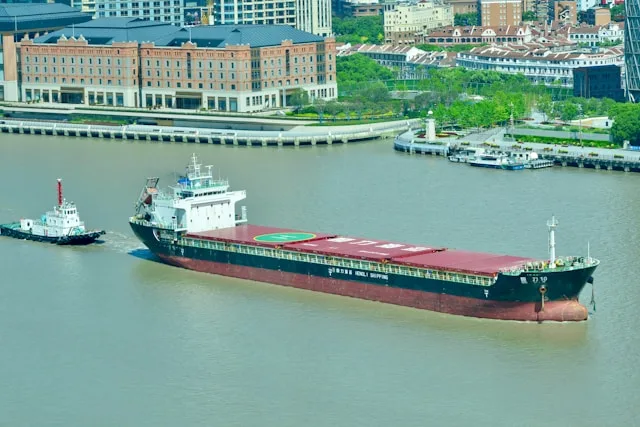
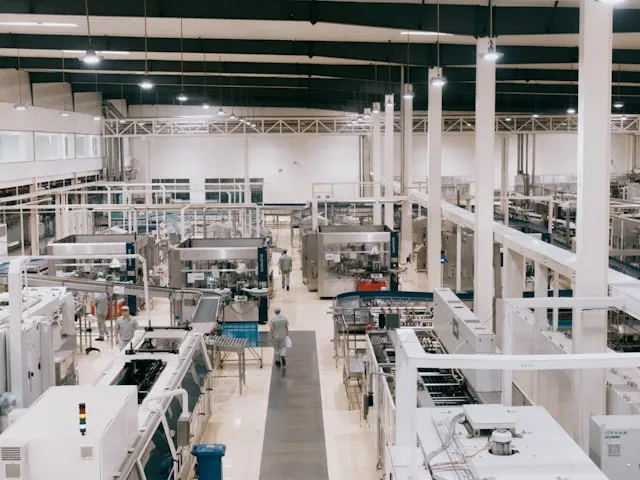
Shanghai Port handled 49.16 million TEU in 2023 and has held the title of the world's busiest container port for fourteen consecutive years. Yangshan Phase IV, its flagship automated terminal, operates 130 autonomous guided vehicles on 5G networks, reduced manual labour by 70%, and processes 6.3 million TEU annually with a fraction of the workforce a conventional terminal requires. The physical infrastructure is formidable. The talent infrastructure behind it is fracturing.
Between 2022 and 2024, demand for smart port technicians in Shanghai grew by 340%, according to Zhaopin Recruitment data. Senior automation engineers at Shanghai International Port Group (SIPG) carry average tenures of seven years or more, and fewer than 2% are unemployed at any given time. The candidates who can maintain these systems, integrate terminal operating software with Chinese 5G networks, and manage digital twin environments are almost entirely passive. They do not appear on job boards. They do not respond to postings. And the state-owned compensation structures that govern Shanghai's dominant port employers cannot match what Singapore or the private sector will pay to take them.
What follows is an analysis of the force reshaping Shanghai's maritime and logistics sector: an automation investment programme that eliminated one category of worker and created acute dependence on another that does not yet exist in sufficient numbers. The article examines where the shortages are most severe, what they cost, why conventional hiring methods fail in this market, and what organisations competing for leadership talent in Shanghai's port complex need to do differently.
The Automation Paradox at the Centre of Shanghai's Port Economy
The promise of automation in container terminals has always been straightforward: replace manual crane operators, truck drivers, and yard planners with machines, then run more cargo with fewer people. SIPG's own technology roadmap projects a 50% reduction in overall labour needs by 2030. Yangshan Phase IV already demonstrates this at scale. The 70% labour reduction at that terminal is real, measurable, and widely cited.
But the people who were replaced were not the same kind of people now required. The eliminated roles were operational: crane drivers, yard tractor operators, manual inspection teams. The roles now in acute shortage are technical: PLC engineers who can troubleshoot Konecranes and Terex systems, 5G network slicing specialists for industrial IoT, and digital twin modellers working in Unity or Unreal Engine to visualise terminal operations in real time.
This is not a simple workforce transition where one role gives way to another. It is a category mismatch. The skills required to maintain an automated terminal bear no relationship to the skills of the workers the terminal displaced. Capital investment moved faster than human capital could follow. SIPG and COSCO committed billions to smart port infrastructure. The pipeline of engineers qualified to maintain that infrastructure did not scale at the same rate. The result is a market where the same organisations publicly celebrating headcount reduction are privately struggling to fill the technical roles that keep the automation operational.
The 340% growth in demand for smart port technicians between 2022 and 2024 is not an abstraction. It translates directly into unfilled positions, extended search timelines, and compensation pressure that state-owned enterprise salary structures were never designed to absorb.
Shanghai's Port Complex in 2026: Physical Scale, Operational Strain
Throughput and Expansion
Shanghai Port's throughput stabilised at approximately 49.0 to 49.5 million TEU through 2024, with Drewry Maritime Research projecting 50.5 to 51.0 million TEU by 2026. That projection is contingent on the commissioning of Yangshan Phase V, originally planned for late 2025, which will add 3 million TEU of annual capacity. Combined with Ningbo-Zhoushan Port's 33.35 million TEU, the Yangtze River Delta now functions as a dual-hub system exceeding 100 million TEU annually.
The water-to-water transshipment ratio at Shanghai Port reached 60.8% in 2024. This reduces truck congestion on landside routes but introduces a different operational challenge: feeder vessel coordination across an increasingly complex network of berths, automated systems, and digitally managed schedules. Each layer of complexity increases the need for engineers and systems architects who understand how the pieces fit together.
The Lingang and Waigaoqiao Divide
Shanghai's logistics real estate market tells two stories simultaneously. Overall warehouse vacancy across the municipality stood at 10.8% in the third quarter of 2024, up from 8.2% in early 2023, driven by new supply in outlying districts like Fengxian and Jinshan. But Class A warehouses in the Waigaoqiao bonded zone held vacancy below 5%. Lingang New Area added 480,000 square metres of smart warehouse space in 2024, targeting pharmaceutical and semiconductor cold chain, with another 800,000 square metres planned for delivery through 2025 and 2026.
The cold chain gap is the most immediate operational constraint. Shanghai requires an additional 1.2 million cubic metres of compliant cold storage capacity by 2026 to meet pharmaceutical and premium food import demand. Current utilisation rates sit at 94%. Finding the physical space is one problem. Finding the cold chain compliance managers who can operate it under pharmaceutical GDP and hazardous materials regulations is another entirely. Foreign third-party logistics providers including DHL Supply Chain and Kuehne+Nagel consistently exceeded 90-day time-to-fill metrics for Regional Cold Chain Director roles throughout 2024, typically paying headhunter fees of 25 to 30% of first-year salary against a standard 20%.
Green Shipping: The Talent Gap That Regulation Created
Shanghai faces converging decarbonisation deadlines from multiple directions. The EU Emissions Trading System began levying carbon costs on Shanghai-Europe routes in 2024, with Phase 2 compliance arriving in 2026. The IMO's 2025 carbon intensity regulations are now in effect. China's national carbon market is expected to expand to maritime between 2026 and 2027. And Shanghai's own ambition to establish the world's largest green methanol bunkering hub by 2026 requires RMB 4.5 billion in green fuel storage and supply chain infrastructure at Yangshan.
Where the Demand Concentrates
The roles this regulatory environment creates are specific. IMO Data Collection System audit expertise. EU MRV (Monitoring, Reporting, Verification) compliance capability. Lifecycle carbon analysis using GaBi or SimaPro software. Alternative fuel procurement for methanol and ammonia supply chains. Carbon credit trading knowledge. These are not adjacent to traditional maritime operations skills. They represent an entirely separate discipline that barely existed five years ago.
According to reporting by Lloyd's List in October 2024, COSCO Shipping's Energy Transportation subsidiary maintained an open vacancy for a Senior Alternative Fuels Development Manager for seven months before filling the role through internal transfer from the Singapore office. The position required dual expertise in marine engineering and carbon markets. External candidates with ten or more years of experience commanded salary expectations 40% above COSCO's standard state-owned enterprise compensation band.
This is the pattern, not the exception. Green shipping specialists with EU ETS and methanol expertise command RMB 1.5 to 2.5 million in Singapore and at foreign shipping lines. SIPG and COSCO, bound by SASAC executive compensation guidelines that cap senior manager base pay near RMB 1 million and restrict top-to-median ratios below 12:1, cannot structurally match these figures. Performance bonuses and housing subsidies increase total remuneration by 30 to 50%, but the gap remains material at exactly the seniority level where the most critical green shipping leadership sits.
The Shanghai-Los Angeles Corridor Test
The Shanghai-Los Angeles Green Shipping Corridor, established under a 2022 C40 Cities memorandum, commenced pilot operations in March 2024 with COSCO's vessel completing the first methanol-ready voyage. SIPG provided 460,000 cubic metres of LNG bunkering in 2024, up 23% year-on-year. Shore power compliance at berth reached 92% in Waigaoqiao and 88% in Yangshan.
These are real operational milestones. They also represent commitments that require sustained leadership from professionals who understand both the technology and the regulation. Every green corridor, every bunkering expansion, every carbon reporting obligation creates demand for talent that the market has not yet produced in sufficient volume. The estimated RMB 18 billion required in green fuel infrastructure by 2030 will not deploy itself. It requires leaders who sit at the intersection of engineering, regulation, and commercial strategy. That intersection is where the talent pool is thinnest.
The SOE Compensation Trap: Why Shanghai's Dominant Employers Cannot Pay Market Rate
The compensation data for Shanghai's maritime logistics sector reveals a structural fault line. Port automation engineers at the specialist or manager level earn RMB 450,000 to 750,000 in base salary, rising to RMB 1.2 to 1.8 million for Heads of Automation. Supply chain directors at third-party logistics firms earn RMB 600,000 to 900,000 at senior specialist level and RMB 1.5 to 2.8 million at executive level. Maritime commercial roles at foreign shipping lines reach RMB 1.8 to 3.5 million at VP level.
But SIPG and COSCO, which together control the physical assets of the world's busiest port, operate under SASAC Order No. 32. Department-level heads are capped near RMB 800,000 to 1 million in base compensation. The total package, including performance bonuses, housing subsidies, and state benefits, can reach 30 to 50% above base. That still leaves a gap of 30% or more against what Singapore's Maritime and Port Authority offers through the MaritimeSG Talent initiative, where the top marginal tax rate is 24% compared to Shanghai's 45%.
This is not a negotiating tactic. It is a policy constraint embedded in the governance of state-owned enterprises. COSCO cannot unilaterally decide to pay a green shipping director RMB 2.5 million. The compensation ratio framework does not permit it. The result is predictable: senior maritime professionals with fifteen or more years of experience increasingly migrate to Singapore for terminal automation and green shipping roles. Mid-level managers with five to ten years of experience are drawn to Shenzhen's tech-logistics hybrid sector, where firms like Cainiao and Tencent's supply chain AI divisions offer equity compensation unavailable in traditional Shanghai shipping.
The compensation gap between Shanghai's SOEs and the external market is not closing. It is widening fastest at exactly the seniority level where the cost of a failed executive hire is highest and the pool of qualified candidates is smallest.
Digitalisation Beyond the Terminal: Where the Next Talent Pressure Builds
Shanghai's digitalisation investments extend well beyond the terminal gates. The "Port Metaverse" initiative, a collaboration between SIPG and Dongfang Innovation, deployed a digital twin covering all Yangshan terminals in the second quarter of 2024. SIPG and COSCO completed over 150,000 blockchain-based document transfers via the Global Shipping Business Network (GSBN) platform by October 2024, compressing documentation processing from three days to four hours. The YRD International Trade Single Window processes 99.9% of declarations, with average cargo release times down to 18.8 hours for imports.
Autonomous Trucking and the Next Hiring Wave
The next phase of automation is landside. Full implementation of autonomous truck platooning between Yangshan Deep-Water Port and Luchaogang logistics park, a 30-kilometre route, is scheduled for 2026. This involves over 200 autonomous heavy trucks operated through a joint venture between Plus.ai and SIPG. The technology and AI talent required for this programme sits at the intersection of autonomous vehicle engineering, logistics operations, and Chinese regulatory compliance for road transport. This is not a skill set that traditional maritime employers have recruited for before.
At the same time, cross-border e-commerce logistics demand is intensifying. The 9610, 9710, and 9810 customs supervision codes that govern bonded e-commerce require specialists who understand both warehouse management system configuration and China Customs regulatory architecture. Lingang New Area's focus on bonded R&D warehouses serving integrated circuit and biopharma sectors compounds this demand further. Each new warehouse that opens needs not just operators but compliance-literate managers who can satisfy both Chinese and international regulatory requirements.
The skills half-life in this market is compressing. What qualified a supply chain director two years ago does not qualify them for the same role today if the role now requires blockchain documentation fluency, carbon accounting capability, and autonomous logistics system oversight. The executive career marketability bar is rising at the same pace as the technology deployment.
Why Conventional Search Methods Fail in This Market
The structural characteristics of Shanghai's maritime talent market render conventional recruitment approaches ineffective for the roles that matter most.
Senior terminal automation engineers carry unemployment rates below 2%. Their average tenure exceeds seven years at SIPG or COSCO. They are not looking. They are not browsing job boards. They are not updating LinkedIn profiles. According to Hays China's Industrial Automation Talent Report for 2024, these candidates are sourced exclusively through German and Singaporean engineering firm alumni networks. A conventional job posting reaches none of them.
Maritime arbitrage and trading specialists holding dual qualifications, such as a Master Mariner combined with an MBA, employed by commodity traders like Trafigura or Mercuria in Shanghai, are 90% passive candidates. Robert Walters China reports they are recruited exclusively through retained executive search.
The pattern is consistent across every high-value role category in this market. The candidates you need are not visible. The candidates who are visible are not the candidates you need. A search strategy that depends on inbound applications or job board advertising will reliably deliver a shortlist composed of the wrong people.
This challenge is compounded by the hukou system, which restricts blue-collar logistics worker mobility into Shanghai and exacerbates warehouse labour shortages even where automation has been deployed. SIPG reports 15% turnover among operational staff driven by housing cost pressures. The barrier is not just finding talent. It is retaining talent in a city where living costs strain compensation packages already constrained by policy.
For organisations running executive searches in Shanghai's maritime sector, the method of candidate identification is not a tactical choice. It is the determining factor in whether the search succeeds or fails. The traditional playbook of posting, waiting, and interviewing reaches at most 10% of the viable candidate pool. The other 90% must be found through direct identification, mapping, and confidential approach. Firms that have not adapted to this reality are losing the same searches repeatedly.
What Senior Hiring Leaders Need to Do Differently
The data points converge on a single conclusion. Shanghai's maritime logistics sector has invested heavily in physical infrastructure and digital systems. It has not invested commensurately in the talent systems required to operate them. The automation paradox at the centre of this market, that reducing headcount has intensified the difficulty of filling the remaining roles, is not temporary. It is the defining feature of this hiring market through 2026 and beyond.
Three practical imperatives follow for hiring leaders operating in this sector.
First, compensation creativity within SOE constraints. SIPG and COSCO cannot change SASAC policy. But they can structure total packages that use housing allowances, project-based bonuses, international rotation opportunities, and deferred benefits to close the gap. The organisations winning green shipping talent are not necessarily paying the highest base salary. They are offering the most compelling career trajectory within a total package that respects policy limits while remaining competitive against Singapore.
Second, pipeline investment before vacancy. The roles hardest to fill in this market take six months or longer when they become urgent. A proactive talent mapping and pipeline approach, where candidate identification begins twelve months before the role opens, compresses this timeline materially. For organisations planning Yangshan Phase V operations, autonomous truck platooning programmes, or methanol bunkering expansions, the hiring strategy should be running now, not when the commissioning date approaches.
Third, search methodology that matches the candidate population. In a market where the most critical candidates are 90% passive and sourced through engineering alumni networks and retained search, an organisation that relies on job postings is structurally disadvantaged. Direct headhunting methodology that identifies, maps, and confidentially approaches candidates who are not looking is not a premium option. It is the only option that reliably reaches the people this sector needs.
KiTalent delivers interview-ready executive candidates within 7 to 10 days through AI-powered talent mapping that identifies the passive professionals conventional methods miss. With a 96% one-year retention rate and a pay-per-interview model that eliminates upfront retainer risk, the approach is built for markets where speed and precision both matter.
For organisations competing for automation, green shipping, and supply chain leadership in Shanghai's maritime sector, where the candidates who can maintain the world's most advanced port systems are not visible on any public platform and the cost of a prolonged vacancy is measured in operational disruption, speak with our executive search team about how we identify and deliver these candidates.
Frequently Asked Questions
What are the highest-demand executive roles in Shanghai's maritime logistics sector in 2026?
Four role categories face the most acute shortages: smart port automation engineers with 5G and AGV maintenance expertise, green shipping and decarbonisation specialists with EU ETS compliance knowledge, cold chain compliance managers for pharmaceutical logistics, and bilingual maritime commercial managers covering shipping finance and commodity trading. Demand for smart port technicians grew 340% between 2022 and 2024. Senior automation engineers at SIPG carry average tenures exceeding seven years, and fewer than 2% are available at any time. These roles require direct executive search approaches rather than conventional job advertising.
How much do maritime logistics executives earn in Shanghai?
Compensation varies materially by employer type. Port automation engineers earn RMB 450,000 to 750,000 at specialist level and RMB 1.2 to 1.8 million at Head of Automation level. Supply chain directors at third-party logistics firms earn RMB 1.5 to 2.8 million at executive level. Maritime commercial roles at foreign shipping lines reach RMB 1.8 to 3.5 million at VP level. State-owned employers like SIPG and COSCO face SASAC-mandated salary caps near RMB 1 million for department-level heads, though total packages including bonuses and housing can reach 30 to 50% above base.
Why is it so difficult to hire green shipping specialists in Shanghai?
Green shipping roles require a combination of marine engineering and carbon market expertise that barely existed five years ago. The EU ETS, IMO carbon intensity regulations, and China's national carbon market expansion create simultaneous compliance obligations. Professionals with this dual expertise command RMB 1.5 to 2.5 million in Singapore and at foreign lines, while Shanghai's state-owned port operators face compensation caps that create a persistent gap. COSCO reportedly took seven months to fill a Senior Alternative Fuels Development Manager role in 2024.
How does Shanghai Port's automation affect hiring demand?
Counterintuitively, automation has increased hiring difficulty for the remaining technical roles. Yangshan Phase IV's 130 autonomous guided vehicles reduced manual labour by 70%, but the engineers required to maintain 5G networks, PLC systems, and digital twin environments are in severe shortage. The skills of displaced workers bear no relationship to the skills now required. This category mismatch is the defining feature of Shanghai's port talent market through 2026.
What is the best way to recruit passive maritime executives in Shanghai?
Senior terminal automation engineers and maritime trading specialists in Shanghai are overwhelmingly passive candidates, with some categories reaching 90% passivity. They do not respond to job postings and are sourced through specialist alumni networks and retained executive search. KiTalent's AI-powered talent mapping identifies these candidates through direct research rather than job board advertising, delivering interview-ready shortlists within 7 to 10 days and charging only when clients meet qualified candidates.
How does Singapore compete with Shanghai for maritime talent?
Singapore offers 30 to 50% compensation premiums for maritime executives, a top marginal personal tax rate of 24% versus Shanghai's 45%, and active government recruitment through the MaritimeSG Talent initiative. Senior professionals with fifteen or more years of experience are increasingly migrating to Singapore for terminal automation and green shipping roles. Mid-level managers are drawn to Shenzhen's tech-logistics sector for equity compensation. Shanghai's SOE compensation constraints are the primary structural disadvantage in this competition.