Shenzhen Fintech Hiring in 2026: Why Geographic Proximity Has Not Produced a Unified Talent Market
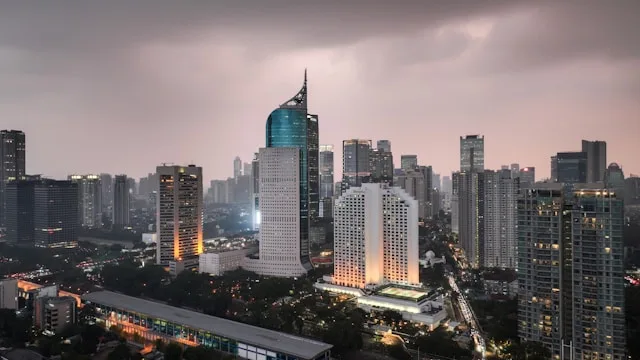
Shenzhen sits thirty minutes by high-speed rail from Hong Kong. Its two largest financial employers, Ping An Group and China Merchants Bank, manage combined assets measured in the trillions. Its stock exchange hosts nearly 2,900 listed companies. The Qianhai cooperation zone alone holds 198 licensed financial institutions. On paper, this is one of Asia's most formidable financial clusters.
The reality is more complicated. Shenzhen's financial services sector is not one market. It is two. The first is dominated by state-adjacent conglomerates that reduced headcount through 2024 and 2025 while automating aggressively. The second is a fintech ecosystem fused to the city's hardware supply chain, producing hybrid roles that exist almost nowhere else in the world. These two markets compete for different talent, pay on different scales, and face different constraints. Hiring leaders who treat Shenzhen as a single talent pool will misread both.
What follows is a structured analysis of the forces shaping Shenzhen's financial services and fintech sector in 2026: the employers driving demand, the regulatory friction constraining supply, the compensation dynamics pulling talent across borders, and what senior leaders need to understand before they make their next critical hire in this market.
The Two Markets Inside Shenzhen's Financial Sector
The most important fact about Shenzhen's financial labour market is one that the headline employment figures obscure. Ping An Group and China Merchants Bank collectively employ over 450,000 people. They account for roughly 60% of the city's financial sector payroll. Their hiring decisions set the tempo for the entire market.
Yet these incumbents are not expanding. Ping An reduced headcount by 3.2% year-on-year through 2024, a trajectory that continued into 2025 as its "Ping An GPT" automation programme began displacing back-office underwriting functions. By the end of 2026, the group expects to have automated 15% of those roles entirely. China Merchants Bank is investing in digital wealth management infrastructure that reduces the need for retail relationship managers at the branch level.
Meanwhile, Shenzhen's fintech employers are hiring. WeBank expanded R&D headcount by 23% in a single year, recruiting 400 distributed systems engineers for core banking infrastructure. Huawei's Financial Services business unit employs approximately 4,000 staff building payment switches and AI-powered risk engines. Venture-backed fintech created an estimated 8,000 new roles in 2024.
Conglomerate Consolidation Is Masking Fintech Demand
The aggregate numbers make the market look flat. Incumbent restructuring absorbs fintech growth in the totals. But the talent profiles are entirely different. A retail banking relationship manager displaced by branch digitisation cannot fill a distributed systems engineering role at WeBank. A traditional insurance agent made redundant by Ping An's AI-agent hybrid model does not possess the hardware-software integration expertise that an insurtech product architect requires.
This is the split that matters for hiring leaders. Shenzhen posted 34,000 new financial services job openings in Q3 2024 alone, a 12% year-on-year increase. The candidate pool grew by only 4%. The resulting shortage ratio of 2.8 vacancies per qualified applicant for mid-to-senior roles tells only part of the story. In the conglomerate segment, active candidates outnumber roles in retail functions. In fintech infrastructure and cross-border compliance, the ratio inverts dramatically. A senior leader planning a Shenzhen hire must first determine which of these two markets the role sits in. The answer changes everything about how the search should be run.
Hardware-Software Convergence Creates Roles That Exist Nowhere Else
What makes Shenzhen's fintech cluster distinct from Shanghai's or Beijing's is not scale. It is composition. Shenzhen's proximity to the world's densest electronics manufacturing supply chain means that "fintech" here implies something different from fintech anywhere else in China.
Tencent's WeBank builds micro-lending platforms. That is recognisable fintech. But Huawei's FinTech Lab develops core banking systems for global clients. DJI, better known for drones, operates enterprise financial services. The city's dominant fintech use cases are IoT-integrated finance, supply-chain finance for electronics manufacturing, and embedded insurance for hardware exports. These are hybrid profiles. They require candidates who understand both financial regulation and physical product engineering. The pool of people who hold both competencies is exceptionally thin, and it is not visible through conventional job advertising.
The Greater Bay Area Integration Paradox
The policy promise of the Greater Bay Area is that Shenzhen, Hong Kong, and the surrounding Guangdong cities will function as a single integrated financial market. The Wealth Management Connect scheme facilitated RMB 12.8 billion in cross-boundary investment flows between Shenzhen and Hong Kong in 2024, up 34% from the prior year. The 2026 expansion is expected to allow Shenzhen-based investors access to Hong Kong-listed REITs and structured products, which the Hong Kong Monetary Authority has projected will require a 30-40% expansion in cross-border compliance and product advisory headcount at major Shenzhen banks.
That expansion has not materialised into a unified talent pool.
The Compensation Wall Between Shenzhen and Hong Kong
Hong Kong financial salaries remain 40-60% higher than Shenzhen's for equivalent roles. A Private Wealth Director commanding RMB 1.5 to 2.8 million in Shenzhen would earn materially more across the border. The tax differential compounds the gap. Hong Kong's salaries tax is capped at 17%. Shenzhen's marginal income tax rate reaches 45%.
For senior private banking and wealth management professionals with portable client books, the incentive structure points clearly toward Hong Kong. This is not a theoretical observation. The Deloitte Greater Bay Area Talent Mobility Survey published in 2024 documented this migration pattern: senior Shenzhen bankers with cross-border client relationships moving to Hong Kong for the compensation and tax arbitrage.
Regulatory Barriers Override Geographic Proximity
The talent flow should work in both directions. Hong Kong-based wealth managers should be able to service mainland clients, drawing on Shenzhen's client base while based in the SAR. In practice, licensing restrictions prevent this. A Hong Kong SFC-licensed advisor cannot directly manage mainland investment portfolios without a separate CSRC authorisation. Shenzhen-based professionals face HKSAR visa quotas and, at mid-career levels, Cantonese language barriers that limit mobility.
The result is a paradox. The cities are thirty minutes apart. The policy framework explicitly encourages integration. But the labour market remains segmented. Geographic proximity has not translated to talent market fluidity. For hiring leaders, this means that a search for a cross-border compliance director cannot draw freely from both sides. The candidate must hold specific dual-jurisdiction qualifications that very few professionals possess. This is why time-to-fill for "Head of Private Banking (GBA Region)" roles has extended to six to eight months, against a three-to-four-month financial services average, according to Robert Walters' Greater China salary survey data.
Regulatory Pressure Is Creating Roles Faster Than Universities Can Fill Them
Shenzhen's regulatory environment entered a new phase in 2024 with the NFRA's "Administrative Measures for Cross-Border Data Transfer in Financial Institutions." Any data transfer involving more than 100,000 individuals or 10,000 sensitive personal information records now requires a formal security assessment. For fintechs serving overseas Chinese diaspora communities or operating hybrid Shenzhen-Hong Kong applications, this means duplicate data centres, duplicate compliance teams, and a new C-suite role: the Data Sovereignty Officer.
This role reports directly to the CEO in most implementations. It requires expertise in China's Data Security Law and Personal Information Protection Law alongside familiarity with Hong Kong's PDPO, and ideally with GDPR and CCPA frameworks for firms with international exposure. According to Michael Page's China financial services hiring analysis, these searches have stalled for four to six months due to the near-total absence of candidates possessing this combination.
The Local Talent Pipeline Cannot Keep Pace
Shenzhen's universities produce approximately 12,000 finance and economics graduates annually. Shanghai produces more than 35,000. This is not a marginal difference. It is a threefold gap that forces Shenzhen's financial employers to recruit nationally, drawing mid-career professionals from Hunan, Hubei, and elsewhere in Guangdong.
For entry-level and generalist roles, this internal migration works. For quantitative finance positions requiring advanced degrees, or for the new category of AI-plus-domain-knowledge hybrid roles, the pipeline breaks down. Ping An's January 2025 Technology Summit disclosed that "AI trainers" with actuarial domain knowledge, the profile needed to manage the Ping An GPT deployment, number fewer than 2,000 qualified individuals nationwide. That is not 2,000 in Shenzhen. That is 2,000 across all of China.
When the local pipeline produces a fraction of what the market requires, and the national pipeline for the most critical roles is measured in the low thousands, the arithmetic for hiring leaders is unforgiving. Every search for these profiles is a direct headhunting challenge, not an advertising exercise.
Compensation Structures That Reflect a Bifurcated Market
The compensation data confirms the two-market thesis. In Shenzhen's conglomerate segment, pay follows established banking and insurance bands with predictable bonus structures. In the fintech segment, packages incorporate startup-era equity mechanics and signing premiums that reflect acute scarcity.
A Chief Risk Officer or Head of Model Risk with AI and machine learning specialisation commands RMB 2 to 3.5 million in base salary at the executive level, plus performance bonuses of 50-100% and long-term equity where joint venture structures permit it. A Private Wealth Director focused on GBA cross-border business earns RMB 1.5 to 2.8 million base, with team overrides and equity participation in wealth management subsidiaries layered on top.
The most revealing figure is the insurtech premium. An Insurtech Product Architect at the CPO level earns RMB 1.8 to 3 million base, a 25-35% premium above traditional insurance product management. That premium exists because the role requires hardware-software integration expertise. It is the Shenzhen-specific skill set. Candidates who hold it have options everywhere in the GBA, and they know it.
Shanghai's Premium Complicates Every Senior Search
Shanghai commands a 15-25% compensation premium over Shenzhen for equivalent executive roles in asset management and investment banking, according to Mercer's cost-of-living data. Shanghai's cost of living is approximately 18% higher than Shenzhen's core districts, which partially offsets the salary gap. But the gap is widest at exactly the seniority level where the most critical roles sit.
For a head of function in asset management or a senior compliance leader with international fund distribution experience, the pull toward Shanghai or Hong Kong is material. The presence of BlackRock, Fidelity, and JPMorgan's China headquarters in Shanghai draws talent with global ambitions away from Shenzhen. Singapore adds a third vector at the MD and partner level, offering regulatory clarity for blockchain and Web3 initiatives that remain restricted on the mainland, along with superior stock option liquidity and international schooling access. The Financial Times documented this migration pattern in its November 2024 analysis of China tech founder relocations to Singapore.
For Shenzhen-based employers, negotiating competitive offers for these senior profiles requires more than matching a number. It requires constructing a proposition that accounts for the regulatory, tax, and lifestyle differentials that competing cities exploit.
The Passive Candidate Problem in Shenzhen's Critical Functions
The candidate pool for Shenzhen's most important roles is overwhelmingly passive. LinkedIn Economic Graph data for China's financial services sector indicates that 75-80% of AI and machine learning financial engineers with five or more years of experience are employed and not actively searching. At the compliance director level and above, average tenure stands at 4.2 years with voluntary turnover of just 12%.
These candidates do not respond to job postings. They are not on recruitment platforms. They move for equity, title elevation, or a problem they cannot solve at their current employer. Reaching them requires systematic talent mapping across Shenzhen's concentrated employer base, identification of the specific triggers that would prompt a move, and a search methodology built for a market where the best candidates are invisible to conventional processes.
The Active Candidate Surplus Creates a Misleading Signal
Simultaneously, Shenzhen's retail banking and traditional insurance segments are shedding staff. Retail banking relationship managers face 8.3% unemployment in their sub-sector as branch networks digitise. Traditional insurance agents face a 3:1 active candidate ratio as Ping An and peers adopt AI-agent hybrid models.
This surplus creates a misleading signal for hiring leaders unfamiliar with the market. The inbound applicant volume for any posted financial services role in Shenzhen will be high. The quality match for the roles that actually matter, the cross-border compliance directors, AI risk officers, and insurtech architects, will be near zero within that applicant pool. The candidates who apply are not the candidates you need. The candidates you need are not applying.
This is the core analytical insight of this market. Shenzhen's financial services talent challenge is not a shortage in aggregate. It is a mismatch so severe that the surplus in one segment and the scarcity in another coexist within the same city, the same sector, and sometimes the same employer. The automation programmes that are releasing traditional staff are simultaneously generating demand for hybrid profiles that the released staff cannot fill. Capital has moved faster than human capital can follow.
What This Means for Executive Search in Shenzhen
The structural features of this market, the bifurcation between conglomerate and fintech, the GBA integration paradox, the passive candidate concentration in critical functions, and the misleading active candidate surplus, combine to produce a search environment where methodology matters more than most hiring leaders assume.
A standard retained search process that begins with a job posting and waits for inbound applications will fill retail banking and insurance agency roles efficiently. It will fail systematically for the roles that determine competitive advantage: cross-border compliance leadership, AI governance and model risk, insurtech product architecture, and the new Data Sovereignty Officer function.
For these roles, the search must begin with the candidate universe, not the job description. It requires mapping the 2,000 or fewer individuals nationwide who hold a specific hybrid profile, identifying which of them are reachable, and constructing a proposition tailored to the specific triggers that would move a passive candidate in a market where tenure is long and loyalty is high. The cost of a failed search at this level is not merely the search fee. It is the regulatory exposure from an unfilled compliance role, the competitive disadvantage from a delayed AI deployment, or the client attrition from a vacant wealth management leadership position.
KiTalent's approach to this market uses AI-powered talent mapping to identify the passive candidates that job boards do not reach, delivering interview-ready executive candidates within seven to ten days. With a pay-per-interview model that eliminates upfront retainer risk, and a 96% one-year retention rate across 1,450-plus executive placements, the methodology is designed for exactly the conditions Shenzhen's financial services market presents: a small, passive, highly specialised candidate pool where speed and precision determine the outcome.
For organisations hiring cross-border compliance, AI risk, or fintech leadership talent in Shenzhen's bifurcated financial market, where the candidates you need number in the low thousands nationally and are not visible through any conventional channel, speak with our executive search team about how we approach this market.
Frequently Asked Questions
What is the current demand for fintech talent in Shenzhen?
Shenzhen's financial services sector posted 34,000 new job openings in Q3 2024, representing a 12% year-on-year increase. The candidate pool grew by only 4%, producing a shortage ratio of 2.8 vacancies per qualified applicant for mid-to-senior roles. Demand is concentrated in distributed systems engineering, AI-native financial infrastructure, cross-border compliance, and embedded insurance product architecture. These roles require hybrid skill sets combining financial regulation knowledge with technology or hardware expertise. The shortages are most acute in roles tied to the Greater Bay Area integration framework and Ping An's automation programme, which simultaneously reduces traditional headcount and creates new specialist positions.
How does Shenzhen's financial services compensation compare to Shanghai and Hong Kong?
Shanghai commands a 15-25% compensation premium over Shenzhen for equivalent executive roles in asset management and investment banking, partially offset by an 18% higher cost of living. Hong Kong salaries run 40-60% above Shenzhen for comparable positions, compounded by a tax advantage: Hong Kong's salaries tax caps at 17% versus Shenzhen's 45% marginal rate. For insurtech and hardware-integrated fintech roles unique to Shenzhen, however, packages include 25-35% premiums above traditional financial services bands, plus startup equity structures. Senior leaders evaluating offers across GBA cities should use market benchmarking data specific to each jurisdiction.
Why are cross-border compliance roles so difficult to fill in Shenzhen?
China's 2024 cross-border data transfer regulations require security assessments for any data involving more than 100,000 individuals. This created a new C-suite role, the Data Sovereignty Officer, requiring expertise across China's Data Security Law, PIPL, Hong Kong's PDPO, and ideally GDPR or CCPA. Fewer professionals hold this combination than the market demands. Searches for these roles typically stall for four to six months. The problem is compounded by GBA regulatory complexity: candidates must understand both CSRC mainland and SFC Hong Kong frameworks, a dual-jurisdiction competency that very few professionals have developed.
What percentage of senior financial services candidates in Shenzhen are passive?
Approximately 75-80% of AI and machine learning financial engineers with five-plus years of experience in Shenzhen are employed and not actively searching. Senior compliance officers at director level and above show average tenure of 4.2 years and voluntary turnover of just 12%. These candidates respond to direct approaches, not job postings. KiTalent's direct search methodology is built for this kind of market: identifying passive, high-performing executives through AI-powered talent mapping and reaching them with tailored propositions.
How does Greater Bay Area integration affect talent availability in Shenzhen?
The GBA Wealth Management Connect scheme has expanded cross-boundary investment flows, reaching RMB 12.8 billion in 2024. The 2026 expansion is expected to require a 30-40% increase in cross-border compliance and advisory headcount. However, labour market segmentation persists despite geographic proximity. Hong Kong visa quotas, licensing restrictions, Cantonese language requirements, and compensation differentials prevent the seamless talent flow that policy frameworks envision. Hiring leaders should not assume that GBA proximity provides access to Hong Kong's talent pool without a targeted cross-border search strategy.
What role does Ping An Group play in Shenzhen's financial talent market?
Ping An Group employs approximately 342,000 people globally, with around 45,000 in Shenzhen headquarters functions. Its integrated model spans insurance, banking, securities, asset management (RMB 5.4 trillion AUM), and fintech through OneConnect. The group's deployment of Ping An GPT is automating back-office underwriting roles while creating demand for AI trainers with actuarial domain knowledge, a profile estimated at fewer than 2,000 qualified individuals nationwide. Ping An's hiring and restructuring decisions set the tempo for the entire Shenzhen financial labour market, making its strategic direction essential context for any executive search in the city.