Shenzhen's Nanshan Tech District Is Spending Billions on AI. The Talent to Build It Does Not Exist in Sufficient Numbers

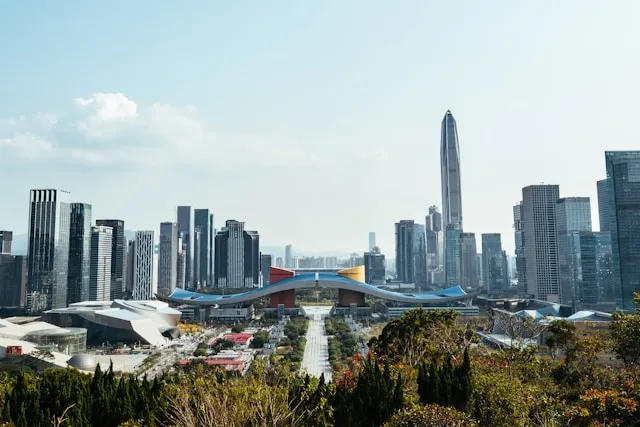
Nanshan District covers 9% of Shenzhen's land area. It accounts for 42% of the city's tech sector output. As of 2026, it houses 4,300 registered technology firms per square kilometre, including Tencent's global headquarters, DJI's drone empire, and a corridor of autonomous driving startups racing toward Level 4 deployment. The municipal government is targeting RMB 1.5 trillion in digital economy output by year-end 2026, backed by an AI computing infrastructure expansion to 200 petaflops. Capital is arriving. The engineers required to deploy it are not.
The core tension is not a generic shortage. It is a specific mismatch between where investment is flowing and where talent has been trained. Shenzhen's venture capital community directed 68% of its 2024 deployment toward large language model infrastructure and autonomous driving. These are disciplines where 92% of the most qualified researchers are not actively seeking new roles, where search cycles for a Chief AI Scientist routinely stretch to six months, and where the compensation required to move a passive candidate has risen 35 to 45% in two years while aggregate venture funding fell 23% over the same period. The money is concentrating. The people it needs to reach are not moving.
What follows is a ground-level analysis of the forces shaping Shenzhen's tech hiring market in 2026: the sectors driving demand, the roles that remain hardest to fill, the compensation benchmarks hiring leaders need, and the search strategies that actually work when 80% of your target candidates are invisible to conventional recruitment channels.
A Bifurcated Market Hiding Behind a Single Growth Number
Shenzhen's software and information technology services sector generated RMB 1.02 trillion across the first three quarters of 2024, representing 11.2% year-over-year growth according to the Shenzhen Municipal Bureau of Statistics. At the headline level, this looks like a market in expansion. The reality beneath that number is two markets moving in opposite directions.
The first market is frontier AI. Large language model infrastructure, autonomous driving systems, edge computing for industrial IoT, and digital twin applications for the Pearl River Delta's manufacturing base. This market is absorbing the majority of venture capital, commanding the highest salaries, and experiencing the most acute talent constraints. Forecasts from the China Academy of Information and Communications Technology suggest that 40% of 2026 venture deployment in Shenzhen will target industrial metaverse and digital twin applications, up from 18% in 2023.
The second market is everything else. Traditional enterprise SaaS, consumer internet, and non-AI verticals where salary growth of 12% annually has outpaced revenue growth of 9% since 2022. This compression is driving consolidation. In 2024, 14% of Shenzhen's SaaS firms underwent M&A or pivoted toward AI augmentation. These firms are not hiring aggressively. Many are shedding roles.
A hiring executive reading the aggregate growth figure could reasonably conclude that Shenzhen's technology sector has talent liquidity. It does not. The liquidity exists in junior mobile development and web frontend roles, where active candidate ratios exceed 60% but skill mismatch produces low conversion. In the disciplines that matter most to the investment thesis driving the city's digital economy targets, the candidate pool is shallow, passive, and increasingly expensive.
Where the capital is going versus where the talent sits
The Shenzhen Venture Capital Association's 2024 review showed RMB 48 billion invested in software and AI companies across the year. But early-stage funding (Seed to Series A) compressed 31% compared to 2021 peaks, while growth-stage rounds for profitable fintech infrastructure remained stable. This means fewer new companies are forming at the bottom of the pipeline while established players compete intensely for the same senior engineers and researchers at the top. The funnel is narrowing from both ends.
The implication for any organisation hiring into this market is straightforward: the headline numbers will not help you. The only question that matters is whether the specific profile you need falls into the expanding or contracting half of the market. If it falls into the expanding half, the search will be longer, more expensive, and more dependent on reaching candidates who are not looking.
Three Roles That Define the Hiring Crisis
Nanshan tech firms posted 78,000 software and AI-related vacancies in Q3 2024, a 34% increase year-over-year. Average time-to-fill extended from 28 days in 2022 to 47 days in 2024. But these averages mask the roles where searches routinely run three to six times longer than the market norm.
LLM architects and the [Beijing](/beijing-china-executive-search) gravity problem
The most acute shortage sits at the intersection of deep learning research and production-scale systems engineering. Mid-stage AI startups in Nanshan report typical search cycles of four to six months for Chief AI Scientists with transformer architecture experience. Only 8% of qualified researchers with publications at NeurIPS or ICML are actively seeking employment in the Greater Shenzhen area at any given time. Average tenure among top-tier talent runs 4.2 years.
The problem is compounded by Beijing's gravitational pull. Haidian and Chaoyang districts dominate LLM foundational research through ByteDance, Baidu, and Moonshot AI, and offer 15 to 20% higher compensation for PhD-level AI researchers. Beijing also provides direct access to Tsinghua and Peking University's main campuses and state-backed AI lab affiliations. Shenzhen's counter-argument is a 20% lower cost of living and proximity to hardware supply chains, but this resonates more strongly with engineers interested in applied AI-hardware convergence than with pure research scientists.
Autonomous driving firms in Nanshan have responded by restructuring research divisions to offer co-Principal Investigator positions with local universities, attempting to replicate the academic prestige that Beijing provides by default. According to analysis published by 36Kr in October 2024, this has become a standard recruitment mechanism rather than an exceptional one.
Chip-software co-design engineers and the poaching spiral
The second critical shortage sits in chip-software co-design, a discipline that barely existed as a hiring category five years ago. U.S. semiconductor export controls restricting access to advanced AI training chips have forced reliance on domestic alternatives like Huawei's Ascend series. According to the Semiconductor Industry Association's China impact assessment, these alternatives carry 30 to 40% performance efficiency gaps. Closing that gap requires engineers who understand both cloud infrastructure and silicon-level optimisation.
According to Caijing Magazine's August 2024 tech sector analysis, Huawei's 2012 Labs and emerging RISC-V chip startups have engaged in systematic recruitment from Tencent's infrastructure divisions, offering 40 to 60% salary premiums for engineers with five or more years of cloud hardware optimisation experience. Total compensation packages for senior chip-software co-design leads reportedly reach RMB 2.8 to 3.5 million annually. This is a market where the cost of a bad hire is measured not in recruitment fees but in months of delayed product development.
Fintech compliance architects and the regulatory paradox
The third shortage is the most counter-intuitive. Regulatory clarity was supposed to increase the supply of compliance talent. When gaming license approvals stabilised and the 2024 Cross-Border Data Flow Security Management Measures provided clearer guidelines, the expectation was that career risk in compliance roles would diminish and more professionals would enter the field. The opposite happened.
Average search times for Chief Compliance Officers in Shenzhen rose from 4.1 months in 2022 to 5.2 months in 2024. The reason: regulatory complexity is outpacing talent development pipelines despite policy normalisation. Cross-border data compliance now requires simultaneous expertise in China's Personal Information Protection Law, the EU's GDPR, and Hong Kong's evolving data frameworks. According to a Deloitte China survey, average compliance spending rose to RMB 3.8 million annually for mid-size firms handling cross-border data flows.
Tencent has reportedly maintained specific senior "Cross-Border Data Compliance Architect" roles open for six months or longer, according to analysis by Liepin Research Institute of archived career portal listings. The response has been to establish a dedicated Regulatory Technology Academy for internal transfers rather than relying on external hires. When the market's largest employer cannot fill a role externally and builds an internal training programme instead, the signal to every other hiring organisation is unambiguous: the conventional search approach is failing.
The Compensation Arms Race and What It Actually Costs to Hire
Compensation in Nanshan's tech sector follows the same bifurcation as the market itself. In frontier AI and chip-software convergence, total packages have escalated to levels that would have seemed implausible three years ago. In traditional software verticals, salaries are growing faster than revenue, squeezing margins without producing equivalent talent advantages.
At the VP of Artificial Intelligence level in platform companies, base compensation ranges from RMB 2.5 to 4.0 million, with total packages reaching RMB 5 to 12 million depending on pre- or post-IPO equity status. This is according to Korn Ferry's 2024 Greater China Technology Executive Compensation Report. At the principal researcher level (eight to twelve years of experience), base salaries sit at RMB 1.2 to 1.8 million with total compensation reaching RMB 1.8 to 2.8 million.
Cloud infrastructure leadership shows a similar structure. A VP of Cloud Engineering commands RMB 2.0 to 3.5 million in base salary, with equity bringing total packages to RMB 4 to 8 million. Senior cloud solutions architects at the specialist level earn RMB 800,000 to 1.3 million base.
Gaming technical leadership carries the highest variance. A CTO of a gaming division at the Tencent or NetEase tier earns RMB 3 to 6 million base, with performance bonuses pushing total compensation to RMB 8 to 15 million. Lead game engine programmers earn RMB 600,000 to 1.0 million base, with total packages between RMB 900,000 and 1.5 million.
The most telling figure, however, is not at the top of the range. It is in the signing bonuses. For LLM architects and AI research scientists, signing bonuses have reached 12 to 18 months of base salary. This is not a bonus. It is a transfer fee. It reflects the reality that these candidates are not unemployed, not dissatisfied, and not responding to job advertisements. They must be identified, approached, and persuaded individually. The compensation is the final step in that process, not the first.
For hiring executives conducting market benchmarking for senior technology roles in Shenzhen, the critical insight is that published salary guides already lag the market by six to nine months. By the time a survey is published, the top decile has moved again. Real-time compensation intelligence, drawn from active search data rather than retrospective surveys, is the only reliable basis for structuring an offer.
The Four-Front Competition for Shenzhen's Best
Shenzhen does not compete for talent in isolation. It sits within a four-city matrix where Beijing, Hangzhou, Shanghai, and increasingly Singapore each pull specific profiles in different directions. Understanding which city threatens which role category is essential for any organisation running a senior search in Nanshan.
Beijing dominates pure AI research. The main campuses of Tsinghua and Peking University, combined with state-backed AI labs, create an academic-industrial ecosystem that Shenzhen's satellite graduate schools cannot fully replicate. For a PhD-level researcher whose career identity is built around publishing, Beijing offers more prestige and 15 to 20% higher base pay.
Hangzhou competes on quality of life. According to LinkedIn's Economic Graph China Mobility Report for 2024, Shenzhen firms lose approximately 12% of senior cloud architects to Hangzhou annually. The draw is Alibaba's ecosystem, lower operational costs, and a work-life balance narrative that resonates with mid-career professionals reassessing their priorities.
Shanghai competes for fintech and gaming talent. MiHoYo, Lilith Games, and the Ant Group ecosystem offer strong alternatives. Shanghai also offers international schooling and lifestyle amenities that matter disproportionately when recruiting expatriate or returnee talent.
Singapore represents an emerging threat at the executive level, particularly for professionals considering international career moves. An effective tax rate of 13.5% compared to 35 to 45% for high earners in China, combined with visa stability, makes Singapore attractive for fintech compliance VPs and AI policy experts despite total compensation packages that typically run 20 to 30% lower than equivalent Shenzhen roles.
Shenzhen's counter-arguments are real but require articulation. Nanshan offers faster corporate registration (three days average versus seven in Shanghai), municipal subsidies of up to RMB 50 million per major AI project, proximity to the world's densest electronics manufacturing supply chain, and the cross-border data flow pilot zones that Hangzhou and Beijing cannot offer. The problem is that these advantages must be communicated during the search process itself, by someone who understands both the candidate's decision framework and the market's structural differences. A job posting cannot make this case. A recruiter who understands the competitive dynamics can.
Why Export Controls Are Reshaping Every Senior Hire in Nanshan
Here is the synthesis that most hiring leaders in this market have not yet articulated: the U.S. semiconductor export controls have not simply created a chip shortage. They have created an entirely new category of professional that did not exist in sufficient numbers before the controls were imposed, and they have done so faster than any university or training programme can produce graduates.
Before the October 2024 export control updates restricted access to NVIDIA H800 and B200 chips, a senior cloud architect in Shenzhen needed to understand distributed computing, container orchestration, and cloud-native security. Today, that same role requires additional expertise in domestic chip architectures, hardware-software co-optimisation, and the ability to extract competitive performance from processors carrying a 30 to 40% efficiency disadvantage. The job description changed. The candidate pool did not change with it.
This is not a temporary dislocation. The export controls are structural. Every AI model training cycle in Shenzhen now takes longer than the equivalent cycle in Silicon Valley. Closing that gap requires engineers who can optimise at the silicon level, not just the software level. These engineers must understand both Huawei's Ascend architecture and the cloud infrastructure it plugs into. Three years ago, this combination of skills was a curiosity. Today it is the single most critical hiring requirement across Nanshan's AI sector.
The firms that recognised this shift early have been building internal training programmes and acquiring small research teams through acqui-hire transactions. The firms that did not are now competing for the same small pool of qualified engineers with signing bonuses equivalent to 18 months of salary. The capital investment moved faster than human capital could follow, and the gap is widening with each successive round of control tightening.
What This Market Demands from a Search Strategy
The conventional approach to hiring in Shenzhen's tech sector follows a predictable pattern: post on Zhaopin or Boss Zhipin, wait for applications, screen for keywords, and interview the best of whoever applied. This approach reaches, at most, 8 to 15% of the viable candidate pool for the roles described in this article. The remaining 85 to 92% must be found differently.
For LLM research scientists, recruitment relies on academic conference networks (NeurIPS, ICML) and acqui-hire transactions of entire research labs. For autonomous driving perception engineers, talent typically moves only when entire project teams migrate following lead scientists, or through strategic equity packages vesting over four or more years. For fintech infrastructure security architects, movement is triggered by regulatory pressure or pre-IPO equity windows at competing platforms.
These are not candidates who respond to job boards. They are not candidates who update their profiles on recruitment platforms. They are professionals embedded in multi-year projects with equity that has not yet vested and problems they have not yet solved. Reaching them requires direct headhunting methodology combined with real-time intelligence about which companies are approaching vesting cliffs, which project milestones create natural transition points, and which competing offers have already been extended.
The speed dimension matters as much as the method. In a market where time-to-fill has extended from 28 to 47 days at the aggregate level, and where senior AI searches routinely run four to six months, the ability to produce interview-ready candidates within days rather than months is the difference between filling a role and watching the search stall while the project it supports falls behind schedule.
KiTalent's approach to executive search in the AI and technology sector addresses both dimensions. AI-powered talent mapping identifies passive candidates across Shenzhen, Beijing, Hangzhou, and international markets simultaneously, while a pay-per-interview model means organisations invest only when they are meeting qualified candidates. The result is a shortlist of interview-ready executives delivered within 7 to 10 days, drawn from the 80% of senior professionals who never appear on a job board. With a 96% one-year retention rate across 1,450 completed placements, the methodology is built for markets where the cost of a failed search is not measured in recruiter fees but in delayed product launches and lost competitive position.
For organisations competing for LLM architects, chip-software co-design leads, or fintech compliance executives in Shenzhen's Nanshan district, where the candidates you need are solving problems that do not yet exist at other firms and the window to reach them is measured in weeks rather than months, speak with our executive search team about how we approach this market.
The 2026 Inflection Points That Will Determine What Happens Next
Two regulatory variables will shape Nanshan's hiring market over the next twelve months. The first is the Cross-Border Data Flow Negative List, which may reduce compliance costs for the 15,000 Shenzhen firms currently spending an average of RMB 2.3 million annually on data localisation audits. If implemented as expected, this would ease one of the structural barriers to cross-border talent mobility, potentially making Shenzhen more attractive to international senior hires who have been deterred by the compliance overhead of operating across the mainland-Hong Kong boundary.
The second is gaming license approval velocity. The stabilisation at 100 or more domestic titles monthly in 2024 gave the industry room to plan. But automatic review mechanisms tied to youth protection metrics could tighten approvals again, redirecting development resources toward compliance engineering and away from the content creation roles that drive revenue.
Beyond regulation, the broader structural question is whether Shenzhen's property market contraction, with home prices down 12% year-over-year in Q3 2024, will affect the tech sector's ability to attract and retain talent. Lower housing costs are nominally positive for recruitment. But reduced consumer spending power affects fintech payment volumes and local advertising revenue, creating indirect pressure on the platform companies that anchor the ecosystem.
The firms that will hire successfully in this environment are those that understand which half of the bifurcated market they are operating in, what the real compensation benchmarks are in real time, and how to reach candidates who are not visible through conventional channels. The data is clear. The method must match it.
Frequently Asked Questions
What is the average salary for a senior AI researcher in Shenzhen's Nanshan District?
A Principal AI Researcher with eight to twelve years of experience in Nanshan earns RMB 1.2 to 1.8 million in base salary, with total compensation reaching RMB 1.8 to 2.8 million including equity and bonuses. At the VP of Artificial Intelligence level in platform companies, total packages range from RMB 5 to 12 million depending on equity structure and IPO status. Signing bonuses for LLM specialists have reached 12 to 18 months of salary, reflecting the extreme scarcity of qualified candidates in this discipline.
Why is it so hard to hire LLM architects in Shenzhen?
Only 8% of qualified LLM researchers with top-tier conference publications are actively seeking new roles in Shenzhen at any given time. The remaining 92% are passive candidates embedded in multi-year research programmes. Beijing offers 15 to 20% higher compensation and stronger academic affiliations, creating constant outward pull. Successful recruitment in this market requires direct identification and approach of passive candidates through methods that job boards and recruitment platforms cannot replicate.
How does Shenzhen's tech talent market compare to Beijing and Shanghai?
Beijing dominates pure AI research hiring with superior academic partnerships and higher base pay for PhD-level researchers. Shanghai leads in fintech and gaming recruitment, with stronger international lifestyle amenities. Shenzhen's advantages are hardware supply chain proximity, lower cost of living (20% below Beijing's tech corridors), faster corporate registration, and generous municipal AI subsidies of up to RMB 50 million per project. Each city attracts different profiles, and effective talent mapping must account for this competitive matrix.
What impact do U.S. export controls have on Shenzhen tech hiring?
The October 2024 semiconductor export control updates restricted access to NVIDIA's advanced AI training chips, forcing Shenzhen firms to rely on domestic alternatives with 30 to 40% performance efficiency gaps. This has created urgent demand for chip-software co-design engineers who can optimise performance at the hardware level, a skill set that barely existed as a hiring category five years ago. The export controls have effectively generated a new professional category faster than universities can produce graduates qualified to fill it.
How long does it take to fill a senior tech role in Shenzhen's Nanshan District?
The market average for software and AI roles extended from 28 days in 2022 to 47 days in 2024. For specialised roles, timelines are far longer: Chief AI Scientist searches typically run four to six months, and fintech Chief Compliance Officer searches average 5.2 months. KiTalent's AI-enhanced direct search methodology delivers interview-ready executive candidates within 7 to 10 days by accessing the passive talent pool that conventional methods miss, compressing timelines that would otherwise cost organisations months of lost productivity.
What are the most in-demand tech skills in Shenzhen for 2026?
The highest-demand skills align with Shenzhen's "20+8" industrial policy priorities: distributed training framework optimisation (PyTorch, MindSpore), LLM fine-tuning and multimodal model deployment, cloud-native architecture at scale, and cross-border data compliance architecture spanning PIPL and GDPR frameworks. Game engine development for mobile cloud gaming and quantum-resistant cryptography for fintech infrastructure also carry material premiums. Hiring leaders seeking current compensation benchmarks for these roles should rely on real-time search data rather than published salary surveys, which lag the market by six to nine months.