Siracusa's Petrochemical Zone Is Shrinking and Running Out of People at the Same Time
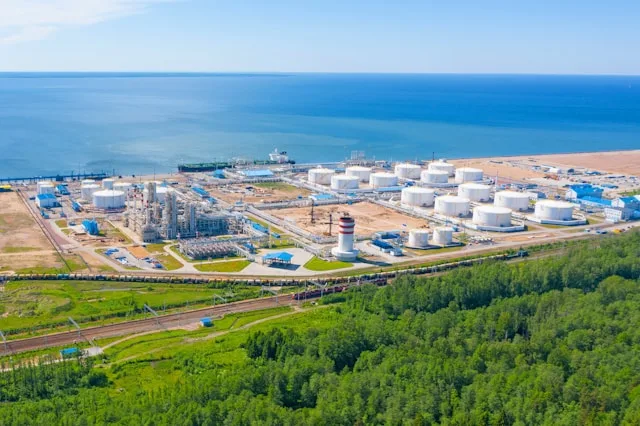
Sicily's largest industrial complex employs fewer people than it did a decade ago. The Siracusa, Priolo, Augusta, and Melilli industrial zone, which once anchored the island's economy with pure refining volume, has stabilised at roughly 3,800 direct positions in its core petrochemical and refining operations. Headlines describe a sector in retreat. Regional media frame it as a slow-motion closure story. The employment figures, taken alone, support that reading.
But the employment figures, taken alone, are misleading. Beneath the headline contraction sits an acute and worsening shortage in exactly the roles that determine whether this complex survives its next decade. Process safety engineers qualified under the SEVESO III Directive carry a vacancy rate above 12%. Environmental remediation project managers take more than seven months to hire. Digitisation technicians in SCADA and predictive maintenance are 42% more in demand year on year, while supply has responded by just 8%. The zone is not simply losing jobs. It is losing one kind of job and failing to fill another.
What follows is a ground-level analysis of how this bifurcation took hold, why it is accelerating through 2026, and what it means for the leadership teams running energy transition, remediation, and circular economy programmes across one of Europe's most complex industrial sites. The data covers compensation, competitor geography, regulatory constraint, and the specific executive roles where conventional hiring methods have already failed.
The Two Markets Inside One Industrial Zone
The official designation of the Siracusa, Priolo, Augusta zone as a Sito di Interesse Nazionale, Italy's strictest environmental oversight classification, is the structural fact that shapes everything else. It means the complex operates under a dual mandate. Legacy refining and chemical operations must maintain continuity. Simultaneously, a remediation and decarbonisation programme valued at more than €1.2 billion must advance toward EU-mandated milestones.
These two mandates pull the labour market in opposite directions.
On the legacy side, direct employment has stabilised after years of decline. Eni-group companies, including Versalis, Syndial, and Enilive, account for roughly 2,400 positions. The ISAB refinery, operating under extraordinary commissioner administration since 2022 following EU sanctions on its Russian parent Lukoil, maintains approximately 1,000 to 1,200 direct workers. The refinery runs on government liquidity guarantees totalling €1.5 billion, according to a Reuters report from October 2024. Its long-term ownership remains unresolved. New permanent hiring is effectively frozen.
On the transition side, capital is flowing in. Eni allocated €300 million between 2023 and 2027 for a Circular Economy Hub at Priolo. Versalis plans operational startup of a chemical recycling pilot plant by late 2026, requiring 120 to 150 new technical hires. Syndial's remediation workforce is projected to expand by 15 to 20%, adding 80 to 100 technical roles through 2026.
The result is a zone where headcount is flat or declining in aggregate, while specific categories of technical and leadership talent are in deficit. Confindustria Siracusa reports that 87% of its associated firms cite talent shortage as their primary growth constraint. That figure sits alongside a decade of net job losses. Both are true. They describe different segments of the same complex.
Why the Shortage Is Invisible from the Outside
The dominant public narrative about Siracusa's industrial zone is decline. ISAB's sanctions crisis. Versalis restructuring. A province with negative STEM migration. Every major Italian newspaper has published some version of this story. And every version omits the same thing.
The restructuring headlines created a false impression that qualified technical talent was available. The employment losses of the past decade targeted operational and commodity production roles. The simultaneous shortage in environmental remediation, process safety management, and circular chemistry deepened in the same period. The crisis and the shortage are not contradictory. They are two faces of the same structural mismatch.
The process safety gap
Consider the SEVESO III compliance requirement. The entire Priolo complex is classified as a high-tier Seveso establishment under EU Directive 2012/18/EU. This means unannounced inspections by the Ministry of Interior, mandatory Safety Management Systems, and quantitative risk assessment obligations that few professionals in Italy are qualified to meet at the required depth. The vacancy rate for process safety engineers across the complex stands at 12.3%. Average time to fill: 7.4 months. The equivalent metric in Northern Italy is 3.2 months.
An estimated 85 to 90% of candidates with more than ten years of SEVESO tier-one site experience are passive, according to LinkedIn Talent Insights data from late 2024. Average tenure in current roles exceeds 5.5 years. These are professionals who do not respond to job postings. They do not attend career fairs. They must be found through direct headhunting methodology or they will not be found at all.
The remediation bottleneck
The remediation talent pool is even thinner. Fewer than 150 professionals in all of Italy have more than five years of experience on SIN-classified contaminated site projects. More than 95% of them are passive candidates. Syndial's human resources plan for 2024 through 2026 disclosed in environmental impact documentation that 35% of its project management roles require external recruitment because local supply of hydrogeologists and contaminated site engineers is insufficient.
One pattern illustrates the problem. Syndial maintained an open vacancy for a Senior Remediation Project Manager, responsible for SIN soil vapour extraction systems, from March 2024 through at least January 2025. More than nine months. The role requires SEVESO III qualification and English fluency for EU funding reporting. According to reporting by UnionFiltec-CISL, only three qualified candidates were identified in the entire Sicilian market. All three demanded relocation premiums to move from Northern Italy.
The Compensation Bifurcation That Aggregate Data Hides
Federchimica's sectoral data for 2024 shows nominal wage growth of 2.8% across the Italian chemical industry. That figure is broadly aligned with national inflation. It is also nearly useless for planning a hire in Siracusa's transition-critical roles.
The aggregate masks a split. Traditional petrochemical wages in the zone are stagnating. But roles tied to biorefinery operations, circular economy, and environmental remediation are experiencing compensation hyperinflation of 20 to 30% above standard Southern Italy benchmarks. The market rate for a chemical engineer in this complex varies by more than 40% depending on whether the role involves legacy operations or green chemistry deployment.
What the roles actually pay
At the senior specialist and manager level, a Process Safety Manager with SEVESO qualification earns €75,000 to €95,000 base plus a hazardous site allowance of €8,000 to €12,000. An Environmental Remediation Project Manager earns €68,000 to €85,000 base, with premiums of 15 to 20% for SIN-specific contamination expertise. A Biorefinery Operations Manager, reflecting the scarcity of renewable feedstock experience, earns €82,000 to €100,000 base.
At executive and VP level, the numbers escalate. An Industrial Site Director for a complex exceeding 500 employees earns €140,000 to €180,000 base with 30 to 40% bonus potential and a total compensation range of €200,000 to €260,000. An HSE Director earns €130,000 to €160,000 base plus legal liability insurance coverage valued at €15,000 to €20,000, a direct consequence of the SEVESO and environmental prosecutor scrutiny that defines this zone. An Energy Transition and Circular Economy VP earns €150,000 to €200,000 base plus long-term incentive components, reflecting direct competition with multinational headquarters in Milan.
These figures matter for one reason. They are not high enough to solve the problem on their own. The competitors for this talent are not paying Southern Italy rates.
The Geographic Drain No Compensation Package Can Fully Offset
Siracusa competes for petrochemical and environmental talent against three distinct markets. Each offers monetary or non-monetary incentives that erode whatever premium a Sicilian employer is willing to pay.
Northern Italy, particularly Milan, Ravenna, and Porto Marghera, offers 15 to 25% higher base salaries for equivalent engineering roles and materially stronger career progression to corporate headquarters functions. Ravenna specifically competes for remediation talent with similar SIN-classified projects but superior infrastructure.
The Rotterdam and Antwerp hub, Europe's petrochemical capital, offers 40 to 60% salary premiums for senior operations roles after tax differentials, English-language working environments, and exposure to circular economy projects further advanced than anything currently operational in Sicily. This market specifically attracts Sicilian talent who hold EU-funded master's degrees or have international exposure.
The Middle East, particularly Jubail and the UAE, represents the most aggressive competitor. For senior plant managers and HSE directors, Saudi Aramco and ADNOC offer tax-free compensation packages totalling €250,000 to €400,000 annually, according to Energy Intelligence's 2024 reporting on global refining talent migration. Italian professionals with 10 to 15 years of SEVESO experience are a specific target of this recruitment. The drain accelerated after 2022 as European energy sector volatility made Gulf stability more attractive.
Syracuse province exhibits a negative migration balance of minus 2.1% annually for STEM graduates aged 25 to 35. According to SVIMEZ's 2024 report on the Southern Italian economy, 68% cite lack of career advancement compared to Northern Italy or abroad as the primary reason. The pipeline is not refilling.
This creates the analytical claim at the centre of this article. The investment in energy transition and remediation has not reduced the workforce problem. It has replaced one kind of worker with another that does not yet exist in sufficient numbers in Sicily. Capital moved faster than human capital could follow. Eni committed €300 million for circular economy infrastructure. The Italian government designated the zone as a potential Hydrogen Valley. Versalis planned pilot plant operations for 2026. But the professionals required to operate these assets, the hydrogeologists, the biorefinery managers, the SCADA engineers, the SEVESO-qualified safety directors, are either not in Sicily, not looking for new roles, or being paid more somewhere else. The investment case is strong. The talent case has not been made.
Regulatory Complexity as a Hiring Multiplier
The regulatory environment of the Siracusa zone does not merely constrain operations. It multiplies the difficulty of every hire.
Permitting delays and their talent consequences
Any new industrial project within the SIN requires a Valutazione di Incidenza, an impact assessment proving compatibility with ongoing remediation activities. This adds 12 to 18 months to permitting timelines versus standard Italian industrial zones. For employers, this means every new role tied to a transition project is subject to bureaucratic lag. For candidates, it means offers come with uncertainty about start dates, project timelines, and whether the asset they are being hired to build will receive approval on schedule.
The EU Emissions Trading System adds another layer. Carbon credit costs for Siracusa facilities exceeded €45 million in 2023, according to Eni's annual report. The EU Carbon Border Adjustment Mechanism entering full implementation in 2026 will further pressure margins on carbon-intensive production, complicating the business case for roles tied to export-oriented chemical chains.
The no-net-job-loss constraint
The EU Just Transition Fund, which allocated €180 million for Sicily, includes clauses mandating no net job loss. This requires 18-month consultation periods with trade unions for any workforce reduction. The mechanism is designed to protect workers. In practice, it also slows the reallocation of headcount from legacy operations to transition roles, because every reduction must be matched by a corresponding gain elsewhere in the zone. The result is a labour market where restructuring proceeds at bureaucratic speed while the talent demand curve moves at investment speed.
For executive hiring leaders in the industrial and manufacturing sector, this regulatory overlay means that search timelines in the Siracusa zone should be calibrated to account for constraints that do not exist in competitor geographies. A role that takes 90 days to fill in Rotterdam may take 220 days in Priolo. Not because the role is different. Because the environment around it is.
What the ISAB Resolution Means for the Talent Market in 2026
The unresolved ownership of the ISAB refinery is the single largest variable in the zone's near-term labour market. According to reporting by Il Sole 24 Ore and the Financial Times, the Italian government's preferred outcome is a sale to a non-sanctioned operator, with Trafigura and Saudi Aramco having reportedly evaluated the asset. A conclusion by mid-2026 is the expected timeline.
A successful sale would stabilise 800 to 1,000 direct jobs and release more than €500 million in deferred maintenance and efficiency investment. For the broader zone, this would create a secondary wave of hiring demand in engineering, maintenance, and project management that would compound the existing shortages in process safety and digitisation.
Failure to sell would trigger managed decline under EU Just Transition Fund protocols. The workforce reduction scenarios in that case are not public, but the implications for the contractor ecosystem are clear. Approximately 2,000 contractor personnel depend on ISAB operations. Their redeployment into Versalis transition projects or Syndial remediation work would require retraining that the local system is not currently equipped to deliver at speed.
Either outcome intensifies the talent challenge. A sale means more demand for the same scarce roles. A failure means a restructuring that demands transition managers and reskilling coordinators, roles that are themselves in short supply.
The 2026 Hiring Picture for Leadership Teams
The trajectory established through 2025 has continued and sharpened into 2026. Versalis's chemical recycling pilot plant, targeting operational startup by late 2026, requires 120 to 150 new technical positions in process engineering and feedstock management. These are not roles that can be filled from the existing Sicilian talent pool. They require hybrid experience in traditional refining and renewable feedstock processing, a combination that fewer than a handful of professionals in Southern Italy possess.
Syndial's remediation expansion adds another 80 to 100 technical roles. The hydrogen electrolyser project, designated under the EU Important Projects of Common European Interest framework, remains without a Final Investment Decision. But feasibility work is underway. If it proceeds, the talent requirement will be additive to everything already described.
Meanwhile, the zone faces energy cost competitiveness gaps of 30 to 40% versus U.S. Gulf Coast and Middle Eastern petrochemical hubs, according to Federchimica's 2024 competitiveness analysis. Sixty percent of process equipment in the Priolo chemical complex exceeds 30 years of age. The port at Augusta carries logistics cost premiums of $0.50 to $0.80 per barrel versus Rotterdam due to draft limitations. These are not talent problems. But they shape the commercial context in which every talent decision is made.
For organisations hiring into this zone, the core challenge in 2026 is not whether candidates exist. A small number do. The challenge is that those candidates are passive, employed, and being courted simultaneously by Northern Italian chemical clusters, the Rotterdam hub, and Middle Eastern operators offering tax-free packages that no Italian employer can match.
The search method matters as much as the offer. A conventional executive search process that relies on job postings, database mining, or inbound applications reaches at most 5 to 10% of viable candidates for SEVESO-qualified and SIN-experienced roles. The other 90% must be identified through talent mapping and direct approach, using the professional society networks, alumni channels of Eni remediation programmes, and cross-border intelligence that define this market.
KiTalent works across executive hiring in energy, oil, and renewables with a methodology built for markets where the talent is not visible. Interview-ready executive candidates are delivered within 7 to 10 days. The model charges on a pay-per-interview basis, with no upfront retainer. In a market where 95% of the most qualified remediation specialists are passive and the cost of a failed executive hire compounds through regulatory delay and project slippage, the speed and precision of the search is the competitive advantage.
For organisations competing for SEVESO process safety leadership, environmental remediation directors, or biorefinery operations managers in Sicily's most complex industrial zone, speak with our executive search team about how we approach this market.
Frequently Asked Questions
What is the average salary for a process safety manager in the Siracusa petrochemical zone?
A SEVESO-qualified Process Safety Manager in the Siracusa, Priolo, Augusta zone earns €75,000 to €95,000 in base salary, plus a hazardous site allowance of €8,000 to €12,000 annually. These figures reflect Southern Italy benchmarking and are 15 to 25% below equivalent roles in Northern Italy. However, the vacancy rate for these positions exceeds 12%, and time to fill averages 7.4 months, which means employers competing for this talent may need to offer premiums beyond published salary bands to secure candidates.
Why is it so difficult to hire environmental remediation specialists in Sicily?
Fewer than 150 professionals in Italy have more than five years of experience managing SIN-classified contaminated site projects. More than 95% of them are currently employed and not actively looking for new roles. The Siracusa zone requires hydrogeologists and contaminated site engineers with specific experience in Italian Legislative Decree 152/06 and EU funding reporting in English. Local university output does not match demand, and Northern Italy and international competitors offer higher salaries and stronger career progression. Identifying passive candidates through direct search is the only reliable method in this market.
What is the outlook for the ISAB refinery in Priolo?
The Italian government is pursuing a sale of the ISAB refinery to a non-sanctioned operator, with a conclusion expected by mid-2026. A successful sale would stabilise 800 to 1,000 direct jobs and unlock more than €500 million in deferred investment. If the sale fails, managed decline under EU Just Transition Fund protocols becomes the likely path. Either scenario intensifies demand for transition managers, process safety engineers, and restructuring specialists in the zone.
How does the Siracusa petrochemical zone compete with Northern Italy and the Middle East for talent?
It competes at a systemic disadvantage. Northern Italian chemical clusters offer 15 to 25% higher base salaries and better career progression. The Rotterdam and Antwerp hub offers 40 to 60% premiums after tax. Middle Eastern employers offer tax-free packages of €250,000 to €400,000 for senior plant managers and HSE directors. Syracuse province loses 2.1% of its STEM graduates aged 25 to 35 annually. Employers in the zone must combine competitive compensation with structured executive search approaches that reach passive candidates before competitors do.
What executive roles are most in demand in Sicily's petrochemical sector in 2026?
The highest-demand roles are Environmental Remediation Project Managers for SIN soil and groundwater projects, SEVESO-qualified Process Safety Managers, Biorefinery Operations Managers with renewable feedstock experience, SCADA and predictive maintenance specialists for Industry 4.0 digitisation, and Energy Transition VPs who can manage EU IPCEI and Just Transition Fund applications. KiTalent delivers interview-ready candidates for these roles within 7 to 10 days through AI-enhanced talent mapping and direct headhunting, with a 96% one-year retention rate across completed placements.
What regulatory factors complicate hiring in the Siracusa industrial zone?
The zone's SIN designation adds 12 to 18 months to permitting for new projects, creating uncertainty around start dates for transition roles. SEVESO III high-tier classification requires specialised safety qualifications that few candidates hold. The EU Just Transition Fund's no-net-job-loss clauses impose 18-month consultation periods for any workforce reduction. The EU Emissions Trading System adds carbon costs exceeding €45 million annually. Together, these factors extend search timelines and narrow the pool of candidates willing to accept the regulatory complexity of working in this environment.