Siracusa's Port Lost Its Largest Employer. The Talent It Needs Now Does Not Exist Locally.
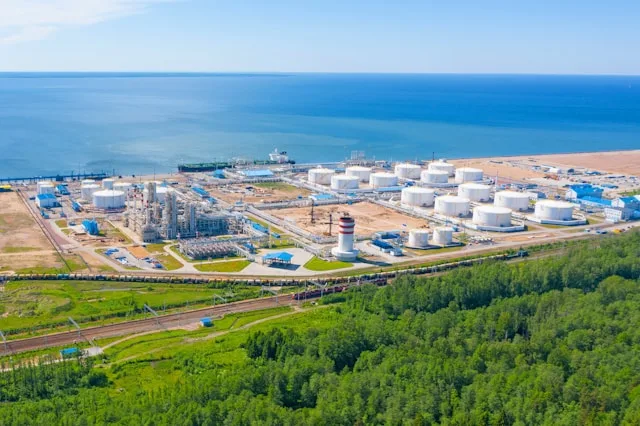
The Port of Siracusa handled 3.8 million tonnes of cargo in 2021. By 2023, that figure had dropped to 2.1 million. The cause was singular and irreversible: ExxonMobil closed its Esso Italiana refinery in December 2023, eliminating the port's largest single cargo generator and its most substantial maritime employer. Liquid bulk traffic collapsed by 65% in a single cycle. Roughly 900 jobs disappeared from the San Pio X industrial terminal alone.
What has replaced the refinery's demand is not a comparable employer. It is a constellation of smaller, more specialised requirements: environmental remediation contractors needing bilingual HSSE managers with ATEX and Seveso III certification. Cold chain logistics firms competing with Catania for refrigeration specialists. A fishing cooperative that cannot find a replacement for ageing fleet captains. A port services consortium that has left its Chief Pilot position vacant for over fourteen months. Siracusa's maritime sector is not shrinking uniformly. It is contracting in volume while intensifying in complexity.
What follows is an analysis of how the refinery closure restructured the talent requirements of an entire port, why a province with 17.8% unemployment still cannot fill its most critical maritime roles, and what organisations hiring in this market must understand before they begin a search.
A Refinery Closes, a Talent Market Fractures
The permanent closure of the ExxonMobil refinery did not simply reduce cargo volumes at the Port of Siracusa. It split the local labour market into two populations that barely overlap.
The first population consists of the workers displaced by the closure. At its peak, the Esso Italiana operation employed approximately 1,100 people. By 2024, roughly 150 to 200 remained in decommissioning roles. The majority of displaced workers held operational, administrative, or process roles specific to active refining. Their skills are not transferable to the functions now in demand.
The second population is the one the market actually needs: licensed maritime pilots, Seveso III-qualified safety managers, cold chain logistics directors, and marine mechanics with artisanal shipwright capability. These roles require certifications that take years to obtain, institutional knowledge of the Siracusa channel's restricted-draft conditions, or both. The two populations exist in the same province. They do not exist in the same talent market.
This is the core analytical point that aggregate unemployment figures obscure. Siracusa Province reported unemployment of 17.8% in mid-2024, according to ISTAT. The maritime sector in the same province reported an average of 67 days to fill a vacancy, compared to a regional average of 41 days. A senior consultant analysing hidden talent pools would recognise this immediately: the available labour pool and the required labour pool are not the same pool. The gap between them is not a training problem solvable in months. It is a certification and experience problem measured in years.
The Roles That Cannot Be Filled From Within
Fourteen Months Without a Chief Pilot
The Centro Servizi Portuali Siracusa, the public-private consortium providing pilotage and mooring services, has operated without a Chief Pilot since October 2023. According to reporting in La Sicilia, the role requires specific licensing for the Siracusa channel, ISPS certification, and sufficient seniority within a national pool of only 380 licensed port pilots. Despite offering gross annual compensation of €95,000 to €110,000, the consortium has found zero local candidates who qualify.
The passive candidate ratio for licensed maritime pilots in Italy is estimated at 9:1. Average tenure is 18 years. These professionals do not use job boards. They move through direct invitation from other port authorities or through retirement buyout arrangements. A conventional job posting reaches, at best, the 10% of pilots who might consider a change. The other 90% must be identified and approached individually, a process that requires direct headhunting methodology rather than advertising.
The HSSE Manager Search That Moved to Milan
A major international environmental remediation contractor operating at the former ExxonMobil site reportedly abandoned a six-month search for a bilingual Health, Safety, Security and Environment Manager. The role required ATEX certification, experience with Seveso III high-tier regulations, and fluency in both Italian and English. According to pattern data identified by the Osservatorio Industria Petrolchimica Siracusa and reported by Confindustria, the firm ultimately relocated the role to Milan with weekly site travel, increasing its costs by 35%.
This outcome illustrates a dynamic that will repeat across the decommissioning phase. The San Pio X site remains under strict Seveso III high-tier control until remediation completion, estimated for 2028. Every contractor operating on that site requires HSE personnel with petrochemical demolition experience. That experience pool is concentrated in Northern Italy and internationally. It is not available in Siracusa at the compensation levels employers initially budget for.
Cold Chain Logistics: The Catania Premium
The cold chain logistics segment presents a different version of the same problem. Unioncamere Sicilia's 2024 reporting documented an incident where a Siracusa-based cold chain firm recruited a Logistics Manager from a competitor in Catania by offering a 22% salary premium, moving the package from €52,000 to €63,500 annually plus a company vehicle. The Catania firm left the role unfilled for eight months, eventually outsourcing the function to a third-party logistics provider.
This is not an isolated incident. Catania's logistics hub, anchored by the airport logistics zone and superior rail connections, offers 12% to 18% higher salaries for equivalent roles. It also offers something Siracusa's SME market cannot: career trajectory. Larger firms operating out of Catania provide international mobility and corporate structures. Siracusa's cold chain operations are dominated by micro and small enterprises where the ceiling arrives quickly. For a logistics director weighing two offers, the Catania proposition is structurally stronger on multiple dimensions.
The Paradox of Excess Capacity and Insufficient Talent
The refinery closure did something counterintuitive to the Port of Siracusa. It created physical surplus and human capital deficit simultaneously.
The San Pio X industrial zone now has excess berth capacity. The port authority's traffic forecast for 2026 projects stabilisation at 1.8 to 2.0 million tonnes, well below the 3.8 million tonnes the infrastructure was built to handle. There are empty berths. There are vacant warehouses. The physical port can accommodate far more than it currently processes.
Yet functional constraints prevent that capacity from being used. The port lacks deep-water berths. Its maximum draft of 10.5 metres excludes Post-Panamax container traffic. The SS114 highway, the primary road connection to Catania and the mainland, operates at 140% of designed capacity during peak season. Rail freight modal share sits below 4%, compared to 18% nationally, due to single-track limitations. Planned upgrades to the Siracusa-Catania rail link, including a double-tracking feasibility study by Rete Ferroviaria Italiana, could reduce transit times by 40 minutes. But that infrastructure will not arrive before late 2026 at the earliest, according to RFI's development plan.
The talent implication is direct. Organisations evaluating whether to use Siracusa's newly available port capacity face a hiring environment where the logistics managers, terminal operators, and intermodal coordinators who would run those operations are not present in the local market and must be recruited from Catania, Augusta, or further afield. The physical asset is available. The human capital to operate it is not. Capital, in this case public infrastructure investment, has again moved faster than the talent pipeline required to make it productive.
Compensation in a Market That Defies National Trends
National logistics salary growth in Italy moderated to 2.1% in 2024, according to Assocostieri's remuneration report. In Siracusa, the picture is sharply different. Median compensation for Port Operations Directors has risen 14% since 2022, from €78,000 to €89,000, driven specifically by the scarcity of Seveso-qualified managers needed for the decommissioning phase.
This divergence matters for any organisation benchmarking a hire against national data. The national figure understates what it actually costs to attract qualified talent to Siracusa by a considerable margin.
The full compensation structure, drawn from Mercer, Page Executive, and Unioncamere data, reveals where the premiums concentrate:
Port Operations Director: Senior manager level commands €55,000 to €68,000 gross annual. Executive level, specifically a Direttore Generale or Amministratore Delegato for a mid-size terminal operator, reaches €90,000 to €120,000 plus performance bonus. The gap between those two tiers reflects the scarcity of candidates with both the technical certification and the general management capability required.
Logistics and Supply Chain Director: Senior specialists earn €48,000 to €62,000. Executive-level roles reach €75,000 to €95,000. Candidates with cold chain specialisation and HACCP advanced certification command the top of these ranges.
Fishing Fleet Manager: A senior captain with cooperative experience earns €42,000 to €55,000 plus revenue share. Executive-level directors of large cooperatives reach €65,000 to €80,000. These figures are governed by the CCNL Pesca collective bargaining agreement for 2023 to 2025.
The competitive challenge, however, is not only about what Siracusa pays. It is about what competitors pay. Augusta, 15 kilometres north and under the same port authority jurisdiction, offers a 15% to 20% premium for petrochemical-maritime roles and retains active refining capacity through the Luigi Virginio plant. Catania offers the salary premiums already noted plus materially better infrastructure. For C-suite maritime executives, Northern Italian ports in Genoa and Naples offer 40% to 60% compensation premiums and equity participation, according to Spencer Stuart Italy's Board and CEO Index, creating a persistent drain of senior talent.
Malta compounds the challenge from a different direction. The Malta Ship Register offers zero per cent tax on shipping income. Transport Malta's maritime statistics show an English-speaking regulatory environment, tax incentives for maritime executives through the Resident Scheme, and a yacht management cluster that directly competes with Siracusa's marina sector for qualified managers. An organisation in Siracusa trying to hire a senior maritime professional is not competing with local alternatives. It is competing with Augusta, Catania, Genoa, Naples, and Valletta simultaneously.
The Blue Economy Pivot and What It Requires
Siracusa's strategic response to the refinery closure centres on what regional authorities call the "Blue Economy pivot." The Regional Operational Programme (POR FESR Sicilia 2021-2027) allocates €14 million for smart port infrastructure and fishing tourism hybridisation. The Zona Logistica Semplificata, designated in 2023, clusters 45 SMEs in cold chain logistics, construction materials distribution, and ship chandlery. The Marina di Siracusa, with over 450 berths and 85% to 90% seasonal occupancy, has already absorbed former industrial maritime workers into refitting and maintenance roles.
These are genuine structural responses, not speculative plans. The marina sector is growing. The decommissioning phase is generating temporary but real demand for heavy-lift logistics through 2026 and 2027. General cargo traffic is projected to increase 5% to 7% as the construction sector recovers.
But each of these growth vectors requires talent that the current market cannot supply organically.
The smart port agenda requires professionals who understand digital port management systems, IoT-enabled cargo tracking, and automated berth allocation. These skills exist in Rotterdam, Singapore, and Hamburg. They do not exist in Siracusa, and the local university system does not produce them at scale.
The fishing tourism hybridisation model requires operators who combine commercial fishing expertise with hospitality management and EU regulatory compliance. This is an emerging profile. The candidates who fit it are not searching for roles because the roles themselves are still being defined.
The decommissioning logistics demand requires project cargo specialists with heavy-lift experience and environmental remediation knowledge. As the failed HSSE Manager search demonstrated, this talent pool is nationally dispersed and internationally mobile. It will not respond to local job postings.
Each growth vector, in other words, depends on hiring talent that is either geographically distant, professionally passive, or both. Organisations mapping the talent available in niche markets of this kind will find that the conventional recruitment playbook does not apply. The candidate pools are too small, too specialised, and too passive for advertising-based methods.
What Hiring Leaders in This Market Must Do Differently
The Siracusa port and maritime market exhibits every characteristic that causes conventional executive searches to fail. The candidate pools are small and nationally dispersed. The passive-to-active ratio in critical roles exceeds 9:1. Compensation benchmarks based on national logistics data understate the local premium by double digits. Geographic competitors with superior infrastructure and higher pay are 15 kilometres away.
An organisation that posts a maritime operations role on Italian job boards and waits for applications will reach, at most, the small minority of qualified professionals who happen to be actively looking. For licensed maritime pilots, that minority is functionally zero. For Seveso-qualified HSE managers, it is barely larger. For cold chain logistics directors willing to work in an SME environment rather than a corporate one in Catania, it is negligible.
The search methodology that works in this market is direct, proactive, and forensically targeted. It requires identifying passive candidates through AI-enhanced talent mapping across the entire Italian maritime sector, Augusta's refining cluster, Malta's maritime services market, and Northern Italy's port ecosystem. It requires understanding that a candidate in Genoa earning €130,000 will not move for €90,000 unless the proposition addresses something beyond compensation: autonomy, impact, quality of life, or a role in building something that does not yet exist elsewhere.
KiTalent works with organisations facing exactly this kind of specialised, passive-dominated talent market. Through AI-powered candidate identification and direct headhunting across industrial and manufacturing sectors, KiTalent delivers interview-ready candidates within 7 to 10 days, reaching the professionals who are invisible to job boards and inaccessible through conventional search. With a 96% one-year retention rate across 1,450 executive placements, the methodology is built for markets where the margin for error in hiring is zero.
For organisations hiring port operations directors, logistics executives, or specialised maritime professionals in Siracusa's post-refinery market, where every viable candidate must be found rather than attracted, start a conversation with our executive search team about how we approach markets of this complexity.
Frequently Asked Questions
What is the average salary for a Port Operations Director in Siracusa?
Senior manager-level Port Operations roles in Siracusa command €55,000 to €68,000 gross annual compensation. Executive-level positions, such as a Direttore Generale for a terminal operator, reach €90,000 to €120,000 plus performance bonus. These figures have risen 14% since 2022 due to acute scarcity of Seveso III-qualified managers. National logistics salary benchmarks understate the Siracusa market by a material margin, making local market benchmarking essential before structuring an offer.
Why is it so hard to hire maritime professionals in Siracusa despite high unemployment?
Siracusa Province reports 17.8% unemployment, but the maritime sector averages 67 days to fill a vacancy. The unemployed population consists largely of generalists displaced by the ExxonMobil refinery closure. The roles in demand require specific certifications, including ISPS, ATEX, Seveso III qualifications, and licensed maritime pilot credentials, that take years to obtain. The available labour pool and the required labour pool do not overlap. This is a structural mismatch, not a volume problem.
How does the ExxonMobil refinery closure affect hiring in Siracusa's port sector?
The closure in December 2023 removed the port's largest cargo generator and its most substantial employer, reducing liquid bulk traffic by 65%. The decommissioning phase running through 2028 has created new demand for specialised roles in environmental remediation, heavy-lift logistics, and HSSE management. These roles require certifications and experience that are nationally dispersed, making direct search methods essential for filling them.
What are the main competitors for maritime talent in the Siracusa region?
Augusta, 15 kilometres north, offers 15% to 20% salary premiums for petrochemical roles and retains active refining capacity. Catania offers 12% to 18% higher logistics salaries plus superior infrastructure and career progression at larger firms. Malta competes for yacht services and ship management talent through tax incentives and an English-speaking regulatory environment. For C-suite maritime executives, Genoa and Naples offer 40% to 60% compensation premiums.
What roles are hardest to fill in Siracusa's maritime sector?
Four categories present the most acute shortages: licensed maritime pilots, where the national pool totals only 380 professionals; chemical and petrochemical terminal operators with Seveso qualifications; refrigeration and cold chain logistics managers; and marine mechanics with artisanal shipwright skills. KiTalent's approach to executive hiring in specialised sectors is designed for markets where the candidate pool is this constrained and predominantly passive.
Is Siracusa's port sector growing or declining?
Neither description is accurate on its own. Total cargo volume has declined sharply from 3.8 million tonnes in 2021 to approximately 2.1 million in 2023, stabilising around 1.8 to 2.0 million tonnes through 2026. But specific segments are growing: the marina and yacht services sector operates at near-capacity, general cargo is forecast to rise 5% to 7%, and the decommissioning phase is generating temporary demand for project cargo logistics. The market is contracting in volume while intensifying in the complexity and specialisation of the talent it requires.