Tainan Food Processing: Billions in Smart Agriculture Investment, Not Enough People to Run It
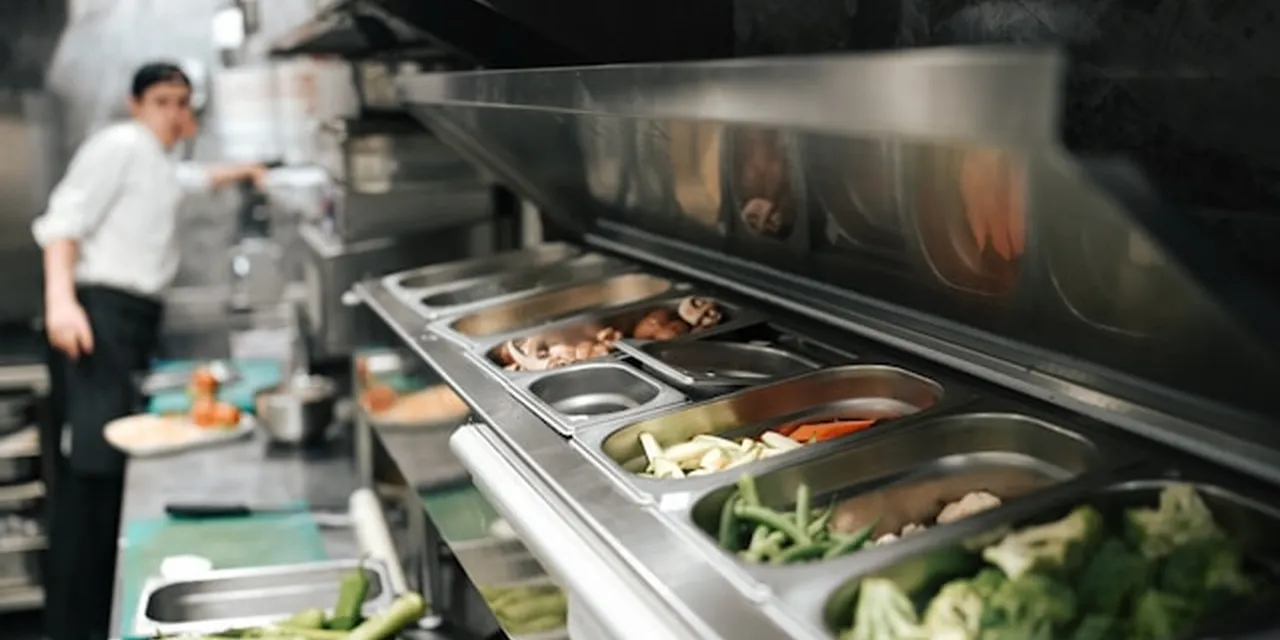
Tainan's food processing sector generated NTD 420 billion in revenue through 2024, anchored by roughly 1,200 registered manufacturers drawing raw materials from the Chianan Plain within a 50-kilometre radius. The city is home to Taiwan's largest food conglomerate, hosts 11% of the island's cold storage capacity, and has seen its seafood exports to Japan climb 14% year-on-year. By most measures, this is a sector with strong fundamentals and clear growth ahead.
The problem is not capital. Tainan's municipal government allocated NTD 2.4 billion for smart agriculture parks in Guantian and Xuejia. Private firms are investing in IoT-enabled farms, pharmaceutical-grade fermentation for functional foods, and CPTPP-compliant testing infrastructure. The money is flowing. What is not flowing is the talent required to convert that investment into operational capacity. Job postings for food manufacturing in Tainan rose 17% year-on-year in the second half of 2024, with the steepest increases in food safety, cold chain logistics, and food technology R&D. Yet the people those postings need are largely invisible to job boards, employed elsewhere, or unwilling to relocate from Taipei for the salaries on offer.
What follows is an analysis of the forces reshaping Tainan's food processing, agribusiness, and seafood value chains, the talent dynamics that will determine which organisations capture growth and which stall, and what senior hiring leaders competing in this market need to understand before they make their next move.
The Chianan Plain Advantage Is Real but Fragile
Tainan occupies a singular position in Taiwan's food economy. The city accounts for approximately 18% of the island's total agricultural output value, specialising in rice, mango (particularly the Irwin cultivar), pineapple, and aquaculture species including milkfish and grouper. The proximity of raw material supply to processing capacity is the sector's foundational competitive advantage. Forty-five or more fruit processing SMEs cluster in Yujing and Nanxi districts. Thirty-eight HACCP-certified seafood processing plants operate out of Cigu and Beimen. The supply chain from field to factory floor runs short and fast.
But this advantage is eroding from below. Tainan's agricultural workforce declined 4.2% year-on-year through 2024. Sixty-eight percent of farm operators are over 55. The average farmer age across the broader Tainan agricultural sector has reached 65.4 years. Government-backed "Young Farmers" subsidy programmes have achieved only 34% of their recruitment targets in Tainan, according to a 2024 evaluation by the Council of Agriculture.
The implication is stark: the processors investing in export growth and smart facilities are doing so on top of a raw material base whose human infrastructure is ageing out. Without a new generation of agricultural operators, post-harvest loss (already 12-15% for fruit due to gaps in pre-cooling infrastructure) will worsen, and processors will face a choice between importing raw materials or reducing output. Neither option is compatible with the "local value chain" positioning that underpins Tainan's premium food branding in Japanese and Southeast Asian export markets.
Where the Export Growth Is Coming From
Japan remains the dominant destination for Tainan-origin food exports, absorbing 38% of outbound volume. Vietnam follows at 21%, and the United States accounts for 15%. The Japanese market is particularly significant because it drives high-value OEM processing contracts, including private-label snack production for 7-Eleven Japan and frozen seafood supply through trading houses like Mitsui Bussan.
The CPTPP Compliance Pressure
Anticipated alignment with Japan's Positive List System for agricultural chemicals by mid-2026 will require NTD 500 million or more in testing infrastructure upgrades across Tainan's SME base, according to the Taiwan Food Industry Development Research Institute. This is not a future concern. It is a compliance investment cycle that firms need to be executing now, and the regulatory affairs professionals who can manage the transition are among the scarcest talent categories in the market.
Cross-Strait Disruption and Supply Chain Complexity
China's intermittent bans on Taiwanese food imports, most recently targeting pineapple and sugar apple between 2021 and 2023, have forced Tainan processors to maintain dual supply chains. This operational complexity increases overhead and requires logistics leadership with experience managing geopolitical supply chain risk. The firms that absorbed this disruption most effectively were those with existing export diversification toward Japan and Southeast Asia. Firms dependent on a single export corridor were materially damaged.
The combined effect is a market where export revenue is growing, but the compliance burden, supply chain complexity, and raw material risk are all growing faster. This is the environment in which Tainan food companies are trying to hire.
The Talent Bottleneck: Three Roles That Define the Crisis
Hiring data from 104 Job Bank showed 1,240 active food manufacturing postings in Tainan during Q3 2024, a 17% increase year-on-year. But the aggregate number understates the severity at the top of the skills pyramid. Three role categories illustrate why.
Bilingual Food Safety and Regulatory Affairs Managers
Average days-to-fill for bilingual food safety roles in Tainan reached 94 days in 2024, compared to 58 days for monolingual equivalents. The gap reflects a compound requirement: these roles demand fluency in Japanese (typically JLPT N1), deep knowledge of both Taiwanese and Japanese pesticide residue standards, and operational experience managing HACCP or ISO 22000 systems. Each qualification alone narrows the pool considerably. The combination narrows it to a few dozen plausible candidates in all of Taiwan.
Industry data suggests a pattern consistent with prolonged search failures in this category. A senior export compliance position at one major Tainan food manufacturer reportedly remained open for eight months through 2024, eventually filled through internal promotion after external search produced no viable candidates with the required dual-competency profile. The pool of professionals who combine Japanese language capability, regulatory expertise, and willingness to work in Tainan rather than Taipei is vanishingly small.
Cold Chain Operations Directors
Cold chain leadership is a market where poaching is the primary hiring mechanism. According to reporting in the Commercial Times in June 2024, Great Wall Enterprise recruited a Cold Chain Division Manager from Taichung-based competitor Cheng I Foods with a 35% total compensation premium, raising the individual's package from NTD 2.8 million to NTD 3.78 million annually to oversee a new Cigu facility. This triggered a retaliatory salary adjustment at Cheng I Foods.
The incident is instructive because it reveals the market dynamic beneath the headline. When qualified cold chain directors are not available through conventional hiring channels, firms resort to direct extraction from competitors. The cost is not just the premium paid to the individual. It is the escalation cycle it triggers across the entire market. Each poaching event raises the floor for the next search.
Smart Agriculture and Food Tech Engineers
Food application technologist postings grew 15% year-on-year. Agritech and IoT engineering roles command a meaningful premium over standard food sector positions, with senior specialist compensation reaching NTD 1.4 million to NTD 2.2 million and executive-level packages ranging from NTD 3.5 million to NTD 5.0 million. Yet these figures still trail what Taipei's software and fintech sectors offer by 30% or more.
The result is a talent drain operating in precisely the wrong direction. Tainan needs food tech engineers to staff the smart agriculture parks it is building. The engineers it needs are being hired by Taipei tech firms that offer higher pay, more urban amenities, and the professional network density that technology sector careers provide. Taisun Enterprise restructured its R&D department in 2024 to permit full-remote work for IoT and agricultural data scientists, according to its sustainability report. This represented a considerable departure from Tainan manufacturing culture. It was an adaptation born from necessity, not preference.
The Original Tension: Capital Has Outrun Human Capital
This is the analytical spine of Tainan's food sector challenge in 2026. The investment in automation, IoT-enabled agriculture, functional food development, and export certification has not reduced the workforce requirement. It has replaced one kind of worker with another that does not yet exist in sufficient numbers.
The NTD 2.4 billion flowing into smart agriculture parks assumes the availability of agricultural data scientists, IoT systems engineers, and process automation specialists. The Southern Taiwan Science Park's expansion into functional foods assumes the availability of food chemists with pharmaceutical-grade fermentation experience. The CPTPP compliance timeline assumes regulatory affairs professionals who can bridge Taiwanese and Japanese standards.
Capital moved faster than human capital could follow. The facilities will be built. The testing laboratories will be equipped. The question for every hiring leader in this market is whether they will have the people to operate what they have invested in, or whether those facilities will sit underutilised while the talent capable of running them remains in Taipei earning 30% more in an adjacent industry.
This is not a transient imbalance. It is embedded in the structure of the market. The farm succession crisis is removing one generation of workers. The smart agriculture investment is creating demand for a different generation that has not yet been trained or attracted in sufficient volume. The gap between the two is where Tainan's growth projections will either be met or missed.
Compensation Realities: What the Market Actually Pays
Understanding what roles command in this market is essential for any organisation calibrating its offer strategy. The data below, drawn from 1111 Job Bank and Michael Page Taiwan's 2024 salary guides, represents total annual compensation in NTD.
Food Safety and Quality Assurance professionals earn NTD 1.2 million to NTD 1.8 million at manager level, rising to NTD 2.8 million to NTD 4.0 million at executive and VP level. Cold Chain and Logistics Operations directors command NTD 3.0 million to NTD 4.5 million. Food R&D and Product Development leadership ranges from NTD 2.5 million to NTD 3.8 million. Agritech and IoT Engineering roles carry the highest premiums, with executive packages reaching NTD 3.5 million to NTD 5.0 million.
The Taipei Discount Problem
Tainan compensation trails Taipei by 15-20% at executive levels. Cost of living is 25-30% lower, which theoretically closes the gap. In practice, for many candidates the calculation does not balance. Taipei offers proximity to regulatory bodies (the Ministry of Economic Affairs, the Food and Drug Administration), superior international schooling for expatriate executives, and a deeper professional network. A passive candidate weighing a Tainan offer against remaining in Taipei is not simply comparing salary and rent. They are comparing career trajectory, family quality of life, and professional optionality.
Kaohsiung presents a different competitive threat, particularly for seafood processing talent. The port-proximity premiums and newer facilities in Kaohsiung's Cianjhen district and its Free Trade Zone command 10-15% higher compensation for marine biology and food engineering specialists. Taichung competes on cold chain logistics roles, offering comparable pay with a central distribution hub location that gives logistics professionals broader career mobility.
The net effect: Tainan's compensation structure is adequate for candidates already committed to the region. It is inadequate for attracting the mobile, high-demand specialists the sector now requires. Organisations that do not adjust their offer architecture for these roles will continue to run searches that stall at the shortlisting stage, watching candidates accept offers elsewhere because the total proposition did not meet the threshold required to move a passive professional.
The Passive Candidate Problem: Why 80% of the Talent You Need Is Invisible
The talent shortage in Tainan's food sector is not primarily a problem of demand outstripping supply, though that is part of it. It is a problem of visibility. The professionals most capable of filling the roles that matter most are not looking for work.
HACCP and ISO 22000 Lead Auditors in Tainan are estimated to be 80% passive. Average tenure runs 6.2 years, and unemployment in this specialism sits below 2%. Cold chain engineers, particularly refrigeration and HVAC specialists, show a passive ratio of approximately 75%. These candidates are recruited through industry association networks, specifically the Taiwan Cold Chain Association, rather than through any job posting platform.
The most extreme case is senior food chemists and flavorists. Over 90% are passive. Recruitment in this category operates exclusively through executive search or academic referral channels from NCKU's Department of Food Science and Technology. A conventional job advertisement reaches essentially none of the viable candidate pool.
This means that a hiring leader relying on 104 Job Bank or 1111 Job Bank for these roles is operating with access to at most 10-20% of the qualified market. The other 80-90% must be reached through direct identification and outreach. Firms that have not adopted this approach are not failing because better candidates do not exist. They are failing because their method cannot reach the hidden majority of qualified professionals who are already employed, satisfied, and not scanning job boards.
What Tainan's Food Sector Needs From Its Next Hires
The 2026 growth trajectory for Tainan food processing is projected at 3.5-4.0% by the city government. Biotech crossover into functional foods is accelerating as Southern Taiwan Science Park firms apply pharmaceutical fermentation capacity to probiotics and collagen peptides. Export certification requirements are tightening. Smart agriculture parks are coming online.
Each of these growth vectors depends on a specific talent category that is currently undersupplied. The functional food expansion requires R&D leadership with cross-disciplinary capability bridging food science and pharmaceutical processing. The CPTPP compliance push requires bilingual regulatory professionals who can operate across Taiwanese and Japanese frameworks. The smart agriculture buildout requires engineers who understand both agricultural systems and industrial IoT.
Thirty percent of Tainan's small-scale processing plants, those with revenue below NTD 50 million, face closure by 2027 due to lack of second-generation succession, according to the Taiwan Food Industry Development Research Institute. This is not a distant risk. It is a countdown. The talent pipeline decisions that organisations make in the next twelve months will determine which firms consolidate and grow, and which wind down.
For organisations building senior leadership teams in food processing and agribusiness, the question is no longer whether the market is competitive. It is whether your search method reaches the candidates who can actually be hired. In a market where the majority of qualified professionals are passive, where compensation trails competing cities, and where the required skill combinations are genuinely rare, conventional recruitment consistently fails.
KiTalent's approach to this market uses AI-powered talent mapping to identify and reach the professionals who are not visible through job boards. Interview-ready candidates delivered within 7 to 10 days. A 96% one-year retention rate. A pay-per-interview model that removes the upfront retainer risk that makes speculative searches expensive. For hiring leaders competing for bilingual regulatory specialists, cold chain directors, or food tech engineers in Tainan's compressed talent market, start a conversation with our executive search team about how we source in markets where conventional methods reach only a fraction of the viable pool.
Frequently Asked Questions
What are the hardest food processing roles to fill in Tainan?
Bilingual food safety and regulatory affairs managers top the list, with average days-to-fill reaching 94 days in 2024. These roles require Japanese language proficiency (JLPT N1), knowledge of both Taiwanese and Japanese pesticide residue standards, and HACCP or ISO 22000 operational experience. Cold chain operations directors and senior food chemists (flavorists) are also acutely scarce, with passive candidate ratios exceeding 75% and 90% respectively. Standard job advertising reaches almost none of the qualified candidates for these positions.
How does Tainan food industry compensation compare to Taipei?
Tainan food sector executive compensation trails Taipei by 15-20%. At VP level, food safety roles pay NTD 2.8 million to NTD 4.0 million, cold chain directors earn NTD 3.0 million to NTD 4.5 million, and agritech engineering leaders command NTD 3.5 million to NTD 5.0 million. Tainan's cost of living is 25-30% lower, partially offsetting the gap, but for mobile candidates weighing career optionality and family considerations, the discount often proves insufficient without a compelling role proposition. Understanding how salary negotiations work at executive level is essential for hiring leaders calibrating offers.
What is driving food processing export growth from Tainan?
Japan absorbs 38% of Tainan-origin food exports, driven by OEM contracts for private-label products and frozen seafood supply to Japanese trading houses. Vietnam (21%) and the United States (15%) are the next largest markets. Anticipated alignment with Japan's Positive List System for agricultural chemicals by mid-2026 is driving NTD 500 million or more in compliance investment across Tainan's SME base. CPTPP accession, if achieved, would further accelerate export volumes but requires substantial laboratory and certification upgrades.
Why is the farm succession crisis relevant to food processing hiring?
Tainan's agricultural workforce is contracting at 4.2% annually, with 68% of farm operators over 55 and average farmer age at 65.4 years. This directly affects processors because it threatens the raw material supply chain that underpins their operations. Increasing raw material price volatility, projected at 8-12% annually without intervention, forces processors to either absorb costs, import substitutes, or invest in vertical integration. Each response requires different leadership capability, making executive-level succession planning critical for both farms and the processors that depend on them.
How does executive search work differently in Tainan's food sector?
With 80-90% of qualified candidates in key food sector roles classified as passive, meaning they are employed and not actively searching, conventional job advertising reaches only a fraction of the viable market. KiTalent uses AI-enhanced direct headhunting methodology to identify and approach these candidates directly, delivering interview-ready shortlists within 7 to 10 days. The pay-per-interview model means organisations only invest when they meet qualified candidates, removing the retainer risk that makes speculative searches costly in tight talent markets.
What impact is smart agriculture investment having on Tainan's talent needs?
Tainan's NTD 2.4 billion investment in agricultural technology parks and private-sector IoT automation is creating demand for agricultural data scientists, IoT systems engineers, and process automation specialists. These roles command premium compensation (NTD 3.5 million to NTD 5.0 million at executive level) but compete directly with Taipei's technology sector, which offers 30% or more in additional pay. This has forced some Tainan manufacturers to adopt remote work arrangements to attract candidates, a notable cultural shift in a traditionally conservative sector. Identifying professionals open to these hybrid arrangements requires targeted talent mapping beyond standard recruitment channels.