Toulouse Aerospace Hiring in 2026: Europe's Largest Graduate Pipeline Cannot Fill the Roles That Matter Most

Toulouse produces more aerospace engineering graduates than any other city in Europe. ISAE-SUPAERO alone sends 650 new engineers into the market each year, with 90% entering the aerospace sector. ENAC, INSA, and a network of specialised research labs add hundreds more. By any aggregate measure, Toulouse should be the easiest aerospace market in Europe to hire in.
It is not. As of early 2026, Toulouse's aerospace and space sector reports over 3,200 active vacancies, with a vacancy rate of 4.8%, nearly double the regional average. Unemployment among aerospace engineers sits below 2%, which is full employment by any practical definition. The roles going unfilled are not junior positions that fresh graduates can step into. They are systems architects, satellite payload integration engineers, AI specialists with domain knowledge, and composite materials process engineers. The candidates who can fill these roles are employed, not looking, and increasingly being courted by competitors in Paris, Munich, Montreal, and a growing ring of NewSpace startups in Bordeaux and Madrid.
What follows is an analysis of the forces reshaping Toulouse's aerospace and space sector and the structural gap between what its education system produces and what its employers actually need. For senior hiring leaders operating in this market, the implications are concrete: the methods that filled aerospace roles five years ago no longer reach the candidates who matter in 2026.
The Production Boom That Outran Its Own Workforce
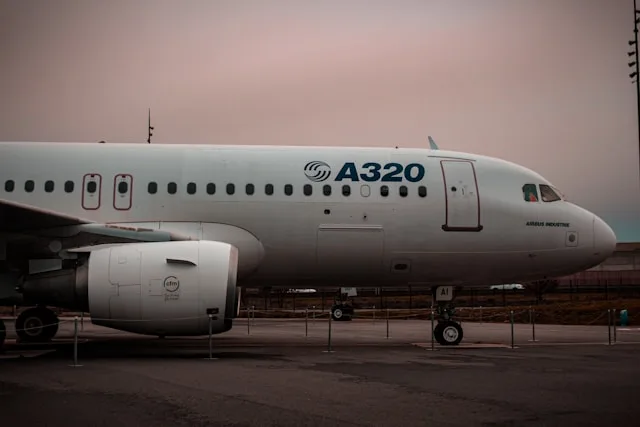
Toulouse's aerospace sector entered 2026 in what can best be described as a high-output, high-constraint equilibrium. The demand side is clear. Airbus achieved a production rate of 75 A320 family aircraft per month across its global final assembly line network through 2025. The target for 2026 is 84. The A350 production rate is rising from 10 to 12 monthly units, a jump that requires an estimated 1,200 additional technical hires in Toulouse alone by the end of this year.
These are not aspirational figures from a corporate strategy deck. They are production commitments with delivery slots sold to airlines. When a production rate increase falls behind schedule, it shows up in quarterly earnings and customer penalties. The pressure to hire is not theoretical.
The space segment is accelerating on a parallel track. Thales Alenia Space's Toulouse facility operated at 95% capacity utilisation for geostationary satellite orders through 2024 and 2025. The company has committed €400 million to modernise its Toulouse clean rooms, with operations planned for Q3 2026, requiring 600 new technicians and engineers. CNES is expanding its Toulouse footprint by 15%, adding 400 new positions to manage the CO2M and SWOT follow-on missions. Airbus Toulouse is manufacturing OneWeb Gen 2 satellites, adding further demand for satellite integration and propulsion specialists.
The supply side cannot keep pace. And the reason is more subtle than a simple headcount shortfall.
The Skills Translation Gap: Why Graduate Volume Masks a Deeper Problem
This is the original synthesis that defines Toulouse's hiring challenge in 2026, and it is a point that aggregate employment data obscures completely: the market appears well-supplied at the graduate level but remains critically constrained in the specific digital competencies that drive current executive hiring priorities. Capital invested in production capacity has moved faster than human capital has adapted to fill it.
Toulouse's engineering schools produce graduates trained in theoretical aerodynamics, structural mechanics, and classical systems engineering. These are valuable foundations. But industry demand has shifted decisively toward software-defined systems: embedded AI, cybersecurity to airworthiness standards like DO-326A/ED-202, model-based systems engineering using SysML and Capella, and agile development methodologies applied to safety-critical software. Academic curricula lag three to five years behind these market requirements, according to the Aerospace Valley Skills Forecast.
The result is a market where 650 new aerospace engineers graduate into Toulouse each year, and employers still cannot fill 3,200 vacancies. The mismatch is not about volume. It is about the specific intersection of aerospace domain knowledge and digital systems fluency that these roles demand.
A senior systems architect position at Airbus, for instance, requires airworthiness qualification for flight control systems. This is not a skill that can be taught in a six-month reskilling programme. It requires years of accumulated certification experience layered on top of digital engineering competency. The candidates who possess this combination are almost universally employed, not searching, and aware of their market value.
This gap will widen before it narrows. The France 2030 investment programme has designated Toulouse as the pilot city for France's "New Space" industrial strategy, pouring funding into satellite constellation production, electric propulsion, and Earth observation payloads. Every euro of this investment creates demand for skills that Toulouse's education pipeline does not yet produce at scale.
Where the Scarcity Is Most Acute
Systems Architects and Certification Specialists
The sharpest pain point sits in systems architecture and airworthiness certification. During the A321XLR certification campaign through 2023 and 2024, typical time-to-fill for Level 5 Systems Architect positions in Toulouse ran to 180 to 220 days, according to the Aerospace Valley Skills Barometer. Internal hiring managers reported that 60% of shortlisted candidates received counter-offers from existing employers before acceptance. The result was heavy reliance on contractors at day-rate premiums of 40 to 50% above equivalent permanent costs.
This is not a temporary spike driven by a single programme. The A350 rate increase, the A400M software modernisation, and ongoing A321XLR production all require the same certification-qualified systems architects. Demand is cumulative. Supply is not.
Satellite Payload and Integration Engineers
The space segment exhibits a different but equally acute pattern. Satellite payload architects operate in what the data describes as a "hidden" circulation market. According to recruitment metrics disclosed by Thales Alenia Space, 90% of role changes for these specialists occur through direct headhunting or internal referral. Job board applications account for virtually none of the successful hires.
According to Les Echos, Thales Alenia Space has typically secured senior satellite systems engineers from Airbus Defence and Space through poaching premiums of 15 to 20% above base salary, particularly for the OneWeb Gen 2 programme. This pattern created salary compression that forced Airbus to implement retention bonuses of €10,000 to €15,000 for comparable roles.
AI and Machine Learning Specialists With Aerospace Domain Knowledge
The AI talent challenge in Toulouse is distinctive because it involves competition not just within aerospace but across entirely different industries. According to Le Figaro, CNES restructured its Toulouse AI laboratory in 2023 after losing three senior computer vision specialists to autonomous vehicle companies in Paris within six months. The restructuring hybridised civil service contracts with private-sector salary top-ups through subsidiary contracting, allowing CNES to match market rates for these specific profiles.
AI and ML specialists with PhD-level credentials and aerospace domain knowledge command premiums of 20 to 30% above standard engineering compensation bands. The challenge is not simply salary. It is that these professionals can apply their skills in automotive, fintech, or pure technology companies that offer equity, faster career progression, and more flexible working arrangements. Aerospace must compete on mission and technical complexity, because it often cannot compete on total compensation or lifestyle.
The Passive Candidate Reality in Toulouse Aerospace
The defining characteristic of Toulouse's senior aerospace talent market is that the candidates organisations most need to hire are the ones least likely to be found through conventional recruitment. This is not a market where posting a role and reviewing applications produces viable shortlists at the senior level.
Senior flight test engineers with more than ten years of experience sit in a market with unemployment below 1% and average tenure of 7.5 years. The ratio of active to passive candidates is approximately 1:9, according to Airbus Flight Test Center analytics cited in the Aerospace Valley Report. VP-level programme directors are 95% or more passive. These roles are filled almost exclusively through direct headhunting that reaches the 80% of leaders not visible on any job board.
The implications for search strategy are stark. A traditional recruitment process that relies on job postings and inbound applications reaches, at best, the 10% of the talent pool that happens to be actively looking at the moment the role opens. In a market where the most qualified 90% must be identified, approached, and persuaded, the method matters as much as the mandate. Firms that have not adapted their approach are running the same failed searches repeatedly, extending timelines past six months while paying contractor premiums to cover the gap.
France Travail's "Métiers en Tension" analysis for Occitanie confirms that recruitment lead times exceed 120 days for the specialisations listed above. For hiring leaders accustomed to three-month search cycles, Toulouse aerospace in 2026 requires a fundamental recalibration of expectations and process.
Compensation: What Senior Aerospace Roles Pay in Toulouse
Understanding the compensation structure is essential for any organisation trying to attract or retain leadership talent in this market. Toulouse sits in a specific competitive position: lower base salaries than Paris or Munich, but meaningfully lower cost of living, creating a quality-of-life calculation that complicates direct salary comparisons.
Aircraft Programme Leadership
At the senior specialist and technical lead level, with 10 to 15 years of experience, total cash compensation in aircraft programmes ranges from €75,000 to €95,000. At VP and programme director level, base salaries sit between €140,000 and €180,000, with total compensation reaching €200,000 to €250,000 including performance bonuses. Long-term incentives for executives at listed companies like Airbus, Safran, and Thales can add 20 to 40% on top of these figures.
Space and Defence Leadership
The space and defence segment pays slightly higher at the specialist level, with satellite systems architects and chief engineers earning €80,000 to €105,000. At VP level, base compensation runs €150,000 to €200,000, with total packages reaching €220,000 to €300,000. The higher ceiling reflects the scarcity premium for satellite programme leadership and the competitive pressure from Cannes, where Thales Alenia Space's headquarters competes for the same talent with Mediterranean lifestyle positioning.
The Geographic Arbitrage Problem
The compensation data becomes strategically important when read alongside geographic competitor dynamics. Paris offers 12 to 18% higher base salaries for equivalent aerospace roles, but with 40% higher housing costs. Munich and Hamburg pay 15 to 25% higher gross salaries, supported by IG Metall collective bargaining agreements. Montreal offers similar nominal salaries with a lower tax burden, and Quebec's immigration policies actively target French-speaking engineers from Toulouse's schools. ISAE-SUPAERO's graduate destination survey shows that 8% of graduates now choose North America, up from 3% in 2018.
Bilingual French-English technical programme managers earn premiums of €10,000 to €15,000 over monolingual peers. This premium reflects the reality that Toulouse's aerospace market operates in English as much as French, and programme leadership increasingly requires both.
For organisations benchmarking offers in this market, the risk of a poorly calibrated compensation package is not just a failed hire. It is a six-month delay before the search restarts, during which production milestones slip and contractor costs accumulate.
The Structural Constraints Tightening the Market Further
The hiring challenge in Toulouse aerospace is not occurring in isolation. Several systemic forces are compressing the talent pool simultaneously, and each one reinforces the others.
The Retirement Wave
Approximately 25% of Toulouse's current aerospace workforce is eligible for retirement by 2028. This is not a distant demographic projection. It is a near-term reality that means the sector must simultaneously replace experienced specialists and hire for growth. The knowledge contained in a 30-year veteran of satellite integration or flight test cannot be transferred through a training manual. It leaves with the individual.
The France 2030 investment programme and the production rate increases at Airbus assume access to a workforce that is, in part, about to exit. No amount of capital investment solves a problem of human capital departure at this scale without deliberate talent pipeline and succession planning.
Housing and Infrastructure
Toulouse metropolitan area housing prices rose 18% between 2020 and 2024. Aerospace wages rose 8% over the same period. The gap is eroding the relocation attractiveness that historically made Toulouse an easy sell to candidates from higher-cost markets. Nantes and Bordeaux, both developing their own aerospace and NewSpace clusters, now offer lower housing costs and are intercepting mid-level talent that Toulouse previously attracted without effort.
Infrastructure saturation compounds the problem. The A620 and A624 highway networks and Blagnac airport access roads add 45 or more minutes to peak-hour commutes. This reduces the effective labour pool radius: a candidate living 30 kilometres from Blagnac faces a commute that would not exist in a less congested market. The practical effect is that Toulouse's addressable talent pool is smaller than its metropolitan population suggests.
Export Controls and Security Clearance Constraints
Tightening ITAR, EAR, and EU dual-use regulations complicate the hiring of non-EU nationals for satellite and defence roles, according to the French Ministry of Defence's Direction Générale de l'Armement. This narrows the addressable talent pool for precisely the roles where scarcity is most acute. A world-class satellite systems architect who holds only a non-EU passport may be technically perfect and practically unhireable for classified programmes. The regulatory constraint does not appear in vacancy statistics, but it is a binding limitation on every international executive search in the defence and space segment.
What This Means for Organisations Hiring in Toulouse Aerospace
The data points toward a single conclusion: the conventional approach to executive and specialist hiring in Toulouse aerospace is structurally inadequate for the current market. Posting roles, waiting for applications, running a three-month process, and extending an offer no longer produces results at the senior level. The candidates who can fill the most critical roles are passive, employed, and aware of their value. Reaching them requires a fundamentally different method.
Three principles define effective hiring in this market as of 2026.
First, speed. In a market where 60% of shortlisted candidates receive counter-offers before acceptance, the elapsed time between first approach and formal offer is the single largest predictor of search success. A process that takes six months will lose its best candidates to faster competitors. Organisations that can present interview-ready candidates within days rather than months hold a measurable advantage.
Second, reach. With 90% of satellite payload architects and 95% of VP-level programme directors operating as passive candidates, the only viable search method is direct identification and approach. This requires systematic talent mapping of the Toulouse aerospace ecosystem: who holds which qualifications, who has worked on which programmes, and what proposition would be required to move them. Job boards and inbound applications are irrelevant at this level.
Third, precision in the value proposition. A senior systems architect considering a move in Toulouse is not motivated primarily by a salary increase. They are motivated by programme significance, technical challenge, career trajectory, and the specific team they will join. The approach must be tailored to the individual, not templated. The counteroffer risk is too high to leave anything to chance.
KiTalent's approach to this market reflects these realities. Using AI-enhanced talent mapping to identify passive candidates across Toulouse's aerospace cluster, combined with a pay-per-interview model that aligns incentives with speed and quality, KiTalent delivers interview-ready leadership candidates within 7 to 10 days. With a 96% one-year retention rate across 1,450 executive placements, the methodology is built for markets where conventional search consistently fails.
For organisations competing for systems architects, satellite programme leaders, or AI specialists in Toulouse's aerospace market, where the candidates you need are not visible on any job board and every month of vacancy costs production momentum, speak with our aerospace and defence executive search team about how we approach this market.
Frequently Asked Questions
What are the hardest aerospace roles to fill in Toulouse in 2026?
The four most constrained role categories are systems architects with airworthiness certification qualifications, AI and machine learning engineers with aerospace domain knowledge, satellite payload integration engineers, and composite materials process engineers. Systems architect roles routinely take 180 to 220 days to fill, with 60% of shortlisted candidates receiving counter-offers before acceptance. These roles require a combination of deep regulatory knowledge and digital systems fluency that Toulouse's education pipeline does not yet produce at the scale industry demands.
What do senior aerospace executives earn in Toulouse?
VP and programme director roles in aircraft programmes offer total compensation of €200,000 to €250,000 including bonuses. Space and defence VP roles reach €220,000 to €300,000 at the top end. Senior specialists with 10 to 15 years of experience earn €75,000 to €105,000 depending on sub-sector. AI and ML specialists with PhD credentials and aerospace domain knowledge command premiums of 20 to 30% above these standard bands. Long-term incentives at listed companies can add 20 to 40% for executives.
Why is Toulouse struggling to hire despite producing so many aerospace graduates?
The shortage is not about volume. It is about the gap between academic training and market demand. Toulouse's engineering schools produce graduates strong in classical aerodynamics and structural mechanics, but industry now requires proficiency in embedded AI, model-based systems engineering, cybersecurity compliance, and agile software development. Academic curricula lag three to five years behind these requirements. The roles going unfilled demand a combination of digital fluency and domain experience that new graduates do not yet possess.
How does Toulouse aerospace compensation compare to Paris and Munich?
Paris offers 12 to 18% higher base salaries for equivalent roles but with 40% higher housing costs. Munich and Hamburg pay 15 to 25% higher gross salaries, backed by stronger collective bargaining agreements. Toulouse's advantage lies in lower cost of living and quality of life, but rising housing prices (up 18% from 2020 to 2024) are eroding this differential. Montreal competes through lower tax burdens and aggressive recruitment of French-speaking engineers from Toulouse's schools.
What percentage of senior aerospace candidates in Toulouse are passive?
The market is overwhelmingly passive at the senior level. For flight test engineers with 10 or more years of experience, the active-to-passive ratio is approximately 1:9. For satellite payload architects, 90% of role changes occur through direct headhunting or internal referral. VP-level programme directors are 95% or more passive. This means traditional recruitment methods reach at most 10% of viable candidates. Effective executive search in aerospace and defence requires direct identification and approach of candidates who are not looking.
How can organisations reduce time-to-hire for critical aerospace roles in Toulouse?
The primary driver of extended timelines is not candidate scarcity alone but process design. Organisations using traditional post-and-wait methods face six-month cycles in which their best candidates accept competing offers. Compressing the timeline requires three changes: proactive talent mapping before a vacancy opens, direct approach to pre-identified passive candidates, and a streamlined interview process that moves from first meeting to offer within weeks rather than months. KiTalent's model delivers interview-ready aerospace leadership candidates within 7 to 10 days by combining AI-powered candidate identification with direct headhunting methodology.