Toulouse Aerospace Hiring in 2026: The Talent Market Is Splitting in Two, and Most Employers Are on the Wrong Side
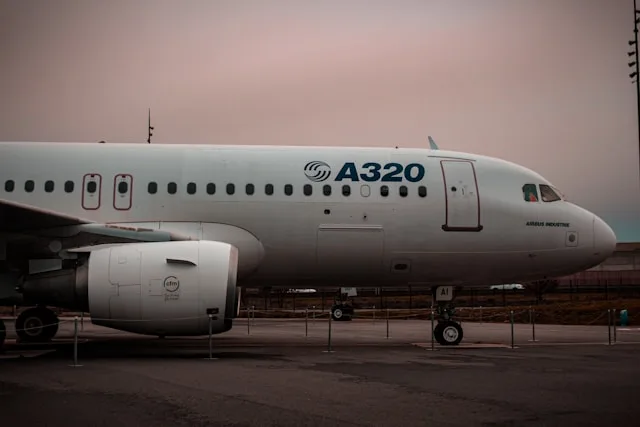
Toulouse's aerospace cluster added thousands of jobs between 2024 and 2025. The Occitanie region hosts 874 aerospace companies, 89,400 direct employees, and a supply chain that stretches from Airbus final assembly lines to 400 specialist SMEs manufacturing everything from composite fuselage panels to electrical harness systems. On aggregate, the numbers look healthy. They look like a market where hiring should be getting easier.
It is not. The aggregate figures conceal a fracture running through the centre of this ecosystem. Airbus and Safran are expanding headcount, absorbing the best-qualified candidates, and offering compensation premiums that smaller suppliers cannot match. Meanwhile, 40% of SMEs in the Aerospace Valley cluster have frozen hiring due to cash-flow constraints, and SME bankruptcy filings rose 15% year-on-year through 2023 and 2024. The same market that is creating jobs at the top is losing capability at the base.
What follows is an analysis of the forces pulling Toulouse's aerospace talent market apart: the production ramp-up pressures driving OEM hiring, the structural constraints squeezing the supply chain, and what this bifurcation means for any organisation trying to fill a senior technical or leadership role in this cluster in 2026.
The Production Ramp-Up That Is Reshaping Employment Across the Cluster
Airbus is executing a trajectory toward 75 A320 family aircraft per month by 2027, up from approximately 50 to 55 monthly through 2025. That acceleration required 13,000 net new hires across the Occitanie region in 2024 and 2025 alone. With approximately 53,000 personnel already in the Toulouse metropolitan area, Airbus operates the largest single-employer concentration in European aerospace. The Saint-Eloi and Jean-Luc Lagardère factories represent production nodes where a single delayed hire in a certified inspection role can stall an entire assembly sequence.
Safran Aircraft Engines maintains approximately 12,000 employees locally, with LEAP engine maintenance volumes driving MRO expansion at its Colomiers and Toulouse sites. The MRO subsector shows particular momentum. Aging A320ceo and B737NG fleets require heavy maintenance at accelerating rates, and Toulouse is positioning itself as a European centre for sustainable aviation fuel retrofit and hydrogen propulsion testing through the IRT Saint Exupéry research programmes.
These numbers represent real demand for real workers. But the demand is not distributed evenly. The OEMs are hiring aggressively and can pay accordingly. Tier-2 and tier-3 suppliers are watching their best technicians leave for Airbus or Safran before they have completed their notice periods.
The implications for hiring leaders are specific. If you are an OEM, your challenge is volume and speed. If you are a mid-tier supplier, your challenge is existential. The same ramp-up that creates your order book is draining the workforce you need to fulfil it.
Where the Talent Gaps Are Most Severe
The French employment agency DARES classifies aircraft maintenance technicians, CNC machinists, and composite manufacturing technicians as experiencing "very high tension" in the Occitanie region, with vacancy rates exceeding 15%. Those categories are not niche. They are foundational to the production of every aircraft that leaves a Toulouse assembly line.
Composite and Electrical Harness Specialists
Latécoère, the Toulouse-headquartered Tier 1 aerostructures and interconnection systems supplier, maintained 400 open positions throughout 2023 and 2024. According to La Tribune, roles for composite technicians and electrical harness specialists remained vacant for six to eight months on average. The company's HR director noted publicly that candidates with three to five years of experience receive an average of 3.2 simultaneous offers, forcing recruitment cycles beyond two quarters.
This is not a shortage that job advertising can solve. When a candidate pool this small receives this many competing offers, the search process itself becomes a competitive exercise. Speed, method, and candidate intelligence determine outcomes. Posting and waiting does not.
Executive and Senior Technical Roles
At the executive level, the passive candidate ratio reaches 85%. VP and Director-level professionals in Toulouse aerospace do not monitor job boards. Their average tenure in current roles is 4.2 years, according to Korn Ferry's Aerospace Executive Survey. They move through retained executive search or board-level networks, and they move rarely.
A pattern reported by Les Echos and confirmed by Michael Page's aerospace practice illustrates what this means in practice. A search for a Director of Operations at a mid-sized aerostructures supplier ran from Q4 2023 through Q2 2024 across two executive search firms. The role required composite manufacturing expertise and bilingual English-French capability. Three finalist candidates accepted competing offers from larger employers at compensation levels 25% above the client's ceiling.
Eight months. Two search firms. Zero hires. That is not bad luck. That is a systemic mismatch between what mid-tier employers can offer and what the market demands.
The OEM-SME Compensation Split Is Widening at the Worst Possible Level
The compensation data for Toulouse aerospace contains an apparent contradiction that, once resolved, tells the real story of this market. APEC data shows median aerospace executive compensation in Toulouse grew only 2.8% in 2024, which is below inflation. That figure suggests a cooling market. It is misleading.
Beneath the median, the market is splitting. Generalist engineering and management roles are indeed stagnating. But specific profiles in transformation-critical disciplines are commanding 12 to 18% year-on-year increases and signing bonuses up to €15,000. MBSE architects, SAF certification engineers, and LEAP engine MRO specialists sit in this category. The median is an average of a stagnant majority and an overheated minority. Neither group experiences the median.
What Senior Roles Actually Pay in This Market
Based on APEC's 2024 salary survey and PageGroup's Aerospace and Defence guide for the Toulouse-Occitanie region, the compensation picture at senior and executive level breaks down as follows.
Aerospace Engineering Managers with 8 to 15 years of experience earn €75,000 to €95,000 in base salary at the senior manager level, reaching €85,000 to €110,000 in total compensation. At VP or Director level, leading functions of 50-plus personnel, base salaries range from €130,000 to €180,000. Total compensation packages including variable pay and equity participation reach €160,000 to €230,000.
MRO Operations Directors earn €90,000 to €120,000 at site manager level. At executive level, managing multiple sites, base salaries reach €140,000 to €200,000. Total packages at major international MRO providers can reach €250,000.
Senior Program Managers in the Airbus and Safran context earn €80,000 to €110,000. VP-level programme leaders earn €150,000 to €220,000 plus long-term incentive plans.
These are competitive figures within France. They are not competitive against Toulouse's international rivals. Paris offers 18 to 22% gross salary premiums for equivalent roles. Hamburg and Munich offer 15 to 25% premiums net of tax advantages, particularly for MBSE and certification engineers. Montreal and Mobile, Alabama, target Toulouse-trained specialists with expatriation packages including 30 to 40% salary uplifts. The compensation gap is widening fastest at exactly the seniority level where the most critical roles sit: the VP and Director tier where salary benchmarking against international competitors determines whether a candidate stays or leaves.
For SMEs operating on margins below 5%, matching even the lower end of OEM compensation is financially destructive. They cannot pay what Airbus pays. They cannot offer the career trajectory that Safran offers. And they cannot match the international packages that pull talent out of France entirely.
The Demographic Cliff Behind the Shortage Numbers
Thirty-five percent of Toulouse aerospace technicians are over 50 years old. Retirement waves projected for 2025 through 2030 will remove experienced capacity faster than the local training system can replace it. The CFA Aéronautique de Toulouse produces 400 graduates annually. The estimated replacement requirement is 1,200.
That is a gap of 800 technicians per year, every year, for five years. And these are not interchangeable generalists. An aircraft maintenance technician with 25 years of experience on A320 structures carries institutional knowledge that a recent graduate cannot replicate in training. The knowledge transfer window is closing.
ISAE-SUPAERO, the top-ranked aeronautical engineering school, produces 600 graduates annually with 90% entering aerospace. But these graduates are engineers, not technicians. The shortage at the technician level is structurally different from the shortage at the engineering level. It requires different training infrastructure, different recruitment methods, and a different talent pipeline strategy entirely.
Here is the original analytical claim that the data supports but that no single source states: the investment flowing into Toulouse's aerospace transformation, the €1.2 billion Pacte Agir allocation, the hydrogen demonstrators, the SAF retrofit programmes, has not reduced the workforce requirement. It has replaced one kind of worker with another that does not yet exist in sufficient numbers. Capital has moved faster than human capital could follow. The cluster is investing in hydrogen propulsion while it cannot staff its composite layup lines. The future arrived before the present was adequately resourced.
Structural Risks That Compound the Hiring Challenge
Supply Chain Concentration and the Spirit AeroSystems Effect
The cluster's dependence on Airbus, which represents 60% of regional aerospace revenue, creates asymmetric vulnerability. According to Reuters, Spirit AeroSystems' financial restructuring and quality control incidents forced Airbus to accumulate €2.3 billion in work-in-progress inventory. That inventory backlog triggered hiring freezes among second-tier suppliers even while OEMs continued expanding their own headcount.
This is the paradox at the centre of Toulouse's aerospace employment story. The aggregate numbers show growth. The ecosystem's resilience is deteriorating. Talent is concentrating in OEMs while SME capabilities erode. A hiring leader at a Tier 2 supplier faces a double constraint: the order book demands more people, but the cash flow from delayed deliveries cannot fund competitive offers.
Regulatory Costs Hitting SME Viability
The EU Corporate Sustainability Reporting Directive imposes new audit requirements on 300-plus Toulouse aerospace SMEs from 2025 onward. Compliance costs are estimated at €150,000 to €300,000 per SME annually, according to GIFAS's regulatory impact assessment. For specialised suppliers with margins below 5%, that cost is not an inconvenience. It is an existential pressure that further constrains the budget available for competitive hiring.
Simultaneously, sanctions on Russian titanium, previously 30% of Airbus's supply, have forced reshoring to alternatives in Japan and the US. Material costs have risen 18 to 25%, straining working capital for local manufacturers. Every euro absorbed by titanium premiums and CSRD compliance is a euro unavailable for the signing bonuses and salary adjustments that the talent market demands.
Infrastructure Constraints Pushing SMEs Out
Industrial land scarcity in Toulouse Métropole has driven land prices up 40% since 2020. SMEs are relocating to Castres or Auch, where land is cheaper but where the talent pool is thinner still. The Toulouse-Blagnac Airport faces slot limitations and night-flight restrictions that constrain cargo capacity for aerospace logistics. The physical infrastructure that made Toulouse the ideal location for this cluster is now, at the margin, working against the smaller companies that depend on it.
For hiring leaders, the infrastructure constraints translate directly into candidate behaviour. A passive candidate considering a move to an SME that has relocated 90 minutes from central Toulouse faces a quality-of-life calculation that no compensation package can fully offset.
What This Means for Executive Search in Toulouse Aerospace
The Toulouse aerospace talent market in 2026 is not a single market. It is two markets occupying the same geography.
In the first market, OEMs are hiring at scale with strong employer brands, competitive compensation, and long-term career architectures. Their challenge is speed and volume. They need to process thousands of hires per year without compromising on the certified, experienced profiles that production ramp-ups demand.
In the second market, SMEs and mid-tier suppliers are fighting for the same candidates with weaker brands, lower budgets, and less certainty about their own futures. Their challenge is existential. They need to find the 60 to 70% of qualified professionals who are passive, who are not responding to job advertisements, and who require a fundamentally different approach.
Across both markets, the traditional recruitment playbook struggles. The Aerospace Valley SME Barometer documented that SMEs lose 30% of successfully recruited candidates to counter-offers from Airbus and Safran before their start dates. According to Les Echos, Figeac Aero reported cases where CNC machinists accepted offers then defected to Safran Landing Systems for 18 to 22% salary premiums within the notice period. This is a market where understanding the counteroffer dynamic is not optional. It is central to every hire.
The roles that matter most, VP Programme Management, Director of Supply Chain, CTO for decarbonisation, Quality Assurance Directors, MRO Operations Directors, sit in the 85% passive candidate tier. They cannot be reached through job boards. They cannot be reached through single-agency mandates that lack the market intelligence to identify them. They require direct headhunting methods that map the full candidate ecosystem, identify who is moveable and why, and construct a proposition specific enough to shift someone from a stable, well-compensated role.
The skills these roles demand are themselves evolving. Model-Based Systems Engineering for digital continuity. Cybersecurity certification under DO-326A and ED-202 standards. Predictive maintenance AI for MRO digitalisation. Hydrogen storage systems. These are not competencies that existed in aerospace hiring specifications five years ago. Finding candidates who combine deep aerospace experience with transformation-era skills requires a talent mapping capability that goes well beyond keyword matching against a CV database.
For organisations competing for senior leadership in aerospace and defence, where 85% of the candidates who could fill your role are not looking, and the 15% who are visible are fielding three competing offers, the search methodology determines the outcome. KiTalent delivers interview-ready executive candidates within 7 to 10 days through AI-enhanced talent mapping that reaches the professionals conventional methods miss. With a 96% one-year retention rate across 1,450 executive placements, the approach is built for exactly the conditions this market presents: high passivity, intense competition, and zero tolerance for slow searches.
The cost of delay in Toulouse aerospace is not abstract. It is the eight-month failed search that leaves a production line understaffed. It is the Director of Operations role that two search firms could not fill because the market moved faster than the process. It is the composite technician who accepted your offer on Monday and took a call from Safran on Wednesday. For hiring leaders facing these conditions, start a conversation with our aerospace executive search team about how to approach this market before your next critical role opens.
Frequently Asked Questions
What are the hardest aerospace roles to fill in Toulouse in 2026?
The most acute shortages are in composite manufacturing technicians, CNC machinists with aerospace certification, electrical harness specialists, and MBSE architects. At the executive level, VP Programme Management, Director of Supply Chain, and MRO Operations Directors are among the most difficult roles to fill. DARES classifies several of these categories as experiencing "very high tension" with vacancy rates above 15%. The passive candidate ratio at executive level reaches 85%, meaning the vast majority of qualified professionals must be identified through proactive search methods rather than job advertising.
What do aerospace executives earn in Toulouse?
VP and Director-level aerospace executives in Toulouse earn base salaries of €130,000 to €200,000 depending on function and scope. Total compensation packages including variable pay and long-term incentives reach €160,000 to €250,000 at major OEMs and international MRO providers. Senior Programme Managers earn €80,000 to €110,000, while VP Programme leaders earn €150,000 to €220,000. Niche profiles in MBSE, SAF certification, and LEAP engine MRO commanded 12 to 18% year-on-year increases through 2024 and 2025, outpacing the 2.8% median growth for generalist roles.
Why do aerospace SMEs in Toulouse struggle to retain talent?
SMEs face a structural disadvantage. Airbus and Safran offer stronger employer brands, 18 to 22% salary premiums for comparable roles, and deeper career development pathways. The Aerospace Valley SME Barometer found that 30% of candidates recruited by SMEs accept counter-offers from OEMs before their start dates. SME margins below 5% leave little room for competitive salary matching, and new regulatory compliance costs under the EU CSRD further constrain hiring budgets. Mid-tier suppliers must compete on factors other than pure compensation, including role scope, autonomy, and technical challenge.
How does Toulouse compare to other aerospace hiring markets in Europe?
Paris offers 18 to 22% gross salary premiums for equivalent roles but has 35 to 40% higher living costs. Hamburg and Munich actively recruit French-speaking engineers at 15 to 25% net salary premiums, particularly for MBSE and certification roles. Montreal and Mobile, Alabama, target Toulouse-trained specialists with 30 to 40% expatriation uplifts. Toulouse retains advantages in quality of life, ecosystem density, and proximity to Airbus final assembly operations, but these advantages are insufficient to retain all professionals against international offers. Understanding how executive compensation compares across markets is essential for any employer building a competitive offer.
What is KiTalent's approach to aerospace executive search in Toulouse?
KiTalent uses AI-enhanced direct headhunting to identify and engage passive aerospace executives and senior specialists. In a market where 85% of leadership candidates are not actively seeking roles, this approach maps the full candidate ecosystem before a search begins. KiTalent delivers interview-ready candidates within 7 to 10 days on a pay-per-interview model with no upfront retainer, giving hiring organisations access to talent that job advertising and traditional agency methods consistently miss. The firm has completed over 1,450 executive placements with a 96% one-year retention rate.
What structural risks affect aerospace hiring in Toulouse in 2026?
The primary risks are supply chain concentration (Airbus represents 60% of regional aerospace revenue), a demographic cliff (35% of technicians are over 50 with training output at one-third of replacement needs), and regulatory cost pressure from the EU CSRD. Geopolitical factors including titanium supply disruption and Spirit AeroSystems production issues create hiring volatility among subcontractors. These risks compound the talent challenge by introducing uncertainty that makes building a resilient talent pipeline more difficult for mid-tier employers and critical for long-term competitiveness.