West Palm Beach Family Office Hiring: Why the Fastest Growing Wealth Market Cannot Pay Enough to Solve Its Talent Problem
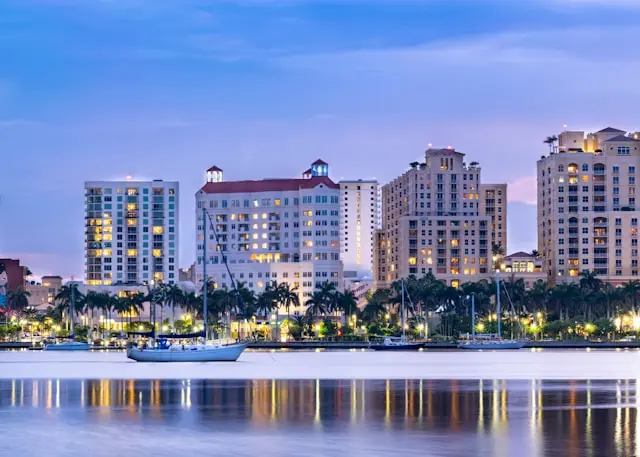
Palm Beach County now hosts more than 380 single-family offices and roughly 90 multi-family office operations. That figure represents a 45% increase in formations since 2020. The migration headlines were real. The capital arrived. The offices opened. But the professionals required to run them did not arrive in anything close to matching numbers.
The core tension in this market is not a shortage in the conventional sense. It is a mismatch between what family offices need and what they are willing, or structurally able, to pay to get it. West Palm Beach financial services compensation grew 3.8% year over year through 2024, below the national financial services average of 4.2% and well below Miami's 5.9%. In a market where the ratio of open COO positions to qualified candidates sits at 3:1, wages should be rising faster than the national average. They are not. That fact tells a more interesting story than the shortage itself.
What follows is a structured analysis of why this market behaves the way it does, what it means for the senior leaders trying to build teams inside it, and what any organisation hiring at the executive level in Palm Beach County must understand before launching a search that could easily stall for months.
The "Wall Street South" Reality Check
The narrative is familiar by now. Wealthy families and financial firms have relocated from the Northeast to South Florida, drawn by zero state income tax, lifestyle advantages, and a critical mass of peers. Bloomberg has tracked the migration under its "Wall Street South" banner. The Business Development Board of Palm Beach County projects 8-12% employment growth in securities, commodities, and financial services through 2026.
But the commercial real estate data complicates the story. Class A office vacancy in Downtown West Palm Beach stood at 19.2% as of Q3 2024, according to CBRE's South Florida Office Market Report. That is higher than Miami's Brickell corridor at 14.1%. It is higher than Fort Lauderdale at 16.8%. Net absorption for 2024 registered negative 142,000 square feet.
These numbers do not mean the family office boom is fictitious. They reveal something more specific: the growth is not materialising inside traditional office inventory the way most observers expected. Single-family offices often operate from residential or hybrid commercial spaces on Palm Beach Island itself, not from Class A towers downtown. The multi-family offices and professional services firms clustering along the Flagler Drive corridor and around West Palm Beach's financial district are real, but they occupy a different part of the market than the headline migration suggests.
Phillips Point at 777 South Flagler Drive operates at 91% occupancy, anchored by Bessemer Trust, Fiduciary Trust International of the South, and Stonebridge Private Wealth. The nearby 360 Rosemary complex sits at 78% leased, with Northern Trust expanding into 8,500 square feet for private client advisory. The demand is concentrated in a narrow band of premium addresses. Meanwhile, the broader downtown market softens around them.
This bifurcation matters for hiring leaders because it shapes the physical and psychological geography of where candidates want to work. The premium addresses attract talent. The vacancy rate two blocks away does not.
A Market Where 90% of the People You Need Are Not Looking
The talent arithmetic in West Palm Beach is stark. Financial services employment across Palm Beach County reached 34,200 as of October 2024, a 12.3% year-over-year increase. Family office-specific roles grew 18% annually against a regional talent pool growing at just 4%. Local universities produce approximately 280 finance and accounting graduates per year. The sector generates more than 400 open positions annually. The pipeline does not come close.
But the real constraint is not volume. It is seniority.
At the junior level, talent is available. Entry-level trust administration and operations associates represent an active, recruitable candidate market. At the senior level, the market inverts entirely. Family Office CIOs and Investment Heads are 90% passive, with average tenures exceeding seven years. Senior Trust Officers with 15-plus years of experience are 75% passive, with average tenures of nine years at their current institutions. Family Office CFOs are 85% passive, moving through networks rather than applications.
This is a market where the vast majority of qualified candidates are invisible to conventional recruitment methods. Posting a role on a job board reaches, at best, the bottom 10-25% of the available talent pool. The professionals a family office actually needs to hire will never see the listing. They are managing $500 million trust structures or overseeing direct investment portfolios for a single family. They are not browsing job boards over breakfast.
The Senior Trust Officer Bottleneck
The most acute example is the Senior Trust Officer role. The position requires Florida Bar admission, a CTFA designation, and deep knowledge of Florida's Trust Code under Chapter 736, including directed trust statutes. It requires multi-jurisdictional tax expertise for families with assets across state lines and international borders. The candidate pool for a search requiring ten or more years of experience typically contains eight to twelve viable professionals across all of South Florida.
Average time to fill: 47 days, compared to a 32-day national average for comparable trust roles. And that 47-day figure understates the problem. It measures searches that succeeded. It does not capture the searches that stalled, restarted, or were quietly abandoned.
The COO Crisis
Family Office COOs face an even more acute supply constraint. These roles require operational oversight of five to twenty person units, vendor management across legal, accounting, and custody relationships, and the diplomatic skill to implement family governance structures in organisations where the employer and the family are the same entity. The ratio of open positions to qualified candidates in the South Florida market is 3:1.
Average time to fill: 89 days. That is nearly three months during which a family office operates without the executive who coordinates its daily operations. For a structure managing hundreds of millions in assets, three months without a COO is not an inconvenience. It is an operational risk with compounding consequences.
The Compensation Paradox That Defines This Market
Here is where the data becomes genuinely puzzling. In a market with documented 3:1 supply-demand ratios and 89-day search timelines, standard economics predicts aggressive wage inflation. Employers should be bidding up compensation to clear the market. They are not.
Compensation growth in West Palm Beach financial services moderated to 3.8% in 2024. The national financial services average was 4.2%. Miami posted 5.9%. West Palm Beach is the tightest family office talent market in Florida and is growing compensation slower than markets with more available candidates.
The data points are not contradictory. They describe different forces operating on the same population.
Family Office COO compensation ranges from $350,000 to $550,000 base plus discretionary bonus and equity participation. Director of Private Investments roles command $300,000 to $450,000 base plus carried interest participation. Senior Trust Officers at the executive level earn $220,000 to $285,000 base with 30-50% bonus potential. Private Wealth Advisor Managing Directors range from $275,000 to $400,000 base plus revenue sharing.
These figures carry a 12-15% premium over national averages, according to Korn Ferry's Financial Services Compensation data. But they remain 8-10% below equivalent Manhattan roles. Florida's absence of state income tax functionally closes 5-7% of that gap for net compensation equivalence. The remaining 3-5% gap is the lifestyle premium that candidates implicitly accept.
The analytical insight that emerges from this data is not about the shortage itself. It is this: family offices in West Palm Beach are structurally unable to bid up wages the way institutional employers would, and this rigidity is the primary reason the talent market does not clear. A single-family office does not have a compensation committee benchmarking against market data and adjusting bands. It has a family principal who set the COO's pay based on personal judgement and relationship dynamics. Budget rigidity in family offices is not a policy failure. It is a structural feature of how these entities operate. The search extends to 89 days not because the candidates do not exist, but because the compensation on offer does not move fast enough to reach them.
This means that organisations hiring in this market must compete on dimensions beyond base salary. Equity-like structures, lifestyle flexibility, and the quality of the role itself become the primary tools. Any firm approaching this market with a standard compensation benchmarking exercise and nothing more will consistently lose candidates to employers who understand what actually moves a passive professional in this environment.
The Retention Problem No One Discusses at the Offer Stage
Recruiting is only half the challenge. Retention is the other half, and in West Palm Beach, it is arguably the harder problem.
Family offices relocating from Connecticut or New York to Palm Beach County report 60-70% retention failure of C-suite executives at the twelve-month mark, according to the Family Wealth Report's "Retention in Relocation" survey from September 2024. The failure rate is not driven by job dissatisfaction. It is driven by two forces that have nothing to do with the role itself.
The Trailing Spouse Problem
West Palm Beach's economy is narrower than New York's, Miami's, or even Stamford's. A CFO's spouse who held a senior marketing role in Manhattan may find no equivalent employer within commuting distance of Palm Beach County. The professional identity loss and career disruption for the non-relocating partner becomes the dominant factor in whether a family stays. No compensation package solves this. It is a market-structure limitation that conventional search processes rarely surface during the recruitment stage.
The Housing Shock
Palm Beach County median home prices reached $585,000 in Q3 2024, a 34% increase since 2020. Financial services wages grew 18% in the same period. That 16-percentage-point affordability gap is most acute for mid-level professionals, but it affects senior hires too. A COO earning $450,000 in Palm Beach County discovers that the waterfront or island-adjacent housing expected at that income level costs substantially more than anticipated. The sticker shock compounds when combined with property insurance premiums that increased 40-60% between 2022 and 2024 for commercial and residential assets alike.
The result is a talent market where employers must win the same candidate twice: once at the offer stage, and again at the twelve-month mark when the realities of daily life in Palm Beach County become clear. Firms that do not account for retention risk at the point of hire are not saving money. They are deferring cost into a second search.
The Competitive Geometry: Miami, Greenwich, and Dallas
West Palm Beach does not compete for talent in isolation. It operates within a triangle of competitor markets, each pulling at a different part of the candidate pool.
Miami's Brickell and Edgewater corridors offer 15-20% compensation premiums for equivalent family office roles and a deeper ecosystem of private equity and hedge fund employers. Senior investment talent seeking career mobility beyond single-family structures gravitates toward Miami. The city offers something West Palm Beach structurally cannot: platform scale. A Director of Private Investments who wants to move into a larger fund role in three years has options in Miami. In West Palm Beach, the next role often requires another relocation.
Greenwich and Stamford compete for CIO and senior investment roles with 25-30% higher base compensation and proximity to New York deal flow. But this market is a net contributor to Palm Beach County. It represents the "push" market, the source of lifestyle-motivated migration that has fuelled the growth in the first place. Candidates leave Greenwich for Florida willingly, accepting a compensation haircut in exchange for tax savings and quality of life.
Dallas has emerged as a quieter competitor for back-office and middle-office family office roles. It offers comparable tax advantages with materially lower housing costs. It lacks Palm Beach County's ultra-high-net-worth density, but for operations-focused roles that do not require client proximity, Dallas increasingly wins on economics alone.
For hiring leaders in West Palm Beach, the competitive implication is specific. The market retains lifestyle-motivated professionals and loses career-motivated professionals. Any executive search strategy that does not account for which type of candidate the role requires will misread the market entirely. A family governance role may be perfectly suited to a lifestyle-motivated hire. A Director of Private Investments role may require someone career-motivated enough to accept a market with limited platform mobility.
The Regulatory Layer That Is Adding Roles and Complexity
The regulatory environment is tightening in ways that create both cost and hiring demand simultaneously.
Florida's House Bill 3, enacted in 2024, expands state oversight of private fund advisers. Family offices managing external capital exceeding $100 million, excluding the single-family exclusion, now face state registration requirements effective in 2025. This captures multi-family offices and family offices that have accepted capital through joint ventures or friends-and-family fund structures.
At the federal level, the SEC's 2024 expansion of "Private Fund Adviser" definitions potentially captures family offices managing non-family capital, creating compliance and registration requirements estimated at $150,000 to $400,000 annually for affected offices. This cost is not trivial for a 15-person family office. It represents a material line item that must be staffed against.
The demand this creates is for compliance professionals who understand both federal and Florida-specific registration frameworks, combined with the fiduciary context of family office operations. These professionals are not the same as bank compliance officers. They need a hybrid skill set that barely existed as a defined role category three years ago. West Palm Beach is now hiring for positions whose job descriptions are still being written, in a market where the candidate pool for established roles is already insufficient.
No new Class A office construction is planned for Downtown West Palm Beach delivery through 2026. The proposed 550,000 square foot One West Palm mixed-use tower has paused pre-leasing activities pending anchor tenant commitments. Family offices expanding their compliance and operations teams will compete for the same constrained Class A inventory that existing firms already occupy at premium addresses. For some, this will mean operating from less prestigious locations. For others, it will mean limiting hiring to what their existing footprint can physically accommodate.
What This Means for Organisations Hiring in This Market
The West Palm Beach family office talent market in 2026 is defined by a series of compounding constraints. Candidate pools of eight to twelve people for senior trust roles. Passive candidate ratios above 85% for every executive-level position. Compensation growth below the national average despite severe supply-demand imbalances. Retention failure rates of 60-70% at the twelve-month mark for relocated executives. And a regulatory expansion creating demand for roles that do not yet have established talent pipelines.
Conventional recruitment methods reach a fraction of the relevant market here. A posted vacancy for a Family Office COO or a CIO-level investment head will attract candidates from the active market, which is the smallest, least experienced, and least relevant segment of the talent pool. The professionals who can actually perform these roles are employed, satisfied, and not looking. Reaching them requires direct identification and outreach through methods that map the market before approaching it.
KiTalent works with family offices, wealth management firms, and financial services organisations facing exactly these conditions. Using AI-enhanced direct search to identify and approach passive candidates across the private wealth and investment management sector, KiTalent delivers interview-ready candidates within 7 to 10 days. The pay-per-interview model means organisations only invest when they meet qualified candidates, not before.
With a 96% one-year retention rate across 1,450-plus executive placements, the approach addresses the retention dimension that defines this market as clearly as the sourcing dimension. In a market where a failed search costs three months and a failed hire costs twelve, the method of search matters as much as the speed of it.
For family offices and wealth management firms competing for senior trust, investment, and operations leadership in Palm Beach County, where the candidates who matter most will never see a job posting and the cost of a prolonged vacancy compounds weekly, start a conversation with our executive search team about how we approach this specific market.
Frequently Asked Questions
What is the average time to fill senior financial services roles in West Palm Beach?
Senior Trust Officer roles in West Palm Beach average 47 days to fill, compared to a 32-day national average. Family Office COO searches average 89 days. These figures reflect only completed searches and do not account for roles that were restarted or abandoned. The extended timelines result from candidate pools as small as eight to twelve qualified professionals for senior trust roles across all of South Florida, combined with passive candidate rates exceeding 85% at the executive level.
Why is West Palm Beach family office compensation growing slower than Miami?
West Palm Beach financial services compensation grew 3.8% in 2024, below Miami's 5.9% and the 4.2% national average. Single-family offices lack the institutional compensation governance structures that drive systematic pay adjustments. Budget decisions often rest with family principals rather than compensation committees. The result is that pay adjusts more slowly than market conditions would predict, extending search timelines rather than increasing salaries. Florida's zero state income tax closes part of the gap with higher-cost markets, but not enough to overcome the structural rigidity.
What executive roles are hardest to fill in Palm Beach County family offices?
Family Office Chief Operating Officers, Directors of Private Investments, and Senior Trust Officers represent the most constrained roles. COO searches face a 3:1 ratio of open positions to qualified candidates. CIO and Investment Head roles are 90% passive candidate markets, meaning direct headhunting approaches are essential. Trust Officers requiring Florida Bar admission and CTFA designation face acute bottlenecks due to the specificity of Florida fiduciary law expertise required.
How does West Palm Beach compete with Miami for financial services talent?
Miami's Brickell corridor offers 15-20% compensation premiums and greater career mobility through its deeper private equity and hedge fund ecosystem. West Palm Beach retains lifestyle-motivated professionals but loses career-motivated talent seeking platform scale. The competitive dynamic means West Palm Beach employers must assess which candidate motivation profile their specific role requires. Roles centred on family governance and trust administration compete effectively. Investment-focused roles requiring future career optionality face stronger pull from Miami.
What impact does Florida's regulatory expansion have on family office hiring?
Florida's House Bill 3 and the SEC's expanded Private Fund Adviser definitions are creating new compliance requirements for family offices managing external capital. Affected offices face annual compliance costs of $150,000 to $400,000 and must hire professionals who understand both federal and state-level registration frameworks within a family office operational context. This demand is generating roles whose job descriptions are still being defined, in a market where established roles already face supply constraints.
How can family offices improve executive retention after relocation to Palm Beach County?
Retention failure at the twelve-month mark runs 60-70% for C-suite executives relocated to Palm Beach County, driven primarily by trailing spouse employment limitations and housing affordability shock. Employers who address these factors during the search process rather than after the hire, including realistic cost-of-living analysis and spousal career support, achieve materially better outcomes. KiTalent's talent pipeline methodology incorporates retention risk assessment at the candidate evaluation stage, contributing to a 96% one-year retention rate across placements.