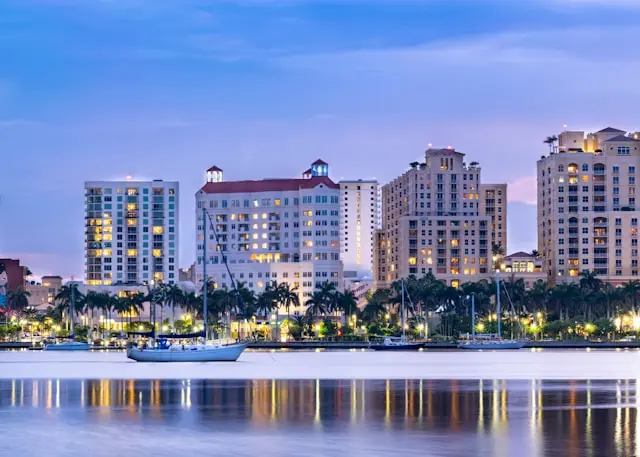
West Palm Beach Business Aviation: Why a Softening National Market Has Made Local Hiring Harder, Not Easier
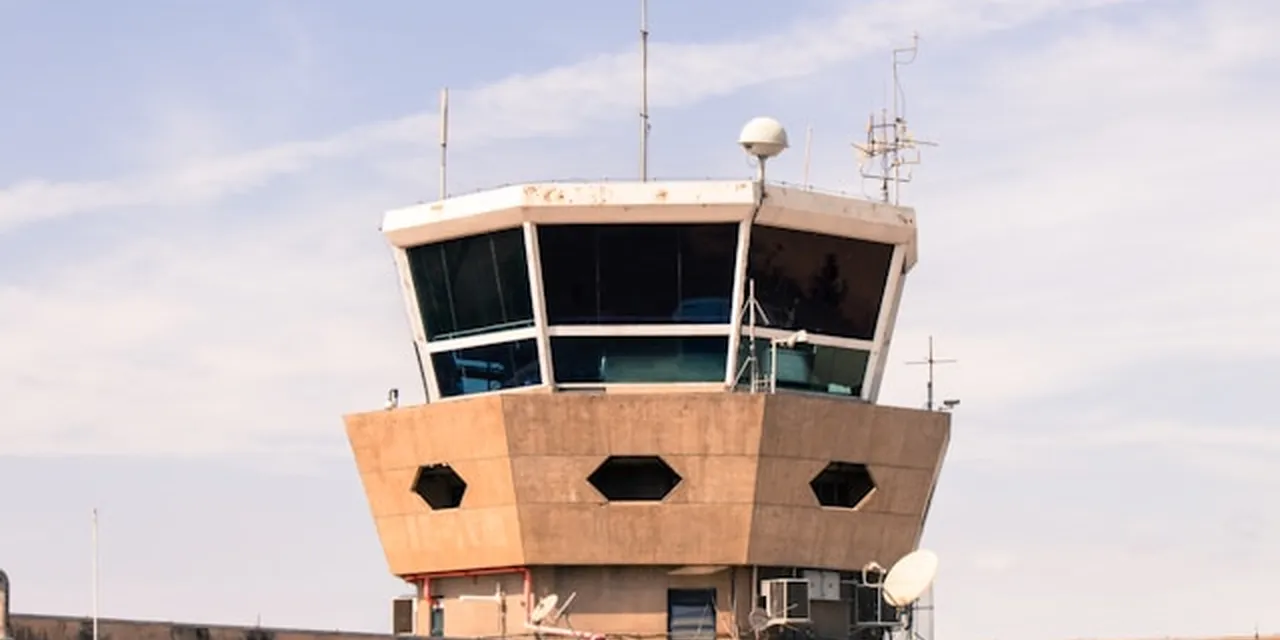
Palm Beach International Airport now supports approximately 250 based business aircraft and a workforce of more than 500 across its FBO and MRO operations. Those numbers have grown steadily even as national business aviation flight hours declined 8% in early 2025. The cluster is expanding. The people required to run it are not appearing at anything close to the necessary rate.
The tension at the centre of this market is counter-intuitive. National indicators suggest cooling demand: pre-owned aircraft values softened through 2025, corporate capital expenditure deferred under elevated interest rates, and flight hours pulled back from pandemic-era highs. A hiring leader reading only the headlines might expect South Florida's aviation labour market to loosen. It has not. Unemployment among certificated aviation maintenance technicians in the Miami-Fort Lauderdale-West Palm Beach metropolitan area stands at 1.2%. Job postings for A&P mechanics across the region increased 34% between Q1 2023 and Q1 2025. Average time-to-fill for a qualified mechanic has extended from 42 days to 78. This market is getting tighter at precisely the moment the national cycle suggests it should ease.
What follows is a ground-level analysis of why this bifurcation exists, what it means for the employers anchoring the PBI cluster, and what organisations competing for senior maintenance leadership, avionics specialists, and FBO operations talent need to understand before they commit to their next search.
The PBI Cluster: A $47 Million Bet on a Market That Cannot Physically Grow
Palm Beach County has committed $47 million for general aviation infrastructure improvements through 2027, including apron rehabilitation and a new GA terminal complex. This investment is not expanding capacity. It is optimising what already exists. PBI operates a single 10,008-foot runway with limited taxiway expansion potential. The Loxahatchee National Wildlife Refuge creates federal wetlands jurisdiction to the east, and residential noise abatement agreements constrain operations from the west. No new runway construction is planned.
This matters for talent because it shapes the kind of growth the cluster can pursue. Amazon Air and DHL have already relocated or downsized PBI cargo operations to Fort Lauderdale-Hollywood International and Miami International since 2022. Cargo lost to physical constraints. Business aviation, however, has adapted. The model has shifted from tarmac-intensive line service toward "white glove" concierge operations requiring less physical space per revenue dollar. Satellite airports at Lantana and Boca Raton absorb overflow demand, feeding the PBI ecosystem without requiring PBI to build what it cannot build.
The workforce implication is direct. Growth through densification and service sophistication demands higher-skilled employees, not more employees. A concierge FBO model requires operations managers with Part 135 charter regulatory expertise. Composite repair on modern large-cabin aircraft requires technicians trained on carbon fibre structures. The cluster is not scaling headcount in a straight line. It is scaling skill requirements upward while the training pipeline produces the same number of graduates it produced five years ago.
Signature, Jet Aviation, and the Competitive Density Problem
The physical proximity of PBI's three major FBOs creates a talent environment unlike most single-airport markets. Signature Aviation operates a 28-acre facility with 220,000 square feet of hangar space, employing approximately 145 personnel. Jet Aviation, a General Dynamics subsidiary, runs a 17-acre campus with adjoining MRO capabilities and roughly 220 staff, including 85 A&P mechanics and avionics technicians. Atlantic Aviation maintains a smaller presence focused on transient high-net-worth clientele with approximately 35 employees.
These three operators compete for the same local talent pool daily. According to industry recruitment intelligence from Jet Professionals staffing agency, in Q4 2024 Atlantic Aviation recruited a Senior Operations Manager from Signature's PBI facility with a 22% compensation premium and relocation assistance. That single move triggered Signature to implement retention bonuses across its remaining PBI management team. The ripple effect of one hire reshaped the compensation expectations of an entire tier of employees at a competing firm.
This dynamic repeats constantly in a cluster this concentrated. It is not a market where employers set compensation and wait. It is a market where every senior hire is a competitive event.
The Talent Arithmetic That Does Not Add Up
The nearest FAA-certified Part 147 A&P school, George T. Baker Aviation Technical College in Miami, produces approximately 120 graduates annually. Only 35% of those graduates specialise in turbine aircraft maintenance. That yields roughly 42 turbine-qualified new technicians per year for the entire South Florida region.
Set that against the demand side. The South Florida business aviation workforce is projected to grow 6.8% annually through 2026, outpacing the national average of 4.2%. Jet Aviation alone employs 85 mechanics and avionics technicians at PBI. Premier Aircraft Maintenance adds 45. Factor in the satellite facilities at Boca Raton and Lantana, the corporate flight departments based at PBI, and the competing clusters at Fort Lauderdale Executive and Miami-Opa Locka, and the region's total demand for certificated technicians runs into the hundreds every year. Forty-two turbine-qualified graduates cannot fill that gap. Not close.
The pipeline problem is compounded by retirement. The technician workforce in business aviation skews older than commercial aviation. According to the NBAA Compensation Survey 2024, the median age of A&P mechanics with business jet certification in South Florida exceeds 48. The replacement ratio is structurally negative. More experienced technicians leave the workforce each year than qualified replacements enter it.
Why Housing Costs Function as a Hiring Constraint
Median home prices in Palm Beach County reached $485,000 as of Q1 2025. For a mechanic earning $85,000 to $115,000 at the senior technician level, homeownership in the county is functionally out of reach without dual income or prior equity. The result: 42% of aviation technical staff commute from St. Lucie or Broward counties. These commutes run 45 to 90 minutes each way, creating a retention vulnerability that compensation alone cannot fully address.
Fort Lauderdale Executive Airport compounds this problem. FXE offers comparable compensation to PBI-based roles, and for a technician living in Broward County, the commute is dramatically shorter. The geographic pull is real. A qualified mechanic who moves from PBI to FXE does not change industries, does not take a pay cut, and cuts an hour from each workday. Employers at PBI are losing candidates not to better opportunities but to shorter drives.
For FBO operations managers, the calculus is different but equally difficult. Operations management talent evaluating PBI against Atlanta's DeKalb-Peachtree Airport or Teterboro in New Jersey faces 20 to 30% compensation premiums at those locations, plus stronger career progression paths to corporate headquarters roles. The passive candidate pool at the executive level runs at 95% in this market. These individuals are not reading job boards. They are responding only to direct, specific outreach that addresses their career trajectory, not just their next salary.
National Softening, Local Tightening: The Bifurcation That Defines This Market
This is the analytical core of the article and the point most likely to be misread by hiring leaders relying on national data.
Business aviation nationally showed clear signs of cyclical cooling through 2025. Flight hours at PBI declined 8% year-over-year in Q1 2025. Pre-owned aircraft transaction volumes softened. Federal funds rates at 5.25 to 5.50% extended aircraft depreciation schedules and deferred major MRO events. FBO fuel sales volume at PBI dropped 12% year-over-year in Q4 2024, according to General Dynamics' earnings call transcript. Insurance premiums for based aircraft climbed 18% in 2024, prompting some flight departments to relocate entirely.
Reading these indicators in isolation, a CHRO or VP of Operations might reasonably conclude that the labour market should be loosening. More available technicians. Slower wage inflation. Easier hiring.
The opposite has happened. Aircraft based at PBI increased 4% during the same period that flight hours declined. The shift is from transient charter operations to resident fleet operations, driven by Florida's continued wealth migration. More aircraft based locally means more scheduled maintenance, more hangar demand, more permanent staffing needs, even as the cyclical business of transient fuelling contracts. Wage inflation for senior mechanics ran at 6.5% year-over-year through 2025 in South Florida, well above national trends.
The original synthesis this data supports: the national market softening has made local hiring harder, not easier, because it has dried up the one source of mobile talent that historically lubricated tight markets. In a boom, technicians relocate toward opportunity. In a cooling national cycle, technicians who are already employed stay put. They do not move to South Florida for a signing bonus when their current employer in Texas or the Midwest is offering retention bonuses of its own. The national softening has frozen the candidate pool in place, leaving South Florida's structurally short pipeline as the only source of new supply. That pipeline cannot deliver.
The Roles That Stall: Where Searches Break Down at PBI
A&P Mechanics with Business Jet Certification
Data from Lightcast Job Postings Analytics shows that the average time-to-fill for an A&P mechanic position in the South Florida MSA extended from 42 days to 78 days between Q1 2023 and Q1 2025. For positions requiring specific type certification on Gulfstream G650 or Bombardier Global series airframes, the duration is longer still.
Jet Aviation has maintained continuous postings for Lead A&P Mechanics at its PBI facility since August 2024. According to Aviation Week Network's MRO Survey, these positions have remained unfilled for over 180 days despite signing bonuses of $15,000 to $25,000, well above standard industry incentives. The requirement for specific airframe experience is the bottleneck. A general A&P certificate is necessary but insufficient. The subset of mechanics with hands-on experience on the aircraft types that dominate PBI's hangars is vanishingly small relative to demand.
Avionics Technicians: The Certification Wall
The second critical shortage is in avionics technicians certified on Collins Aerospace Pro Line Fusion and Honeywell Primus Epic integrated suites. As cited in an NBAA South Florida Regional Forum presentation in November 2024, a corporate flight department based at PBI conducted a six-month search for a Senior Avionics Technician with Honeywell Primus Elite retrofit certification. The search offered $125,000 base salary, 30% above market median. It failed to secure a local candidate. The aircraft was ultimately relocated to Dassault Falcon Jet's completion centre in Little Rock, Arkansas for scheduled work.
That outcome represents the real cost of a failed executive search in this market. Not just the search fee and the time lost, but the operational displacement: an aircraft moved out of state because the person required to maintain it could not be found locally.
FBO Operations Managers: Regulatory Expertise as the Differentiator
FBO operations management at PBI requires a specific combination of customer service sophistication and Part 135 charter regulatory knowledge. The clientele at PBI is disproportionately high-net-worth. The regulatory environment is complex. Noise abatement programmes limit Stage 2 aircraft operations and nighttime engine run-ups, constraining MRO operational windows and increasing the compliance burden on operations managers. Candidates who can manage both the white-glove client experience and the regulatory framework are rare. Those who can do both while managing shift scheduling around noise restrictions are rarer still.
Compensation: What the Benchmarks Actually Show
Executive compensation in West Palm Beach's business aviation cluster runs 15 to 20% above national medians. The premium reflects three overlapping forces: South Florida's cost of living, the competitive density of three FBOs and multiple MROs within a single airport, and the passive nature of the candidate market at senior levels.
At the maintenance leadership level, a Maintenance Manager or Shop Foreman commands $95,000 to $125,000 base salary plus a 10 to 15% annual bonus. A Director of Maintenance or VP of Technical Operations ranges from $145,000 to $220,000 base, plus a 20 to 30% performance bonus and, for corporate flight departments, equity participation. These are not theoretical bands. They reflect what employers at PBI are paying now, according to the NBAA Compensation Survey 2024 and the Jet Professionals Executive Search Salary Guide.
FBO operations leadership shows a similar spread. An Operations Manager earns $78,000 to $105,000 base. A Regional VP of FBO Operations commands $135,000 to $195,000 plus a 15 to 25% bonus and relocation packages. Avionics leadership falls between: a Lead Avionics Technician at $85,000 to $115,000, a Director of Avionics at $130,000 to $175,000 with project completion bonuses.
The critical question for hiring leaders is not whether these numbers are competitive nationally. They are. The question is whether they are competitive locally, against the FBO next door that just offered your best manager a 22% premium. Salary benchmarking in this market requires granularity down to the airport level, not the metropolitan area.
Fleet Modernisation and the Skills That Do Not Yet Exist in Volume
The MRO sector at PBI is preparing for a wave of heavy maintenance events on Gulfstream G650 and Bombardier Global 7500 aircraft as early production units reach major inspection intervals through 2026. Jet Aviation's PBI facility invested $3.2 million in specialised tooling for composite repair and connectivity upgrades specifically to capture this demand.
The challenge is that the technicians required to use that tooling are not available in the numbers the maintenance schedule demands. Composite materials repair on modern large-cabin aircraft requires expertise in carbon fibre and honeycomb structures that was not part of the standard A&P curriculum even five years ago. The skills gap is not a shortage of mechanics in the traditional sense. It is a shortage of mechanics trained on materials and systems that became prevalent faster than the training infrastructure could adapt.
This creates a hiring problem that compensation cannot solve alone. You cannot pay a premium to attract a technician with composite repair experience if that technician does not exist in your geography. The employers who will capture the fleet modernisation revenue are those who either invest in training existing staff, a multi-year commitment, or identify and relocate the small number of qualified specialists from other markets through direct, targeted outreach.
What This Means for Hiring Leaders in 2026
The West Palm Beach business aviation cluster is entering 2026 in a position that should concern any organisation planning a senior hire. The training pipeline produces a fraction of the technicians needed. Housing costs push qualified workers toward competing airports with shorter commutes. National market softening has frozen candidate mobility rather than releasing it. And the fleet modernisation cycle is creating demand for skills that barely existed at scale three years ago.
For organisations competing for maintenance leadership, avionics specialists, and FBO operations talent at PBI, the conventional hiring approach of posting a role, screening inbound applicants, and selecting from whoever appears reaches at most 22% of the viable candidate pool. Seventy-eight percent of qualified A&P mechanics in South Florida are employed and not actively looking. At the director level and above, 95% of the market is passive. These candidates will not see your job posting. They will not respond to a recruiter who cannot articulate why your role is worth leaving a stable position for. They respond to a direct approach that is specific, informed, and credible.
KiTalent's approach to executive hiring across industrial and manufacturing sectors is built for exactly this candidate profile. AI-powered talent mapping identifies the passive specialists who match the specific certification, airframe experience, and leadership requirements of each role. Candidates arrive interview-ready within 7 to 10 days. The pay-per-interview model means clients invest only when they meet qualified candidates, not before. Across 1,450 executive placements globally, this method produces a 96% one-year retention rate, the metric that matters most in a market where replacing a failed hire costs six months and the entire search fee again.
For organisations hiring maintenance directors, avionics leaders, or FBO operations executives in the PBI cluster, where every qualified candidate is already employed and every competing employer is watching the same talent pool, start a conversation with our search team about how we identify and engage the candidates this market will not surface on its own.
Frequently Asked Questions
Why is it so hard to hire A&P mechanics in West Palm Beach?
The difficulty stems from three converging factors. Unemployment among certificated aviation maintenance technicians in the South Florida MSA stands at 1.2%, which is effectively full employment. The nearest Part 147 training school produces only about 42 turbine-qualified graduates per year for the entire region. And 78% of qualified mechanics are passive candidates who respond only to direct recruitment outreach. Housing costs in Palm Beach County further narrow the pool, with median home prices at $485,000 pushing 42% of technical staff to commute from neighbouring counties. These conditions make traditional job advertising largely ineffective for reaching qualified aviation maintenance talent.
What does a Director of Maintenance earn at Palm Beach International Airport?
A Director of Maintenance or VP of Technical Operations at PBI commands $145,000 to $220,000 in base salary, plus a 20 to 30% performance bonus. Corporate flight departments may add equity participation. These figures run 15 to 20% above national medians, reflecting South Florida's cost of living and the competitive density of multiple FBOs and MROs at a single airport. Senior Maintenance Managers earn $95,000 to $125,000 base plus 10 to 15% bonus. At the avionics leadership level, Directors earn $130,000 to $175,000 with project completion bonuses.
How does West Palm Beach compare to Fort Lauderdale and Miami for business aviation jobs?
PBI is Florida's third-busiest business aviation gateway, behind Miami-Opa Locka and Fort Lauderdale Executive. Compensation at FXE is comparable to PBI, but housing costs in Broward County are marginally lower, giving FXE a commute advantage for technicians living between the two airports. Miami-Opa Locka offers 8 to 12% salary premiums over PBI but presents longer commutes for Palm Beach County residents. For executive talent, the real competition comes from Atlanta and Teterboro, New Jersey, where 20 to 30% compensation premiums and stronger corporate career paths draw senior candidates away.
What is driving business aviation growth in South Florida despite national market softening?
The key driver is Florida's continued wealth migration. While national flight hours declined 8% in early 2025, aircraft based at PBI increased 4% during the same period. The shift is from transient charter operations to resident fleet operations as high-net-worth individuals and corporate flight departments establish permanent bases in South Florida. This means more scheduled maintenance and permanent staffing needs even as transient fuelling revenue declines. The result is persistent local labour market tightness that is decoupled from national cyclical trends.
How long does it take to fill a senior aviation maintenance role in West Palm Beach?
Average time-to-fill for A&P mechanic positions in the South Florida MSA has extended from 42 days to 78 days between 2023 and 2025. For senior or supervisory roles requiring specific airframe type experience, such as Gulfstream G650 or Bombardier Global series, searches commonly exceed 180 days. Industry data shows that executive-level maintenance roles operate in a 95% passive candidate market, meaning retained search through a specialist firm with direct headhunting methodology is typically the only viable approach for roles at Director level and above.
What skills are most in demand at PBI's business aviation cluster?
Three skill categories face the most acute shortages. First, composite materials repair expertise for carbon fibre and honeycomb structures on modern large-cabin aircraft. Second, avionics certification on Collins Aerospace Pro Line Fusion and Honeywell Primus Epic integrated suites. Third, Part 145 repair station management, covering regulatory compliance, quality control, and return-to-service documentation. The fleet modernisation cycle is intensifying demand for all three as early-production Gulfstream G650 and Bombardier Global 7500 aircraft reach major inspection intervals through 2026.