Trento's Trentodoc Sector Commands Premium Prices but Cannot Pay Premium Salaries: The Talent Paradox Reshaping Alpine Wine

Trentodoc sells for $35 to $50 a bottle in the United States. That places it firmly in the luxury sparkling wine tier, well above Prosecco's $12 to $15 shelf price and within striking distance of entry-level Champagne. The 47 producers represented by the Consorzio Trentodoc have built a category that punches above its weight in global markets, anchored by the Lunelli Group's Ferrari brand and supported by a distinctive high-altitude terroir that no other Italian region can replicate. Production reached 11.2 million bottles in 2024. Export volumes to the U.S. are projected to grow 12% in 2026. The brand story is working.
The talent story is not. Senior oenologist positions requiring méthode champenoise expertise remain vacant for seven to eleven months in the Trentodoc sector. Export director searches show a 45% vacancy persistence rate after six months. The compensation data explains why: Trento pays 15 to 20% less than Franciacorta for equivalent roles and 40 to 50% less than Champagne. Executives capable of sustaining the category's premium positioning are being recruited away by regions that can afford to pay for the value Trentodoc creates but does not capture internally.
What follows is an analysis of the forces driving this paradox, who it affects most, and what it means for organisations in this sector trying to build and retain the leadership teams that their premium positioning demands. The gap between what Trentodoc earns in global markets and what it pays the people who make that possible is not closing. It is becoming the defining constraint on the sector's next phase of growth.
A Premium Category Built on Constrained Geography
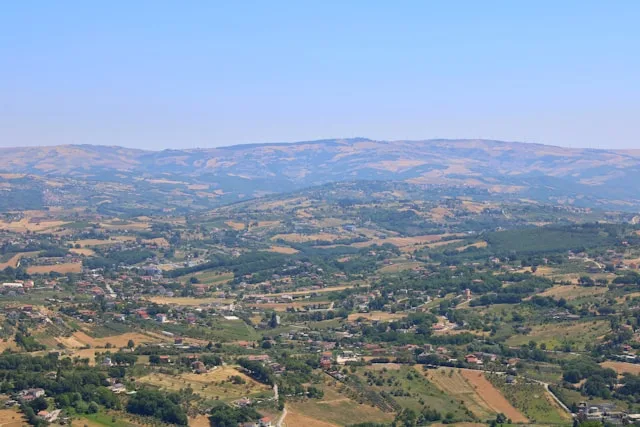
The Trentodoc appellation occupies a narrow band of Alpine terrain between 300 and 900 metres above sea level. Vineyards are concentrated in the Piana Rotaliana and the hillside zones around Pergine Valsugana and Valle dei Laghi. This geography produces wines with the acidity and mineral character that justify premium pricing. It also imposes a hard ceiling on growth that no amount of capital investment can remove.
DOC Trento regulations limit yields to 18,000 kilograms per hectare. Riserva classifications require hand harvesting. Minimum aging on lees runs from 15 months for Brut to 36 months for Riserva, tying up inventory and cellar capacity for years before a bottle generates revenue. According to analysis by Nomisma Wine Monitor, these compliance requirements add an estimated €0.60 to €0.90 per bottle in direct costs compared to Charmat-method sparkling wines. Land suitable for new Trentodoc-classified vineyards costs €80,000 to €150,000 per hectare in premium zones. In the Prosecco Conegliano Valdobbiadene zone, comparable vineyard land runs €30,000 to €50,000.
The Istituto Trentodoc projects 4 to 5% volume growth for 2026. That projection is constrained by terrain and regulation, not by demand. Export markets, particularly the United States, Japan, and emerging Southeast Asian channels, could absorb considerably more volume. The sector cannot produce it. This constraint shapes every other dynamic in the Trento talent market, from compensation to career progression to the fundamental economics of hiring.
Why Volume Constraints Compound the Talent Problem
A wine region producing 620 million bottles, as the Prosecco DOC zone does, can spread the cost of a senior oenologist, a digital marketing director, or a sustainability compliance team across a vast production base. Trentodoc's 11.2 million bottles cannot absorb those costs at the same rate. The sector requires the same calibre of expertise that Franciacorta or Champagne demands. It needs senior oenologists who understand prise de mousse management and autolysis monitoring. It needs export directors with U.S. TTB compliance knowledge and Asian market entry strategy. It needs precision viticulture technicians operating drones and spectroscopic analysis equipment on 45-degree slopes.
But it must fund these roles from a revenue base that is a fraction of its competitors'. The Lunelli Group generates approximately €150 million in consolidated revenue. Mezzacorona employs around 580 staff region-wide. The remaining consortium members are mid-sized cooperatives and small estates, 60% of which produce fewer than 100,000 bottles annually. These producers face a choice that their competitors in larger regions do not: invest in the talent the premium market requires, or accept that the skills gap will eventually erode the premium itself.
The Compensation Gap That Drives Talent Away
Trentodoc's compensation data tells a clear story about where the sector sits in the Italian wine talent hierarchy. A senior oenologist or cellar master in Trento earns €65,000 to €85,000 in base salary, with performance bonuses of €8,000 to €15,000 tied to vintage quality ratings. An export manager focused on North America or Asia earns €58,000 to €78,000 base, with commission structures of 10 to 20% on net margin.
These figures reflect the premium that traditional method sparkling wine commands within Trentino itself. Specialists with proven méthode champenoise track records earn 20 to 30% more than their still wine counterparts in the same region. But the comparison that matters for retention is not internal. It is external.
Franciacorta, 90 minutes southwest in Lombardy's Brescia Province, pays 15 to 25% more in base salary for oenologists and export managers. It offers proximity to Milan, a 45-minute commute that gives wine industry professionals access to urban amenities without sacrificing sector relevance. Its production volume of 32 million bottles creates more frequent advancement to director-level roles. Housing in Franciacorta zones runs €2,800 to €3,500 per square metre compared to €2,200 to €2,800 in Trento's periphery, but salary premiums more than offset the difference for mid-career professionals.
The Champagne Ceiling
At the executive level, the compensation gap widens further. Champagne houses, particularly LVMH, Laurent-Perrier, and Pommery, offer 2.5 to 3 times the total compensation packages available in Trentodoc for senior oenologists and global brand directors. According to compensation data aggregated by Decanter Jobs and Wine-Searcher, this differential actively draws Italian talent with traditional method expertise toward France.
An Operations Director or Managing Director at a top-tier Trentodoc house earns €140,000 to €220,000 in base salary, with total compensation reaching €280,000 to €350,000 at the Lunelli Group level through long-term incentive plans tied to EBITDA and export growth. A Commercial Director focused on exports earns €110,000 to €160,000 base, with variable components of 30 to 50% for U.S. and Asian market penetration. These are meaningful packages by Italian food and beverage standards. They are not competitive against what the same skillset commands in Champagne or, increasingly, in large Franciacorta houses scaling their own export operations.
The result is a persistent outflow of mid-career and senior talent from Trento toward regions that can convert wine industry revenue into wine industry compensation more efficiently. This outflow does not show up as mass departures. It shows up as the senior oenologist who declines to be considered for a Trentodoc role because the offer cannot match Franciacorta. It shows up as the export director who is headhunted by a Champagne house and never appears on Trento's candidate radar at all.
The Passive Candidate Problem in a Micro-Market
The most qualified candidates for Trentodoc's critical roles are not looking for work. Unemployment among senior oenologists specialising in traditional method sparkling wine within Trentino sits below 2%. Average tenure at current employers exceeds eight years. The passive-to-active candidate ratio for this specialisation runs above 3:1.
According to industry recruitment surveys, 85 to 90% of placements in the senior oenologist category are filled through executive search and direct approach rather than applications to advertised roles. This figure is striking but consistent with the market's structure. In a sector where the total population of qualified specialists numbers in the low hundreds across all of Italy, and where the Trentodoc-specific subset is smaller still, conventional job advertising reaches almost no one who matters.
Export directors with U.S. market expertise present an even more concentrated problem. Candidates with established TTB compliance knowledge and distributor networks in California, New York, and Florida are universally employed. They are not browsing job boards. The typical search process involves identifying managers at competing Italian wine houses across Franciacorta, Prosecco Superiore, or Brunello production zones and constructing a proposition compelling enough to justify relocation to Trento. That proposition increasingly requires equity participation or profit-sharing arrangements that smaller cooperative employers cannot offer.
The contrast with the junior talent market is sharp. Fondazione Edmund Mach, operating the Istituto Agrario di San Michele all'Adige, produces approximately 70% of Trentino's graduate oenologists. Junior viticulturists with zero to five years of experience apply actively to posted positions. Digital marketing specialists transfer across industries with a 60:40 active-to-passive ratio. The pipeline at the entry level functions. The problem is what happens after a decade of experience, when the skills become rare and the competing offers become serious. That is precisely the point at which traditional recruitment methods fail and the search must shift to direct identification of passive candidates.
Three Roles Defining the Sector's Future
Senior Oenologists Who Cannot Be Found on Any Job Board
The méthode champenoise process is unforgiving. Tirage, disgorgement, and dosage calculation require accumulated judgement that no certification programme can fully replace. A senior oenologist managing a Trentodoc production line is monitoring autolysis across thousands of bottles with aging cycles measured in years, making decisions whose consequences will not be tasted for another 24 to 36 months. This is not a role where a promising generalist can grow into competence quickly.
The 3:1 demand-to-supply ratio reported by Unioncamere Excelsior data understates the effective shortage. It counts all oenologists with relevant credentials. It does not filter for those with successful vintage track records at altitude, where frost management and UV stress mitigation add layers of complexity that lowland producers do not face. Vacancy durations of seven to eleven months for these positions, compared to three to four months for still wine oenologist roles, reflect the gap between credentialed supply and operationally proven supply.
Export Directors Bridging Two Regulatory Worlds
The Lunelli Group's operation of Ferrari USA Inc. represents a strategic shift from importer-dependent distribution toward owned-market subsidiaries. This model requires executives who combine deep wine technical knowledge with TTB compliance expertise, a regulatory domain entirely separate from EU wine law. Adding Asian market entry strategy compounds the requirement further.
The vacancy persistence rate of 45% after six months of active search for these roles reflects a talent pool that exists at the intersection of two specialised domains. Sixty percent of qualifying candidates are recruited from outside Trentino, primarily from Lombardy or Emilia-Romagna. Each hire is, in effect, a relocation negotiation layered on top of a compensation negotiation. The total cost of acquisition for these roles extends well beyond the salary line.
Chief Sustainability Officers in a Sector That Did Not Have Them
The EU's Corporate Sustainability Reporting Directive applies to the Lunelli Group, Cavit, and Mezzacorona for financial year 2025 reporting. Each large entity faces estimated annual compliance costs of €150,000 to €200,000. The Lunelli Group has committed to carbon neutrality by 2026. Organic vineyard conversion across the consortium is accelerating from 15% to 22% of total vineyard surface.
These commitments require a role that most Trentodoc houses did not employ five years ago. The Chief Sustainability Officer in a wine context must understand agricultural carbon accounting, supply chain traceability under the EU Deforestation Regulation, and energy efficiency in temperature-controlled cellar operations. This combination of skills is new enough that the talent market has not yet produced it in sufficient depth. Hiring for these positions often means recruiting from adjacent sectors and investing in wine-specific knowledge transfer, a process that demands a different approach to talent identification than posting a job description and waiting.
The Structural Tension the Sector Has Not Resolved
Here is the analytical claim that the data supports but that no single data point states directly: Trentodoc's premium positioning in global markets and its inability to retain the talent that sustains that positioning are not separate problems. They are the same problem, caused by the same constraint. The DOC regulations and Alpine geography that create the scarcity value justifying $35 to $50 bottle prices also cap the production volume that would generate the revenue base necessary to pay competitive salaries.
Franciacorta produces three times the volume at a lower per-bottle price and pays its oenologists 15 to 25% more. It can do this because its revenue base is larger and its terrain is less constraining. Prosecco produces 55 times the volume at a fraction of the price and still creates more frequent senior advancement opportunities through sheer organisational scale. Champagne captures both volume and price, enabling compensation packages that Italian producers cannot approach.
Trentodoc captures price but not volume. The premium is real, but it flows disproportionately to brand owners and distributors rather than back into the labour market. The sector's annual production value of €180 to €200 million must fund the same categories of specialist talent that Franciacorta funds from a much larger base. Negotiating competitive packages within this constraint is not impossible, but it requires creative compensation structures, including equity participation, profit-sharing, and non-monetary benefits tied to the Trentino lifestyle, that conventional salary benchmarking does not capture.
This tension will not resolve through organic growth. The DOC yield limits ensure that. It can only be managed through deliberate strategies: consolidation among smaller producers to create entities with sufficient scale, investment in employer brand differentiation that makes the Trentino lifestyle proposition explicit, and search methodologies that reach candidates whose motivation extends beyond base compensation.
What This Means for Hiring Leaders in the Trentodoc Sector
The sector-wide capital expenditure pipeline of approximately €40 million planned for 2026 concentrates on sustainable viticulture certification and direct-to-consumer digital infrastructure. These investments will create additional demand for specialists who are already in short supply. Hiring demand across technical and commercial functions is projected to increase 8 to 10% year-over-year, even as production volume remains essentially flat. The gap between the talent the sector needs and the talent it can attract through conventional channels is widening.
For organisations hiring in this market, three realities must be confronted directly.
First, the candidate pool for critical roles is almost entirely passive. Job postings will reach junior viticulturists and digital marketers. They will not reach the senior oenologist with a decade of méthode champenoise experience or the export director with an established U.S. distributor network. Reaching those candidates requires direct identification and outreach through specialist headhunting rather than advertisement.
Second, every search is a cross-regional competition. The candidate you need is likely employed in Franciacorta, working for a Prosecco Superiore house in Valdobbiadene, or considering an approach from Champagne. The proposition must account for relocation, lifestyle transition, and the career trajectory implications of moving to a smaller production region. A salary number alone will not close the hire.
Third, speed determines outcomes. In a market where qualified candidates number in the dozens rather than the hundreds, the cost of a prolonged search extends beyond vacancy costs. It includes the vintage decisions not made, the export market entry delayed, and the sustainability reporting deadline missed. Organisations that run a six-month search in a market where a competitor can move in six weeks will consistently lose.
KiTalent works with food, beverage, and specialist manufacturing organisations facing exactly these dynamics: niche talent pools, passive candidate majorities, and cross-regional competition for a small number of qualified leaders. Our AI-enhanced talent mapping identifies candidates who are not visible through conventional channels, and our pay-per-interview model means clients invest only when they meet qualified professionals. With a 96% one-year retention rate across 1,450 executive placements, we build the shortlists that job boards and generalist agencies cannot assemble.
For organisations competing for oenology, export, and sustainability leadership in Trento's Trentodoc sector, where the candidates who matter are not looking and the cost of delay compounds with every missed vintage cycle, speak with our executive search team about how we approach this market.
Frequently Asked Questions
What is the average salary for a senior oenologist in Trento's Trentodoc sector?
A senior oenologist or cellar master with 8 to 15 years of experience in the Trentodoc sector earns €65,000 to €85,000 in base salary, with performance bonuses of €8,000 to €15,000 tied to vintage quality outcomes. Specialists with proven méthode champenoise expertise command a 20 to 30% premium over still wine oenologists in the same region. However, these figures remain 15 to 20% below equivalent roles in Franciacorta and 40 to 50% below Champagne, which contributes to talent outflow from Trento toward higher-paying sparkling wine regions.
Why are Trentodoc executive searches so difficult to fill?
Three factors converge. The total population of senior méthode champenoise specialists in Italy is small, concentrated, and almost entirely employed. Unemployment in this specialisation sits below 2% in Trentino. Vacancy durations run seven to eleven months for senior oenologists and show 45% persistence after six months for export directors. The sector's constrained production volume limits the revenue base available to fund competitive compensation packages, while Franciacorta and Champagne actively recruit the same candidates at higher pay. Reaching these candidates requires specialist executive search methodologies rather than job advertising.
How does Trentodoc production compare to Franciacorta and Prosecco?
Trentodoc produced approximately 11.2 million bottles in 2024, a premium niche category. Franciacorta produced 32 million bottles across the same period, offering nearly three times the production scale and correspondingly more senior roles and advancement opportunities. Prosecco DOC and DOCG zones produced approximately 620 million bottles, operating at industrial scale with fundamentally different talent market dynamics. Trentodoc's DOC yield limits and Alpine topography constrain growth to 4 to 5% annually regardless of market demand.
What are the most in-demand executive roles in the Trentodoc wine sector?
The three most critically demanded leadership positions are Director of Viticulture, overseeing high-altitude vineyard expansion and climate adaptation; U.S. Market General Manager, specific to houses establishing direct import operations; and Chief Sustainability Officer, a newly created role driven by CSRD compliance and carbon neutrality commitments. Each role sits at the intersection of wine-specific technical knowledge and a second specialisation, whether regulatory, agricultural, or environmental, that narrows the qualified candidate pipeline considerably.
What makes Trento competitive for wine industry professionals despite lower salaries?
Trento offers a lifestyle proposition that compensation data alone does not capture. Housing costs run €2,200 to €2,800 per square metre in the periphery, materially below Milan-adjacent Franciacorta. The Trentino region consistently ranks among Italy's highest for quality of life, public services, and natural environment. Career distinctiveness also matters: working with high-altitude viticulture at 300 to 900 metres, managing frost and UV stress conditions unique to Alpine terroir, and contributing to a category growing at premium price points provides professional differentiation that flatter, larger regions cannot match.
How can wine companies in Trento improve their executive hiring outcomes?
Organisations must accept that 85 to 90% of senior placements in this sector occur through direct search rather than advertised roles. Building a compelling proposition requires looking beyond base salary to include equity participation, profit-sharing structures, and explicit lifestyle benefits. Speed is critical: in a market where qualified candidates number in the dozens, delays of weeks rather than months determine whether a shortlist holds. Engaging a search partner with talent mapping capability across Italian and European wine regions reduces time-to-shortlist and reaches candidates that internal recruitment teams and generalist agencies consistently miss.