Campobasso's Agri-Food Sector Has €142 Million in Funding and No One to Spend It
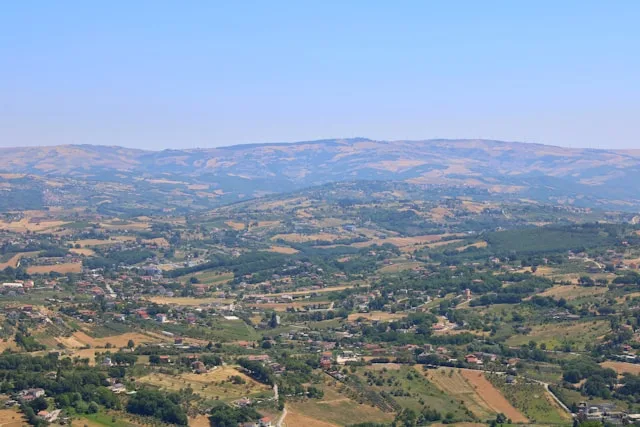
The Province of Campobasso concentrates 62% of Molise's dairy processing capacity and hosts the region's primary meat processing infrastructure. In 2023, the sector generated €312 million in added value, accounting for 8.4% of provincial GDP. By any measure, this is a functioning regional food economy producing DOP-certified cheeses and IGP-protected salumi that command premium prices in domestic and emerging international markets.
Yet the 2023-2027 Rural Development Program has allocated €142 million to Molise's agri-food sector, with €38 million earmarked specifically for processing modernisation and youth entrepreneurship. As of late 2024, only 23% of the business investment funds had been disbursed. The money is not absent. The ability to use it is. The gap between available public capital and the sector's capacity to deploy it is the single most important dynamic shaping Campobasso's agri-food future, and it is fundamentally a human capital problem.
What follows is a structured analysis of why this market operates the way it does, where the talent constraints are most acute, what the compensation realities look like for the roles that matter most, and what organisations working in or hiring for Campobasso's food and agricultural sector need to understand before committing to growth in this province.
A Sector Built on Fragmentation
The structural reality of Campobasso's agri-food sector is not complexity. It is atomisation. The 2021 ISTAT Agricultural Census recorded 4,847 agricultural holdings in the province. Of those, 78% operate as sole proprietorships or family units employing zero external staff. The average farm size is 11.3 hectares, well below the national average of 18.4 hectares.
This matters for hiring because the employers in this market are, overwhelmingly, not employers at all. They are family operations. The province hosts 127 dairy processing facilities, of which 89% employ fewer than 10 workers. The 23 authorised slaughterhouses and 45 salumi workshops follow the same pattern. A sector that produces 1,200 tonnes of Caciocavallo Podolico del Molise and 850 tonnes of Pecorino del Molise annually does so through a network of micro-producers, not through consolidated operations with HR departments and structured recruitment processes.
The Cooperative Model as an Employment Floor
The largest single agri-food employer in the province is the Consorzio Produttori Latte della Provincia di Campobasso, which aggregates 340 dairy farms and runs a central processing facility with 45 permanent staff and 30 seasonal workers. The largest private-sector meat processor, Salumificio Molisano Srl, employs 35 people. Mid-scale operations like Azienda Agricola Di Nucci maintain workforces of around 28.
These are not the employment bases that generate executive-level recruitment demand in any conventional sense. The demand exists, but it is dispersed across dozens of micro-enterprises that each need one quality assurance manager, one export-capable commercial lead, one digitally skilled agricultural technician. No single firm generates a search at scale. The aggregate market, however, tells a different story entirely.
Where the Demand Concentrates
Unioncamere's Excelsior system recorded 487 planned hires in the province's agri-food sector for 2024. Only 312 were realised by Q4. That is a 36% fulfilment gap across a sector where the total planned hires already reflect modest ambitions. The problem is not that individual firms are failing to fill large teams. The problem is that across hundreds of small employers, the same three or four specialised roles are going unfilled simultaneously, creating a cumulative shortage that no single employer has the resources or visibility to address.
This cumulative, dispersed demand is precisely the kind of market condition where conventional recruitment advertising yields nothing. When 73% of member enterprises in Confagricoltura Molise report relying on direct referrals rather than public job postings for technical roles, because public postings yield zero qualified applicants after 90-day listing periods, the market has already told you the answer. The candidates are not looking. They must be found.
The Demographics That Cannot Be Reversed by Policy
Campobasso's agri-food talent problem is not cyclical. It is demographic.
In Molise, 58.7% of agricultural entrepreneurs are over 65 years of age. Only 4.2% are under 40. In the Province of Campobasso specifically, the ratio of farmers over 65 to those under 35 stands at 18 to 1. This is not a pipeline that can be replenished through graduate recruitment or retraining programmes. It is a generational cliff.
The implications for leadership hiring are direct. When a 70-year-old cheese producer retires, the knowledge embedded in that operation does not transfer to a successor unless a successor exists. Market analysts project a 15-20% reduction in active dairy processing facilities by 2026, driven by the combined pressure of EU hygiene regulation compliance costs under Reg. EC 853/2004 and precisely this kind of generational transition failure.
The Graduate Pipeline That Leaves
The Università degli Studi del Molise's Department of Agricultural, Environmental and Food Sciences graduates approximately 120 students annually in food science and agricultural engineering. This is the region's primary talent pipeline institution.
It is also a pipeline with a leak at the end. Northern Italy draws 34% of Molise's agricultural and food science graduates within five years of graduation. These graduates move to Emilia-Romagna, Lombardy, and Veneto, where compensation premiums of 35-45% for equivalent roles, superior R&D infrastructure, and established career progression in multinational food groups make the decision straightforward. The pattern is not mysterious. It is rational.
Rome, 220 kilometres southwest, competes for commercial, regulatory, and senior management talent with salary premiums of 25% for food safety managers and 40% for international commercial roles. The capital also offers dual-career opportunities for partners, a factor that research on executive mobility consistently identifies as decisive in relocation decisions at senior levels.
Even neighbouring Abruzzo, hardly a metropolitan powerhouse, draws mid-level operations managers away from Campobasso with 10-15% salary premiums and better logistics connectivity. The nearest high-speed rail station to Campobasso is Vasto-San Salvo, 90 kilometres away. This geographic isolation is not a soft factor. It is a hard constraint on every search.
Three Roles the Market Cannot Fill
The fulfilment gap is not evenly distributed. Three categories of professional are acutely scarce, and each presents a different kind of hiring challenge.
Food Safety and Quality Managers
These professionals are responsible for HACCP implementation, BRC/IFS certification maintenance, and laboratory oversight. The vacancy rate in this category across Molise's dairy sector runs at 22%. Average time-to-fill for a Quality Assurance Manager position in the province is 127 days, compared to 68 days in Lombardy.
An estimated 85% of qualified professionals in this specialism within the province are currently employed and not actively seeking alternatives. Unemployment in this segment runs below 3%. Roles requiring dual HACCP and ISO 22000 certification command a 12-15% premium over base QA positions, yet even at that premium, the candidate pool is functionally exhausted within the province.
At senior specialist level, compensation ranges from €42,000 to €58,000 annually. At executive or technical director level, the range extends to €75,000-€95,000. These figures sit 25-30% below equivalent roles in Emilia-Romagna. The gap is not closing. It cannot close without either a step change in local revenues or a compensating quality-of-life proposition that does not currently exist.
Agricultural Technicians with Digital Skills
This is the category where the research data is most striking. Among surveyed employers, 89% reported difficulty sourcing candidates capable of managing precision agriculture software and automated dairy systems. The market exhibits what one industry body describes as "zero unemployment" for candidates combining agronomic knowledge with IoT and data analytics skills. Every viable candidate is already embedded in an operation.
Industry 4.0 adoption in Molise's agri-food sector stands at 12% of eligible firms, compared to 31% nationally. The gap is not primarily about willingness. It is about capability. Firms that want to adopt automated processing and traceability systems cannot find the technical personnel to implement and manage them. The €38 million in PSR Molise funding earmarked for processing modernisation assumes a workforce that does not yet exist in sufficient numbers in this province.
Export and Internationalisation Managers
Only 3% of local agri-food firms currently employ dedicated international commercial staff. Yet 34% report intentions to export within 24 months. This is latent demand that will become active demand in 2026 and 2027, and the local market has no ready supply.
Qualified international commercial managers exhibit 90% passive candidate characteristics. They are typically retained through long-term incentive plans or equity participation in established enterprises elsewhere. At senior level, base compensation ranges from €45,000 to €65,000, with on-target earnings reaching €80,000. At director level, the range is €85,000 to €110,000, with material variance based on export market complexity.
Moving a candidate of this calibre to Campobasso requires more than a competitive salary. It requires a proposition that addresses the full set of factors that drive executive career decisions: role scope, autonomy, growth trajectory, and a credible answer to the lifestyle question.
The Capital Paradox: Why €142 Million Is Not Enough When It Is More Than Enough
This is the analytical tension at the centre of Campobasso's agri-food story, and it is the insight that a senior hiring leader needs to internalise before committing to any growth strategy in this market.
The PSR Molise 2023-2027 programme represents a 23% increase over previous programming. €142 million is, by any reasonable standard, a material injection of public capital into a provincial economy of this size. Yet the sector simultaneously exhibits severe capital constraints, aging infrastructure, and an average facility age in the Campobasso industrial zone of 28 years.
The money is not reaching the operations that need it. As of late 2024, EU monitoring data showed only 23% disbursement of business investment allocations. The average loan volume for agri-food enterprises in Molise is €47,000, compared to €89,000 in Emilia-Romagna. Only 12% of Campobasso-based agri-food firms report access to venture capital or private equity, versus 34% in Northern Italian food clusters.
The conventional reading of this data is that the sector lacks capital. The more precise reading is that the sector lacks the human capacity to convert capital into investment. Generating a bankable project proposal that meets EU disbursement criteria requires management sophistication that a sole proprietorship with zero external staff does not possess. Implementing an Industry 4.0 traceability system requires a digital agricultural technician who does not exist locally. Building an export operation requires a commercial director who commands €85,000 or more and has no reason to move to a province without high-speed rail.
Capital shortage is the symptom. Human capital absence is the disease. The €142 million will remain substantially unabsorbed until the sector can hire the people who know how to spend it.
The Consolidation Wave and What It Means for Leadership
The projected 15-20% reduction in active dairy processing facilities by 2026 is not simply a story of closures. It is a story of consolidation. Mid-scale "bridge" enterprises employing 20-49 people are expected to capture 35% more market share as cooperative associations centralise production.
This consolidation creates a specific and urgent category of executive hiring need. When three or four micro-producers merge operations into a single cooperative processing unit, the resulting entity needs a managing director, a quality assurance lead, a supply chain manager, and potentially a commercial director for the first time. These roles did not exist in the predecessor organisations. There is no internal candidate. The new entity is simultaneously more capable of affording an external hire and more dependent on finding one.
For the mid-scale operations that survive and grow, the management challenge intensifies. The median agri-food enterprise in Campobasso operates with an equity ratio of 28%, compared to 41% in Northern clusters. This limits self-financing capacity for technology upgrades and makes every hiring decision consequential. A bad executive hire at this scale is not an HR inconvenience. It is an existential risk to a business operating on compressed margins.
Regulatory Pressure Adds Urgency
Implementation of the EU Corporate Sustainability Reporting Directive will affect approximately 15 mid-large agri-food enterprises in the province from 2025 onwards. These firms require ESG reporting capabilities that their current management structures lack entirely. Simultaneously, Common Agricultural Policy transitions are reducing decoupled payments for smallholders under 10 hectares, threatening the economic viability of 40% of supplier farms to Campobasso processors.
Energy costs compound the pressure. Natural gas prices for industrial users in Molise averaged €42 per megawatt hour in 2024, according to ARERA's annual reporting, running 18% above the national industrial average. Cold-chain dependent processors see energy consume 14-18% of operating budgets, compared to 8-10% in Northern Italy. Feed cost inflation for dairy operations remains 23% above 2019 baselines.
Every one of these pressures increases the need for more sophisticated management. None of them increases the supply of managers available to hire locally.
What This Means for Organisations Hiring in This Market
A hiring leader approaching Campobasso's agri-food sector with a standard recruitment playbook will fail. The arithmetic is unforgiving. In a market where 85-90% of qualified specialists are passive, where public job postings in technical categories yield zero qualified applicants after 90 days, and where the nearest competing labour market draws talent away at a 25-45% premium, the only viable approach is direct identification and engagement of passive candidates.
The search methodology matters more here than in larger, more liquid markets. In Milan or Bologna, a strong job posting will generate some qualified inbound interest even for senior roles. In Campobasso, it will not. The entire viable candidate pool for a food safety director or an export manager must be identified through systematic talent mapping, approached individually, and presented with a proposition that addresses not just compensation but role scope, geographic constraints, and career trajectory.
The compensation conversation requires particular care. Offering a Northern Italy package in a Southern Italian market might seem like it would solve the problem. It will not, if the candidate's partner cannot find equivalent employment locally, if international schooling is unavailable, or if the daily commute to a processing facility in the Campobasso industrial zone feels like professional isolation after a career in Parma or Bologna. The proposition must be constructed around the whole decision, not just the salary line.
Speed as a Competitive Advantage
In a market where time-to-fill for a quality assurance manager runs at 127 days, the organisation that can present qualified candidates within 7-10 days holds a decisive advantage. This is not a marginal difference. It is the difference between securing a candidate before competitors know the search has begun and entering a protracted cycle where the same three or four qualified professionals receive overlapping approaches from multiple employers.
KiTalent's approach to markets like Campobasso's agri-food sector combines AI-powered identification of passive candidates with direct engagement methodology. In a province where 73% of employers already rely on direct referrals because job postings fail, the search firm that can systematise and accelerate that referral-based approach, across a wider geography, is the one that fills the role. With a 96% one-year retention rate across 1,450 executive placements and a pay-per-interview model that eliminates upfront retainer risk, this approach is built for exactly the kind of fragmented, capital-constrained market that characterises Southern Italian agri-food.
For organisations building leadership teams in Campobasso's dairy, meat processing, or agricultural technology sectors, where every qualified candidate must be found rather than attracted and where the cost of a failed search compounds with every month of delay, start a conversation with our executive search team about how we identify and deliver the candidates this market cannot surface on its own.
Frequently Asked Questions
What are the most in-demand executive roles in Campobasso's agri-food sector?
Three categories dominate current demand: food safety and quality managers responsible for HACCP and ISO 22000 compliance, agricultural technicians with digital skills in precision agriculture and IoT systems, and export and internationalisation managers capable of building distribution channels for DOP and IGP-certified products. The fulfilment gap across the sector ran at 36% in 2024, with quality assurance positions averaging 127 days to fill. The scarcity is most acute for candidates combining technical certification with management experience, a profile that barely exists in sufficient numbers within the province.
What do food safety managers earn in Campobasso compared to Northern Italy?
At senior specialist level, food safety managers in the Province of Campobasso earn €42,000 to €58,000 annually. At technical director or executive level, the range extends to €75,000-€95,000. These figures run 25-30% below equivalent roles in Emilia-Romagna, where the same profile commands €55,000-€75,000 at manager level and €100,000-€125,000 at director level. Candidates holding dual HACCP and ISO 22000 certification earn a 12-15% premium in either market. For detailed salary benchmarking across Italian food and beverage roles, specialist market data is essential before structuring an offer.
Why is it so difficult to hire agricultural technicians with digital skills in Molise?
The market exhibits functional zero unemployment for candidates combining agronomic expertise with IoT and data analytics capabilities. Industry 4.0 adoption across Molise's agri-food sector stands at 12% of eligible firms versus 31% nationally, meaning the few digitally skilled agricultural professionals in the region are already embedded in the operations that adopted earliest. UNIMOL graduates approximately 120 food science and agricultural engineering students annually, but 34% of these graduates relocate to Northern Italy within five years. The supply pipeline is too narrow and too leaky to meet current demand, let alone the demand that €38 million in modernisation funding is designed to generate.
How does Campobasso's geographic isolation affect executive recruitment?
Geographic isolation is a binding constraint, not a soft factor. The nearest high-speed rail station is 90 kilometres away at Vasto-San Salvo. International schooling options are limited. Dual-career opportunities for partners are scarce compared to Rome, 220 kilometres away, or Northern Italian food clusters. These factors mean that compensation alone cannot close a search for a senior candidate relocating from a major metropolitan area. KiTalent's direct headhunting methodology addresses this by identifying candidates whose personal and professional circumstances align with the specific lifestyle realities of the market, not just the role specification.
What is driving consolidation in Campobasso's dairy processing sector?
Two forces are converging. EU hygiene regulation compliance costs under Reg. EC 853/2004 exceed the financial capacity of the smallest operators, and generational succession is failing at scale as 58.7% of agricultural entrepreneurs in Molise are over 65 with only 4.2% under 40. Analysts project a 15-20% reduction in active dairy processing facilities by 2026. Mid-scale cooperative enterprises are expected to absorb this capacity, capturing 35% more market share. Each consolidation event creates new leadership roles that did not previously exist, generating a wave of executive-level hiring demand in a market with no surplus of qualified candidates.
Is there EU funding available for agri-food modernisation in Campobasso?
The PSR Molise 2023-2027 programme allocates €142 million to the agri-food sector, including €38 million for processing infrastructure and youth entrepreneurship. The funding exists. The problem is absorption. As of late 2024, only 23% of business investment allocations had been disbursed due to bureaucratic complexity and the limited management capacity of micro-enterprises to generate qualifying project proposals. Firms that hire the right management talent, particularly professionals experienced in EU funding applications and project implementation, are the ones most likely to access this capital.