Campobasso Metalworking in 2026: €42 Million in Modernisation Funding and No Technicians to Install the Machines
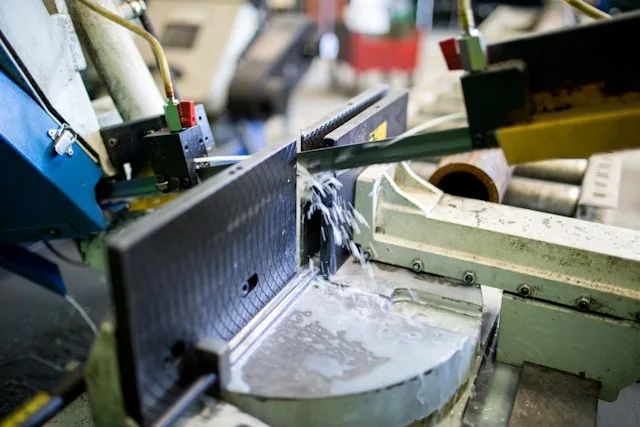
Campobasso province hosts approximately 340 active metalworking firms employing 4,100 workers. Their output is growing. Mechanical goods exports from Molise rose 4.2% year on year through the first three quarters of 2024, according to the Bank of Italy's Regional Economies report. The sector's trajectory through 2025 and into 2026 has been one of quiet, persistent expansion in a region most economic commentators overlook entirely.
The paradox is that this growth is happening while the labour force powering it is contracting. Campobasso province has lost 11.3% of its resident population since 2001. The working-age cohort is shrinking at 2.1% annually. Youth between 18 and 34 are leaving at a steady rate, drawn to Pescara, Bologna, and Rome by salaries that run 15 to 50% higher for equivalent technical roles. The firms left behind are producing more with fewer people, and the strain is becoming visible in every hiring cycle.
What follows is an analysis of the forces pulling Campobasso's metalworking sector in opposite directions: capital flowing in from Italy's national recovery plan, talent flowing out toward better-paying markets, and a modernisation programme that risks stalling before it starts. For any senior leader responsible for industrial hiring in southern Italy, or for any organisation embedded in the supply chains these firms serve, the dynamics in this small provincial market carry implications that extend well beyond Molise.
A Small Industrial Ecosystem Punching Above Its Weight
Campobasso's manufacturing base is easily underestimated. Molise ranks among Italy's regions with the lowest industrial density, with industrial value-added per capita at €3,200, less than half the national figure of €6,800. The numbers suggest a backwater. The reality is more specific.
The metalworking firms clustered in the Zona Industriale di Campobasso and the Bojano corridor are not producing for the local market. They are subcontracting precision mechanical workshops integrated into national supply chains. Fonderie Molisane S.r.l., with 80 to 95 employees, supplies precision ferrous castings to agricultural gearbox manufacturers in Emilia-Romagna. OMC S.p.A. in Bojano specialises in CNC machining for hydraulic components, employing an estimated 120 to 140 people. CBM Costruzioni Meccaniche fabricates stainless steel equipment for food processing plants across southern Italy.
These are not large employers by any national standard. But in a province of 340 metalworking firms, a handful of anchor companies with 50 to 140 staff set the tone for the entire talent market. They define what skills are available locally, what wages the market will bear, and how far a smaller firm must stretch to compete for qualified workers.
The sectoral composition matters. Approximately 28% of the provincial manufacturing base sits in mechanical engineering and metal fabrication, primarily serving Molise's dominant agri-food machinery sector. Plastics moulding, once assumed to be a larger presence, represents only 6.3% of industrial value-added and is concentrated in packaging rather than technical applications. Traditional foundries have contracted from 12 operational sites in 2010 to just 6 in 2024, squeezed by environmental compliance costs and energy prices that remain 23% above pre-crisis levels.
What holds the ecosystem together is maintenance, repair, and overhaul services supporting the region's agricultural machinery fleet and food processing plants. This is steady, unglamorous work. It also produces exactly the kind of tenured, highly skilled technician who is nearly impossible to recruit through conventional channels.
The PNRR Paradox: Capital Without the Workforce to Absorb It
Italy's National Recovery and Resilience Plan allocated €42 million to Molise for industrial digitalisation and green transition under Mission 4, Component 2. For a metalworking sector whose combined annual turnover makes this allocation equivalent to roughly 11% of the entire sector's revenue, this is not a marginal injection. It is transformative in scale, if not yet in execution.
The funds began reaching subcontractor level through 2025, triggering machinery replacement cycles. Firms that had operated legacy equipment for decades suddenly had access to subsidised capital for CNC upgrades, IoT-enabled production lines, and predictive maintenance systems. The demand side of the modernisation equation was solved.
The supply side was not.
The Technician Gap That Capital Cannot Close
ANPAL data for Campobasso province shows 780 open positions in metalworking and machine installation as of Q3 2024, with an average time-to-fill of 94 days against a national average of 67 days. More telling than the vacancy count is the self-reported constraint: 64% of metalworking firms identified "inability to find suitable technical staff" as their primary barrier to utilising PNRR funds. Not credit access. Not market demand. Human capital scarcity.
This is the analytical tension at the centre of Campobasso's manufacturing story in 2026. The conventional assumption about SME modernisation in southern Italy is that capital is the binding constraint. Firms cannot invest because they cannot borrow, and they cannot borrow because collateral requirements are punitive. That assumption is not wrong. SME lending rates in Molise average 5.8%, with collateral requirements 20% stricter than national averages. But when the state removes the capital barrier through direct subsidy, a deeper constraint becomes visible.
The investment in automation has not reduced the need for skilled workers. It has replaced one category of worker with another that does not yet exist in sufficient numbers within this market. A firm that replaces a manual lathe with a five-axis CNC machine does not eliminate the machinist. It eliminates the machinist who only knows manual operation and creates demand for a programmer who can code Fanuc and Siemens 840D controls. A firm that installs IoT sensors on a production line does not reduce its maintenance headcount. It needs a technician who understands predictive maintenance algorithms, and that person does not live in Campobasso.
Capital moved faster than human capital could follow. The €42 million is arriving. The people who can turn it into operational capacity are not.
Where the Industry 4.0 Training Infrastructure Falls Short
Campobasso has the institutional skeleton to address this gap. The Consorzio per l'Area di Sviluppo Industriale manages the "Fabbrica Intelligente" demonstration centre, an Industry 4.0 training hub located within the Zona Industriale. The Distretto Tecnologico Agroalimentare's mechatronics hub connects 22 local engineering firms to universities for R&D in food-processing automation.
But utilisation rates at the Fabbrica Intelligente remain below 40%. Only 18% of Campobasso metalworking SMEs have implemented IoT-enabled machinery or digital twinning, against a national SME average of 31%. The infrastructure exists on paper. The engagement does not follow in practice, partly because the firms most in need of training are the same firms whose owners are personally covering weekend shifts to compensate for the technicians they cannot hire.
Three Roles That Define the Shortage
The talent shortage in Campobasso's metalworking sector is not evenly distributed. General production operatives remain available. The broader mechanical operative category carries an unemployment rate of 8.4%. The crisis is concentrated in three specific profiles where local supply has collapsed against rising demand.
CNC Programmers Capable of Five-Axis Work
Unemployment among senior CNC programmers in Molise sits below 2%. The qualified population is typically tenured, averaging more than seven years with a single employer. They are recruited through word-of-mouth or direct approach by competitors. The ratio of active to passive candidates runs approximately one to four: for every programmer actively looking, four more would need to be identified and approached directly.
A representative pattern, documented by Confindustria Molise's 2024 competency survey, shows mid-sized workshops advertising CNC programmer positions for six to nine months without a hire. One firm in the Bojano zone reported a position open from March through November 2024. The owner covered the gap by running the machine personally on weekends.
A CNC programmer with five years of experience earns approximately €32,000 in Campobasso. The same profile commands €38,000 in Pescara and €45,000 in Bologna. The differential is not subtle. It is the single clearest reason why passive candidates in this specialisation are difficult to attract and nearly impossible to retain once they discover their market value elsewhere.
Certified Welding Engineers
The numbers here are stark. Twelve certified International Welding Engineers reside in Molise. Thirty-four open requests existed in 2024. The entire viable candidate pool is employed. There is no active market to recruit from.
Firms have responded with compensation premiums. Aggregate wage differential data from Unioncamere Molise indicates that structural metalwork firms have offered 25% salary premiums above standard technician rates to attract IWE-certified professionals from competitors, in some cases adding company vehicles and remote work allowances for documentation tasks. The competition is not between Campobasso and Bologna. It is between Campobasso firms fighting each other for the same twelve people.
International recruitment is the only channel that expands the pool. Romanian and Polish welding engineers are increasingly present in the region, according to the Istituto Italiano della Saldatura's regional data. But integrating internationally sourced technical talent into family-owned Italian SMEs introduces language, certification recognition, and cultural challenges that add months to effective onboarding.
Automation and Industry 4.0 Technicians
These roles barely existed in Campobasso before the PNRR funding cycle. They are newly created positions that emerged as firms purchased IoT-enabled equipment they now cannot maintain. Experienced profiles with more than three years of relevant work have already been absorbed by larger plants in Abruzzo or are employed remotely by northern Italian firms. The talent pipeline for these roles in Campobasso is functionally empty.
One food-processing equipment manufacturer in Campobasso, documented as a representative case by the Distretto Tecnologico Agroalimentare, created an arrangement with the University of Molise to employ PhD students part-time at €25 per hour. No commercial candidates were available after four months of search. The arrangement fills the immediate gap but creates no long-term capability.
The Demographic Undertow
Every hiring challenge in Campobasso sits on top of a deeper structural reality. The province is shrinking. Eleven point three percent of the resident population has gone since 2001. The outflow is not random. It is concentrated in the 18 to 34 age bracket, precisely the cohort that would normally replenish the technical workforce.
The annual youth emigration rate of 2.1% does not sound dramatic until it compounds. Over five years, it removes roughly one in ten young adults from the province. Over a decade, it hollows out the apprenticeship pipeline, the mid-career technical pool, and eventually the supervisory and management layer that SMEs depend on.
The competitors for this talent are not abstract. Pescara-Chieti, 80 kilometres southeast, offers 12 to 18% higher salaries for equivalent engineering roles, superior road and airport infrastructure, and the presence of multinational supply chains including Sevel and the Thales Alenia Space network. The career progression available in a 140-person workshop in Bojano simply cannot match what a young engineer sees in a multinational's supplier ecosystem in Abruzzo.
Bologna-Modena, Italy's packaging and agricultural machinery heartland, draws Molise graduates with 40 to 50% salary premiums and internationally structured career paths. Rome offers non-manufacturing alternatives in consulting and energy with higher absolute compensation.
The result is a talent market where conventional job advertising reaches almost no one worth hiring. The unspecialised operative positions can be filled from the local active market. Every role requiring five or more years of technical experience, a specialist certification, or Industry 4.0 competence requires direct identification and approach of employed professionals, either within the province or from neighbouring regions and international markets.
Compensation: The 15 to 20% Discount That Costs More Than It Saves
Campobasso's metalworking compensation trades at a 15 to 20% discount to northern Italian manufacturing hubs and a 5 to 8% discount to Pescara. The discount reflects lower cost of living, lower industrial density, and the historically captive nature of the local workforce. Firms have long assumed that employees would stay because there was nowhere else to go within commuting distance.
That assumption is breaking down.
A Plant Manager (Responsabile di Produzione) at senior specialist level earns €42,000 to €58,000 base annual gross in Campobasso. At executive level (Direttore Operativo), the range extends to €68,000 to €92,000, with bonus structures limited to 10 to 15% compared to 20 to 30% in northern Italy. A Technical Director with R&D responsibility earns €48,000 to €62,000 at senior level and €75,000 to €105,000 at executive level. A Quality Manager sits at €38,000 to €50,000 at senior level, rising to €60,000 to €78,000 at director level.
These figures are not uncompetitive by southern Italian standards. The problem is that remote work has partially dissolved geography for certain functions. An automation engineer who might once have been confined to the local market can now work remotely for a firm in Milan or Turin. A Quality Director with ISO 3834 and EN 1090 expertise can advise multiple firms from anywhere. The compensation benchmarks that made sense when the market was geographically sealed no longer hold when the seal has cracked.
The firms responding fastest are the ones breaking the local pay norms. The 25% premiums reported for welding engineers are a signal. When firms in a market this small begin outbidding each other by a quarter of base salary, the local equilibrium has already collapsed. The question for hiring leaders is not whether Campobasso's pay scales need adjustment. It is whether adjustment alone will be sufficient when the talent is not in the province at all.
What This Means for Senior Hiring Leaders
Campobasso's metalworking sector presents a specific kind of challenge that larger, better-known markets rarely exhibit in such concentrated form. The talent pool is tiny. The candidate universe for any specialist role can be counted in dozens, not hundreds. The passive-to-active ratio runs four to one or higher. And the competitive dynamics are not between employers of comparable scale, but between an SME ecosystem fighting to retain what it has and a set of external markets offering materially better compensation and career trajectory.
For any organisation that depends on this supply chain, whether as a buyer of precision components, a co-investor in PNRR-funded digitalisation projects, or a firm considering expansion into southern Italy's lower-cost manufacturing base, the talent constraint is not a secondary consideration. It is the primary one. The €42 million in modernisation capital does not help if the machines sit idle because no one in the province can programme them.
The search methodology required for this market is direct, targeted, and confidential. Posting a role on a job board in Campobasso reaches the 8.4% of operatives who are actively looking. It does not reach the CNC programmers with seven-plus years of tenure, the twelve welding engineers who are all employed, or the automation technicians who are already working remotely for better-paying firms. Direct headhunting that maps the passive candidate pool and approaches individuals with a structured, confidential proposition is the only methodology that produces results in a market this constrained.
KiTalent delivers interview-ready candidates within 7 to 10 days through AI-powered talent mapping that identifies exactly these profiles: the employed specialist who is not on any job board, not responding to any advertisement, and not visible to any recruiter working from an active database. With a 96% one-year retention rate across 1,450 completed executive placements and a pay-per-interview model that eliminates upfront retainer risk, the approach is built for markets where the margin for error in a hire is zero.
For organisations hiring technical leadership, plant management, or specialist engineering talent in Campobasso's metalworking sector, where the candidate pool is measured in single digits and the cost of a failed search is measured in months of lost production, speak with our executive search team about how we identify and deliver the candidates this market cannot surface on its own.
Frequently Asked Questions
Why is it so difficult to hire CNC programmers in Campobasso?
Unemployment among senior CNC programmers in Molise sits below 2%. The qualified population averages more than seven years of tenure with a single employer and does not actively seek new roles. The local candidate pool is extremely small, and the compensation gap with Pescara (18% higher) and Bologna (40% higher) means that any programmer aware of their external market value has strong incentive to leave. Effective recruitment requires direct identification of passive candidates rather than job advertising, which reaches almost none of the qualified population.
What is the PNRR's impact on manufacturing hiring in Molise?
Italy's National Recovery and Resilience Plan allocated €42 million to Molise for industrial digitalisation and green transition. The funds have triggered machinery replacement cycles across metalworking SMEs, creating demand for CNC programmers, automation technicians, and Industry 4.0 engineers. However, 64% of metalworking firms report that inability to find technical staff is their primary barrier to using these funds. The capital is available. The human capital is not.
What do manufacturing executives earn in Campobasso compared to northern Italy?
Campobasso manufacturing compensation trades at a 15 to 20% discount to Milan, Turin, and Bologna. A Plant Manager earns €42,000 to €58,000 at senior level and €68,000 to €92,000 at executive level. A Technical Director earns €48,000 to €62,000 at senior level, rising to €75,000 to €105,000 at executive level. Bonus structures in Campobasso typically range from 10 to 15%, compared to 20 to 30% in the north. KiTalent provides detailed salary benchmarking for manufacturing roles to help organisations calibrate competitive offers.
How does Campobasso compete with Pescara and Bologna for technical talent?
Campobasso competes at a material disadvantage. Pescara offers 12 to 18% higher salaries, direct motorway and airport access, and multinational employer presence. Bologna offers 40 to 50% salary premiums and internationally structured career paths. Campobasso's advantages are lower cost of living, shorter commutes, and the stability of long-tenured positions in family-owned firms. For hiring leaders, the practical implication is that candidate attraction requires a compelling role proposition beyond compensation alone.
What is the best approach to executive search in Campobasso's manufacturing sector?
In a market where the specialist candidate pool can be counted in dozens and 80% or more of qualified professionals are passively employed, conventional recruitment methods produce poor results. The average time-to-fill for metalworking roles in Campobasso runs 94 days against a national average of 67. Executive search firms using AI-powered talent mapping and direct headhunting methodology can identify and approach passive candidates who are invisible to job boards. KiTalent's model delivers interview-ready candidates within 7 to 10 days, with a pay-per-interview structure that removes upfront retainer risk.
Are international candidates a viable solution for Campobasso's welding engineer shortage?
International recruitment is one of the few channels that expands the pool. Romanian and Polish welding engineers are increasingly present in southern Italy. However, integrating internationally sourced talent into family-owned Italian SMEs involves certification recognition, language barriers, and cultural onboarding that can add months to effective deployment. Firms considering this route benefit from structured talent mapping that identifies qualified international profiles and assesses their readiness for integration before an approach is made.