Ulm's Medtech Cluster Produces World-Class Research. It Cannot Hire the People to Commercialise It.
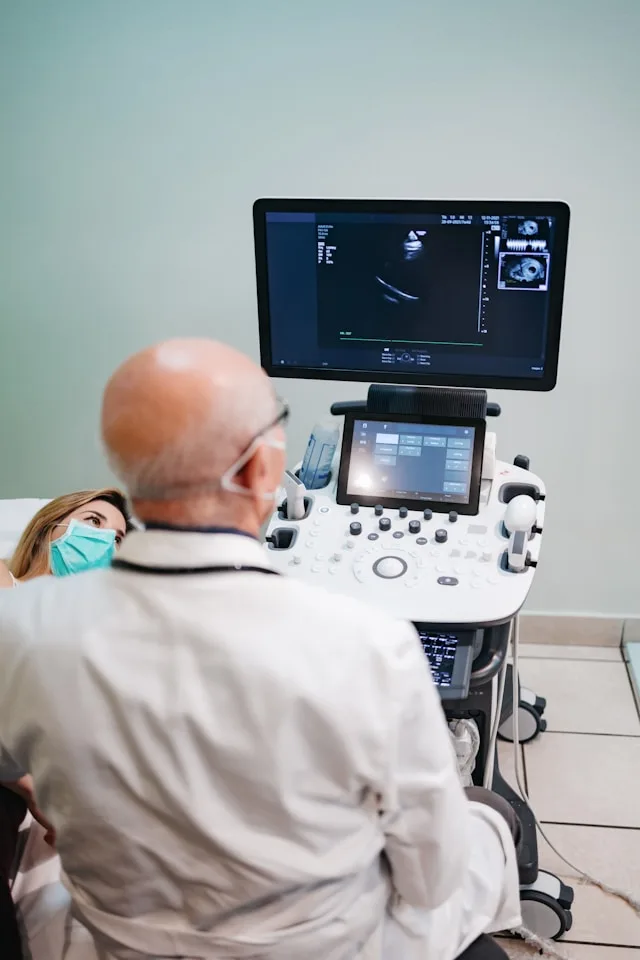
Ulm's medical technology cluster entered 2026 with a contradiction that no amount of research excellence can resolve on its own. The city and its surrounding BioRegion support roughly 180 dedicated medtech and biomedical engineering firms. They employ an estimated 14,000 people across the wider region. Universität Ulm ranks in the top 10 per cent of European universities for medical technology research citations per faculty member, and the University Hospital generates over €40 million annually in third-party research funding. By any measure of scientific output, this is one of Europe's most productive medtech ecosystems.
Yet the cluster's commercial translation record tells a different story. Only three Ulm-based medtech firms achieved €10 million or more in revenue through 2024, compared with twelve in Munich's Medical Valley over the same period. Vacancy fill times for specialised biomedical engineering roles averaged 127 days through 2024, exceeding the national medtech average by 40 per cent. The roles most critical to turning research into regulated, marketable products are the roles this market cannot fill. Regulatory affairs specialists, clinical data scientists, and MDR-compliant software engineers remain acutely scarce, and the factors driving that scarcity are intensifying rather than easing.
What follows is a structured analysis of the forces reshaping Ulm's medtech sector, the employers and institutions driving that change, and what senior leaders need to understand before making their next hiring or retention decision in this market. The picture that emerges is not simply one of supply and demand imbalance. It is a market where the regulatory burden that creates the greatest need for specialist talent is the same burden that prevents firms from affording it.
The Missing Middle: Why Ulm's Ecosystem Structure Creates a Talent Trap
The architecture of Ulm's medtech cluster looks strong from a distance. At the top sit anchor institutions: the University Hospital with approximately 6,200 employees, Stryker's trauma and extremities R&D operations with an estimated 400-plus local staff, and KLS Martin Group with roughly 850 global employees and a material R&D presence in the city. At the base sit dozens of micro-enterprises spun out of university research, 47 active spin-offs since 2018, of which 32 remained operational as of early 2025.
What sits between these two tiers is thin. The cluster lacks the density of growth-stage mid-caps, firms with 50 to 250 employees, that anchor talent retention in more commercially mature ecosystems. The spin-off density is high at 2.3 per 1,000 life science students, above the national average of 1.8. But the survival rate to Series A funding or €5 million revenue is materially lower than in Munich or Heidelberg, according to the German Startup Association's 2024 monitor.
Where Talent Gets Stuck and Where It Leaks
This structural gap matters for hiring in a very specific way. A senior regulatory affairs specialist or a biomedical software architect in Ulm faces a constrained career path. They can work at a micro-enterprise where the ceiling arrives quickly, or they can work at one of the two or three large employers where vertical mobility is limited by headcount. The growth-stage firms that typically offer the combination of responsibility, equity participation, and career trajectory that retains ambitious mid-career talent are largely absent.
The result is predictable. Net outflow data from Universität Ulm's own graduate surveys showed 12 to 15 per cent of Ulm-trained biomedical engineers relocating to Munich within three years of graduation through 2024. The professionals who stay tend to be those with deep local ties. The professionals who leave tend to be the most commercially ambitious, exactly the people the cluster needs most to close the translational gap.
This is the analytical claim that the data supports but that neither the university nor the cluster management organisation has stated directly: Ulm's commercialisation problem is not primarily a capital problem or a research problem. It is a talent retention problem created by ecosystem architecture. The missing middle means there are not enough firms at the right growth stage to offer the career trajectories that keep scaling talent in the region. Capital follows talent, not the other way around. Until the ecosystem can retain the people who build €10 million companies, the venture capital gap and the commercial translation gap will persist together.
MDR Compliance: The Regulatory Paradox Reshaping Every Hire
The EU Medical Device Regulation (MDR 2017/745) has imposed costs on Ulm's SME-heavy cluster that are disproportionate to the firms bearing them. Through 2024, medtech SMEs in the BioRegion reported average compliance costs of €380,000 to €520,000 per device family for MDR technical documentation updates. For firms with fewer than 50 employees, this represented 15 to 25 per cent of annual revenue, according to Spectaris industry data.
The compliance timeline compounds the cost. Local SMEs reported average delays of 14 to 18 months for MDR conformity assessments from Notified Bodies, compared with 8 to 12 months for larger corporates with established BSI or TÜV SÜD relationships. Forty per cent of local SMEs indicated they lacked in-house quality management personnel sufficient for the required audit frequencies.
The Paradox: Demand for Regulatory Talent Rises as Firms Struggle to Afford It
One might expect a regulatory burden of this magnitude to suppress demand for regulatory talent. If firms are exiting markets or delaying product launches, the need for regulatory specialists should theoretically decline. The data shows the opposite. Demand for regulatory affairs professionals in the BioRegion is projected to increase 18 per cent year-on-year through 2026 as MDR implementation deadlines approach for Class IIb and III devices.
The explanation is that MDR compliance is not optional for any firm that intends to remain in the market. The firms that cannot afford it face acquisition or closure. The firms that can afford it need more regulatory specialists than they previously employed. Either outcome increases demand for the same constrained talent pool. Salary inflation for MDR specialists has been running at 12 to 15 per cent annually, and a Regulatory Affairs Manager position in the Ulm cluster typically sits vacant for 140 to 160 days, nearly double the 85-day average for general engineering roles in Baden-Württemberg.
The regulatory constraint is not transitional. It is embedded and permanent. It creates a market where the industry simultaneously cannot afford compliance and cannot afford to hire the compliance expertise it requires. For hiring leaders, this means that every regulatory affairs search in Ulm is competing not only with other medtech firms but with the attrition of the very employers generating the roles.
Compensation Arbitrage: Why Ulm's Cost Advantage Is Becoming a Hiring Liability
Executive compensation in Ulm's medtech sector trails Munich benchmarks by 18 to 22 per cent at the senior specialist and VP levels. At the executive tier, the gap is wider still: total compensation for a Head of Regulatory or Quality in Ulm ranges from €165,000 to €220,000, while equivalent Munich roles command a premium that pushes packages 22 per cent higher according to Michael Page's 2024 executive compensation data.
For years, this differential worked in Ulm's favour. Lower cost of living, a university city atmosphere, and housing costs 65 per cent below Munich levels made the effective compensation gap smaller than the headline numbers suggested. Firms marketed the lifestyle trade-off as part of the package.
That argument is eroding. Housing vacancy in Ulm city centre has fallen to 0.8 per cent, creating relocation barriers for senior hires from international markets. Meanwhile, wage inflation in scarce roles has been running at 4 to 5 per cent annually, narrowing the cost advantage that attracted SMEs in the first place without yet closing the gap enough to compete for the most in-demand candidates.
The Swiss and [Stuttgart](/stuttgart-baden-wurttemberg-germany-executive-search) Corridors
The competitive pressure is not only from Munich. Basel and Zurich offer gross compensation premiums of 35 to 45 per cent for equivalent roles. Net of tax and cost of living adjustments, the premium remains 20 to 25 per cent. Senior regulatory executives in Ulm have established a pattern of weekly commuting to Basel, maintaining residence in Ulm for cost reasons while earning Swiss salaries. This arrangement removes VP-level talent from the local employer pool without those individuals ever formally leaving the region.
Stuttgart presents a different but equally acute challenge. Bosch Health Campus and the automotive majors offer compensation packages that directly compete for embedded software engineers, the same professionals building Software as Medical Device products in Ulm. The compensation differential for systems engineers and software developers is 15 to 18 per cent in Stuttgart's favour. The attraction is compounded by remote-first policies and superior rail connectivity. For a software engineer in Ulm who can do the same work for a Stuttgart automotive AI team at higher pay with fewer office days, the question is not whether to leave but when.
The Roles That Define the Shortage
Three categories of hire now define the difficulty of building a leadership team in Ulm's medtech cluster. Each has distinct characteristics, and each requires a different approach.
MDR Regulatory Affairs Specialists
An estimated 80 per cent of qualified MDR regulatory affairs specialists in the region are passive candidates. They hold ISO 13485 Lead Auditor certifications and MDR Technical Documentation experience. They transition through direct search or referral networks, rarely applying to posted vacancies. The small absolute population and high retention rates at incumbent firms like Stryker and KLS Martin mean that the visible candidate market, the professionals who appear on job boards, represents a fraction of the qualified pool.
A typical pattern in the cluster involves midsize dental device manufacturers with 50 to 100 employees losing MDR-competent quality managers to Munich-based diagnostics firms. These competitors offer remote-work flexibility and base salary premiums of 20 to 25 per cent. The cost of a failed or prolonged search in this function is not measured in recruiter fees. It is measured in months of product launch delay and regulatory submission backlogs.
Biomedical Software Architects
Engineers with dual competency in embedded systems and medical device software lifecycle processes under IEC 62304 carry an estimated 75 per cent passive candidate ratio. They are typically retained through equity and deferred compensation at current employers. Demand for AI and machine learning engineers for diagnostic software is projected to increase 35 per cent through 2026 as University Hospital spin-offs move into AI-radiology tools. These candidates face direct competition from Stuttgart automotive AI teams offering higher wages and remote-first arrangements.
Ulm medtech software developers have already begun restructuring work arrangements in response. Firms have created hybrid structures with only two to three mandatory office days per month, a material shift from pre-2023 full-time requirements, specifically to slow attrition toward the automotive sector.
Clinical Affairs Directors with FDA Experience
The most constrained segment of all. Estimated 85 per cent passive candidate ratio. Fewer than 200 individuals with the relevant profile exist in the broader region. Director and VP Clinical Affairs base salaries range from €125,000 to €160,000. These professionals combine clinical trial management with biostatistics competencies, and when CROs or device companies onboard them, Heidelberg-based pharmaceutical firms in the BioNTech and CureVac ecosystem routinely recruit them away within four to six weeks, often with relocation bonuses of €15,000 to €25,000. The revolving door in this function is not a metaphor. It is a documented pattern.
What 2026 Holds: Consolidation, Expansion, and Competing Demands
The trajectory established through 2025 has continued into 2026 with three dynamics now converging.
First, consolidation among micro-SMEs is accelerating. An estimated 20 to 25 per cent of firms with fewer than 20 employees face acquisition or closure due to MDR compliance cost burdens, according to BDI analysis. This may release some talent into the market, but the professionals freed by SME closures are not necessarily the ones other firms need most. A quality engineer from a closing single-product firm does not carry the same MDR audit depth as a specialist who has shepherded multiple device families through Notified Body assessment.
Second, the University Hospital's planned expansion of its Comprehensive Cancer Centre will increase demand for clinical research nurses by more than 40 full-time equivalents. These nurses draw from the same talent pool that device CROs need for trial execution. The hospital already carried 340 open positions in nursing and clinical research coordination as of late 2024. The expansion will intensify competition for a workforce that is already insufficient.
Third, spin-off formation is expected to increase by 15 per cent through 2026, driven by new EXIST funding programmes. More startups will enter the market needing regulatory, engineering, and commercial talent. Venture capital availability in Ulm remains 40 per cent below Munich levels, meaning these startups will be less able to compete on compensation than their Bavarian counterparts. The cluster will generate more demand for exactly the talent it cannot retain.
Employment growth across the cluster is projected at a modest 2 to 3 per cent, constrained not by market demand but by the regulatory cost burden and the inability to hire at the pace investment would otherwise support. The growth ceiling is not commercial. It is human.
What This Means for Senior Hiring Leaders
Any organisation hiring into Ulm's medtech cluster in 2026 must accept three realities that conventional hiring methods are not designed to address.
The first is time. A specialised biomedical engineering search in this market averages 127 days. Regulatory affairs roles run to 140 to 160 days. These timelines are not caused by process inefficiency. They reflect a market where 75 to 85 per cent of qualified candidates are employed, performing well, and not looking. A search methodology that only reaches active candidates will miss the overwhelming majority of the qualified population.
The second is compensation positioning. Matching Ulm market rates is no longer sufficient for scarce roles. The data indicates that securing a passive candidate requires premiums of 15 to 20 per cent above current Ulm benchmarks. For a VP of Regulatory Affairs, that means a total compensation package in the €190,000 to €260,000 range. Firms unwilling to reach this threshold will continue to lose candidates to Munich, Stuttgart, and Swiss border employers.
The third is the nature of the search itself. In a market with fewer than 200 Clinical Affairs Directors with FDA experience across the entire region, no job posting will generate a viable shortlist. These roles require systematic identification and direct approach of passive candidates who are currently employed at competitors, combined with a proposition that addresses not only compensation but career trajectory, the very factor that Ulm's missing middle makes hardest to promise.
KiTalent's approach to executive search in the healthcare and life sciences sector is built for precisely this kind of constrained market. AI-enhanced talent mapping identifies the passive candidates who make up 75 to 85 per cent of the qualified pool for regulatory, clinical, and software engineering leadership roles. Interview-ready candidates are delivered within 7 to 10 days, compressing timelines that in this market routinely exceed four months through conventional methods. The pay-per-interview model means organisations invest only when they are meeting qualified candidates, not when a retainer is signed and the search has yet to begin.
With a 96 per cent one-year retention rate across more than 1,450 executive placements, KiTalent's methodology addresses the specific risk that defines Ulm's talent market: not just finding the right person, but ensuring they stay. In a cluster where clinical data managers are recruited away within weeks of onboarding, retention begins with the quality of the match, not with a counteroffer after a resignation letter arrives.
For organisations competing for regulatory affairs, clinical operations, or biomedical engineering leadership in Ulm's medtech market, where the candidates you need are not visible on any job board and the cost of a slow search is measured in delayed MDR submissions and lost product cycles, speak with our executive search team about how we approach this market differently.
Frequently Asked Questions
How long does it take to fill a senior medtech role in Ulm?
Specialised biomedical engineering roles in Ulm averaged 127 days to fill through 2024, and regulatory affairs positions typically ran to 140 to 160 days. These timelines reflect a market where 75 to 85 per cent of qualified candidates are passive, meaning employed and not actively applying. Conventional job postings reach only a fraction of the viable talent pool. Direct search methods that systematically identify and approach passive candidates compress these timelines materially. KiTalent's methodology delivers interview-ready candidates within 7 to 10 days of engagement, even in the most constrained medtech functions.
What do senior medtech executives earn in Ulm compared to Munich?
Total compensation for a Head of Regulatory or Quality in Ulm ranges from €165,000 to €220,000, trailing Munich equivalents by approximately 22 per cent. For R&D leadership at VP or CTO level in small to mid-size medtech firms, total packages including equity range from €180,000 to €260,000. The gap narrows when adjusted for Ulm's lower cost of living, but housing scarcity in the city centre and wage inflation of 4 to 5 per cent annually in scarce roles are eroding this advantage. Accurate market benchmarking is essential before positioning an offer.
Why is MDR compliance driving talent shortages in Ulm's medtech cluster?
The EU Medical Device Regulation imposes compliance costs of €380,000 to €520,000 per device family for SMEs, representing 15 to 25 per cent of annual revenue for firms with fewer than 50 employees. This burden simultaneously increases demand for regulatory specialists and reduces firms' capacity to afford them. Forty per cent of local SMEs lack sufficient in-house quality management personnel for MDR audit frequencies, yet regulatory affairs demand is projected to increase 18 per cent year-on-year through 2026.
What makes Ulm's medtech talent market different from Munich or Stuttgart?
Ulm's cluster is research-anchored and SME-heavy, with strong academic output but a scarcity of growth-stage mid-cap firms with 50 to 250 employees. This missing middle constrains career trajectories for ambitious mid-career professionals, driving a net outflow of 12 to 15 per cent of Ulm-trained biomedical engineers to Munich within three years of graduation. Stuttgart competes differently, attracting embedded software engineers through automotive-sector wages and remote-first policies. Each competitor exploits a different gap in Ulm's retention capacity.
How can organisations improve executive retention in Ulm's medtech sector?
Retention in this market starts before the hire. The revolving door pattern in clinical data management, where new hires are recruited away within weeks, suggests that compensation alone is insufficient. Effective retention requires a role proposition that addresses career trajectory, equity participation where possible, and work arrangement flexibility. Firms that mandate full-time office presence without a compelling reason lose software engineers to Stuttgart's remote-first employers. Firms that cannot articulate a growth path lose regulatory specialists to Munich's larger employers.
Is Ulm's medtech cluster growing or contracting?
Both, simultaneously. Employment growth is projected at 2 to 3 per cent, constrained by MDR compliance costs rather than market demand. Spin-off formation is expected to increase 15 per cent through 2026 due to new EXIST funding. At the same time, 20 to 25 per cent of micro-SMEs with fewer than 20 employees face acquisition or closure. The cluster is not shrinking in aggregate, but it is restructuring. The balance between innovation diversity and commercial scale will depend on whether consolidation produces stronger mid-size firms or simply reduces the number of employers competing for the same scarce talent.