Vantaa's Aviation Talent Crisis: A Billion Euros in Infrastructure and Nobody to Run It

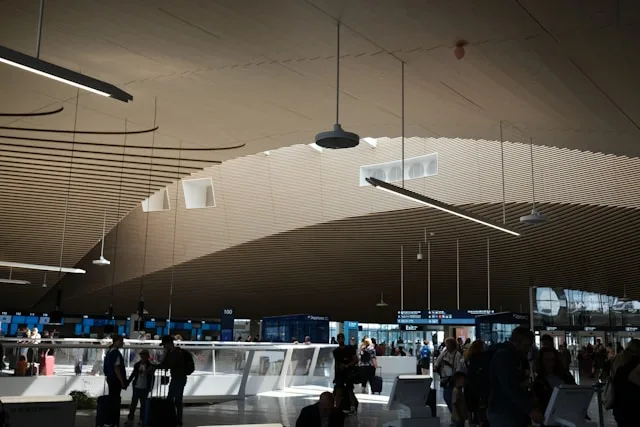
Helsinki Airport processed 16.9 million passengers in 2024, recovering to roughly 90% of its 2019 peak. Finavia's €1 billion capital programme has delivered a rebuilt central plaza, a new baggage system capable of handling 22 million bags annually, and terminal capacity designed to serve 30 million passengers by 2030. By every infrastructure measure, Vantaa's Aviapolis district is a modern, well-capitalised aviation hub positioned for growth.
The problem is not the terminal. It is the people. Licensed aircraft maintenance engineers in the Helsinki region take 120 to 150 days to hire. Air traffic controller vacancies in the Tampere to Helsinki corridor sat open for over 14 months. The workforce median age for EASA Part-66 licensed engineers has reached 52, and Finnish vocational training output for aircraft mechanics has fallen 30% since 2015. Finavia is building an airport for 30 million passengers while operating in a labour market that cannot staff the current 18 million.
What follows is an analysis of the forces driving this mismatch, the specific roles where the gap is most acute, and what it means for organisations trying to hire and retain aviation leadership in Finland's most critical transport hub. The tension between capital investment and human capital scarcity is now the defining constraint on Vantaa's aviation sector, and it will not resolve itself through expansion alone.
The Infrastructure Paradox: Building Capacity You Cannot Operate
Finavia's capital programme is among the most ambitious airport investments in Northern Europe. The €1 billion spend running from 2020 to 2030 has already delivered visible results. The Terminal 2 "Aukio" central plaza expansion is complete. A new automated baggage handling system went operational in late 2024. The programme targets terminal capacity sufficient for 30 million annual passengers by the end of the decade.
Yet Helsinki Airport operates under IATA Level 3 slot coordination, meaning every takeoff and landing requires pre-allocated approval. The three-runway system has a theoretical capacity of 60 movements per hour, but noise abatement procedures and the airport's environmental permit cap peak-hour operations at 38 to 40 movements. A strict night curfew from 23:00 to 06:00 further limits scheduling flexibility. Summer 2025 slots were constrained to approximately 260,000 annual movements.
This creates a structural ceiling. Terminal capacity can expand to serve 30 million passengers, but aircraft movements remain capped at roughly 2019 levels. The investment buys comfort and processing speed on the ground. It does not buy more flights.
The original synthesis this article rests on is this: Finavia's capital programme has widened the gap between what Helsinki Airport can physically accommodate and what it can operationally deliver. The constraint is no longer concrete and steel. It is licensed engineers, air traffic controllers, and specialised operations managers who do not exist in sufficient numbers within Finland's borders. Capital moved faster than human capital could follow, and the result is a risk of stranded infrastructure: terminals built for a throughput the workforce cannot sustain.
Slot Constraints and the Regulatory Ceiling
The Level 3 slot coordination regime means Helsinki cannot simply add flights as demand recovers. Every new route or frequency increase requires a slot, and the noise quota system restricts the type of aircraft that can operate, particularly during shoulder hours near the curfew. According to Traficom's 2025 summer season slot coordination report, summer capacity is functionally at its ceiling under current environmental permissions.
For hiring leaders, this has an indirect but material consequence. Growth in passenger numbers must come from higher load factors and larger aircraft rather than more movements. That shifts demand from volume-based ground handling roles toward technical specialisms: engineers qualified on wide-body types, operations managers capable of optimising turnaround times on constrained schedules, and compliance professionals managing the increasing regulatory burden of EU ETS Phase IV and ReFuelEU Aviation mandates.
ReFuelEU and Rising Compliance Costs
The ReFuelEU Aviation regulation now requires 2% sustainable aviation fuel blending as of January 2025, with escalating thresholds ahead. Finavia estimates €20 to €30 million in additional compliance costs by 2026, affecting fuel logistics, ground handling procedures, and reporting requirements. This regulatory layer compounds the operational ceiling. It does not create new roles in large numbers, but it makes existing roles more complex and harder to fill with candidates who lack current compliance knowledge.
The gap between what Helsinki Airport can build and what it can staff is not closing. It is widening at exactly the skill levels where the most critical roles sit.
The Licensed Engineer Deficit: A Market That Is 80% Invisible
The most acute shortage in Vantaa's aviation sector is not ground handlers or customer service agents. It is EASA Part-66 B1 and B2 licensed aircraft maintenance engineers, particularly those with type ratings for Finnair's core Airbus A350 and Embraer E190 fleet.
The numbers are stark. The Finnish Aviation Industry Association (ILA) forecasts a deficit of 300 to 400 licensed maintenance personnel in the Helsinki region by 2026. The current workforce median age is 52. Finnish vocational training produces only 30 to 40 aeronautical engineering graduates annually from Haaga-Helia University of Applied Sciences, a pipeline that replaces fewer than a quarter of projected retirements. Average tenure among employed licensed engineers is 8.5 years per employer, and unemployment in this category sits below 2%.
Only 15 to 20% of employed licensed engineers in the Helsinki region are actively seeking new roles at any given time. The remaining 80% are embedded in stable positions, not monitoring job boards, and unreachable through conventional recruitment advertising. This is the definition of a passive candidate market where direct headhunting is the only method that reaches the talent that matters.
The MRO Cluster Has Thinned
The local talent pool for licensed engineers shrank materially when Finnair divested its heavy maintenance capabilities to Estonia-based Magnetic MRO in December 2021. While Magnetic MRO and Patria maintain line maintenance and component repair stations at Helsinki Airport, the depth of the MRO cluster is thinner than it was before the pandemic. Magnetic MRO employs an estimated 150 to 200 Finnish-based engineers at its Helsinki station. Patria maintains 100 to 150. These are meaningful numbers, but they represent a fraction of the pre-divestment capacity.
The divestment also created a geographic competitor. Magnetic MRO's headquarters and main base in Tallinn offers comparable net compensation to Finnish engineers. According to Statistics Finland's cross-border labour mobility data, gross salaries in Tallinn run 15 to 20% lower, but income tax and housing costs are 30% cheaper. The net effect is that Finnish engineers can maintain their lifestyle in Tallinn while paying less tax. The flow of talent southward is quiet but measurable.
Stockholm Arlanda competes from the other direction. B1/B2 engineers in Sweden command base salaries of SEK 650,000 to 800,000, compared to €55,000 to €70,000 in Finland. That is a 25 to 35% premium on gross pay. Living costs in Stockholm are roughly 40% higher, which erodes some of the differential, but for a senior engineer approaching peak earning years, the headline number carries weight.
For any organisation running a technical leadership search in the aviation or industrial sector, the implication is clear: the candidate pool is small, passive, and subject to cross-border competition from employers offering either lower costs or higher salaries. A conventional job posting will reach the 15 to 20% who are looking. It will miss everyone else.
Air Traffic Control: A Market Where Zero Means Zero
Air traffic controllers at Helsinki Area Control Centre represent an extreme case. Active unemployment among qualified ATCOs in Finland is effectively zero. Every qualified controller is either employed or in a training pipeline that takes two to three years to complete. The market is, by Finavia's own disclosure, 95% passive.
According to Finavia's 2023 annual report, specific sector openings for the Tampere to Helsinki corridor remained unfilled for over 14 months. The consequences were operational, not merely administrative. Mandatory overtime for existing controllers became routine. The opening of new airspace sectors intended to increase capacity was delayed. This directly constrained slot availability at a time when Finavia was investing billions to expand terminal capacity.
The irony is pointed. Helsinki Airport's growth is being limited not by concrete or terminals or passenger demand, but by the number of qualified people sitting in front of radar screens. No amount of capital expenditure resolves a shortage that takes three years of training to address, one controller at a time.
This is a market where traditional executive recruiting approaches fail entirely. There is no pool of active applicants to screen. There is no surplus market to advertise into. The only viable strategy is direct identification and engagement of controllers at other facilities or in late-stage training, combined with a retention strategy that prevents the controllers already in place from being recruited away.
Ground Handling: A Different Kind of Shortage
The ground handling market at Helsinki Airport operates under different dynamics. Swissport Finland (now under Dnata ownership), Aviator Airport Alliance, and Menzies Aviation collectively employ approximately 2,500 personnel and handle 85% of ground movements. Supply of entry-level ramp agents and load controllers is available, but retention is the problem.
According to reports in Helsingin Sanomat and Yle News, Swissport Finland publicly offered €1,000 start bonuses for ramp agent and load controller positions during the peak summer seasons of 2022 and 2023. The company also offered subsidised temporary housing in Vantaa for recruits from Estonia and Latvia to address staffing shortfalls that caused cascading flight delays at Terminal 2. These bonuses remained in effect through summer 2023 for night-shift positions.
The competition for ground handling managers is not geographic. It is sectoral. Candidates with the operational management skills needed to run a ramp operation are increasingly drawn to warehouse logistics: Posti, Kesko, and Amazon's Vantaa fulfilment centres offer more stable daytime schedules and lower physical strain at comparable compensation. A senior operations manager at a ground handling firm earns €65,000 to €85,000 with OTP-linked bonuses. A logistics operations manager at a major fulfilment centre earns a similar base with predictable hours and lower injury risk.
For employers trying to retain experienced ground handling managers, the counteroffer from a logistics competitor is not always a salary conversation. It is a lifestyle conversation. The shift patterns, the outdoor exposure in Finnish winters, and the physical demands of airside work create attrition that compensation alone cannot address.
Automation and the Shifting Skill Profile
Finavia's €50 million "Smart Airport" programme, scheduled for deployment phases through 2026, introduces AI-driven baggage handling and autonomous vehicle pilots on the airside. This will not eliminate ground handling roles in the near term, but it will reshape them. The roles that remain will require digital literacy and data fluency that current ramp agents do not possess. The roles that disappear will be the repetitive, physically demanding ones that are already hardest to staff.
The net effect is a workforce that shrinks in headcount but increases in average skill requirement. Organisations that plan their talent pipeline around current role definitions will find those definitions obsolete within two to three years.
Compensation in Context: What Aviation Leadership Earns in Vantaa
Vantaa's aviation compensation structure is compressed compared to peer markets. Finnish collective bargaining agreements create stable but rigid salary frameworks, and public-sector classification scales constrain Finavia's ability to match private-sector offers for equivalent roles.
At the specialist level, a senior EASA Part-66 engineer with 10 or more years of experience and current type ratings earns €55,000 to €72,000 in base salary, with shift differentials adding 15 to 20%. A VP or Director of Maintenance at an airline or MRO provider commands €150,000 to €220,000 in base compensation, with short-term incentives of 20 to 30% and long-term share programmes. Finnair's executive team members in technical operations roles received total compensation of €180,000 to €250,000 in 2023 according to the airline's remuneration statement.
Ground handling leadership pays less. A senior operations manager at station level earns €65,000 to €85,000. A VP of Ground Operations covering a Nordic regional role earns €95,000 to €135,000, with material variation depending on whether the employer is a legacy handler or a low-cost specialist.
At Finavia itself, a senior airport duty manager earns €70,000 to €90,000 on public-sector scales. VP-level airport operations and infrastructure roles command €140,000 to €190,000. CEO Lauri Järvilehto's total remuneration of €298,000 in 2023 sets the effective ceiling for operational VPs at €180,000 to €200,000.
For anyone benchmarking a senior aviation executive offer in this market, the key insight is that Finnish aviation compensation is competitive within Finland but structurally lower than Stockholm and Copenhagen at the same seniority level. Finnair long-haul captains earn €40,000 to €60,000 less annually than SAS equivalents. B1/B2 engineers earn 25 to 35% less than their Swedish counterparts. The gap is partially offset by Finland's lower cost of living outside the Helsinki city centre, but for a candidate weighing a cross-border move, the gross salary differential is the first number they see.
Compensation inflation in technical roles is now outstripping general Finnish wage growth. The ILA projects 3.5% annual increases for licensed aviation roles against a 2.1% CPI baseline. This differential will continue to widen as retirement-driven scarcity intensifies.
Understanding how to negotiate compensation packages that account for Finnish collective bargaining constraints while remaining competitive against Nordic peers is essential for any organisation making a senior offer in this market.
The Geopolitical Overhang: Russian Airspace and Finnair's Strategic Bind
Helsinki Airport's historic advantage was geographic. Situated at the crossroads of Europe and Asia, the hub offered the shortest great-circle routes between European capitals and East Asian destinations. Finnair built its business model on this positioning, operating high-frequency connections to Tokyo, Seoul, Shanghai, and other Asian cities via Russian overflight.
That advantage is now impaired. The indefinite closure of Russian airspace to EU carriers forces Finnair's Asian routes to operate 15 to 25% longer flight paths, increasing fuel burn, reducing payload capacity, and eroding the time advantage that justified connecting through Helsinki rather than through Middle Eastern hubs. Finnair's Asia-Europe transfer traffic remains 15 to 20% below 2019 capacity, according to the airline's Q3 2024 interim report. The re-routing via polar corridors has partially compensated, and the expansion of Qatar Airways, Japan Airlines, and Korean Air long-haul services has replaced some lost capacity. But the structural disadvantage persists.
For the talent market, this creates concentration risk. Finnair accounts for 55% of Helsinki Airport's passenger traffic. The airline's debt-to-equity ratio remains elevated at 120% following its post-COVID restructuring. Any material deterioration in Finnair's financial position would ripple through the entire Aviapolis employment ecosystem. When one airline accounts for more than half the traffic at a hub, every hiring decision in the district carries implicit exposure to that airline's balance sheet.
The 2026 outlook projects a return to 2019 volumes of approximately 21 million passengers by Q4 2026, but this projection depends on the continued success of alternative routing and the growth of non-Finnair long-haul services. The Finnish Aviation Industry Association's skills gap analysis does not model a scenario in which Finnair contracts rather than grows. If that scenario materialises, the talent shortage inverts into surplus in generic roles while remaining acute in technical specialisms that serve all carriers, not just one.
What This Means for Hiring Leaders in 2026
The Vantaa aviation talent market in 2026 presents a challenge that cannot be solved by posting a vacancy and waiting. The candidate populations that matter most are between 80% and 95% passive. The pipeline from vocational training replaces fewer than a quarter of projected retirements. Cross-border competitors in Tallinn and Stockholm offer net compensation that is either cheaper or higher. And the regulatory and environmental ceiling on operations means that growth in complexity, not just volume, is driving demand for skills that did not appear in job descriptions five years ago.
For organisations hiring aviation and industrial leadership across the Nordics, the practical implications are specific. Searches for licensed engineers must be conducted through direct headhunting methodology that reaches embedded, passive candidates. Compensation packages must be benchmarked not against Finnish averages but against the specific cross-border alternatives a candidate will weigh. And the timeline for executive-level aviation hires must account for a market where 120 to 150 days is the norm, not the exception.
KiTalent's approach to this market reflects the reality the data describes. Using AI-enhanced talent mapping to identify the full universe of qualified candidates, including the 80% who will never respond to a job posting, and delivering interview-ready shortlists within 7 to 10 days. With a 96% one-year retention rate across 1,450 executive placements globally, and a pay-per-interview model that eliminates the upfront retainer risk, the methodology is built for markets where speed and precision both matter.
For organisations competing for licensed engineers, air traffic control leadership, or senior operations talent in Vantaa's constrained aviation market, speak with our executive search team about how we identify and engage the candidates your competitors cannot reach.
Frequently Asked Questions
What is the average time to hire a licensed aircraft maintenance engineer in Vantaa?
The average time to fill a licensed EASA Part-66 B1 or B2 engineer role in the Helsinki region is 120 to 150 days, according to the Finnish Aviation Industry Association's 2024 labour market survey. This reflects the extremely passive nature of the candidate market, where only 15 to 20% of qualified engineers are actively seeking new roles at any time. Unemployment in this category sits below 2%. Conventional job advertising reaches a fraction of the qualified pool, which is why firms increasingly turn to direct headhunting for aviation technical roles to reduce time to fill and access candidates who are not visible through standard channels.
How does Helsinki Airport aviation compensation compare to Stockholm and Copenhagen?
Helsinki aviation roles pay materially less in gross terms than equivalent positions in Stockholm and Copenhagen. EASA Part-66 B1/B2 engineers earn €55,000 to €72,000 in Finland versus SEK 650,000 to 800,000 in Sweden, a 25 to 35% premium for Stockholm. Long-haul captains at SAS earn approximately €40,000 to €60,000 more annually than Finnair equivalents. Finland's lower cost of living partially offsets the gap, but the headline salary differential influences candidate decisions, particularly for engineers weighing cross-border moves to Tallinn or Stockholm.
Why is there a shortage of air traffic controllers at Helsinki Airport?
Active unemployment among qualified air traffic controllers in Finland is effectively zero. Training a new ATCO takes two to three years, creating a pipeline that cannot respond to near-term demand. Finavia disclosed that specific sector openings for the Tampere to Helsinki corridor remained unfilled for over 14 months during 2023 to 2024, requiring mandatory overtime and delaying the opening of new airspace sectors. The market is approximately 95% passive, meaning nearly all qualified candidates are employed and not actively looking.
What is the impact of Russian airspace closure on Helsinki Airport employment?
The indefinite closure of Russian airspace to EU carriers forces Finnair's Asian routes onto flight paths 15 to 25% longer than pre-closure. This reduces Finnair's competitive advantage for Europe to Asia transfer traffic. Finnair accounts for 55% of Helsinki Airport passenger traffic, creating concentration risk for the entire Aviapolis employment ecosystem. While alternative carriers and polar routing have partially compensated, the structural disadvantage limits the growth trajectory that would otherwise drive additional hiring across technical and operational roles.
How can organisations hire passive aviation talent in Finland effectively?
In a market where 80 to 95% of the most qualified candidates are not actively seeking new roles, conventional recruitment advertising is insufficient. Effective hiring requires systematic identification of qualified professionals through talent mapping, direct engagement through confidential headhunting, and compensation packages benchmarked against cross-border competitors in Tallinn, Stockholm, and Copenhagen. KiTalent's AI-enhanced talent mapping methodology identifies the full candidate universe and delivers interview-ready shortlists within 7 to 10 days, reaching the professionals who never appear on job boards.
What emerging skills are most in demand at Helsinki Airport in 2026?
Beyond traditional EASA licensing, Helsinki Airport's talent needs now include data analytics for predictive maintenance, sustainable aviation fuel handling and quality management, and cybersecurity for airport operational technology systems. Finavia's €50 million Smart Airport programme is driving demand for professionals who combine aviation domain knowledge with digital fluency. These hybrid profiles are exceptionally rare in the Finnish market, sitting at the intersection of AI and technology capability and deep aviation operational expertise.