Viterbo's Manufacturing Paradox: Rome's Gravity Is Hollowing Out the Province's Most Critical Workforce
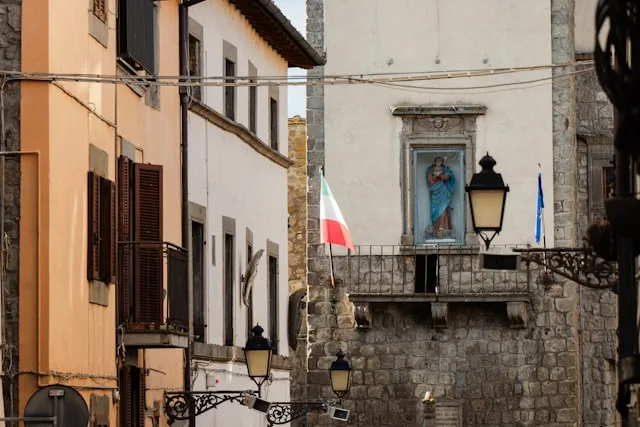
Viterbo province sits 80 kilometres north of Rome on the A1 corridor. That proximity has defined its industrial identity for decades. Precision metalworking shops in Colle Gramignano supply pharmaceutical packaging and agricultural machinery OEMs. The Civita Castellana ceramic district employs roughly 1,800 workers across 52 enterprises. Dispersed quarry operations in Vitorchiano and Bassano in Teverina extract and finish the volcanic tuff and peperino stone that has rebuilt Italy's heritage structures for centuries. By any standard definition, this is a productive, diversified provincial manufacturing base.
It is also one that is quietly losing the contest for its own workforce. Provincial unemployment runs at 6.8%, below the Lazio regional average. Yet CNC machining roles sit unfilled for six to nine months. Master stonemason positions with dual competence in hand-finishing and CNC bridge-saw operation persist as vacancies for eight months or longer. Approximately 8,200 residents of Viterbo province commute daily to Rome for higher-wage manufacturing and logistics work. The province is not short of people. It is short of the specific people its modernising firms need, and Rome is pulling many of those people south every morning.
What follows is a ground-level analysis of why Viterbo's light manufacturing and building materials sector faces a talent crisis that unemployment statistics obscure. It examines the specific roles that cannot be filled, the economic forces widening the gap, and what organisations operating in this market need to understand before they attempt their next critical hire.
A Province of Micro-Enterprises Competing Against Metropolitan Gravity
Viterbo's manufacturing sector is defined by extreme fragmentation. The province hosts 1,587 active manufacturing enterprises. Of those, 94.3% are micro-enterprises with an average headcount of 3.2 full-time equivalents, according to ISTAT's permanent business census. Construction firms follow the same pattern: 92% operate with fewer than 10 employees, serving local restoration and residential markets rather than large-scale infrastructure.
This fragmentation matters for talent acquisition in ways that go beyond the obvious. A micro-enterprise cannot offer the career trajectory, benefits infrastructure, or brand recognition that a Rome-based industrial group provides. When a CNC programmer in Viterbo considers a lateral move, the question is not whether to stay with Employer A or join Employer B within the province. The question is whether to stay in the province at all.
Rome offers salary premiums of 25 to 35% for equivalent manufacturing roles. It offers multinational employers with international mobility paths. It increasingly offers hybrid working arrangements that have no equivalent in Viterbo's factory-floor environments. For a mid-level technician or engineer, the commute calculation is straightforward. The A1 makes Rome reachable in 55 minutes. The pay gap makes the commute rational.
The result is a talent drain that conventional recruitment methods struggle to reverse. Viterbo's firms are not competing with each other. They are competing with a metropolitan labour market that can outbid them on nearly every dimension except quality of life and commute avoidance. The 14% leakage of skilled workforce to Rome-bound commuting is not a statistic that can be solved by posting more job advertisements. It is a systemic condition that reshapes every search.
The Bifurcation: Metalworking Holds While Stone Contracts
Not all of Viterbo's manufacturing faces the same headwinds. The sector is experiencing a clear bifurcation, and understanding it is essential for anyone assessing industrial and manufacturing talent requirements in this province.
Precision Metalworking: Stable but Constrained
Mechanical subcontracting concentrated in the Colle Gramignano industrial zone maintains stable output. Demand from the Roma-Fiumicino logistics corridor supports 45 mechanical engineering firms and 12 metalworking subcontractors specialising in precision machining. These firms serve pharmaceutical packaging and agricultural machinery OEMs, positioning them within supply chains that are benefiting from reshoring trends in automotive component production.
The 2026 outlook projects a 1.5 to 2.1% increase in gross value added for precision metalworking. This is moderate but positive growth. The constraint is not demand. It is the inability to scale production capacity because CNC milling operators and CAD/CAM programmers cannot be found. Over 40% of surveyed mechanical SMEs in Colle Gramignano report stalled capacity expansion due to this single bottleneck. Machines sit ready. Orders exist. The operators do not.
Stone Processing: Consolidation Under Pressure
The extraction and primary processing of Viterbo's volcanic tuff declined 8.3% year-over-year through 2024. High energy costs and slowed new construction starts are the proximate causes. Italian industrial electricity costs of €0.28 per kilowatt-hour sit 30% above the EU average according to Eurostat, and stone cutting is among the most energy-intensive processes in the building materials chain.
The counter-cyclical force is heritage restoration. Italy's PNRR (National Recovery and Resilience Plan) allocated €42 million to historic building interventions in Viterbo province as of early 2025. This funding creates demand for a very specific skill set: the master stonemason who can work traditional hand-finishing techniques on volcanic peperino while also operating CNC bridge-saw equipment to meet modern production standards. That profile barely exists in sufficient numbers.
The consolidation trajectory for 2026 is clear. Micro-enterprises with fewer than five employees face acquisition or closure. Mid-sized firms of 20 to 50 employees are investing in CNC bridge-saw technology to capture high-margin restoration contracts. The firms that survive this consolidation will be those that found the technicians to run the new equipment. The firms that did not will become acquisition targets.
The Vacancy Problem That Unemployment Statistics Hide
Viterbo's 6.8% unemployment rate suggests a functioning labour market with reasonable availability. That figure is misleading for any hiring leader looking for technical manufacturing talent.
The Sistema Informativo Excelsior reports a 28% vacancy rate for specialised mechanics and a 34% vacancy rate for master craftsmen in stone processing. These are not temporary gaps caused by seasonal fluctuations. They are persistent, structural shortages driven by a mismatch between the skills the available workforce possesses and the skills modernising firms require.
The available workforce is predominantly trained in traditional craftsmanship or generic construction trades. The demand is for digital-mechanical hybrid competencies: a CNC programmer who understands metallurgy, a stonemason who can interpret CAD drawings, a supply chain manager who can operate an ERP system while managing heavy-transport permits for Rome's restricted traffic zones.
This is the core analytical insight that the headline data obscures. Viterbo does not have a labour shortage in the conventional sense. It has a skills translation failure. The province produces workers. It does not produce the specific workers its most ambitious firms need. The 120 annual industrial engineering graduates from the University of Tuscia and the 35 to 40 specialised technicians from ITS Academy "Leonardo da Vinci" are valuable, but they represent a fraction of the replacement pipeline required when 31% of the manufacturing workforce is over 55.
The cost of leaving these roles unfilled compounds over time. A production line that cannot add a shift because no CNC operator is available does not simply delay revenue. It loses the contract to a competitor in Terni or Bologna who filled the same role three months faster.
Three Roles, Three Failures: Where Searches Break Down
The specific roles where Viterbo's hiring market fails most consistently reveal the anatomy of the problem.
CNC Machining Specialists
Positions for CNC milling operators and CAD/CAM programmers in the metalworking subsector typically remain unfilled for six to nine months. The vacancy persistence is not caused by a lack of recruitment activity. Firms advertise actively. The problem is that the qualified candidate pool is overwhelmingly passive. Approximately 75% of production managers and CNC programming specialists in the relevant geography are employed, not looking, and will not respond to posted vacancies.
The candidates who could fill these roles are working in Rome or in northern Italian manufacturing hubs. They are earning 25 to 40% more than Viterbo can offer. They are not on job boards. They must be identified and approached directly, which requires a search methodology most Viterbo SMEs have never used and cannot resource internally.
Master Stonemasons
The capo scalpellino role, requiring dual competence in traditional hand-finishing and CNC bridge-saw operation, exhibits vacancy persistence exceeding eight months. Within the province, employers report that poaching from competing firms is the primary source of lateral hires, with salary premiums of 15 to 20% required to induce a move. This is a closed loop. The total number of qualified practitioners does not increase through intra-provincial poaching. It simply redistributes the shortage.
The heritage restoration pipeline funded by the PNRR is accelerating demand at exactly the moment when the demographic profile of the existing workforce is deteriorating. The median age of manufacturing workers in Viterbo province is 48.5 years. The replacement rate in the stone sector stands at 0.8 new entrants per retiring worker. The maths does not favour patience.
Supply Chain Managers
Mid-sized stone processing firms attempting to digitise their logistics operations face a distinct hiring failure. They need supply chain managers with experience in both traditional heavy materials transport and modern ERP systems. These searches typically stall after four to five months. The profile sits at the intersection of old-economy operational knowledge and digital fluency, a combination that the local talent market does not produce and the broader Italian labour market values highly enough to price Viterbo out of contention.
Each of these three failures shares a common root. The candidates exist. They are not in Viterbo. They are not looking. And they will not move for a marginal salary increase. The search methodology required to reach them is fundamentally different from what most provincial SMEs have ever deployed.
Compensation: The 18 to 25% Gap That Defines Every Search
Viterbo manufacturing salaries track at 18 to 25% below Rome equivalents across all seniority levels. This is not a surprising finding. Provincial markets routinely offer lower compensation than their metropolitan neighbours. What makes the Viterbo gap strategically important is how it interacts with the commuting dynamic.
A production manager in Viterbo earns €55,000 to €68,000 base plus a typical 10% bonus at the senior specialist level. The equivalent role at director level commands €80,000 to €105,000. In Rome, equivalent roles start higher and carry the added attractions of multinational employer brands, international exposure, and career ladders that extend beyond the provincial ceiling.
For a CNC programmer or team leader, the Viterbo range is €38,000 to €48,000. At department head level, the ceiling reaches €52,000 to €62,000. A comparable role in Bologna or Modena's advanced ceramics and packaging machinery districts can command 40 to 50% more with materially greater international career mobility.
The compensation gap is not merely a budgetary inconvenience for hiring managers. It is the single largest determinant of whether a passive candidate in Rome or northern Italy will engage with an approach from a Viterbo firm. When 75% of the target candidate pool is passive, the offer package is not a closing tool. It is a door-opening tool. If the headline number falls 25% below what the candidate currently earns, the conversation often ends before it begins.
This creates a specific strategic requirement for firms serious about filling senior manufacturing roles in this province. The compensation offer must be supplemented by a proposition that addresses what Rome cannot easily provide: shorter commutes, quality of life in the Tuscia region, ownership-track roles in family businesses, and the autonomy that comes with running production in a 50-person firm rather than managing a subsection in a 5,000-person plant. But articulating that proposition requires a search partner who understands both sides of the equation, not a job advertisement hoping the right person will self-select.
The Demographic Clock and the Automation Paradox
The demographic data for Viterbo's manufacturing workforce contains the clearest signal of what the next five years will look like. The median age of 48.5 years among manufacturing workers means the workforce is ageing faster than it is being replenished. With 31% of workers over 55 and a replacement rate of 0.8 new entrants per retiring worker in the stone sector, the current talent gap will widen without external intervention.
The obvious response is automation. And indeed, the consolidation in stone processing is driving investment in CNC bridge-saw technology among the mid-sized firms that can afford it. But this is where the paradox sits. Automation in this market has not reduced the need for skilled workers. It has replaced one category of worker with another that does not yet exist in sufficient numbers.
A firm that invests €400,000 in a CNC bridge-saw still needs an operator trained in CAD/CAM software and familiar with the specific material properties of volcanic tuff. A firm that digitises its logistics still needs a supply chain manager who understands both ERP configuration and heavy-transport permitting. The capital investment moves faster than the human capital pipeline can follow.
Meanwhile, 68% of stone-processing SMEs still rely on semi-manual cutting techniques because they lack the capital for CNC investment in the first place. These firms face a dual threat: they cannot compete on cost against Turkish and Spanish stone exporters who have already automated, and they cannot compete on quality against the mid-sized Viterbo firms that are automating now. The consolidation is not a future risk. It is underway.
Only three manufacturing firms in the entire province received growth capital in 2024. Private equity and venture capital presence is negligible. The capital constraints that prevent automation also prevent the wage increases that would make Viterbo competitive for talent against Rome and northern Italy. This is the cycle that provincial SMEs cannot break alone.
For organisations considering talent mapping across Italian manufacturing centres, Viterbo represents a market where the talent exists regionally but must be identified, approached, and persuaded through a fundamentally different method than posting a vacancy and waiting.
What This Means for Hiring Leaders in Viterbo's Manufacturing Sector
The synthesis of Viterbo's manufacturing talent challenge comes down to a single observation that the individual data points do not state directly. Rome's proximity is not a logistical advantage that occasionally creates talent friction. It is the defining force that shapes every hiring outcome in this province. The same 80-kilometre corridor that gives Viterbo firms access to Rome's construction market also gives Rome employers permanent, frictionless access to Viterbo's best workers. The province exports finished goods south and skilled people south along the same road. Until a hiring strategy accounts for this asymmetry, vacancy persistence will remain the norm for every role above the entry level.
The practical implications are specific. Traditional recruitment, relying on posted vacancies and inbound applications, reaches at most 25% of the viable candidate pool for production managers and CNC specialists in this market. The other 75% are employed, not actively searching, and will only engage through a direct, personalised approach that addresses their specific circumstances: what they earn now, what they value beyond salary, and what a move to a Viterbo-based firm would actually mean for their career trajectory.
For firms in the Civita Castellana ceramic district, in Colle Gramignano's metalworking zone, or across the tuff processing corridors, the window for action is defined by the demographic clock. Every year that a critical role goes unfilled is a year closer to the retirement wave that will remove 31% of the current workforce. The firms that build proactive talent pipelines now will be the firms that survive the consolidation. The firms that wait will find the talent pool smaller, more expensive, and further away.
KiTalent delivers interview-ready executive candidates within 7 to 10 days through AI-enhanced direct search methodology that identifies and approaches the passive professionals who never appear on job boards. With a 96% one-year retention rate across 1,450 executive placements, the model is built for markets exactly like Viterbo's: where the candidates you need are employed, not visible, and require a proposition that goes beyond salary alone. For organisations competing for production leadership, CNC programming expertise, or supply chain management talent in central Italy's manufacturing heartland, start a conversation with our executive search team about how we approach this market differently.
Frequently Asked Questions
What are the hardest manufacturing roles to fill in Viterbo province?
CNC milling operators, CAD/CAM programmers, and master stonemasons with dual competence in traditional hand-finishing and CNC bridge-saw operation are the most persistent vacancies. CNC machining roles typically remain unfilled for six to nine months. Master stonemason roles exceed eight months of vacancy persistence. Supply chain managers with combined heavy-materials and ERP experience also face four to five month search timelines. These roles require direct headhunting approaches because approximately 75% of qualified candidates are passively employed and will not respond to posted vacancies.
Why is it so difficult to hire manufacturing talent in Viterbo despite moderate unemployment?
Viterbo's 6.8% unemployment rate masks a deep skills mismatch. The available workforce is trained in traditional craftsmanship or generic construction trades, while modernising SMEs need digital-mechanical hybrid skills such as CNC programming, CAD/CAM proficiency, and ERP-based logistics management. Additionally, approximately 8,200 skilled workers commute daily from Viterbo to Rome, where salaries run 25 to 35% higher for equivalent roles. The province is not short of workers overall. It is short of the specific technical profiles its most ambitious firms require.
What do manufacturing executives earn in Viterbo compared to Rome?
Viterbo manufacturing salaries sit 18 to 25% below Rome equivalents. A senior production manager in Viterbo earns €55,000 to €68,000 base plus bonus, rising to €80,000 to €105,000 at plant director level. CNC programming team leaders earn €38,000 to €48,000, reaching €52,000 to €62,000 at department head level. Supply chain managers range from €48,000 to €58,000, with director-level roles reaching €72,000 to €90,000. For senior engineering and R&D positions, the gap to northern Italian hubs like Bologna and Modena widens to 40 to 50%.
What is driving demand for heritage restoration skills in Viterbo?
Italy's PNRR (National Recovery and Resilience Plan) allocated €42 million to historic building interventions in Viterbo province. This funding targets restoration of structures built with the region's characteristic volcanic tuff and peperino stone. The work requires master stonemasons who combine traditional hand-finishing knowledge with modern CNC bridge-saw operation and chemical analysis of volcanic materials. The demographic profile of existing practitioners, with a median age of 48.5 years in the manufacturing workforce and a replacement rate below 1.0, means demand is rising while the qualified practitioner base is shrinking.
How can Viterbo SMEs compete for talent against Rome employers?
Viterbo firms cannot match Rome on salary alone. The competitive proposition must address dimensions Rome cannot easily offer: shorter commutes, quality of life in the Tuscia region, greater autonomy and ownership-track roles in family businesses, and the scope of responsibility available in a 50-person firm versus a large metropolitan plant. Communicating this proposition requires identifying passive candidates through targeted executive search rather than relying on job advertisements that only reach the 25% of the market actively looking for work. KiTalent's pay-per-interview model and AI-enhanced talent mapping are designed for precisely these conditions.
What is the outlook for Viterbo's building materials sector in 2026?
The sector is consolidating. Micro-enterprises with fewer than five employees in stone processing face acquisition or closure as energy costs and competition from Turkish and Spanish exporters squeeze margins. Mid-sized firms investing in CNC technology are positioned to capture high-margin heritage restoration contracts. Precision metalworking projects moderate growth of 1.5 to 2.1% in gross value added, supported by automotive component reshoring. The binding constraint across both subsectors remains the ability to recruit and retain the specialised technical talent needed to operate increasingly automated production processes.