Volos Agrifood Cluster: Why €120 Million in New Capacity Cannot Find the People to Run It

Volos entered 2026 with more processing capacity under construction than at any point in the past two decades. Myloi Thessalias is commissioning specialty flour lines for Middle East markets. Kyknos is upgrading its Nikaia facilities. The Port of Volos is midway through a €42 million modernisation programme designed to position the city as Thessaly's green logistics hub for agrifood exports. Capital is flowing into this cluster at a pace that would, in most markets, signal confidence and growth.
The talent pipeline tells a different story. Enrollment in the University of Thessaly's agricultural engineering and food science programmes has fallen 15% since 2020. Vacancy rates for technical roles in Magnesia's food manufacturing sector reached 12.4% in late 2024, double the national manufacturing average. A cold-chain logistics director search in this market now takes 8 to 14 months. An automation engineer search often ends not with a hire but with a restructured job description that eliminates the role entirely.
What follows is an analysis of the forces pulling Volos's agrifood cluster in opposite directions: capital expanding capacity on one side, a contracting and increasingly passive talent pool on the other. For any senior leader responsible for hiring, retaining, or restructuring leadership teams in this sector, the data reveals a market where traditional recruitment methods reach a shrinking fraction of the candidates who matter most.
Thessaly's Processing Engine and the Infrastructure Straining to Support It
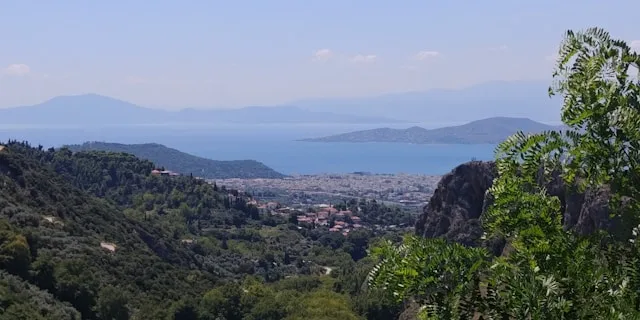
Thessaly accounts for roughly 22% of Greece's total agricultural production value, and Volos functions as the processing and export gateway for much of that output. Canneries including Kyknos S.A. and Pummaro S.A. process tomatoes, peaches, and beans sourced from the Thessalian plain. Myloi Thessalias operates modern milling facilities using locally produced wheat and durum. Tyras S.A. transforms the region's sheep and goat milk into feta PDO and yogurt.
These are not multinational operations. The top ten food manufacturers in Magnesia employ between 80 and 350 workers each. Most are second or third generation family businesses. Kyknos, the largest, runs approximately 280 employees at its Volos and Nikaia facilities. Pummaro has operated as a family-owned exporter since 1957, with 120 seasonal workers at peak and 45 permanent staff.
Port capacity and the cold-chain bottleneck
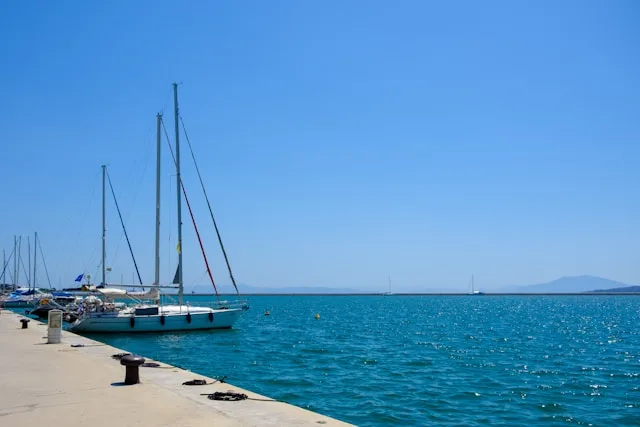
The Port of Volos handled approximately 12.4 million tonnes of cargo in 2023, but specialised cold-storage capacity within the immediate port zone is limited to roughly 45,000 pallet positions. During the 2024 tomato harvest from August to October, utilisation rates exceeded 94%. Processors were forced to divert product to Thessaloniki facilities, adding €0.12 to €0.18 per kilogram in logistics costs.
This is not a theoretical constraint. It is a cost that compounds across every peak harvest season and erodes the margin advantage that proximity to Thessaly's farms is supposed to provide.
The port's €42 million modernisation programme, co-financed by the Recovery and Resilience Facility, includes berth deepening and expanded refrigerated container plugging points. But completion remains roughly 18 months away. And critically, the investment addresses berth infrastructure and container capacity. It does not address the private sector cold-chain storage gap. Public investment in berths may not resolve the private storage bottlenecks that most acutely constrain exporter growth. The absence of major third-party logistics providers establishing dedicated facilities in the port zone suggests the infrastructure investment is outpacing private sector cold-chain readiness.
What this means for senior hires
Every leadership role in this cluster operates within these physical constraints. A new Operations Director at a Volos cannery inherits a logistics chain that breaks under peak load. A Supply Chain Manager must design workarounds for port limitations that will persist for at least another year. The infrastructure context does not just shape the business. It shapes the job, and therefore the candidate profile required to fill it.
The Talent Paradox: Capital Accelerating, Pipeline Contracting
This is the central tension of the Volos agrifood market in 2026, and it is the insight that makes this cluster genuinely different from a standard hiring shortage story.
Between 2024 and 2026, approximately €120 million in processing capacity expansions have been announced in the Volos area. Myloi Thessalias alone committed €7.2 million to specialty flour lines targeting Middle East markets. EU funds totalling €68 million under CAP Pillar II and the Just Transition Mechanism are allocated to Thessaly agri-food modernisation through 2026, with priority given to supply chain digitalisation and renewable energy integration in processing facilities.
At the same time, the University of Thessaly's agricultural engineering and food science programmes, the primary talent pipeline for the cluster, have seen enrollment drop 15% since 2020.
Capital moved faster than human capital could follow. The investment cycle assumed a workforce that the education system is no longer producing at sufficient scale. This is not a temporary mismatch that will correct as salaries rise. It is a systemic gap between the pace of capital deployment and the pace of workforce development. New capacity that cannot be staffed by qualified technical and managerial talent will either sit underutilised or force accelerated automation that itself requires engineers the market cannot supply.
Food processing output in Thessaly grew 3.2% in nominal terms in 2024, according to the Bank of Greece's Regional Economic Developments Report. Real growth was 0.4% after adjusting for input inflation. The cluster is growing on paper, but the growth is being consumed by rising costs rather than converted into margin expansion. Leaders who can manage that compression, who can drive operational efficiency while managing constrained infrastructure, are precisely the leaders this market struggles to attract.
Three Roles the Volos Market Cannot Fill Through Conventional Methods
Employment in Magnesia's food and beverage manufacturing sector stood at approximately 4,850 workers in Q3 2024, representing 8.3% of regional manufacturing employment. But the aggregate figure masks a severe imbalance. According to ManpowerGroup's Employment Outlook Survey for Q4 2024, vacancy rates for technical roles in the prefecture reached 12.4%, against a 6.1% national manufacturing average.
The shortages concentrate in three specific categories. Each tells a distinct story about why this market resists conventional recruitment.
Cold-chain logistics managers
Senior cold-chain logistics roles in Volos typically require 8 to 14 months to fill. The equivalent role in Athens fills in 4 to 6 months. The gap is not simply about salary. It reflects a candidate pool that barely exists in the region.
The profile required is unusually specific: a logistics professional with food-grade cold-chain experience who also holds GDP (Good Distribution Practice) certification, a credential more commonly found in pharmaceutical distribution. Volos employers have been drawing candidates from the pharmaceutical logistics sector, targeting distribution centres operated by firms like Vianex and Pharmathen in Thessaly. Premiums of 15 to 20% above current compensation are standard to secure these cross-sector hires.
Roughly 70 to 75% of qualified professionals meeting cold-chain logistics director requirements in Greece are employed and not actively seeking new positions, according to Korn Ferry's Greece Consumer and Industrial Markets Talent Trends report for 2024. Job advertising reaches, at best, the remaining quarter.
Food safety and quality directors
A typical search for a QA Director with FSSC 22000 certification and export market experience stalls after three to four months. According to reporting in Kathimerini on talent gaps in regional industry, companies are increasingly splitting the role: hiring compliance management locally while outsourcing export certification work to consultants based in Thessaloniki.
This workaround functions, but it introduces coordination risk and removes institutional knowledge from the organisation. A split role means no single person owns the full quality and compliance picture for export operations. For firms targeting Halal certification or BRCGS standards for UK market access, this fragmentation creates exposure.
Automation engineers
This is where the talent paradox bites hardest. Myloi Thessalias and Kyknos have both restructured organisational charts to create "hybrid technician" roles combining mechanical maintenance with basic PLC programming. They did so after failing to recruit dedicated automation engineers willing to relocate to Volos. The pattern is consistent with findings from SEV's HR Survey for 2024.
The irony is sharp. The €68 million in EU funds prioritises digitalisation and renewable energy integration. The firms receiving that capital cannot find the engineers to implement the technology the funds are designed to support. This creates a real risk that modernisation timelines slip, not because of capital constraints, but because the people needed to commission and operate new systems do not exist in sufficient numbers within commuting distance of Volos.
Compensation: What Roles Pay and Why the Premium Still Falls Short
Compensation in the Volos agrifood cluster operates at a persistent discount to Athens, typically 12% below Athens-equivalent roles across the sector. This discount is structural. It reflects cost of living differentials, the smaller employer base, and the absence of multinational anchor tenants whose compensation frameworks tend to lift local benchmarks.
At the senior specialist and manager level, a Plant Operations Manager commands €38,000 to €52,000 in base salary, with total cash compensation reaching €45,000 to €62,000 including production bonuses. A Quality Assurance Manager earns €35,000 to €48,000 base, with total compensation of €42,000 to €58,000. A Supply Chain Manager with cold-chain focus earns €40,000 to €55,000 base, though high demand is pushing the upper range to €65,000 with retention bonuses.
At the executive level, an Operations Director overseeing multiple sites earns €75,000 to €95,000 base, with total compensation of €90,000 to €120,000 including performance incentives. A General Manager of an SME food manufacturer earns €65,000 to €85,000 base, with equity participation common in family-owned firms. A Chief Commercial Officer focused on exports earns €70,000 to €90,000 base plus export commission structures.
These figures look reasonable in isolation. The problem emerges in competitive context. Athens draws quality assurance and regulatory affairs professionals with salaries 25 to 35% above Volos equivalents. Thessaloniki competes aggressively for logistics and supply chain executives, offering approximately 18% salary premiums and superior international connectivity through airport freight capabilities.
For a passive candidate currently employed in Athens or Thessaloniki, the Volos offer represents a pay cut and a relocation to a smaller city with fewer career options if the role does not work out. Even for candidates already in Thessaly, Larissa, 50km inland, is emerging as a domestic competitor for mid-level technical roles. It offers similar salaries with lower cost of living and no port congestion commute.
The compensation gap is not closing at the seniority levels where the most critical roles sit. It is widening, because Athens and Thessaloniki employers are raising offers faster in response to the same shortages. Volos firms that compete on salary alone will lose. The firms that retain and attract senior talent will be those offering equity participation, operational autonomy, and the kind of strategic scope that a mid-level Athens role cannot match. Understanding where a specific offer sits relative to the market is the first step.
Consolidation, Regulation, and the Succession Clock
The 2026 outlook for the Volos cluster is shaped by three converging pressures: market consolidation, regulatory escalation, and demographic decline.
Smaller processors facing exit
ICAP Group projects that 15 to 20% of smaller canneries processing fewer than 5,000 tonnes annually will exit or merge by the end of 2026. The driver is straightforward: these firms cannot finance ESG compliance under the Corporate Sustainability Reporting Directive (CSRD) or upgrade to HACCP 4.0 standards. The investment required for EUDR deforestation-free supply chain traceability alone runs €150,000 to €400,000 for SMEs, according to European Commission implementation guidance.
This consolidation will release some talent into the market. But it will also concentrate hiring pressure on the surviving firms, which will need to absorb production volume, integrate operations, and in many cases professionalise management structures that were adequate for a single-site family operation but are inadequate for a combined entity.
The regulatory stack
Processors operating in Volos in 2026 must simultaneously manage CAP Green Architecture compliance, EUDR deforestation-free supply chain requirements, CSRD sustainability reporting, and Greece's highest-in-Southeastern-Europe industrial electricity prices at €0.12 to €0.14 per kWh post-subsidy. Each of these creates compliance roles that did not exist five years ago. Export compliance managers familiar with Halal certification, BRCGS standards, and the EU's TRACES system for organic and phytosanitary certification are now essential hires, not optional additions.
Thessaly's water scarcity adds a further dimension. Groundwater levels have declined 15 to 30 metres across the region's aquifers over the past decade, according to research from the National Technical University of Athens. For processors dependent on crop supply from the Thessalian plain, this is not an environmental abstraction. It is a raw material supply risk that any operations director or general manager must factor into capacity planning.
Family business succession
Approximately 40% of Volos-based food manufacturers are founder-dependent or face unclear generational transition. This figure, drawn from ICAP Group's Family Business Survey for Greece, represents a management continuity risk that compounds every other challenge. A processing firm facing consolidation pressure, regulatory escalation, and talent scarcity simultaneously cannot afford a leadership vacuum during a generational handover.
The firms that navigate this transition successfully will be those that bring in professional management alongside family ownership. That means recruiting operations directors, commercial leaders, and finance directors from outside the family network, often from outside the region entirely. For a market where 70 to 75% of the most qualified candidates are passive and employed elsewhere, this is an executive search challenge that no job posting will resolve.
Why This Market Requires a Different Hiring Method
The Volos agrifood cluster presents a hiring challenge that is distinctive in its specificity. The candidates required sit at the intersection of food manufacturing expertise, export compliance knowledge, cold-chain logistics capability, and willingness to work in a regional Greek city. Each of these filters narrows the pool. Combined, they reduce it to a population that conventional recruitment methods cannot reliably reach.
Job advertising in this market reaches at most 25 to 30% of qualified professionals for senior roles. The rest are employed, not searching, and will not respond to a posting on a Greek job board. The most qualified candidates, those with specific experience in tomato or peach processing, flour milling, or cold-chain operations with GDP certification, rarely appear on the open market at all.
The search timelines confirm this. A cold-chain logistics director takes 8 to 14 months to recruit through conventional channels. A QA Director search stalls at the three to four month mark and results in a split role that introduces its own risks. An automation engineer search ends not with a hire but with a redesigned position. These are not signs of a slow market. They are signs of a market where the traditional search method reaches the wrong population.
Reaching the right candidates in this cluster requires proactive identification and direct approach. It requires knowing which pharmaceutical logistics professionals hold GDP certifications transferable to food-grade cold chain. It requires mapping the automation engineers within commuting distance of Volos who might consider a sector move. It requires understanding the compensation thresholds and role characteristics that will move a passive candidate from Athens or Thessaloniki into a regional position.
KiTalent's approach to markets like this one combines AI-powered talent mapping with direct headhunting to identify and engage candidates who are not visible through any public channel. In a market where the top performers are passive, employed, and unresponsive to advertising, the difference between a 14-month search and one that delivers interview-ready candidates within 7 to 10 days is the method, not the market.
For organisations competing for cold-chain logistics directors, automation engineers, and export compliance leadership in Greece's agrifood sector, where the candidates you need are solving problems at their current employers and will not apply to a job posting, speak with our executive search team about how we approach this market. With a 96% one-year retention rate across 1,450+ executive placements and a pay-per-interview model that eliminates upfront retainer risk, KiTalent delivers the candidates this market requires through the only method that reaches them.
Frequently Asked Questions
What are the hardest agrifood roles to fill in Volos in 2026?
Cold-chain logistics managers with GDP certification, automation engineers with PLC programming capability, and export compliance managers familiar with Halal and BRCGS standards are the three most acute shortages. Cold-chain logistics director searches in Volos typically require 8 to 14 months through conventional recruitment, compared to 4 to 6 months in Athens. Approximately 70 to 75% of qualified candidates for these roles are passive and employed, meaning they will not respond to job advertising. Proactive executive search and direct candidate identification is the only reliable method for reaching this population.
What do senior food processing executives earn in Volos?
A Plant Operations Manager earns €45,000 to €62,000 in total cash compensation. An Operations Director overseeing multiple sites earns €90,000 to €120,000 total including performance incentives. A General Manager of an SME food manufacturer earns €65,000 to €85,000 base, often with equity participation in family-owned firms. Volos compensation runs approximately 12% below Athens equivalents across the sector. Athens offers 25 to 35% premiums for quality assurance and regulatory affairs professionals, while Thessaloniki offers 18% premiums for logistics executives.
Why is the Volos agrifood talent shortage different from other Greek markets?
The shortage in Volos is not simply a salary gap. It is a convergence of three factors: a contracting university pipeline with 15% enrollment declines since 2020, a regional market competing against Athens and Thessaloniki for passive candidates, and an infrastructure context where port bottlenecks and cold-storage limitations shape every senior role. The specialised profile required, combining food manufacturing expertise with export compliance and cold-chain logistics knowledge, exists in very small numbers nationally. Capital investment of €120 million in new capacity is accelerating demand for talent the education system is not producing.
How does EU regulation affect agrifood hiring in Thessaly?
The EUDR, CSRD, and CAP Green Architecture requirements are creating compliance and sustainability roles that did not exist five years ago. SME processors face traceability investments of €150,000 to €400,000. ICAP Group projects 15 to 20% of smaller canneries will exit or merge by end of 2026 due to inability to finance these upgrades. Surviving firms need export compliance managers, sustainability officers, and quality directors who can manage multiple certification frameworks simultaneously. KiTalent works with agrifood organisations to identify and secure these specialised leadership profiles through direct search.
What is the Port of Volos modernisation and how does it affect agrifood exports?
The Port of Volos is undergoing a €42 million infrastructure modernisation co-financed by the Recovery and Resilience Facility. The programme includes berth deepening and expanded refrigerated container plugging points. However, completion remains approximately 18 months away, and the investment primarily addresses berth infrastructure rather than private sector cold-storage capacity. Current cold-storage utilisation hit 94% during the 2024 harvest peak, forcing processors to divert product to Thessaloniki at additional cost. Senior logistics and operations leaders hired into this market must plan around these constraints.
How can Volos food manufacturers attract talent from Athens and Thessaloniki?
Competing on salary alone is insufficient given the 25 to 35% premium Athens offers. Successful recruitment in this market requires offering operational autonomy, equity participation, and strategic scope that larger-city roles cannot match. It also requires reaching passive candidates through direct headhunting rather than job advertising, since 70 to 75% of qualified professionals are not actively searching. The most effective approach combines precise compensation benchmarking with a compelling role narrative that addresses the candidate's career trajectory, not just their current salary expectations.