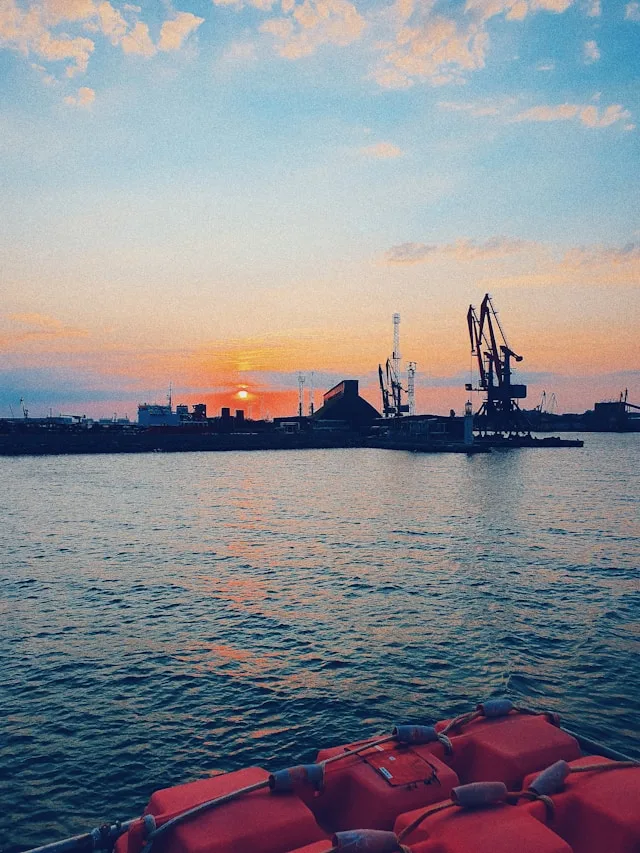
Waterford's Port Is Growing. Its Talent Pipeline Is Not. The Hiring Gap Behind the Cargo Numbers

Waterford's Belview Terminal handled 2.95 million tonnes of cargo in 2024, a 5.3% increase on the previous year. The port's strategic plan projects 3.2 million tonnes by the end of 2026, driven by pharmaceutical exports and the arrival of offshore wind component staging for the Celtic Sea. Capital investment of €45 million is underway to deepen berths and expand yard capacity. By every infrastructure metric, Waterford's logistics sector is accelerating.
The workforce metrics tell a different story. Vacancies in transport, logistics, and supply chain roles across Waterford rose 34% year-on-year in Q4 2024, nearly double the 18% national average. Supply Chain Director searches in the region take 94 days to fill, compared to 67 days nationally. Only 12 qualified marine pilots live in the entire Southeast, and three of them will retire within two years. The port is investing as if talent will follow capital. So far, it has not.
What follows is a ground-level analysis of the forces reshaping Waterford's port, logistics, and industrial trade sector, the specific roles where hiring has stalled, the compensation dynamics that explain why, and what organisations operating in this market must understand before they make their next senior appointment.
A Port That Moves Cargo but Does Not Cluster Industry
The conventional image of a port economy involves a dense cluster of warehousing, processing, and distribution radiating outward from the quayside. Dublin Port and Cork Port both exhibit this pattern to varying degrees. Waterford's Belview Terminal does not.
Belview provides the only deep-water berths in Ireland's Southeast, with 12.4 metres of depth capable of handling Panamax vessels. It handles 85% of the Port of Waterford Company's total throughput by tonnage. Container traffic reached 12,400 TEU in 2024, accounting for just 8% of volume but 22% of revenue. These are strong numbers for a regional port. But the assumption that port throughput growth translates into local industrial clustering is not supported by the evidence.
The major manufacturers that use the port, including Glanbia, Sanofi, and Bausch + Lomb, maintain transactional rather than integrated relationships with Belview. R&D and headquarters functions sit in Dublin or overseas, according to IDA Ireland's Regional Development Strategy. The warehousing capacity that has developed since 2022, approximately 450,000 square feet, is located 15 to 20 kilometres from the port at Butlerstown and Kilmeaden. This is distribution infrastructure, not port-centric logistics clustering.
The distinction matters for hiring leaders because it shapes where talent needs to be, what those roles look like, and why the search patterns differ from what you would see in a true port cluster like Rotterdam or Felixstowe. Waterford's logistics and supply chain talent is dispersed across sites that are not physically connected to each other or to the port. That fragmentation creates a coordination problem that compounds the recruitment challenge.
The Infrastructure Paradox: Investment Running Ahead of Capacity to Operate It
Waterford's capital investment pipeline is substantial. The €45 million Belview programme includes berth deepening to 13.5 metres, which would enable Neo-Panamax vessels, alongside 3.2 hectares of yard expansion. Phase 1 of the N25 Belview Port Access Road upgrade, a €38 million project, completed in late 2024, cutting HGV transit time from the M9 motorway by 12 minutes. A feasibility study for a new rail freight terminal at Belview is expected to conclude by mid-2026.
Road and Rail Bottlenecks That Shape Every Logistics Role
The final four kilometres of the N25 approach to Belview remains single-carriageway. During peak agricultural export season from September to November, HGV queuing adds 45 to 60 minutes to journey times, according to the Irish Road Haulage Association's regional survey. Rail freight, which could relieve road pressure, carries only 4% of port throughput. The infrastructure supports just two freight trains daily versus the 12 required for viable bulk transfer, as documented in Iarnród Éireann's Network Statement for 2025.
What This Means for the Roles Being Created
The offshore wind staging designation is the most important growth vector. Belview is classified as a Tier 2 marshalling port for Celtic Sea floating wind developments, with projected throughput of 40,000 tonnes of components annually from 2026 onward. This creates an entirely new category of operational and logistics roles that did not exist in Waterford five years ago. The problem is that the people qualified to fill them do not exist in the Southeast in adequate numbers either.
This is the core analytical tension in Waterford's port economy in 2026. Capital has moved faster than human capital can follow. The berths are being deepened, the yard is being expanded, and the offshore wind components are being contracted. But the marine pilots, the supply chain directors, and the operations managers required to run this expanded infrastructure are not materialising at the rate the investment schedule demands. Every infrastructure project creates a corresponding talent requirement, and in a region with 0.8% unemployment among HGV drivers and only a dozen qualified marine pilots, those requirements are stacking up without a workforce pipeline behind them.
Three Roles Where Searches Are Stalling
The hiring pressure in Waterford's logistics sector is not uniform. It concentrates in three specific role categories, each with its own scarcity dynamics and each requiring a different search strategy.
Supply Chain Director: The 94-Day Search
There were 48 open positions at Supply Chain Manager or Director level across Waterford-based manufacturing and logistics firms as of January 2025. The average time to fill a Supply Chain Director role in Waterford manufacturing stood at 94 days, compared to 67 days nationally. A typical pattern among mid-sized pharmaceutical logistics operators in the region involves roles remaining open for four to six months. One multinational manufacturer, as reported in the Waterford Chamber of Commerce's employer survey, had a Supply Chain Manager role unfilled since August 2024 despite offering relocation packages.
The scarcity is not just about volume. Pharma supply chain directors require GDP (Good Distribution Practice) compliance expertise alongside multi-modal optimisation experience covering sea, air, and road transport. An estimated 85% of qualified candidates at this level in Waterford are currently employed and not actively seeking roles. This is the kind of passive talent pool that conventional job advertising cannot reach.
Port Operations and Marine Engineering: A Finite National Pool
The Port of Waterford Company has been seeking eight additional marine pilots and vessel traffic service operators since Q2 2024 to support expanded shift patterns. The Irish Institute of Master Mariners' membership survey identified only 12 qualified marine pilots resident in the Southeast region. Three are approaching retirement within 24 months.
According to the Business Post, Doyle Shipping Group recruited a Harbour Master from Cork Port in September 2024, reportedly offering a 25% premium on previous salary. This kind of inter-port poaching illustrates what happens when the total national supply of a specialist role is measured in the low dozens. Every hire in Waterford is a loss for Cork, Dublin, or Shannon. The market is zero-sum.
There are only 15 to 20 individuals qualified for Port Operations Manager roles across the entire Republic of Ireland, according to the Irish Maritime Development Office's skills assessment. The cost of failing to fill these roles is not abstract. It constrains shift patterns, limits berth utilisation, and delays the operational readiness of the offshore wind staging infrastructure that represents the port's growth strategy.
HGV Drivers: Full Employment With No Pipeline
There were 127 open HGV driver positions within 25 kilometres of Waterford city as of January 2025. Unemployment among qualified HGV drivers in the Southeast was 0.8%, which is effectively zero in labour market terms. This is not a challenge that salary increases alone can solve. Twenty-eight percent of current HGV drivers in the region are aged 55 or older, and apprenticeship replacement rates are insufficient to offset retirements.
This demographic cliff creates a compounding problem. The port's throughput is growing. Amazon's Butlerstown fulfilment centre is scaling from 350 to 500 employees by mid-2026. Glanbia has increased milk powder export capacity by 15%. Every one of these expansions generates additional driver demand into a market that is already at capacity.
Compensation: The Gap That Lifestyle Cannot Fully Close
Waterford logistics compensation typically runs 18 to 22% below Dublin equivalents but 5 to 8% above Limerick and Galway for comparable roles. This positioning creates a specific dynamic that hiring leaders must understand clearly.
At the Supply Chain Director level, Waterford offers €120,000 to €150,000 base salary with total compensation reaching €140,000 to €180,000 including long-term incentive plans. Dublin equivalents range from €170,000 to €200,000. Pharma supply chain directors command a 15 to 20% premium over food and agri logistics equivalents, reflecting the regulatory complexity and GDP compliance requirements of the role.
Port Operations Manager compensation sits at €65,000 to €82,000 at the senior specialist level, rising to €110,000 to €140,000 plus maritime allowances at Harbour Master or Port Operations Director level. Logistics Centre General Managers in third-party logistics operations earn €95,000 to €120,000 base with performance bonuses pushing total packages to €115,000 to €145,000.
Senior hires relocating from Dublin or UK markets typically require packages of €15,000 to €25,000 for relocation plus housing allowances of €12,000 to €18,000 annually. These are material costs that Waterford employers must factor into offer construction, and many do not budget for them until a search has already stalled. Understanding these benchmarks before launching a search is essential. Firms that approach salary negotiation without current regional data lose candidates to better-prepared competitors.
Here is where the research reveals something genuinely counter-intuitive. Despite acute scarcity, Waterford-based manufacturers filled 60% of Supply Chain Director searches in 2024 without increasing salary bands beyond inflation of 4 to 5%. Dublin firms paid 12 to 15% premiums for equivalent scarcity. This suggests that non-monetary factors, most likely lifestyle, housing affordability relative to Dublin, and shorter commutes, are partially compensating for the salary gap. But partially is the critical word. The 40% of searches that did not fill represent the roles where lifestyle alone was insufficient, and those are typically the most senior, most complex positions where the candidate pool is smallest.
Geographic Competition: Why Waterford Loses Senior Talent Upward
Waterford competes for logistics leadership against three distinct markets, and it is structurally disadvantaged against each in different ways.
Dublin offers not just higher compensation but stronger career trajectory. Supply Chain Director roles in Dublin frequently carry EMEA regional scope, providing a progression path to global operations leadership. Waterford positions often max out at national or single-site scope. For an ambitious supply chain professional in their early forties, this trajectory gap may matter more than the salary gap. Cork competes directly for pharma logistics talent, offering 12 to 15% salary premiums over Waterford alongside superior international connectivity through Cork Airport and Ringaskiddy's 12.5 million tonne port complex.
Limerick's Shannon Free Zone provides comparable compensation to Waterford but benefits from stronger e-commerce sector growth, with Amazon and Shopify both operating in the region. Galway offers quality of life but fewer senior logistics roles, creating a pattern the Western Development Commission describes as "hollowing out," where mid-level talent migrates to Dublin after five to seven years of experience.
The remote work dynamic that reshaped competition in technology and financial services does not apply here in the same way. Only 12% of supply chain roles in Waterford offer hybrid arrangements exceeding two days remote per week, compared to 34% in professional services. Port operations, warehouse management, and HGV driving are inherently physical. The talent competition in this sector is won or lost on compensation, career scope, and the quality of the role itself. There is no flexibility lever to pull.
This reality makes executive search methodology fundamentally different in logistics than in sectors where remote work expands the addressable candidate pool. In Waterford logistics, the pool is geographically bounded by willingness to live and work in the Southeast. Expanding it requires either persuading passive candidates in Cork or Dublin to relocate, or identifying diaspora talent in the UK willing to return to Ireland.
The Offshore Wind Question: Growth Catalyst or Investment Risk
The Celtic Sea floating wind development is Waterford's highest-profile growth opportunity. Belview's Tier 2 marshalling port designation positions it to handle 40,000 tonnes of wind components annually from 2026. The port has allocated €15 million of its capital programme specifically to offshore renewable energy infrastructure.
But the timeline carries meaningful risk. Wind Energy Ireland's Offshore Outlook 2025 acknowledges that Celtic Sea project schedules remain speculative. If developments slip beyond 2027, the port's ORE investment faces utilisation shortfalls. Planning delays compound this risk. Strategic Infrastructure Development applications for port expansion face average 18-month decision timelines through An Bord Pleanála, and Belview's proximity to the River Suir Special Area of Conservation means proposed berth extensions require Appropriate Assessment under the Habitats Directive, potentially adding 12 to 24 months of additional delay.
The talent implication is direct. Offshore wind operations require a category of specialist that barely exists in Ireland's Southeast: project logistics coordinators, heavy-lift crane operators certified for wind turbine components, and marine coordination officers with floating wind experience. If the timeline holds, Waterford will need these people within 12 to 18 months and will be competing against every other marshalling port in Northern Europe for them. If the timeline slips, the investment in recruiting and training this workforce becomes a stranded cost.
For hiring executives in this sector, the question is not whether to prepare. It is how to build a talent pipeline that can scale up when projects confirm without committing to fixed headcount before timelines are certain. That balance between readiness and prudence defines the leadership challenge in Waterford's port sector for the next two years.
What This Market Requires From a Search Partner
The conventional approach to filling logistics leadership roles, posting on job boards, engaging generalist recruiters, and waiting for applications, reaches a narrow fraction of the viable candidate pool in Waterford. When 85% of qualified Supply Chain Directors are passive, when the national pool of Port Operations Managers numbers fewer than 20, and when the reasons executive searches fail are amplified by geographic constraints, the method must change.
Waterford's logistics hiring challenge is not primarily a compensation problem, though compensation matters. It is a visibility problem. The candidates who could fill these roles are employed, performing well, and not looking at job boards. They are in Cork, Dublin, Limerick, or the UK. Reaching them requires direct identification, confidential approach, and a proposition that addresses not just salary but career scope, relocation support, and the specific professional opportunities that Waterford's growing port economy offers.
KiTalent delivers interview-ready executive candidates within 7 to 10 days through AI-enhanced talent mapping that identifies the passive professionals who never appear on conventional channels. In a market where the total addressable candidate pool for critical roles is measured in dozens rather than hundreds, speed and precision in identification are not advantages. They are requirements. KiTalent's 96% one-year retention rate reflects what happens when the match between candidate, role, and location is made correctly the first time.
For organisations hiring supply chain directors, port operations managers, or logistics centre leaders in Ireland's Southeast, where every search is a competition against larger markets with deeper pockets and broader career trajectories, speak with our executive search team about how direct, market-mapped search reaches the candidates that job postings and generalist recruitment consistently miss.
Frequently Asked Questions
What is the average salary for a Supply Chain Director in Waterford?
Supply Chain Director compensation in Waterford ranges from €120,000 to €150,000 base salary at executive level, with total packages reaching €140,000 to €180,000 including long-term incentive plans. Pharma supply chain directors command a 15 to 20% premium over food and agri-food logistics equivalents due to GDP compliance requirements. Waterford compensation runs 18 to 22% below Dublin equivalents but 5 to 8% above Limerick and Galway. Senior hires relocating from Dublin or the UK typically require additional relocation packages of €15,000 to €25,000. For current market benchmarking data, specialist executive search firms with regional coverage provide the most accurate figures.
Why is it so hard to hire logistics executives in Waterford?
Three factors converge. First, 85% of qualified candidates at director level are passive and not visible on job boards. Second, the total national pool for specialist roles like marine pilots and port operations managers numbers in the low dozens. Third, Waterford competes against Dublin, Cork, and Limerick, which offer higher salaries and broader career scope. The result is that Supply Chain Director searches in Waterford take 94 days to fill, compared to 67 days nationally, and 40% of searches in 2024 did not fill at all within standard salary bands.
What impact will offshore wind have on Waterford port jobs?
Belview Terminal is designated as a Tier 2 marshalling port for Celtic Sea floating wind developments, with projected throughput of 40,000 tonnes of components annually from 2026. This will create new roles in project logistics coordination, heavy-lift operations, and marine coordination. However, timelines remain uncertain and may slip beyond 2027. The talent challenge is that these specialist roles require experience that barely exists in Ireland's Southeast, meaning employers will need to recruit nationally or internationally and invest in relocation support.
How does KiTalent approach executive search in logistics and supply chain?
KiTalent uses AI-enhanced direct headhunting to identify and approach passive candidates in industrial and manufacturing sectors who are not visible through conventional recruitment channels. In markets like Waterford, where the qualified candidate pool for senior logistics roles is extremely small, this means mapping the entire addressable market, identifying individuals by skill profile and career trajectory, and making confidential approaches. KiTalent delivers interview-ready candidates within 7 to 10 days, with a pay-per-interview model that eliminates upfront retainer risk.
What are the biggest risks to Waterford's logistics sector in 2026?
The primary risks are infrastructure bottlenecks, talent pipeline gaps, and sector concentration. The N25 port access road remains single-carriageway for its final four kilometres, causing peak-season delays of 45 to 60 minutes. Twenty-eight percent of HGV drivers in the Southeast are aged 55 or older with insufficient apprenticeship replacement rates. Agri-food exports account for 38% of port volume, creating commodity price exposure. Sanofi's Waterford facility faces patent expirations in 2026 and 2027 that could reduce pharmaceutical throughput by 15 to 20%.
Is Waterford a good location for logistics careers compared to Dublin?
Waterford offers 18 to 22% lower base compensation than Dublin but substantially lower housing costs. Dublin rents run approximately 65% higher than Waterford. Career scope is the more material difference: Dublin logistics roles frequently carry EMEA regional responsibility, while Waterford positions tend to cap at national or single-site scope. For professionals prioritising quality of life and cost of living over maximum compensation and career breadth, Waterford offers a compelling proposition, particularly as the port's offshore wind and pharma logistics growth creates new senior roles. Understanding what drives career marketability helps professionals weigh these trade-offs.