Winston-Salem Tobacco Talent in 2026: The Specialisation Shift That Broke the Old Hiring Playbook
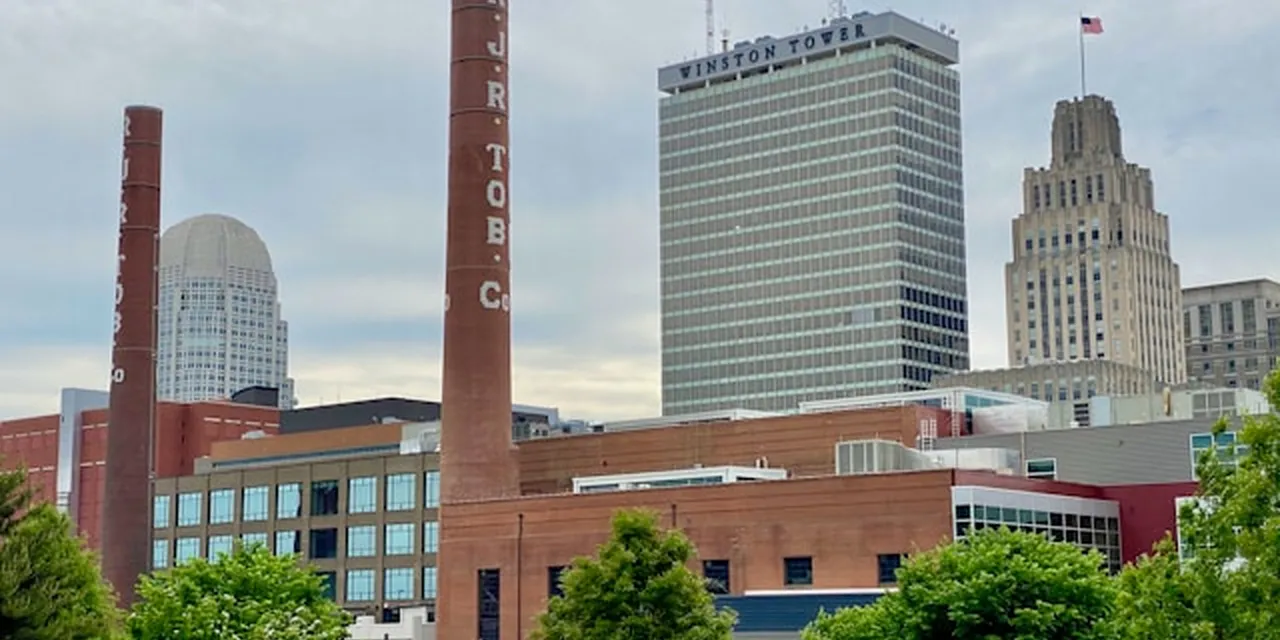
Winston-Salem lost roughly 700 corporate positions from Reynolds American's local operations in a single restructuring cycle. The headlines in the Winston-Salem Journal told a story of contraction. What they did not tell was that during the same period, job postings for regulatory affairs managers rose 18% and aerosol scientist openings climbed 22%. The tobacco sector in this city is not shrinking in a straight line. It is splitting into two different economies operating under the same corporate banner.
That split is the core challenge facing every hiring leader in this market. The roles being eliminated are generalist corporate functions: finance, legal support, traditional brand marketing. The roles being created demand specialisations so narrow that the national talent pool for some of them numbers in the low hundreds. A senior regulatory scientist with Premarket Tobacco Product Application filing experience now takes 140 to 160 days to hire in Winston-Salem, up from 45 days in 2021. The market has gone from easy to impossible in exactly the functions that determine whether a next-generation product ever reaches a consumer.
What follows is a structured analysis of Winston-Salem's tobacco and nicotine products sector as it stands in 2026: the forces that reshaped it, the specific roles where searches are failing, the compensation dynamics driving talent decisions, and what organisations operating in this market must do differently to fill the positions that now define their competitive future.
The Two Economies Inside One Sector
Winston-Salem's tobacco cluster contributed $2.1 billion in direct regional GDP in 2023, representing 8.3% of total private-sector output. That figure was 12% in 2010. The decline tells one story. But the composition of what remains tells a more interesting one.
Reynolds American still employs between 2,800 and 3,200 people in the Winston-Salem metropolitan area as of 2026, down from approximately 4,500 in 2019. The reduction has been concentrated almost entirely in functions that British American Tobacco's global "Quantum" efficiency programme deemed duplicative or automatable. Finance teams were consolidated toward London. Legal support was restructured. Traditional marketing roles disappeared alongside the declining combustibles business they served.
The functions that survived, and in some cases grew, sit in a different world entirely. RAI's CEO and North American leadership team remain physically located at 401 North Main Street. The New Categories Innovation Center continues to operate, as does the Regulatory Affairs North America division. Headcount in next-generation product R&D, specifically nicotine pouches and heated tobacco, grew at 8 to 12% annually through 2025 and that trajectory has continued into 2026. The growth is concentrated in aerosol engineering and regulatory toxicology.
Here is the analytical claim that makes this market genuinely unusual: the restructuring headlines created a false perception that qualified tobacco talent was available. The opposite happened. The layoffs targeted administrative and commodity roles. The simultaneous expansion in specialised functions deepened the shortage in precisely the areas where external hiring is most difficult. A workforce development board reading the top-line data would conclude the tobacco sector is shedding workers. A hiring executive trying to fill a Principal Scientist role in aerosol chemistry would conclude the opposite.
This divergence has consequences that extend beyond Reynolds American's own recruitment challenges. It has reshaped how executive searches must be structured in Winston-Salem and created a set of conditions unlike any other tobacco market in the United States.
Where Searches Are Failing: Three Roles That Define the Crisis
PMTA Regulatory Scientists: 140 Days and Counting
The Premarket Tobacco Product Application is the regulatory gateway for any new nicotine product entering the US market. Filing a successful PMTA requires scientists who understand both the FDA's evidentiary standards and the specific toxicological, behavioural, and manufacturing data that must accompany each submission. This is not a skillset that transfers easily from adjacent industries. Pharmaceutical regulatory affairs professionals can learn it, but the learning curve is measured in years, not months.
RAI's open requisitions for senior regulatory scientists with PMTA filing experience averaged 140 to 160 days unfilled during 2024, according to analysis of job posting duration data from Indeed Hiring Lab. The equivalent figure in 2021 was 45 days. The deterioration is not gradual. It accelerated sharply as FDA enforcement actions against non-compliant products increased industry-wide demand for submission-ready scientists while the pool of experienced professionals remained essentially static.
Retention pressure compounds the problem. According to reporting from the Winston-Salem Journal citing industry sources, RAI offered retention bonuses of $35,000 to $50,000 to existing regulatory staff with successful PMTA submission histories. The bonuses were designed to prevent poaching by Philip Morris International and Altria. The very existence of retention bonuses at this level signals that the market has moved beyond competitive hiring into defensive retention.
National unemployment in this specialisation sits below 2%. Average tenure at RAI and Altria is 7.2 years. These professionals are overwhelmingly passive. They do not apply to job postings. They are reached through specialised FDA regulatory networks and direct executive search, or they are not reached at all.
Clinical Study Managers: Losing to the Research Triangle
The second failure point involves clinical study managers responsible for reduced-risk product validation. These are the professionals who design and oversee the human studies required for Modified Risk Tobacco Product applications.
According to Korn Ferry's Healthcare and Life Sciences Market Update for North Carolina, a search assignment conducted for a Winston-Salem tobacco firm stalled in Q2 2024 after three consecutive candidate offers were rejected. Two of the candidates accepted positions at IQVIA and Parexel in Research Triangle Park at salary premiums of 15 to 20%. The reasons cited were "industry transition risk" and superior remote work policies.
The RTP competition is particularly damaging because it operates within the same state. A clinical scientist living in Greensboro or Durham faces no relocation decision. They face a career calculation: join a tobacco firm undergoing regulatory uncertainty, or join a contract research organisation with diversified clients and flexible working arrangements. For candidates evaluating long-term career marketability, the CRO path often wins.
Supply Chain Automation Engineers: The [Charlotte](/charlotte-north-carolina-executive-search) Drift
The third shortage is in supply chain digitisation leadership. R.J. Reynolds restructured its Winston-Salem supply chain division in 2023, creating a "hybrid hub" model that relocated three senior procurement directors to Charlotte. The relocation, reported by the Winston-Salem Journal, was driven by an inability to fill senior supply chain digitalization roles locally. Charlotte's deeper logistics talent pool and its concentration of banking operations technology professionals provided a richer recruiting environment.
This geographic fragmentation is a leading indicator. When a company physically moves roles out of a city because it cannot fill them there, the local talent market has failed a basic test. The question for 2026 is whether this pattern extends beyond supply chain into other specialised functions that Winston-Salem has historically retained.
Compensation: The Gap Aggregate Data Cannot See
The Bureau of Labor Statistics reports 2.1% year-over-year wage growth for Winston-Salem's tobacco manufacturing sector. That figure suggests a soft labour market. It is misleading.
The 2.1% average is pulled down by the high volume of departing generalist roles where wages were moderate and replacement demand is minimal. Within the specialised functions that are growing, compensation has inflated at five to ten times the market average. Executive search data and retention bonus reports indicate 15 to 20% compensation acceleration for regulatory scientists and aerosol engineers in the Winston-Salem market through 2025.
At the executive level, the bands are wider still. A Vice President of Regulatory Science and External Affairs commands a base salary of $320,000 to $450,000, with total cash compensation reaching $450,000 to $675,000 when BAT's long-term incentive plans are included. A Senior Vice President of New Categories R&D sits at $380,000 to $520,000 base, with total compensation of $550,000 to $850,000. These figures, drawn from BAT's 2023 Directors' Remuneration Report and corroborated by Heidrick and Struggles' Global Consumer Goods Survey, reflect compensation levels that rival pharmaceutical and biotech leadership in larger metropolitan areas.
At the individual contributor level, a Principal Scientist in aerosol technology earns $135,000 to $175,000 base with total compensation of $155,000 to $200,000. This is competitive regionally but sits below what the same PhD-level scientist can command at a biotech firm 90 minutes east in Research Triangle Park. The compensation benchmarking challenge for Winston-Salem tobacco employers is that they must compete with RTP's biotech economy for the same calibre of researcher, while operating in a city with a less established scientific recruitment infrastructure.
The cost of getting compensation wrong in this market is not just a failed hire. It is a cascading retention problem. When one regulatory scientist accepts an offer from Altria's Richmond headquarters at an 8 to 12% premium, the remaining team recalculates their own market value. The counteroffer dynamic in a team of six specialists with irreplaceable institutional knowledge can consume more budget than the original vacancy.
The Three Markets Pulling Talent Away
Winston-Salem does not compete for tobacco and nicotine talent in isolation. It competes against three distinct geographic markets, each attacking a different part of its workforce.
Richmond, Virginia, is the most direct competitor. Altria Group's headquarters offers 8 to 12% salary premiums for equivalent regulatory roles, according to cost-of-living-adjusted compensation comparisons from the Council for Community and Economic Research. Richmond also offers lower housing costs than Winston-Salem's appreciating market, creating a net financial advantage for mid-career professionals with families. The lateral mobility within Altria's larger corporate campus creates a career development argument that a single-employer city like Winston-Salem struggles to match.
Research Triangle Park competes for the scientific and clinical talent that Winston-Salem's next-generation product strategy depends on. Biotech and CRO firms including IQVIA and Syneos Health offer 15 to 25% premiums for PhD-level scientists, according to the North Carolina Biotechnology Center's 2024 Workforce Report. The arrangement flexibility is the sharper weapon. RTP employers commonly offer fully remote or hybrid arrangements. Winston-Salem tobacco employers resist this due to intellectual property security concerns. For a passive candidate weighing two offers, the remote work question often outweighs the salary differential.
London represents a different kind of drain. BAT's global headquarters does not compete for volume hiring, but it draws senior strategy and M&A executives from Winston-Salem through what BAT internally describes as reverse expatriation assignments. Sterling-denominated compensation packages and genuine global mobility create a pull that Winston-Salem cannot replicate domestically. The effect is a steady siphoning of C-suite talent upward into the parent company, leaving the US operation with leadership vacancies that must be filled from a shallow local bench.
The Reputational Constraint That Money Cannot Solve
Compensation can solve many hiring problems. It cannot solve this one.
Thirty-four percent of STEM graduates from regional universities, including Wake Forest and NC State, actively exclude tobacco companies from their job searches. This figure, drawn from the Wake Forest University Career Development Office's 2023 graduate cohort survey and corroborated by internal BAT recruitment metrics cited in BAT's 2023 Sustainability Report, represents a constraint that no salary premium or signing bonus can overcome. These graduates are not passive candidates who could be persuaded with the right offer. They are candidates who will not enter the pipeline under any circumstances.
The consequence is that Winston-Salem tobacco employers must recruit nationally for roles that a regional employer in a different industry would fill locally. BAT's own recruitment data indicates this adds approximately 25% to the cost per hire. Relocation packages, extended interview processes, and the need to source from a national rather than regional pool all contribute.
This reputational headwind is sharpest in exactly the disciplines where demand is growing fastest. Aerosol chemistry, regulatory toxicology, and clinical study design are all fields where the available workforce skews younger and more ethically selective about employer choice. The professionals with 20 years of tobacco experience are approaching retirement. The next generation is choosing careers in biotech and pharmaceutical development instead. The replacement pipeline is not building at the rate the industry needs.
For hiring leaders, the implication is that traditional recruiting methods designed for visible, actively searching candidates miss the overwhelming majority of the talent pool in this market. The ratio of passive to active candidates among regulatory affairs directors is approximately four to one. Among principal scientists in aerosol chemistry, the ratio is even more extreme: these specialised PhDs with tobacco or alternative nicotine experience are almost exclusively passive, with search cycles running four to six months.
What 2026 Demands: A Different Approach to a Different Market
The market that Winston-Salem's tobacco sector now operates in bears little resemblance to the one that existed five years ago. The old model, where a large corporate headquarters generated hundreds of roles that could be filled through conventional job advertising and regional recruitment, is gone. What remains is a smaller, more specialised operation where every open role in a critical function carries disproportionate strategic weight.
BAT's $200 million investment in manufacturing automation across North Carolina facilities, concentrated primarily in Tobaccoville, will displace another 400 to 500 skilled trades and process engineering roles by 2027, according to projections from BAT's Capital Markets Day presentation and corroborated by North Carolina Department of Commerce WARN notices. Capital moved faster than human capital could follow. The investment in automation has not reduced the workforce so much as replaced one kind of worker with another that does not yet exist in sufficient numbers.
The physical fragmentation of the cluster compounds the challenge. The conversion of the historic Whitaker Park manufacturing facility into Wake Forest School of Medicine's Innovation Quarter expansion will sever the last physical link between Reynolds' industrial heritage and its current operations. By 2026, tobacco employers in Winston-Salem are dispersed across suburban office parks rather than concentrated in the walkable campus that historically created what workforce planners call "talent stickiness." The campus effect, where professionals stay partly because their industry peers are all within walking distance, is dissolving.
The regulatory outlook adds further urgency. The FDA's proposed menthol cigarette ban, currently under judicial review, threatens approximately 40% of RAI's Winston-Salem-supervised revenue, according to FDA Center for Tobacco Products regulatory filings and RAI's 10-K risk disclosures. If implemented, the ban would trigger further headcount reductions in traditional marketing and sales support, potentially cutting 20 to 30% of remaining combustibles-related roles. That would deepen the sector's dependence on next-generation products and, by extension, on the specialised scientists and regulatory experts who bring those products to market.
For organisations hiring into this market, the strategic question is no longer whether Winston-Salem has tobacco talent. It is whether the specific professionals required for a next-generation nicotine products strategy can be identified, engaged, and moved within a competitive timeframe. The answer depends entirely on method.
A firm relying on job postings in this market reaches the manufacturing supervisors and brand marketers who are actively looking. It does not reach the regulatory affairs directors with 7.2 years of tenure and no intention of checking a job board. It does not reach the aerosol physicists whose LinkedIn profiles are set to "not open to opportunities." It does not reach the clinical study managers who turned down three offers last quarter because none of them addressed the full proposition required to make a move.
KiTalent's approach to executive search in industrial and specialised manufacturing sectors is built for markets with exactly this profile: high passive-to-active ratios, narrow specialisations, and a competitive geography that requires national reach with local market knowledge. Through AI-enhanced talent mapping, KiTalent identifies and engages the candidates who are invisible to conventional search methods, delivering interview-ready shortlists within 7 to 10 days. The pay-per-interview model means clients invest only when they meet qualified candidates, not before.
With a 96% one-year retention rate across 1,450 completed executive placements, the methodology is designed for markets where the cost of a wrong hire at the senior level is measured not just in salary but in regulatory delay, competitive intelligence loss, and programme timeline failure. In Winston-Salem's tobacco market, where every regulatory scientist departure puts a PMTA filing at risk, retention is not a performance metric. It is a business continuity issue.
For organisations competing for regulatory science, aerosol engineering, or next-generation product leadership in a market where the best candidates are not visible on any job board, start a conversation with our executive search team about how this search should be run.
Frequently Asked Questions
What is the current size of Winston-Salem's tobacco workforce?
Reynolds American employs approximately 2,800 to 3,200 people in the Winston-Salem metropolitan area as of 2026, down from around 4,500 in 2019. The reduction reflects British American Tobacco's Quantum efficiency programme and automation investments, which eliminated roughly 700 corporate positions in 2024 alone. However, headcount in next-generation product R&D, specifically nicotine pouches and heated tobacco development, has grown 8 to 12% annually. The workforce is smaller but more specialised than at any previous point.
Why are PMTA regulatory scientists so difficult to hire in Winston-Salem?
PMTA submission scientists require deep expertise in FDA regulatory pathways specific to tobacco products, including Substantial Equivalence and Premarket Tobacco Product Application filings. National unemployment in this specialisation is below 2%, and average tenure at major employers exceeds seven years. These professionals are overwhelmingly passive candidates who do not respond to job postings. Searches now average 140 to 160 days, up from 45 days in 2021, making specialised executive search methodology essential for reaching them.
How does Winston-Salem tobacco compensation compare to competing markets?
Aggregate wage data shows modest 2.1% growth, but this masks acute inflation in scarce specialisations. Regulatory scientists and aerosol engineers have seen 15 to 20% compensation acceleration. Richmond offers 8 to 12% premiums for equivalent regulatory roles, while Research Triangle Park biotech firms pay 15 to 25% more for PhD-level scientists. Executive compensation for VP-level regulatory and R&D leaders ranges from $450,000 to $850,000 in total cash, competitive with pharmaceutical leadership packages.
What impact could the FDA menthol ban have on Winston-Salem's tobacco sector?
The proposed menthol cigarette ban, currently under judicial review, affects approximately 40% of RAI's Winston-Salem-supervised revenue. If implemented, it could trigger 20 to 30% headcount reductions in traditional marketing and sales support roles. Conversely, it would accelerate investment in reduced-risk alternatives, further increasing demand for the regulatory scientists and product development leaders who are already the hardest roles to fill.
How can companies access passive tobacco industry talent in this market?
With a passive-to-active candidate ratio of approximately four to one among regulatory affairs directors and even higher among specialised scientists, conventional job advertising reaches a small fraction of the available talent. KiTalent uses AI-enhanced direct search and talent mapping to identify and engage candidates who are not actively on the market, delivering interview-ready shortlists within 7 to 10 days. The approach is designed for exactly the kind of narrow, high-stakes specialisation that defines Winston-Salem's tobacco talent market.
What are the biggest risks to Winston-Salem's tobacco talent cluster?
Three risks stand out. First, geographic fragmentation as historic Reynolds industrial sites convert to medical and educational use, reducing the campus effect that retained talent locally. Second, reputational constraints that exclude 34% of regional STEM graduates from considering tobacco employers. Third, competition from Research Triangle Park, where biotech firms offer higher pay and more flexible working arrangements for the same scientific disciplines the tobacco sector needs most.