Zvornik's Timber Sector Is Sliding Toward Raw Material Dependency: The Talent Gap Accelerating the Decline
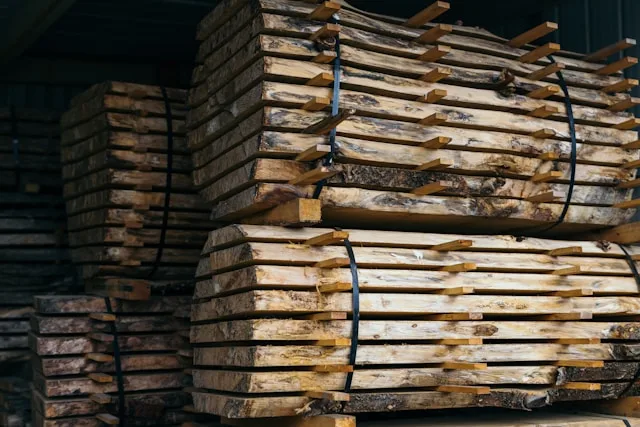
Zvornik's timber processors shipped roughly 12% more wood across the Serbian border in 2024 than in the previous year. By every volume metric, trade is growing. Yet the value of what leaves Zvornik is falling. The municipality's exports are tilting further toward semi-finished lumber and rough-sawn beech, while the finished furniture and precision-cut panel work that would retain margin locally remains stubbornly underdeveloped. The ratio of sawn timber to finished product in Zvornik's export profile worsened through 2024 and into 2025, moving in the opposite direction from the municipality's own economic development strategy.
This is not a story about a market that lacks opportunity. It is a story about a market that cannot hold onto the skills required to capture that opportunity. The three talent categories most critical to moving Zvornik's wood processing sector up the value chain are certified forestry technicians who can manage EU Timber Regulation compliance, CNC machine operators who can run precision processing lines, and bilingual supply chain managers who can coordinate cross-border logistics. All three categories are acutely short. Vacancy rates in wood processing across the Zvornik administrative region hit 8.3% in the third quarter of 2024, against 5.1% in general manufacturing, with technical specialist roles averaging 78 days to fill.
What follows is an analysis of the forces pulling Zvornik's timber sector in two directions at once: growing export volumes on one side, declining value capture and deepening talent scarcity on the other. The article examines where the shortages sit, what drives them, why conventional hiring approaches fail in this market, and what organisations operating here or sourcing from here need to understand before making their next leadership appointment.
A Secondary Node With Primary Constraints
Zvornik sits on the Drina River at Bosnia and Herzegovina's eastern border with Serbia. Its timber sector operates as a secondary processing node within Republika Srpska's broader wood corridor, hosting between 15 and 20 registered wood processing enterprises and an estimated 30 to 40 unregistered micro-workshops operating informally. The formal sector employs 400 to 500 people. The informal economy adds an unknown number more.
Installed sawmill capacity in the municipality runs to an estimated 45,000 to 55,000 cubic metres of annual log processing. Utilisation rates sit at 60 to 65%, constrained by raw material supply irregularities and energy costs that have risen from 12 to 14% of production costs in 2021 to 18 to 22% through 2025. The gap between installed capacity and actual throughput reflects a market where the machinery exists but the conditions to run it fully do not.
Approximately 70% of processed timber crosses into Serbia via the Zvornik to Šabac corridor. Serbian furniture manufacturers and construction firms are the primary buyers. This export orientation means Zvornik's processors are deeply integrated into Serbian supply chains while remaining structurally subordinate within them. They supply the material. Serbia captures the margin.
The transport infrastructure reinforces this subordination. The M-18 highway connecting Sarajevo to Zvornik and onward to the Serbian border suffers from seasonal maintenance failures and bridge weight restrictions. According to the Transport Community Permanent Secretariat's Western Balkans Transport Observatory, these constraints add €12 to €18 per cubic metre in freight costs compared to routes from Brčko or Bijeljina. For a sector competing on thin margins with raw material, that differential is not trivial. It is a structural tax on every shipment that leaves the municipality.
The raw material supply itself is not fully under local control. Public Enterprise Šipad, the state-owned forestry entity, controls approximately 70% of Republika Srpska's forest resources. Šipad functions as the gatekeeper for log procurement across the Podrinje region. Local processors depend on its allocation decisions, its pricing, and its timeline. Supply chain autonomy, in the conventional sense, does not exist here.
The Certification Deadline That Will Reshape the Market
The force most likely to reshape Zvornik's timber sector in the near term is not a new investment or a policy incentive. It is a compliance deadline. Regulatory alignment with the EU's Forest Law Enforcement, Governance and Trade Action Plan is tightening requirements for chain-of-custody certification. By late 2026, roughly 40% of Zvornik's formal sector processors will need FSC or PEFC certification to maintain access to Serbian and EU markets.
The cost of compliance is material for enterprises of this size. Capital expenditures for certification infrastructure run between €50,000 and €150,000 per facility. For a family-owned sawmill employing 20 people, that figure represents a year's profit or more. The certification requirement does not simply add a cost. It creates a binary outcome: comply and remain in the formal export market, or fail to comply and either exit or retreat into the domestic and informal economy.
Consolidation Is Already Beginning
This pressure is expected to accelerate consolidation. Three to five smaller sawmills are likely to exit the formal market or merge operations by the end of 2026. The processors that survive will be larger, more capital-intensive, and more reliant on the specific technical skills that are already hardest to find. Chain-of-custody certification management, EU Timber Regulation due diligence systems, and English-language documentation capability are not skills that most Zvornik-area workers currently possess. The vocational school in Zvornik that serves as the primary training provider for forestry technicians enrolls only 12 to 15 students per year in its forestry technician programme.
The Regulatory Complexity Behind the Certification
Bosnia and Herzegovina's vertical legislative structure compounds the difficulty. Forest management sits under entity jurisdiction within Republika Srpska. Environmental permits fall under state-level institutions. Export documentation is handled by the Indirect Taxation Authority. Processors in Zvornik report average permitting timelines of 8 to 14 months for capacity expansion, compared with 3 to 4 months for equivalent processes in Serbia. A firm that decides today to invest in certification infrastructure may not complete the permitting process before the market deadline arrives.
This convergence of compliance cost, permitting delay, and skills scarcity is not incidental. It is the mechanism through which the market is being sorted. The firms that emerge will need leaders who can manage regulatory complexity across multiple jurisdictions simultaneously. Those leaders are not currently available in Zvornik in sufficient numbers.
Where the Talent Shortages Sit and Why They Persist
Three categories of specialist are critically short across Zvornik's timber sector. Each shortage has a distinct cause, and none is solvable through higher advertising spend or broader job postings.
Certified Forestry Technicians
Certified forestry engineers holding the Dipl.Ing.For. qualification maintain unemployment rates below 2% across Republika Srpska. Average tenure at a single employer exceeds eight years. The candidate pool is 80 to 90% passive. These professionals do not respond to public job advertisements. They are recruited through direct approaches and referral networks, or they are not recruited at all.
The supply problem runs deeper than simple scarcity. Larger entities like Šipad and private mills in Bijeljina routinely attract certified technicians away from Zvornik-area operations with salary premiums of 15 to 20% and transportation allowances. This creates chronic turnover in mid-level technical supervision roles. A Zvornik processor that successfully recruits a forestry technician faces a meaningful probability of losing that technician within 18 months to a better-resourced employer offering a short commute to a larger town.
CNC Machine Operators
Small and medium sawmills in the Drina valley region typically carry CNC operator vacancies for four to six months, with positions unfilled despite advertising at 20 to 25% above standard operator wages. The root cause is institutional. There is no CNC training module in the Zvornik vocational curriculum. Operators who acquire these skills through other channels, or who train on the job, become immediately attractive to employers in Croatia and Slovenia, where EU-standard wages for specialised wood processing roles range from €30,000 to €50,000.
Qualified operators with wood-specific CAM software experience in systems such as WoodCAD/CAM or Alphacam are universally employed. They do not appear on job boards. Recruitment cycles for these specialists extend to four to nine months, operating entirely through poaching and referral.
Bilingual Supply Chain Managers
The third shortage category is less visible but equally consequential. Zvornik's export orientation demands supply chain managers who can operate across the BiH and Serbian regulatory environments, manage documentation in both jurisdictions, and communicate in English with certification bodies and EU-facing buyers. This combination of language skill, regulatory knowledge, and logistics experience is rare in a municipality of Zvornik's size. The candidates who possess it tend to migrate to Banja Luka or Sarajevo, where broader industrial career paths and compensation premiums of 20 to 25% are available.
The aggregate picture is a market where the roles most critical to the sector's survival are the roles that conventional hiring methods cannot fill. A talent mapping exercise across the Podrinje region would reveal that the theoretical candidate pool for each of these three categories numbers in the dozens, not the hundreds. At that scale, every individual placement matters.
The Wage Paradox: Acute Shortage, Stagnant Pay
Here is the analytical puzzle at the centre of Zvornik's timber talent market. Despite vacancy rates 60% above the manufacturing average and time-to-fill figures stretching past fiscal quarters, nominal wage growth in the sector registered only 4.2% annually through 2023 and 2024. The national manufacturing average over the same period was 6.1%.
In a functioning labour market, scarcity should drive wages upward until supply and demand clear. In Zvornik, they do not. The mechanism preventing market clearing operates on two levels.
First, the SME structure of the sector imposes a hard ceiling on what employers can pay. A sawmill with 25 employees and compressed margins cannot match the salary a certified technician commands in Šabac or Belgrade, regardless of how acute the vacancy is. The research from the Republika Srpska Statistical Office confirms this gap: Serbian timber processing zones offer 30 to 40% higher nominal wages for equivalent senior technical roles, with production managers earning €35,000 to €45,000 against €22,000 to €28,000 in Zvornik.
Second, competition from the informal labour market suppresses the wage signal. An estimated 20 to 30% of Bosnia and Herzegovina's domestic timber market involves illegal logging, which depresses legal market prices and reduces the revenue base from which formal employers pay wages. Zvornik's proximity to uncontrolled border zones increases exposure to grey market timber flows that undercut legal operations.
The result is a market where employers cannot afford to pay what the talent is worth, and candidates who acquire marketable skills leave for jurisdictions that can. The shortage does not resolve. It deepens.
This is the original insight that standard labour market analysis misses when applied to Zvornik. The talent crisis here is not a failure of recruitment. It is a structural consequence of a value chain that has been designed, through infrastructure constraints and regulatory fragmentation, to extract raw material rather than retain skilled labour. The shortage and the stagnation are not contradictions. They are two symptoms of the same condition.
The Serbian Gravity Well and the Croatian Exit Route
Zvornik's competitive position for talent must be understood in relation to two external forces operating simultaneously from different directions.
Serbia pulls from the east. Šabac sits 45 kilometres from Zvornik. For a senior technical professional living in the Zvornik area, a job in Šabac is a daily commute, not a relocation. Serbian timber processing zones offer materially higher compensation, better infrastructure, and regulatory environments that are aligning toward EU accession with greater clarity. The proximity creates a commuting zone that drains Zvornik's skilled labour pool without requiring anyone to move house. A production manager earning €22,000 in Zvornik can earn €35,000 or more for the same work across the border.
Croatia pulls from the northwest. The Croatian forestry and wood processing sectors, concentrated in Slavonia, attract BiH technicians with EU-standard wages and Schengen zone mobility. According to the World Bank's Western Balkans Labour Mobility Study, an estimated 15 to 20% of Zvornik-area forestry technicians who obtain EU certifications emigrate to Croatia within 24 months. The certification that Zvornik's sector desperately needs its workforce to acquire is the same credential that enables departure. Investment in workforce capability produces talent for competitors.
For organisations hiring senior leaders in the industrial and manufacturing sectors of the Western Balkans, this dual-pull dynamic is the defining challenge. It means that any executive hired into a Zvornik-based operation must be assessed not only for current capability but for retention risk. A COO with regional supply chain experience spanning BiH and Serbia commands €60,000 to €85,000 annually. These roles are typically filled by Serbian nationals or BiH diaspora returnees who command expatriate premiums. The cost of a wrong hire at this level is not merely the recruitment fee. It is the 12 to 18 months of lost strategic direction in a market that does not offer quick replacements.
What the 2026 Market Demands From Senior Leadership
No major greenfield investments are anticipated in Zvornik's timber sector through 2026. The growth path, such as it exists, runs through modernisation of existing operations funded by EU IPA III pre-accession instruments and the EBRD's Western Balkans Sustainable Forestry Program. Several SMEs are expected to complete partial upgrades using these facilities.
Employment is projected to hold at 400 to 500 formal sector positions. The composition of those positions, however, is shifting. Manual logging roles are declining. Machine operation, quality control, and compliance roles are increasing. The sector needs fewer workers overall but more skilled ones per unit of output.
This shift creates a specific leadership profile that the market currently cannot fill from within. The managing director of a mid-size Zvornik processing firm, a role paying €45,000 to €65,000, must now combine traditional sawmill operations knowledge with certification management, cross-border logistics coordination, and the commercial judgement to decide whether to invest €100,000 in FSC compliance or exit the formal market.
The quality control manager role, paying €18,000 to €24,000, requires EU Timber Regulation documentation expertise and English language proficiency. That combination is rare locally. The production manager role, at €22,000 to €28,000, carries a 10 to 15% premium over general manufacturing management but must compete with Serbian equivalents paying 30 to 40% more.
For any organisation operating in this market, the question is not whether to search for these candidates but how. A conventional recruitment approach that relies on job postings will reach the 10 to 20% of the candidate pool that is actively looking. In CNC operation and forestry engineering, that active pool is essentially empty. The remaining 80 to 90% must be identified, approached, and persuaded individually.
The Negotiation Challenge in a Thin Market
Offer negotiation in Zvornik's timber sector carries particular risk. The market is small enough that every senior hire is known to competitors within weeks. A production manager who accepts a role after a salary negotiation that pushed compensation above local norms becomes a benchmark. Other employees and competing employers recalibrate immediately. The counteroffer dynamic is intense in a market where a single departure can halt a production line. Senior hires must be managed through the entire transition process, not merely identified and offered.
Reaching the Candidates This Market Cannot See
Zvornik's timber talent market is too small, too passive, and too regionally contested for any approach that begins with a job advertisement. The candidates who can manage FSC certification compliance, programme CNC lines for wood-specific applications, or coordinate cross-border logistics between BiH and Serbia are employed, performing, and not looking. The standard recruitment playbook reaches none of them.
This is where the method matters more than the budget. An AI-enhanced talent mapping approach can identify the 80 to 90% of qualified professionals who are invisible to conventional channels. In a market where the total qualified candidate pool for a given role numbers in the low dozens, identifying each individual by name, current employer, and approximate compensation is not a luxury. It is the baseline requirement for a search that has any chance of succeeding.
KiTalent's approach to markets like this delivers interview-ready candidates within 7 to 10 days, not by drawing from a database of active applicants, but by mapping the full candidate universe and approaching passive professionals directly. The pay-per-interview model means organisations in cost-constrained environments, exactly the profile of Zvornik's SME sector, do not pay retainers for searches that may not succeed. They pay when they sit across the table from a qualified candidate.
For organisations competing for production management, compliance leadership, or technical specialists in the Western Balkans timber sector, where the candidates you need are not on any job board and the cost of a vacant critical role compounds monthly in lost certification progress and export market access, speak with KiTalent's executive search team about how we approach these markets.
Frequently Asked Questions
What is the average salary for a sawmill production manager in Zvornik?
Production managers in Zvornik's timber processing sector earn between €22,000 and €28,000 annually in gross terms. This carries a 10 to 15% premium over general manufacturing managers in the region, reflecting hazardous working conditions and specialised technical requirements. However, the figure sits 30 to 40% below equivalent roles across the Serbian border in Šabac and Belgrade, where production managers command €35,000 to €45,000. This gap is the primary driver of talent attrition from Zvornik toward Serbian employers, particularly for senior professionals with cross-border logistics experience.
Why is it so difficult to hire CNC operators for wood processing in Bosnia and Herzegovina?
CNC operator shortages in BiH wood processing stem from an institutional gap: vocational curricula in municipalities like Zvornik do not include CNC training modules for wood-specific applications. Operators who acquire skills in systems like WoodCAD/CAM or Alphacam through other channels are immediately employable and universally employed. With unemployment below 2% in this specialism, the active candidate market is effectively empty. Recruitment depends on direct identification of passive candidates already working at competitors. Average search cycles for these roles extend four to nine months through referral and approach-based methods.
What certifications do Zvornik timber processors need for EU market access?
By late 2026, approximately 40% of Zvornik's formal sector processors will require FSC or PEFC chain-of-custody certification to maintain access to Serbian and EU markets aligned with the EU's FLEGT Action Plan. Compliance infrastructure investment ranges from €50,000 to €150,000 per facility. Processors also need familiarity with EU Timber Regulation due diligence systems. The combination of capital cost and technical skill requirements is expected to force three to five smaller operations to exit or consolidate, making certification management expertise one of the most valuable skills in the local market.
How does Zvornik's timber sector compare to Serbian competitors for talent?
Serbian timber zones, particularly Šabac, offer 30 to 40% higher nominal wages, shorter permitting timelines of three to four months versus eight to 14 months in BiH, and increasingly EU-aligned regulatory frameworks. Šabac sits just 45 kilometres from Zvornik, creating a daily commuting zone that enables Serbian employers to attract Zvornik talent without requiring relocation. Croatia offers a second competitive pull, with Schengen mobility benefits and EU-standard compensation attracting an estimated 15 to 20% of Zvornik technicians who obtain EU certifications. KiTalent's international executive search methodology addresses this cross-border dynamic by mapping candidates across multiple jurisdictions.
What executive roles are hardest to fill in the Western Balkans forestry sector?
The three most persistently vacant senior roles are managing directors with combined operations and certification expertise, quality control managers with EUTR documentation capability and English proficiency, and bilingual supply chain managers operating across BiH and Serbian regulatory systems. COO-level positions requiring regional supply chain experience command €60,000 to €85,000 and are typically filled by Serbian nationals or diaspora returnees. These roles sit in the 80 to 90% passive candidate segment, meaning they are not reachable through conventional advertising and require targeted executive search approaches.
What structural risks affect investment in Zvornik's timber processing sector?
Four risks dominate. Serbian market dependency exposes processors to exchange rate volatility, with 70% of exports denominated in Serbian dinars or euro-converted dinar contracts. Illegal logging, representing an estimated 20 to 30% of BiH's domestic timber market, depresses legal prices and undermines investment cases. Energy costs have risen from 12 to 14% of production costs in 2021 to 18 to 22% through 2025. Finally, Bosnia's fragmented regulatory architecture creates permitting timelines three to four times longer than in Serbia, deterring the capital investment needed for modernisation and market benchmarking shows this gap widening rather than narrowing.