Aalborg's Cement Sector Has Bet DKK 3.2 Billion on Green Technology. The Talent to Deliver It Barely Exists.
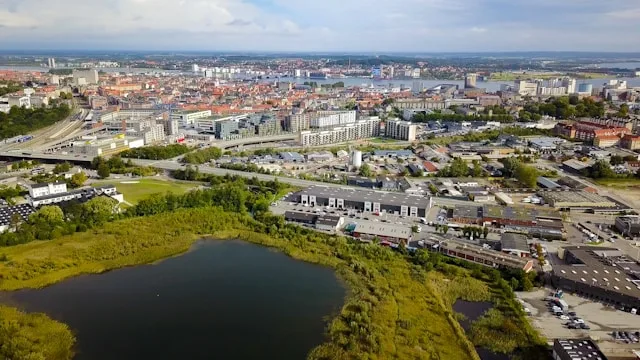
Aalborg Portland's Rørdal facility shipped over 2.1 million tonnes of cement and clinker through Port of Aalborg in 2024, accounting for more than a third of the port's entire dry-bulk throughput. The white cement operation remains Northern Europe's largest export cluster of its kind. Cementir Holding N.V., the Milan-listed parent, has committed DKK 3.2 billion to a full-scale carbon capture and storage retrofit, partnering with Aker Carbon Capture and the Danish Energy Agency. It is the single largest private industrial investment in North Jutland in nearly three decades.
The problem is not capital. The problem is that Aalborg's talent market cannot supply the people this investment requires. A CCS Process Engineer with amine-scrubbing expertise takes 8 to 11 months to recruit in the Aalborg region. A quarry manager holding the statutory blasting supervisor certification draws from a regional pool of roughly 120 qualified individuals, 85% of whom are over 50. Meanwhile, 30% of junior engineering hires leave for Copenhagen-based renewable energy firms within 24 months. The facility competes globally on product quality. It recruits from a region of 350,000 people.
What follows is a ground-level analysis of the forces reshaping Aalborg's cement and heavy materials cluster in 2026: the regulatory pressures compressing margins, the capital commitments demanding new categories of specialist, and the structural misalignment between a world-class export operation and the fragile regional talent pool it depends on. For any senior leader hiring into Danish heavy industry, understanding this market's specific dynamics is no longer optional.
The Decarbonisation Pivot That Changed Every Job Description
The "Green Cement" CCS project at Rørdal is not a pilot. It is a full-scale carbon capture installation targeting 400,000 tonnes of CO₂ captured annually by 2027, according to the Danish Energy Agency's CCS Project Database. The facility is installing technology that will fundamentally alter how cement is manufactured at this site, and by extension, what kind of workforce runs the operation.
Through 2025, Aalborg Portland operated at roughly 85% capacity utilisation across two kiln lines, directly employing 340 full-time equivalents. An additional 120 FTE work through contracted quarrying and logistics specialists. The broader heavy materials cluster in the municipality, including Aalborg Rørdal Grus A/S, Saint-Gobain Denmark, and specialised maintenance subcontractors, accounts for approximately 620 direct industrial manufacturing jobs in the region.
Here is where the compositional shift matters. Cementir's own collective agreement briefing from November 2024 projected headcount stability at 330 to 350 FTE through 2026, but the roles within that figure are moving. Fifteen manual handling positions are expected to be cut. Twelve new roles in process automation and CCS operations are being created. The net change looks negligible. The skills change is anything but.
The 2026 capital expenditure budget indicates a 40% increase in spending on robotics and AI-driven process control, accelerated by EU ETS Phase IV compliance costs. This is not a gradual transition. It is a forced reconfiguration of the entire workforce composition within a 24-month window, driven by a regulatory timetable the company did not set.
Regulatory Pressure Is Compressing Margins and Rewriting the Talent Requirement
EU ETS Phase IV: The Cost That Cannot Be Avoided
2026 marks a hard inflection point for European cement producers. Under EU ETS Phase IV, the cement sector's free allocation of emissions allowances drops to 78% of verified emissions. In 2023, that figure was 94%. The gap is not trivial. Aalborg Portland's compliance costs are projected to increase by DKK 180 to 220 million annually unless CCS capture rates exceed 90%, according to the Danish Energy Agency's ETS Impact Assessment.
With European carbon futures fluctuating between €60 and €80 per tonne through late 2024, the annual compliance burden could reach 12 to 15% of revenue by 2027 without successful CCS deployment. This is not a distant theoretical risk. It is a cost line that is already being priced into 2026 operating budgets.
CBAM and the Documentation Burden
Beyond direct emissions costs, the EU's Carbon Border Adjustment Mechanism adds a documentation and monitoring layer that requires specialised regulatory compliance expertise. MRV protocol knowledge, carbon accounting, and CBAM documentation skills are not capabilities that traditional cement plant workforces carry. They must be recruited or built from scratch.
The practical consequence is a new category of role that did not exist at Aalborg Portland five years ago. Regulatory compliance in this context is not a legal function. It is an operational function embedded in the production line itself. Finding professionals who understand both EU emissions regulation and cement process chemistry is the hiring challenge that has no clean parallel in other sectors.
This regulatory acceleration is why the talent conversation cannot be separated from the capital investment conversation. The DKK 3.2 billion CCS commitment only delivers its intended value if the people who operate, maintain, and report on the system can be hired in time.
The Paradox at the Centre of Aalborg's Industrial Talent Market
This is the original analytical tension that defines Aalborg's cement cluster in 2026: the facility's DKK 3.2 billion green technology investment has technically positioned it as one of the most advanced decarbonisation employers in the Nordic region, yet that investment has not translated into a talent acquisition advantage. In fact, it may be making the problem worse.
Aalborg University's 2024 Karrierebarometer ranked cement manufacturing in the bottom quartile of preferred employers among sustainability-conscious engineering graduates. These are the same graduates who will be essential to operating the CCS installation. The paradox is precise: the facility offering the most advanced decarbonisation career pathway in Northern Denmark is perceived as a carbon-intensive legacy employer by the very candidates it needs.
This is not a branding problem that can be solved with a careers page redesign. It is a deeper misalignment between the speed of capital deployment and the speed of perception change. The investment moved in 2024. Graduate sentiment has not moved at all. A company can build a DKK 3.2 billion carbon capture facility in three years. Changing how a 130-year-old cement works is perceived by 25-year-old engineers takes longer.
The implication for executive search in heavy industry is that passive candidate identification becomes non-negotiable. The active candidate market, particularly for CCS specialists and sustainability leadership, is thin to the point of functional absence. The professionals who could fill these roles are already employed, often at Ørsted, Equinor, or Heidelberg Materials, and they are not watching Aalborg Portland's job listings.
Where the Critical Shortages Sit: Three Roles, Three Structural Barriers
CCS Process Engineers: A Role the Market Has Not Finished Creating
Carbon Capture Process Engineers with amine-scrubbing expertise represent the most acute hiring challenge in the cluster. Recruitment cycles for these specialists run 8 to 11 months in the Aalborg region, compared to 4 to 5 months for standard chemical engineering roles, according to DI Byggeri og Anlæg's 2024 recruitment analysis.
Aalborg Portland has reportedly offered compensation premiums of 25 to 30% above standard process engineering rates to attract talent from Ørsted's CCS division in Copenhagen. Candidate relocation rates remain below 40%, largely due to housing cost differentials that complicate what looks like a generous offer on paper. Copenhagen housing costs run 85% above Aalborg's, which means the salary premium is real. But it asks a Copenhagen-based engineer to relocate to a smaller city, and fewer than half are willing to make that move.
The deeper issue is that this is not a conventional shortage where supply lags demand temporarily. CCS process engineering at commercial scale is a discipline still being defined. The number of professionals who have operated full-scale amine capture systems in an industrial cement context is measured in dozens across all of Northern Europe. You cannot recruit experience that does not yet exist in sufficient quantity.
Quarry Managers with Blasting Certification: A Demographic Cliff
The statutory "Sprængningsleder" certification is required for anyone supervising blasting operations in Danish quarries. The regional talent pool for this role is approximately 120 qualified individuals, of whom 85% are over age 50. Recruitment has stalled for periods exceeding nine months across North Jutland aggregates producers, including Aalborg Portland's contracted quarrying operations.
Average tenure among certified blasting supervisors is 12 years with their current employer, and employment rates exceed 90%. This is a near-total passive candidate market. Traditional job advertising reaches almost nobody in this pool. These professionals move through personal networks, direct approach, or not at all.
The replacement pipeline barely exists. The certification pathway requires years of supervised experience before qualification. Tech College Aalborg's process operator programme feeds the technical frontline, but the step from process operator to certified blasting supervisor is a decade-long career path. By the time the current cohort retires, the next generation will not be ready.
Senior Process Automation Specialists: Cement-Specific Expertise That Cannot Be Generalised
The shift toward AI-driven process control and predictive maintenance requires engineers with deep familiarity with cement-specific distributed control systems. Senior engineers with 10 or more years of experience in this domain are approximately 70% passive, typically moving only through direct headhunting approaches or personal networks, according to Brunel's 2024 Denmark recruitment survey.
The specificity matters. A controls engineer from the oil and gas sector does not immediately transfer to a cement kiln DCS environment. The equipment, the process chemistry, and the failure modes are different enough that cross-sector hires require 12 to 18 months of domain-specific training. Firms that treat this as a generic automation hire discover the gap after onboarding, not before.
The consequence of these three shortages converging simultaneously is that Aalborg Portland's workforce transition plan has no margin for recruitment failure. Every role that goes unfilled for nine months instead of four pushes the CCS project timeline further from its 2027 target.
Compensation Realities: What These Roles Pay and Why It Matters
Understanding compensation benchmarks in Aalborg's industrial sector is essential for any organisation competing for this talent, whether as an employer or a search partner.
At the senior specialist level, a CCS-specialised process engineer with more than 10 years of experience commands DKK 850,000 to 950,000 in base salary plus a 10 to 15% bonus. Maintenance managers responsible for rotating kiln equipment earn DKK 920,000 to 1,050,000 base with a company car benefit. Quarry managers with blasting certification sit at DKK 800,000 to 900,000 base, though scarcity premiums are pushing top-quartile offers to DKK 950,000.
At the executive level, the VP of Operations or Plant Director equivalent earns DKK 1,600,000 to 2,000,000 base with a 25 to 35% short-term incentive and long-term equity participation through Cementir Group's international scheme. A VP of Sustainability or CCS Project Director commands DKK 1,400,000 to 1,800,000 base with project completion bonuses. The Export Sales Director for white cement earns DKK 1,200,000 to 1,500,000 base plus a commission structure tied to North American volumes.
These figures look competitive within North Jutland. They are not competitive against Copenhagen, where comparable CCS and process engineering roles carry a 15 to 20% base salary premium. The housing cost differential partially offsets this: Copenhagen housing runs 85% above Aalborg. But partially is the operative word. For a dual-career household where the partner also needs professional opportunities, Aalborg's more specialised industrial labour market is a harder sell than Aarhus, which offers comparable housing costs but broader dual-career options. The challenge of relocating senior talent is compounded when the destination city, however affordable, limits the partner's career mobility.
Hamburg presents another competitive dimension entirely. German firms including Heidelberg Materials and Holcim offer Euro-denominated contracts with a 20 to 25% purchasing power advantage after tax adjustment for Danish-speaking engineers willing to accept international mobility. This is not a theoretical threat. It is a recruitment pipeline that actively drains Northern Danish engineering talent.
The Export Engine and Its Hidden Vulnerability
Aalborg Portland's white cement export operation generates approximately DKK 4.5 billion in annual export value, according to Statistics Denmark. North America accounts for 45% of white cement export revenue. This concentration creates direct hiring implications that extend beyond the production floor.
The Export Sales Director role sits at the intersection of three pressures. US residential construction permits showed a downward trajectory through Q4 2024, and industry forecasts from the Portland Cement Association suggest a 3 to 5% volume decline in white cement demand if that trend continues. Dollar volatility adds pricing uncertainty. Potential tariffs on European building materials under the current US administration introduce a third variable that makes 2026 revenue forecasting genuinely difficult.
The commercial leadership team required to manage this environment is qualitatively different from the one that managed a stable export book five years ago. The role demands not just sales competence but regulatory fluency across US trade policy, currency hedging strategy, and the ability to rebalance distribution channels in real time. Senior commercial leaders with this combination of capabilities are not abundant in any market. In North Jutland, they are functionally absent from the active candidate pool.
Meanwhile, Cementir Group guidance indicates flat volume growth of 0 to 2% for the Nordic region in 2026, with pricing power constrained by import competition from Turkish and Egyptian grey cement producers. The margin environment is tightening from both the cost side (ETS compliance, energy prices) and the revenue side (import competition, export volatility). This means every senior hire must deliver value faster. The cost of a wrong appointment at this level is not just a salary loss. It is a strategic delay that compounds through every quarter the role is misallocated.
What Must Change in How Aalborg's Industrial Cluster Hires
The traditional approach to recruiting in North Jutland's heavy materials sector relied on two channels: local vocational pipelines and word-of-mouth within a tight-knit industrial community. For decades, this worked. Tech College Aalborg feeds 60% of frontline technical hires. The community is small enough that most quarry managers and maintenance engineers know each other professionally. The network was the recruitment strategy.
That model is now broken for three categories of role: CCS specialists who do not exist in the region, sustainability executives who are concentrated in Copenhagen and Oslo, and senior automation engineers who are 70% passive and unreachable through conventional channels. For these roles, the talent pipeline must be built through deliberate identification and direct approach, not through waiting for applications.
Industry data suggests that 75 to 80% of qualified candidates in the Nordic heavy industry CCS segment are employed and not actively considering a move, according to Odgers Berndtsen's 2024 Nordic Industrial Decarbonization Report. This makes the hiring challenge structural rather than cyclical. A better job advert will not solve it. A higher salary alone will not solve it. The candidates who could fill Aalborg Portland's most critical 2026 roles need to be found, assessed, and approached individually.
The additional complication is Aalborg's energy cost position. Danish industrial electricity prices of €95 to 110 per MWh remain 30 to 40% above the EU industrial average, according to Eurostat's Energy Price Statistics. This disadvantages energy-intensive grinding and kiln operations against competitors in Norway (hydropower) or Southern Europe (solar integration). The cost pressure feeds back into the talent equation: margin compression limits the compensation premium available to attract scarce specialists, precisely when competition for those specialists is at its most intense.
For organisations competing for sustainability leadership, CCS engineering capability, and senior operations talent in Northern Denmark's most critical industrial cluster, KiTalent delivers interview-ready executive candidates within 7 to 10 days through AI-enhanced talent mapping that identifies the passive specialists conventional search methods cannot reach. With a 96% one-year retention rate across 1,450 completed executive placements, and a pay-per-interview model that eliminates the risk of upfront retainer fees, speak with our executive search team about how we source for roles where the candidate market is measured in dozens, not hundreds.
Frequently Asked Questions
What are the most in-demand executive roles in Aalborg's cement and heavy materials sector in 2026?
The three most sought-after executive positions are VP of Sustainability or CCS Director, Operations Director overseeing the transition to semi-automated kiln control, and Export Sales Director managing white cement distribution to North America. Each role requires a rare combination of technical domain knowledge and strategic leadership. The CCS Director role in particular demands familiarity with full-scale carbon capture deployment, a discipline so new that qualified candidates across all of Northern Europe number in the low dozens. Compensation at this level ranges from DKK 1,200,000 to DKK 2,000,000 base depending on role and seniority.
Why is it so difficult to hire CCS Process Engineers in the Aalborg region?
CCS Process Engineers with amine-scrubbing expertise take 8 to 11 months to recruit in Aalborg, more than double the timeline for standard chemical engineering roles. The difficulty stems from three factors: the discipline is new enough that commercial-scale experience barely exists, the 75 to 80% passive candidate rate means most qualified professionals are not visible on job boards, and Copenhagen-based employers offer 15 to 20% salary premiums that complicate Aalborg's recruitment pitch despite lower local housing costs.
How does Aalborg compete with Copenhagen and Hamburg for industrial talent?
Aalborg's cost of living is 85% lower than Copenhagen's for housing, partially offsetting a 15 to 20% base salary gap. However, Copenhagen offers broader career options for dual-career households, and Hamburg-based firms provide Euro-denominated contracts with 20 to 25% purchasing power advantages. Aalborg's strongest competitive asset is the CCS project itself, which offers career exposure to full-scale industrial decarbonisation that few other Nordic employers can match. KiTalent's executive search methodology is designed to identify and approach passive candidates in competing markets, framing Aalborg's unique project-based proposition to professionals who would not otherwise consider relocation.
What impact will EU ETS Phase IV have on Aalborg Portland's hiring strategy?
The 2026 reduction in free emission allowances from 94% to 78% of verified emissions will increase Aalborg Portland's annual compliance costs by DKK 180 to 220 million unless CCS capture rates exceed 90%. This regulatory pressure is directly accelerating demand for automation specialists, emissions monitoring experts, and senior leaders capable of managing industrial decarbonisation programmes. The capital expenditure budget for 2026 reflects a 40% increase in robotics and AI-driven process control investment, each line item creating new hiring requirements.
What does a quarry manager with blasting certification earn in North Jutland?
A quarry manager holding the statutory Sprængningsleder certification earns DKK 800,000 to 900,000 in base salary, with scarcity premiums pushing top-quartile offers to DKK 950,000. The role is among the hardest to fill in the region: the qualified talent pool is approximately 120 individuals, 85% of whom are over 50, and average tenure exceeds 12 years. These professionals are almost entirely passive candidates who do not respond to job advertisements. Successful recruitment requires direct identification and personal approach through specialist search methods.
How can executive search firms help heavy industry employers in Aalborg fill critical roles faster?
In a market where 70 to 80% of qualified candidates are passive and the active talent pool is functionally depleted for specialist roles, traditional job advertising reaches a fraction of viable candidates. KiTalent combines AI-powered talent mapping across industrial sectors with direct headhunting to deliver interview-ready shortlists within 7 to 10 days. The pay-per-interview model means organisations only invest when they meet qualified candidates, removing the retainer risk that makes speculative searches expensive in thin markets.