Aalborg's Maritime Engine Cluster Is Betting on Ammonia: The Workforce to Deliver It Does Not Yet Exist
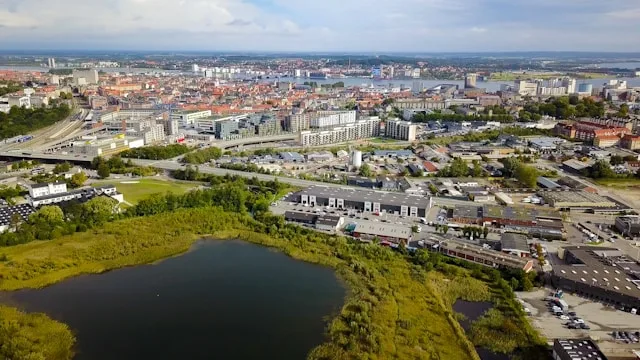
Aalborg is not a city most global hiring leaders associate with the future of maritime propulsion. It should be. MAN Energy Solutions operates its largest Danish production facility and its global lead R&D hub for two-stroke ammonia-fuelled marine engines from here. The first ammonia test engine became operational in late 2023. By early 2026, order backlogs for LNG and dual-fuel engines still stretch 18 to 24 months. The cluster surrounding MAN, a network of 15 to 20 specialised SMEs in machining, controls, casting, and engine retrofit, generates an estimated DKK 8 to 10 billion in annual revenue for the municipality.
Yet the workforce profile this cluster needs in 2026 bears little resemblance to the one it employed five years ago. Pure manufacturing headcount in North Jutland's machinery sector fell 6% year over year through 2024, even as job postings for marine engineers rose 34% in the same period. The market is not shrinking. It is splitting. Traditional mechanical assembly roles are being automated. Chemical process engineering, high-pressure fuel system design, and ammonia combustion expertise are in acute shortage. The unemployment rate for mechanical engineers in the region sits at 1.8%. For senior combustion engineers with ammonia or dual-fuel experience, the effective rate is below 1%.
What follows is a structured analysis of the forces reshaping Aalborg's maritime engineering sector, the employers driving that change, who they need to hire, and why the conventional talent pipeline cannot deliver what the green fuel transition demands. This is a market where capital investment has moved faster than human capital could follow, and the consequences for hiring leaders are now material.
A Cluster in Transition: From Production Town to Engineering Validation Centre
The popular image of Aalborg's maritime and industrial manufacturing sector is one of heavy production: engine blocks, casting, machining lines, quayside logistics. That image is becoming outdated. The trajectory established through 2025 has continued into 2026, and the cluster increasingly resembles an engineering and validation centre rather than a traditional manufacturing hub.
Employment in pure manufacturing roles is projected to decline 5 to 8% by the end of 2026, according to the Confederation of Danish Industry's Future of Manufacturing Report. Engineering and project management roles, by contrast, are projected to grow 12 to 15%. The net employment outlook is stable to moderately positive, with a 2 to 3% overall increase. But the composition of that employment is changing fundamentally.
MAN Energy Solutions' PrimeServ division and its digital monitoring centres now represent a larger share of local headcount than the production lines themselves. Investment is flowing into digital twin capabilities and fuel testing facilities rather than physical plant expansion. Capital expenditure on factory floor growth is constrained by energy costs and zoning limitations. The money is going into R&D infrastructure for the ammonia engine programme and into the service engineering operation that supports Northern European engine upgrades.
The IMO Regulatory Engine Behind Retrofit Demand
This shift is not discretionary. The International Maritime Organization's revised greenhouse gas strategy is creating regulatory pressure that translates directly into retrofit demand. Sulphur Cap enforcement tightened in 2025. EEXI revisions scheduled for 2027 will tighten further. Every vessel owner operating non-compliant engines faces a compliance deadline, and Aalborg is positioning itself as the Northern European service hub for those engine upgrades.
The implication for talent is straightforward: the roles this cluster needs to fill are not the roles it filled a decade ago, and the people qualified to fill them are not sitting in the same talent pools.
The Automation Paradox in North Jutland
The 6% decline in pure manufacturing employment and the 34% rise in marine engineering job postings are not contradictory figures. They describe different populations within the same market. Machining lines are being automated. The technicians who operated them are being made redundant. Simultaneously, the engineers who design ammonia fuel injection systems, manage classification society relationships, and lead complex retrofit projects are in extreme shortage. One category of worker is surplus. The other is nearly impossible to find. Sector-wide retraining programmes cannot bridge this gap without years of friction, because the emerging roles require not just different skills but fundamentally different educational foundations.
This is the core analytical tension of Aalborg's maritime market in 2026: the investment in green fuel technology has not reduced the workforce. It has replaced one kind of worker with another that does not yet exist in sufficient numbers. The firms that understand this distinction are hiring differently. The firms that do not are posting the same job advertisements and wondering why nobody applies.
MAN Energy Solutions and the Cluster It Anchors
MAN Energy Solutions is not merely the largest employer in Aalborg's maritime sector. It is the gravitational centre around which the entire cluster orbits. With an estimated local headcount of 1,450, the company accounts for roughly 35% of the 4,200 to 4,800 FTEs employed across the sector. Its hiring decisions, compensation benchmarks, and strategic priorities set the terms for every other employer in the region.
The Aalborg facility serves three functions simultaneously. It is the primary production site for two-stroke marine engines. It houses the PrimeServ service engineering operation. And it is the global lead site for the ME-LGIP liquid gas injection programme and the ammonia engine development effort that represents the company's most consequential technology bet.
This concentration creates a specific dynamic for talent mapping in the region. When MAN hires aggressively for ammonia fuel systems roles, the entire Tier-2 supplier base feels the pressure. Eltronic, the control systems and automation specialist with approximately 250 employees, competes for many of the same PLC/SCADA engineers. Logimatic, with 180 employees in maritime software and fleet management, competes for the same digital engineering profiles. Vikmar, the specialist machining firm with 80 employees, competes for the same NDT-certified quality professionals.
The result is a market where one employer's hiring surge creates a cascade of vacancies across the supply chain. In a deep talent pool, this would be manageable. In a market where unemployment for mechanical engineers sits at 1.8% and qualified ammonia combustion specialists number in the low dozens nationally, every hire by MAN is effectively a loss for someone else in the cluster.
The Three Roles This Market Cannot Fill
The shortage in Aalborg's maritime engineering sector is not a generalised skills gap. It is concentrated in three specific categories, each with distinct drivers and distinct consequences for the organisations that cannot fill them.
Green Fuel Systems Engineers
The most acute shortage sits in combustion engineering with ammonia fuel experience. These are professionals who combine eight or more years in thermodynamics with safety systems certification in ATEX/IECEx standards and practical experience with high-pressure fuel injection. At senior specialist or manager level, base compensation runs DKK 900,000 to 1,150,000 (€120,800 to €154,400) plus a 10 to 15% bonus, according to IDA salary data for 2024.
At the executive level, a Head of Alternative Fuels R&D or VP Engineering commanding responsibility for global engine development programmes and the IMO regulatory interface earns DKK 2,200,000 to 3,500,000 (€295,300 to €469,800) including long-term incentives, per Korn Ferry and Heidrick & Struggles compensation reviews for the Danish industrial sector.
The problem is not that these roles pay poorly. The problem is that the discipline barely existed five years ago. The number of engineers globally with hands-on ammonia combustion experience in marine two-stroke engines is vanishingly small. LinkedIn Talent Insights data for Denmark's maritime engineering segment in late 2024 estimated a passive-to-active candidate ratio of 4:1 for this category. Typical time-to-fill for a Senior Combustion Engineer with ammonia fuel experience runs 6 to 9 months, compared to 3 to 4 months for a standard mechanical engineering role.
In 2024, according to the Confederation of Danish Industry's recruitment survey, a specialist engineer role in alternative fuels remained open for 11 months at a major supplier in the cluster, forcing the firm to delay an ammonia test programme. The cost of that delay is not measured in recruitment fees. It is measured in lost competitive positioning in a market where first-mover advantage in ammonia engine certification could define the next decade.
Control Systems Engineers with Maritime Classification Experience
The second critical shortage involves control systems engineers who combine PLC/SCADA expertise with maritime classification society experience. These professionals understand both the automation architecture and the regulatory framework that governs how engines are certified for commercial operation.
Competition for this profile has driven signing bonuses to DKK 100,000 to 150,000 (€13,400 to €20,100) above base salary. These premiums are typically paid by firms recruiting from MAN Energy Solutions or Eltronic, creating a circular poaching dynamic within the cluster itself. One firm's gain is literally another firm's departure. The counteroffer dynamics in this market are intense precisely because employers know how few qualified replacements exist.
Senior Project Managers for Retrofit Programmes
The third shortage is in experienced project managers capable of running complex engine retrofit and conversion programmes. These roles require PMP or Prince2 methodology, classification society liaison experience, and the client-facing confidence to manage shipowner relationships. Base compensation at senior specialist level runs DKK 800,000 to 1,000,000 (€107,400 to €134,200).
At director level, a VP Service or Director of PrimeServ Operations carrying P&L responsibility for the aftermarket division commands DKK 2,500,000 to 3,800,000 (€335,600 to €510,100). At this seniority, more than 90% of viable candidates are employed and not actively seeking new roles. Reaching this segment of the talent market requires executive search outreach, not job advertising.
The retrofit demand driven by IMO regulations means these project management roles will only multiply. Every shipowner facing a compliance deadline needs someone to manage the conversion. Every engine OEM needs someone to sell, scope, and deliver it.
The University Pipeline Paradox
Aalborg University is one of this cluster's greatest assets and one of its most misunderstood. The university's Department of Materials and Production and its Maritime Research Group produce approximately 450 engineering graduates annually with relevance to the maritime sector. The problem-based learning model is well aligned with industry needs. Per capita, the output is among the highest in Europe for maritime-relevant engineering talent.
And yet 68% of maritime firms in the region report difficulty finding candidates with sufficient hands-on engine experience, according to the Confederation of Danish Industry's employer survey for 2024. How can both things be true simultaneously?
The answer lies in the gap between graduation and utility. A graduate with strong theoretical grounding in thermodynamics and materials science is not the same as an engineer with practical experience assembling, testing, and certifying large-bore two-stroke engines. The industry requires experience that can only be gained through years of work on physical engines. No classroom replicates it. No simulation fully substitutes for it.
This means that expanding university intake, while necessary for the long-term pipeline, does not solve the immediate hiring crisis. The experience gap that makes executive recruiting so difficult in this market is not a failure of education. It is a function of time. Ammonia combustion engineering as a practical discipline is too new for a deep bench of experienced practitioners to exist. You cannot recruit experience that has not yet had time to accumulate.
The internship and apprenticeship pathways that might accelerate this transition are underdeveloped relative to the scale of need. Industry feedback consistently identifies this as a failure point. The graduates are there. The bridge between graduation and operational readiness is not.
Competing for Talent Against [Copenhagen](/copenhagen-denmark-executive-search), Hamburg, and Singapore
Aalborg does not recruit in isolation. Every senior hire in this market involves a calculation by the candidate about where they could go instead. The three primary competitor markets each offer distinct attractions and impose distinct costs.
Copenhagen draws talent through headquarters functions. MAN Energy Solutions' global headquarters sits in the capital, alongside Maersk and DSV. Absolute salaries carry a 10 to 15% premium over equivalent Aalborg roles. International school infrastructure is better developed. For a mid-career engineer considering a family, these factors matter. But Copenhagen's housing costs run 35 to 40% higher than Aalborg's, according to Statistics Denmark's regional price data. The net attractiveness calculation is closer than the gross salary gap suggests.
Hamburg offers a larger maritime ecosystem, proximity to the SMM trade fair, access to shipyards, and higher gross salaries for senior engineers in the range of €140,000 to €180,000 compared to €120,000 to €150,000 in Aalborg. German firms are actively recruiting Danish engineers for green fuel projects. The international mobility calculation is straightforward for a Danish engineer considering Hamburg: the salary is higher, the ecosystem is deeper, and the commute is manageable. German tax rates and language barriers provide some friction, but not enough to neutralise the pull.
Singapore operates at a different level. Aalborg primarily loses talent to Singapore at VP and Director level, where regional leadership roles for major shipowners and classification societies offer both tax advantages and year-round marine operational exposure. This is not a mass-market competitor. It is a targeted drain on the most senior and most experienced segment of the talent pool.
Aalborg's retention advantage is specific and real: access to the ammonia test facilities that do not exist anywhere else. An engineer working on the global lead programme for ammonia two-stroke engines is doing work that cannot be replicated in Copenhagen, Hamburg, or Singapore. That exclusivity is the strongest retention tool the cluster possesses. But it only works for professionals who value the R&D frontier over compensation maximisation. When it comes to negotiating offers that compete across borders, Aalborg employers must understand precisely what their unique assets are worth to each candidate.
Energy Costs and the Structural Threat to Expansion
The talent challenges in Aalborg's maritime cluster do not exist in a vacuum. They sit atop a structural cost problem that constrains the cluster's ability to grow even when demand and order books would otherwise support expansion.
Danish industrial electricity prices averaged DKK 1.95 per kWh in 2024, among the highest in Europe. For an engine testing operation running high-pressure ammonia combustion cycles, energy is not a marginal cost. It is a primary operating expense. MAN Energy Solutions has publicly stated that expansion of its ammonia test centre is contingent on securing dedicated renewable energy contracts at industrial tariffs below DKK 1.50 per kWh, as reported by Energinet market data and regional media.
This creates a ceiling on the cluster's physical growth. Even as R&D demand intensifies and order backlogs extend, the capital investment required to expand testing capacity faces an energy cost barrier that policy has not yet resolved. The Nordjyllandsværket power plant connection and potential CO2 capture infrastructure offer long-term promise, but neither delivers cost relief in 2026.
The talent implication is indirect but real. If the test centre cannot expand, the number of ammonia combustion engineering roles in Aalborg remains constrained. The pipeline of experienced professionals grows more slowly. And the gap between what the market needs and what the market can train widens. Denmark's working-age population is projected to shrink 3% by 2030, according to the Ministry of Higher Education and Science. Youth interest in marine and mechanical engineering lags well behind software and IT. Every structural barrier to expansion compounds the demographic headwind.
Meanwhile, pressure to near-shore casting and forging from Asia is increasing. Danish foundry capacity is insufficient to absorb the demand. Tasso in Sorø and similar facilities face their own workforce constraints. The supply chain bottleneck creates another layer of hiring pressure for the Aalborg cluster, because even solving the engineering talent shortage does not resolve the manufacturing input constraint.
What This Means for Hiring Leaders in Maritime Engineering
The hiring challenge in Aalborg's maritime cluster is not a standard recruitment problem with a standard solution. It is a market where the skills in highest demand have existed as a practical discipline for fewer than five years. Where the dominant employer's hiring decisions ripple through 20 supplier firms. Where the competitor set for any senior candidate spans three countries and two continents. And where structural cost constraints limit the cluster's ability to grow the roles that would train the next generation.
For organisations filling senior leadership and specialist roles in this sector, three realities define the search:
First, the candidate you need is almost certainly employed. At specialist level, the passive-to-active ratio is 4:1. At VP and Director level, more than 90% of viable candidates are not looking. Job postings and inbound applications will reach, at most, the thinnest slice of the available talent. The remaining 80% or more must be identified and approached directly through methods designed for passive candidate markets.
Second, speed matters more than it does in most markets. A search that takes six months in a market where signing bonuses reach DKK 150,000 and competitors are actively poaching is a search where the best candidates are removed from the pool before your shortlist is assembled. The regulatory calendar creates additional urgency. IMO compliance deadlines are not negotiable. The retrofit projects that depend on the person you are trying to hire have fixed delivery dates.
Third, the proposition must be specific. A higher salary alone does not move a senior combustion engineer away from the only ammonia test facility in the world. Nor does it move a VP of Service Engineering away from a P&L they have built over years. The offer must address what the candidate values, which in this market often means R&D access, programme ownership, or international scope rather than incremental compensation.
KiTalent works with organisations in advanced technology and engineering sectors to identify and deliver interview-ready candidates for exactly these searches. Using AI-enhanced talent mapping to reach the passive professionals who do not appear on any job board, and a pay-per-interview model that aligns cost with results rather than upfront commitment, the approach is built for markets where conventional methods consistently fail. A 96% one-year retention rate across 1,450 executive placements reflects a process designed to match candidates to roles they will stay in.
For organisations competing for ammonia fuel systems engineers, senior retrofit project managers, or manufacturing leadership in Northern Europe's most specialised maritime engineering cluster, start a conversation with our executive search team about how we approach this market and what a 7-to-10-day shortlist looks like in practice.
Frequently Asked Questions
What is the current size of Aalborg's maritime engineering talent market?
As of 2026, Aalborg's advanced maritime engineering and large-scale engine sector directly employs approximately 4,200 to 4,800 FTEs across manufacturing, R&D, and service engineering. MAN Energy Solutions is the dominant employer, accounting for roughly 35% of this total. The sector generates an estimated DKK 8 to 10 billion in annual revenue. Employment composition is shifting, with pure manufacturing roles declining while engineering, project management, and service roles grow at 12 to 15% annually.
Why is it so difficult to hire ammonia fuel systems engineers in Denmark?
Ammonia combustion engineering for marine two-stroke engines is a discipline that barely existed five years ago. The number of professionals globally with hands-on experience is extremely small. Unemployment for mechanical engineers in North Jutland sits at 1.8%, and for ammonia-specific specialists it is below 1%. The passive-to-active candidate ratio is estimated at 4:1. Typical time-to-fill runs 6 to 9 months, compared to 3 to 4 months for conventional mechanical engineering roles. This is not a recruitment problem that job advertising can solve.
How does Aalborg compete with Copenhagen and Hamburg for maritime talent?
Aalborg's primary retention advantage is access to R&D programmes that do not exist elsewhere, particularly the global lead site for ammonia two-stroke engine development. Copenhagen offers a 10 to 15% salary premium and better international infrastructure but costs 35 to 40% more in housing. Hamburg offers higher gross salaries and a larger maritime ecosystem but imposes German tax rates and language requirements. Singapore draws VP and Director-level talent through tax advantages and regional leadership exposure. Each competitor attracts a different segment of the talent pool.
What do senior maritime engineering roles pay in Aalborg?
Compensation varies considerably by function and seniority. A Senior Specialist in ammonia fuel systems earns DKK 900,000 to 1,150,000 base plus 10 to 15% bonus. A VP Engineering or Head of Alternative Fuels R&D commands DKK 2,200,000 to 3,500,000 including long-term incentives. A Plant Director or VP Manufacturing overseeing 500 or more employees earns DKK 2,800,000 to 4,000,000 or more. KiTalent provides detailed compensation benchmarking for industrial and engineering roles as part of every executive search engagement.
How can organisations fill critical maritime engineering roles faster?
The key is reaching passive candidates before competitors do. In Aalborg's maritime cluster, more than 80% of qualified specialists and over 90% of senior leaders are not actively job seeking. Traditional job postings reach a fraction of the available pool. Direct headhunting methods that use AI-powered talent mapping to identify and approach employed professionals produce shortlists in 7 to 10 days rather than months. In a market where signing bonuses have reached DKK 150,000 and regulatory deadlines drive fixed project timelines, the cost of a slow search extends well beyond the recruitment budget.
What regulatory changes are driving hiring demand in Aalborg's maritime sector?
The International Maritime Organization's revised GHG strategy, including tightened Sulphur Cap enforcement from 2025 and EEXI revisions scheduled for 2027, is the primary regulatory driver. These requirements force vessel owners to retrofit or replace non-compliant engines, creating sustained demand for combustion engineers, retrofit project managers, and service engineering leadership. The lack of global agreement on ammonia safety standards adds complexity, intermittently freezing R&D hiring until certification pathways clarify. Regulatory uncertainty creates boom-bust cycles that make long-term workforce planning exceptionally difficult.