Batam Maritime Logistics Hiring: Why Investment Is Pouring In and Senior Talent Is Walking Out
Batam's container throughput grew 8.3% in 2024, nearly double the Indonesian national port average. The Batu Ampar Port expansion is adding 400 metres of quay wall. Electronics manufacturers are expanding production lines. E-commerce fulfilment centres are relocating from Jakarta. Warehousing vacancy rates in the Free Trade Zone have tightened from 18% in 2021 to 12% by late 2024. By every capital investment metric, Batam's maritime logistics and port operations sector is accelerating.
Yet the senior professionals required to run these operations are leaving. Not in a trickle. In a pattern so consistent it has become the defining constraint on the zone's growth. Customs compliance managers with Free Trade Zone expertise take six to nine months to replace. Port operations managers recruited from Jakarta experience 25% first-year attrition, most of them crossing the 45-minute ferry to Singapore. Supply chain directors at the VP level are 85% to 90% passive, and LinkedIn InMail response rates for this population sit below 15%. The investment is arriving. The people to operate it are not staying.
What follows is a ground-level analysis of Batam's maritime logistics talent market as it stands in 2026: what is driving the disconnect between infrastructure investment and workforce retention, where the most acute hiring gaps sit, what compensation really looks like at every level, and what organisations operating in this zone must do differently if they intend to build leadership teams that last.
The Infrastructure Is Growing Faster Than the Workforce Behind It
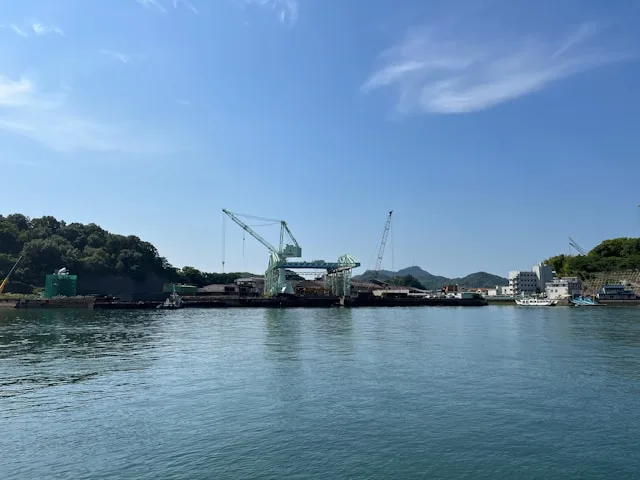
Batam ranks third nationally in container throughput behind Tanjung Priok and Tanjung Perak, handling approximately 1.2 million TEU annually as of early 2025. Batu Ampar Port, the primary maritime gateway operated by Pelindo, processed roughly 850,000 TEU in 2024 at 78% capacity utilisation. The Phase 1 expansion, scheduled for completion in late 2025, lifts theoretical capacity to 1.5 million TEU. Projected 2026 throughput of 1.35 million TEU represents 12.5% growth over the prior year.
These are real numbers attached to real concrete. But they obscure a critical dependency. Batu Ampar's draft limitation of 10.5 metres prevents direct calls by post-Panamax vessels. Every oversized ship must lighter or tranship through Singapore. The dredging required to reach 12 metres remains unfunded, with BP Batam seeking Public-Private Partnership financing of IDR 2.1 trillion (approximately USD 135 million). Until that investment materialises, Batam's logistics model remains structurally coupled to Singapore's Tuas Megaport, and the cost structure of that coupling is borne entirely by Batam-based operators.
The hinterland tells the same story. The primary corridor connecting Batu Ampar Port to the Batamindo and Kabil industrial zones runs along Jalan Hang Nadim: a two-lane, mixed-traffic road with 42 at-grade intersections. Average truck turnaround for a 25-kilometre round trip is 3.5 hours. The Batam Outer Ring Road Phase 2, intended to provide dedicated freight access, stood at just 35% completion as of January 2025 against a target that had already passed. No rail network exists on the island.
What this means for hiring leaders is specific. Every senior logistics role in Batam carries an implicit requirement: the ability to manage high-volume operations through infrastructure that has not caught up with demand. That is not a generic management skill. It is an operational specialisation that narrows the candidate pool before a single interview is conducted.
What the Free Trade Zone Actually Does to the Talent Market
Batam's FTZ status, governed under Government Regulation No. 46/2007 and administered by BP Batam, is the institutional engine behind the zone's attractiveness to manufacturers. Tax incentives, customs facilitation, and exemptions from certain national labour standards draw companies like Flex, Sanmina, and Schneider Electric. Sixty percent of port throughput links directly to electronics export processing and ship-to-ship transfers for oil and gas.
But the FTZ creates a paradox that the research data makes visible. The same incentive structure that attracts manufacturing capital actively undermines the retention of the senior talent required to run it.
The Regulatory Complexity Premium
FTZ operations require dual regulatory fluency. Customs and trade compliance managers must hold working expertise in Indonesia's FTZ regulations and in ASEAN-wide origin certification under the ATIGA framework. They must also manage the interface with Singapore Customs, where documentation harmonisation failures between the two jurisdictions remain the primary source of dwell time overruns. Average import container dwell time in Batam sits at 4.2 days against a target of 3.0. In Singapore, the equivalent figure is 1.8 days. That gap is not an infrastructure problem. It is a human-capability problem, and fewer than 200 professionals in the region hold the specific combination of Batam FTZ operational experience and cross-border certification required.
The Omnibus Law Overlay
The integration of Batam's FTZ status with the Omnibus Law on Job Creation is adding a further layer of uncertainty. The 2024 revision introduces new local content (TKDN) requirements for logistics service providers, potentially increasing costs by 5 to 7% for foreign-owned freight forwarders. For hiring leaders, this translates into a restructuring wave: logistics contracts will shift toward joint ventures with local entities by 2026, and the executives capable of managing those transitions must understand both international supply chain operations and Indonesian commercial law. That is not a profile that appears on job boards.
Organisations attempting to fill these roles through conventional channels are discovering what the hidden 80% of passive talent looks like in practice. The candidates who hold both regulatory fluencies are employed, compensated well enough to stay, and not searching.
Singapore Is Not a Competitor. It Is a Drain.
The most important number in Batam's talent market is not a salary figure. It is 45 minutes. That is the ferry crossing time between Batam and Singapore.
For every executive and senior specialist role in Batam's logistics sector, Singapore is the primary destination for departing talent. The compensation differential is 2.5 to 3 times for equivalent roles. A customs and trade compliance VP earning IDR 45 to 65 million per month in Batam (USD 2,900 to 4,200) faces an equivalent Singapore-based role paying SGD 12,000 to 18,000 per month. That is not a gap employers can close with a retention bonus.
But compensation is only part of the calculation. Singapore offers clearer regulatory frameworks, English-language business environments, international schooling, and regional or global career trajectories. Batam offers Indonesia-only scope. The typical pattern, according to cross-border talent flow data reported by JobStreet, involves Batam-based supply chain directors commuting weekly from Singapore or relocating entirely after 18 to 24 months. The 25% first-year attrition rate among port operations managers recruited from outside Batam reflects the same dynamic: candidates accept the role, assess the living conditions, and leave.
Johor Bahru as the Emerging Secondary Drain
The competition is not limited to Singapore. Johor Port and the Port of Tanjung Pelepas in Malaysia now compete for mid-level logistics managers, offering 40 to 50% salary premiums over Batam with lower cost of living than Singapore. Malaysia's work permit regime for Indonesian nationals is materially easier than Singapore's Employment Pass criteria. For Batam professionals with five to ten years of experience, Johor Bahru has become the path of least resistance out.
This multi-directional talent leakage means that executive search methods designed for markets where candidates are geographically stable simply do not function in Batam. The candidate you identify today may be in a different country in six months. Speed and precision in the search process are not aspirational qualities here. They are operational requirements.
The Original Synthesis: Capital Moved, but Human Capital Cannot Follow Without Somewhere to Live
Here is the analytical claim that the aggregate data supports but that no single data point states directly. Batam's talent retention crisis is not primarily a compensation problem. It is an infrastructure-of-life problem. The zone invested in port capacity, manufacturing facilities, and customs systems. It did not invest in the residential, educational, and healthcare infrastructure required to retain the senior professionals who run those systems.
The evidence is embedded in the compensation data itself. At the director and VP level, 60% of packages include Singapore-based medical insurance and international school fee coverage of USD 20,000 to 30,000 per child per year. Housing allowances of IDR 5 to 8 million per month are standard for senior supply chain managers, reflecting what the data describes as "limited expat-quality housing stock." These are not perks. They are compensatory mechanisms for infrastructure that does not exist on the island.
The consequence is that every senior hire in Batam carries a hidden cost structure. The employer is not just paying for the role. The employer is paying for the candidate's entire quality-of-life gap relative to Singapore or Jakarta. And even with those payments, candidates leave. The 30 to 40% relocation premiums required to bring port operations managers from Jakarta or Surabaya still produce 25% first-year attrition.
No amount of additional port capacity will solve this. Batam is building an industrial economy on an island that has not built the residential and social infrastructure to support the management class that economy requires. Until that changes, every senior search in this market will carry a structural disadvantage that pure compensation cannot offset.
Compensation Reality: What Roles Actually Pay Across Every Level
Understanding what Batam logistics roles command is essential for any organisation benchmarking an offer. The figures below reflect 2024 and early 2025 market benchmarking data from multiple salary surveys.
Customs and Trade Compliance
Senior specialists and managers with 8 to 12 years of experience earn IDR 18 to 28 million per month (USD 1,150 to 1,800), with annual bonuses of two to three months. This carries a 15 to 20% premium over Jakarta for the same title, driven entirely by the scarcity of Batam FTZ specialisation. At the executive and VP level with regional oversight, compensation reaches IDR 45 to 65 million per month (USD 2,900 to 4,200) plus stock options in multinational contexts. That VP figure represents a 40% discount to equivalent Singapore-based roles, and that discount is the primary leakage point.
Supply Chain and Logistics Operations
Senior site or country managers earn IDR 25 to 40 million per month, with housing allowances adding IDR 5 to 8 million. Directors and VPs with ASEAN regional remit command IDR 60 to 90 million per month (USD 3,800 to 5,800). At this level, Singapore-based medical insurance and international school fees are standard components, not negotiable extras. Understanding how to negotiate these packages requires knowing that the non-cash components often exceed 30% of total remuneration.
Port and Terminal Operations
Operations managers at Pelindo or private terminals earn IDR 20 to 32 million per month, with private oil and gas terminal operators paying a 25% premium. Terminal managers and country heads reach IDR 50 to 75 million per month. These roles command retention bonuses equivalent to six months' salary, reflecting the extremely limited pool of Indonesian nationals with deepwater port project experience.
The compensation picture reinforces the core tension. Batam pays well by Indonesian standards. It does not pay well enough to compete with the markets that are 45 minutes or two hours away.
The Skills Shift That Is Making a Hard Market Harder
By 2026, 40% of warehouse operations in Batam are projected to implement Warehouse Management System integration with Indonesia's CEISA 4.0 customs IT platform, up from 25% in 2024. The National Logistics Ecosystem programme, fully operational in Batam since 2023, has already reduced physical inspection rates from 35% to 18%.
This digital transformation is not reducing headcount. It is replacing one category of worker with another that barely exists yet. Demand is shifting from manual logistics coordinators to supply chain analysts and IT-logistics hybrid professionals who can operate at the intersection of AI-driven systems and physical supply chain operations. Batam Polytechnic, the primary vocational feeder for port operations and logistics technology programmes, produces graduates with technical foundations, but the mid-career professionals who can bridge legacy operations and digital systems are not being produced by any institution. They are formed by experience, and the experienced ones are already employed.
The practical implication: organisations planning warehouse automation or customs digitalisation projects in the FTZ face a double hiring challenge. They need the traditional FTZ-experienced operations leader and a digitally fluent systems integrator. In many cases, they need both capabilities in the same person. That profile is exceptionally rare in this market.
For firms that have encountered the cost of a prolonged vacancy or a mismatched senior hire, Batam's market offers a concentrated version of that risk. The wrong hire at the customs compliance or terminal operations level does not just cost salary. It costs dwell time, regulatory exposure, and client relationships that took years to build.
What This Market Demands From the Search Process
The data points in this analysis converge on a single operational conclusion. Conventional hiring methods do not work in Batam's senior logistics market.
At the supply chain director and VP level, 85 to 90% of qualified candidates are passive. Average tenure in current roles is 4.2 years. Among licensed customs brokers with FTZ experience, 80% are passive, maintaining exclusive relationships with two or three manufacturers and never entering the open market. Port operations managers with ISPS Code and IMDG certification are 75% passive, moving only when infrastructure project announcements create new roles worth considering.
Job postings reach the active 10 to 20%. In a market where the senior population is this small and this passive, that is not a viable strategy. The difference between posting a role and directly identifying the specific professionals who hold the required certifications is the difference between a six-month vacancy and a filled position.
The geographic complexity compounds the challenge. The candidates you need may currently be in Batam, Singapore, Johor Bahru, Jakarta, or Surabaya. They may hold Indonesian, Singaporean, or Malaysian work documentation. They may require international relocation support or cross-border commuting arrangements. A search that only covers one geography misses most of the viable population.
KiTalent's approach to markets like Batam's logistics sector uses AI-powered talent mapping to identify and engage the passive professionals who hold specific regulatory certifications, FTZ operational experience, and the bilingual fluency this market demands. With interview-ready candidates delivered within 7 to 10 days and a pay-per-interview model that eliminates upfront retainer risk, the method is built for markets where speed determines whether you meet the best candidate or read about them joining a competitor.
The 96% one-year retention rate for KiTalent placements is particularly relevant in a market where first-year attrition runs at 25% for relocated hires. Getting the hire right the first time is not a luxury in Batam. It is the only way to avoid repeating the same search nine months later.
For organisations competing for customs compliance leadership, port operations management, or supply chain director talent in Batam's Free Trade Zone, where the qualified population numbers in the low hundreds and the best candidates are invisible to conventional search, start a conversation with our executive search team about how we approach this market.
Frequently Asked Questions
What is the average time to fill a senior logistics role in Batam?
Managerial-level positions in Batam's maritime logistics and FTZ operations sector average over eight months to fill as of late 2024. Specialist roles requiring dual expertise in Indonesia's Free Trade Zone regulations and ASEAN origin certification (Form D under ATIGA) typically run six to nine months. The extended timelines reflect a passive candidate market where 80 to 90% of qualified professionals at senior levels are not actively searching. Firms using direct headhunting methods rather than job postings consistently reduce these timelines because they reach candidates who never enter the open market.
Why is it so hard to retain senior talent in Batam?
The primary retention challenge is not compensation alone but the gap in residential, educational, and healthcare infrastructure compared to competing markets. Singapore is 45 minutes away by ferry and pays 2.5 to 3 times more for equivalent roles. Johor Bahru offers 40 to 50% salary premiums with easier work permits for Indonesian nationals. At the director level, 60% of Batam compensation packages include Singapore-based medical insurance and international school fees, reflecting the island's infrastructure shortfall. Even with these supplements, first-year attrition among relocated senior hires reaches 25%.
What does a Supply Chain Director earn in Batam's Free Trade Zone?
A Supply Chain Director or VP with ASEAN regional remit earns IDR 60 to 90 million per month (approximately USD 3,800 to 5,800). Total compensation typically includes housing allowances of IDR 5 to 8 million per month, Singapore-based medical insurance, and international school fee coverage of USD 20,000 to 30,000 per child annually. These non-cash components can exceed 30% of total remuneration. The package represents a material discount to equivalent Singapore-based roles, which is the primary driver of talent movement out of the zone.
How does Batam's Free Trade Zone status affect logistics hiring?
Batam's FTZ status under BP Batam creates acute demand for professionals with specific regulatory expertise unavailable in standard Indonesian logistics markets. Customs compliance managers must understand both FTZ regulations (PP 46/2007) and cross-border documentation harmonisation with Singapore Customs. The 2024 Omnibus Law revisions add new local content requirements for logistics service providers, requiring executives who understand international supply chain operations and Indonesian joint venture structuring. Fewer than 200 professionals in the region hold this combined profile, making proactive talent pipeline development essential for any organisation operating in the zone.
What infrastructure changes will affect Batam logistics hiring in 2026?
The Batu Ampar Port expansion adds capacity to 1.5 million TEU, but the critical dredging to 12 metres depth remains unfunded at approximately USD 135 million. Without it, Batam stays dependent on Singapore transhipment. The Batam Outer Ring Road Phase 2 for dedicated freight access was only 35% complete against its original deadline. On the digital side, 40% of warehouse operations are expected to integrate with Indonesia's CEISA 4.0 customs IT system by 2026, shifting hiring demand toward supply chain analysts and IT-logistics hybrid roles that barely existed in this market three years ago.
Can KiTalent help with executive hiring in Batam's logistics sector?
KiTalent specialises in identifying passive senior talent in markets where conventional search methods fail. In Batam's logistics sector, where 80 to 90% of qualified candidates at the management and director level are not actively job-seeking, KiTalent's AI-enhanced talent mapping identifies professionals holding specific FTZ certifications, ISPS Code qualifications, and cross-border operational experience. The firm delivers interview-ready candidates within 7 to 10 days under a pay-per-interview model with no upfront retainer, and maintains a 96% one-year retention rate across 1,450 completed placements globally.