Batam's Shipbuilding Boom Has a Workforce It Cannot Staff: Why Full Order Books Are Not Translating into Production
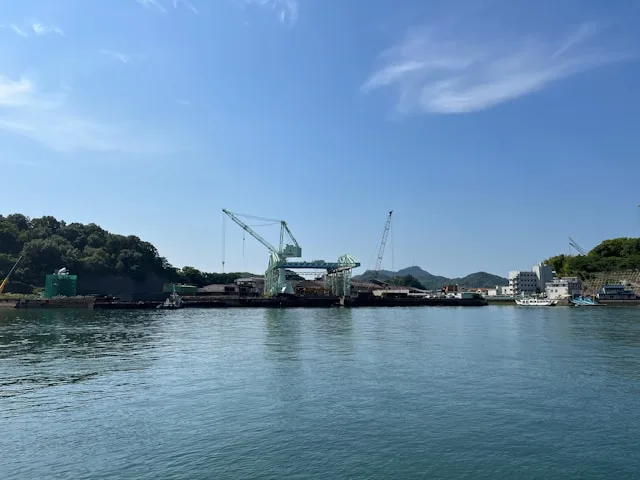
Batam's fabrication yards entered 2026 with order visibility that most industrial clusters would envy. Three major FPSO conversion projects worth approximately $450 million are active across Tanjung Uncang and Kabil. Drydock utilisation rates climbed to 78% through late 2024, up from 65% a year earlier. New investment commitments of $380 million flowed into shipyard expansion and wind farm component facilities through 2024 and 2025. By every capital metric, the island's shipbuilding and offshore fabrication sector is growing.
Yet 40% of IPERINDO member yards project production delays in 2026. Not because of missing contracts. Not because of insufficient steel. Because they cannot find the people to do the work. The gap between capital deployed and human capital available has become the defining constraint of Batam's industrial economy. Certified welders holding 6G and ASME Section IX qualifications, FPSO commissioning managers, and naval architects with hydrodynamic modelling capability are functionally absent from the open market. When they do move, they move between the same thirty-five yards at premiums that compress margins on contracts already signed.
What follows is a ground-level analysis of how Batam's shipbuilding and offshore fabrication sector arrived at this paradox, where the bottlenecks are tightest, what the compensation data reveals about the market's internal dynamics, and what organisations operating in this cluster need to understand before their next critical hire.
The Market in 2026: Recovery Built on Thin Foundations
Batam's offshore fabrication sector employs between 35,000 and 40,000 workers directly across 35 active yards and fabrication facilities. An estimated 15,000 additional workers support the sector through supplier networks. The revenue base remains heavily weighted toward oil and gas, with 60 to 70% of fabrication revenue historically derived from oilfield services and FPSO conversion work. That dependency has not disappeared, but it has begun to diversify.
Two yards, PT Batamec and PT North Sea Works, secured fabrication contracts for offshore wind turbine foundation components destined for projects in Vietnam and Taiwan. These contracts represent less than 10% of total yard revenue, but they signal a directional shift that will reshape hiring requirements over the next three to five years. The technology and engineering skills required for wind foundation fabrication overlap with but are not identical to those required for traditional oil and gas platform construction. Jacket foundation welding, transition piece fit-out, and monopile corrosion protection systems require retraining investments that most yards have not yet made.
FPSO Conversion and the Gas Sector Pivot
The immediate revenue driver remains FPSO work. Indonesia's Masela Block and other deep-water gas developments have positioned Batam as the preferred fabrication hub over Singapore, primarily on cost. Labour rates run at 30 to 40% of Singapore equivalents, and yard operating costs benefit from Batam's free trade zone status. This cost advantage, however, is eroding. Industrial electricity tariffs in Batam run between IDR 1,450 and 1,600 per kilowatt-hour, compared to IDR 1,200 on Java, reflecting diesel generator dependency. Yards maintain expensive backup power systems that add 3 to 5% to operating costs.
Regulatory Retrofit Demand
Implementation of IMO 2025 Carbon Intensity Indicator compliance deadlines is projected to drive 15 to 20% of 2026 repair yard revenue. Engine retrofits and hull optimisation work represent a growing share of yard activity, particularly for Singapore-flagged vessels seeking cost arbitrage by crossing the strait for maintenance. This regulatory-driven demand is structurally durable. It does not depend on commodity prices. But it requires inspection and engineering talent that the same commodity-dependent yards have historically underinvested in developing.
The trajectory is clear enough: Batam has the contracts, the cost position, and the geographic advantage. What it lacks is the workforce to convert those advantages into delivered projects. That workforce gap is not a temporary recruitment challenge. It is a systemic failure of the pipeline that produces skilled industrial workers.
Fifteen Thousand Graduates and Nowhere Near Enough Welders
Indonesia's Ministry of Manpower reports 15,000 annual graduates from vocational maritime programmes nationally. On paper, this suggests adequate labour supply for an industry employing 35,000 to 40,000 direct workers on a single island. The reality is that this number is almost meaningless for Batam's actual hiring needs.
The disconnect is not about quantity. It is about what those graduates can do when they arrive at a yard gate.
Vocational programmes across Indonesia's STM and SMK Kelautan system focus on basic 3G welding and conventional shipbuilding techniques. Batam's fabrication yards require 6G pipe welding certification, ASME Section IX compliance, AWS D1.1 structural welding credentials, and FPSO-specific safety protocol training. The gap between curriculum output and industry requirement is so wide that the traditional approach of posting roles and waiting for qualified applicants produces almost no viable candidates for the positions that matter most.
Polytechnic of Batam produces approximately 400 graduates annually from its Naval Architecture and Welding Engineering programmes. Roughly 30% enter the shipbuilding sector. That yields approximately 120 sector-ready graduates per year entering a market that, according to IPERINDO's own projections, needs to add certified specialists at several multiples of that rate to sustain current production schedules.
This is the analytical core of Batam's hiring crisis, and it is frequently misunderstood by observers who look at aggregate employment numbers. The shortage is not a labour shortage. It is a certification shortage. You cannot recruit a qualification that the education system does not produce in sufficient volume. Policy responses that focus on increasing the number of maritime vocational graduates are addressing a problem that does not exist while ignoring the one that does: certification standardisation and advanced technical training capacity.
The consequence for hiring leaders is stark. Every certified welder and every qualified inspector currently working in Batam is already employed. The only way to acquire one is to take them from someone else. And the market has been operating on exactly that basis for years.
The Poaching Economy: How Batam's Yards Staff Their Projects
When external recruitment fails, internal market competition fills the vacuum. Batam's fabrication sector now operates what can accurately be described as a poaching economy for its most critical technical roles.
According to IPERINDO's Workforce Stability Survey, annual turnover among certified welding inspectors runs between 25% and 30%. This is not attrition to retirement or career change. It is lateral movement between yards, driven almost entirely by compensation escalation. Employers recruit welding supervisors holding ASME Section IX certifications from competitors within Batam rather than investing in the two-to-three-year development cycle required to certify entry-level workers.
A Market Where the Same Talent Circulates at Rising Cost
According to industry reporting cited in the Hays Indonesia Salary Guide 2025, one prominent yard recruited an FPSO Hook-Up Manager from a competitor in the third quarter of 2024, offering a compensation package of IDR 65 million per month plus housing allowance. This represented a 60% increase over the candidate's previous remuneration. A retention-driven counteroffer from the losing employer failed to retain the individual.
The implications extend beyond a single hire. When a critical project manager departs mid-programme, the cost is not limited to the recruitment expense. It includes schedule slippage, knowledge loss, and the risk of rework on integration sequences where continuity of supervision is essential. For FPSO topsides hook-up and commissioning work, replacing a manager mid-project can add weeks to delivery timelines.
The Inspector Vacancy That Lasted Nearly a Year
According to data compiled in IPERINDO's Labour Market Bulletin, PT Drydocks World Graha maintained an open requisition for a Senior Welding Inspector holding AWS CWI or CSWIP 3.2 certification for eleven months between early 2024 and early 2025. The offered salary of IDR 22 million per month represented a 35% premium above standard Batam rates. The role was ultimately filled not through external recruitment but through internal promotion of a junior inspector combined with certification sponsorship.
Eleven months is not an anomaly. It is the expected duration for critical inspection roles in this market. When unemployment in a specialism is effectively zero, and when 65% of hires require direct recruitment of employed professionals from competitor facilities, the conventional post-and-wait approach is structurally incapable of producing results.
Compensation: What the Numbers Actually Show
Batam's compensation structure reflects the island's unusual position: a deep discount to Singapore, a premium over most domestic Indonesian markets, and sharp internal differentiation between certified and uncertified roles.
Welding and Inspection Track
At the senior specialist level, a QC Inspector with ten or more years of experience and AWS CWI certification commands IDR 18 to 28 million per month in base salary, plus project bonuses. At executive level, a QA/QC Manager with yard-wide responsibility earns IDR 45 to 70 million per month, with total compensation reaching IDR 85 million at major yards including Batamec and Drydocks World.
Project Management Track
Senior Project Engineers on FPSO conversion programmes earn IDR 25 to 35 million per month. At the executive tier, a VP of Projects or Operations Director commands IDR 80 to 120 million monthly. Expatriates or Singapore cross-border commuters holding permanent residency across the strait command significantly higher packages, with SGD 12,000 to 18,000 per month being the expected range for senior operational leaders.
Naval Architecture and Marine Engineering
A Lead Naval Architect earns IDR 30 to 45 million per month. At the Technical Director or Engineering Manager level, compensation ranges from IDR 70 to 100 million monthly.
The compensation gap between Batam and Singapore is not closing. It is, in fact, widening fastest at exactly the seniority levels where the most critical roles sit. A Singapore-based Project Engineer earns SGD 8,000 to 12,000 monthly, representing a 250 to 300% premium over the equivalent Batam role. Batam retains talent against this differential through substantially lower cost of living and the cross-border commuting arrangement that allows Singapore PR holders to live on the island. But for career progression, exposure to international projects, and long-term executive marketability, Singapore remains the stronger proposition. This asymmetry means every senior hire in Batam carries an embedded retention risk that compensation alone cannot eliminate.
The practical implication for organisations benchmarking offers against the market is that headline salary comparisons understate the true cost of acquiring senior talent. Housing allowances, project bonuses, and certification sponsorship packages form a material component of total remuneration, and the firms that exclude these elements from their initial offer consistently lose candidates to competitors who lead with total package transparency.
Infrastructure: The Constraint That Capital Cannot Solve Quickly
Investment has flowed into Batam's yards. Infrastructure has not kept pace. This divergence is the second binding constraint on the sector's growth, and it interacts with the talent shortage in ways that amplify both problems.
BPMA reported $380 million in new shipyard and fabrication investments committed for 2024 and 2025. These include wind farm component facilities in Kabil and expanded fabrication capacity in Tanjung Uncang. The capital assumes capacity expansion. The physical infrastructure suggests production bottlenecks will worsen rather than resolve.
Power grid reliability in industrial zones improved only marginally through 2024. Average monthly outages fell to 4.2 hours from 6.1 hours the prior year. The improvement matters, but the threshold for automated welding operations is 2 hours or below. Every outage above that threshold risks quality defects in continuous welding runs, requiring inspection and potential rework. For a sector already short of inspectors, the cost of rework is denominated not just in materials and time but in the availability of the very people qualified to assess whether the rework meets specification.
Batu Ampar Port container handling productivity averages 22 moves per hour. Singapore handles 35 or more. The productivity gap translates directly into vessel repair delays and demurrage costs that undercut Batam's cost advantage. Industrial land prices in Tanjung Uncang and Sekupang have risen 40% since 2020, constraining small and medium yard expansion and concentrating growth in Kabil's greenfield estate.
The infrastructure gap creates a compounding problem for talent acquisition strategy. Senior operational leaders considering a move to Batam evaluate not only compensation and role scope but also whether the yard they join can actually deliver the projects on its order book. Infrastructure constraints that produce schedule delays and margin compression make the employer proposition harder to sell to the passive candidates who dominate the senior talent pool.
A Predominantly Passive Market and What That Means for Search
For technical leadership and specialised inspection roles, Batam operates as a predominantly passive candidate market. This is not a marginal observation. It is the single most important structural feature of hiring in this cluster.
Among FPSO Commissioning Managers and Hook-Up Superintendents, unemployment is effectively zero. Average tenure at employers is 4.5 years. Active job postings represent only 20% of actual hiring volume. The remaining 80% of placements occur through direct headhunting of employed professionals. Among ASME and AWS Certified Welding Inspectors, active candidates constitute approximately 35% of the available pool. The remaining 65% require direct recruitment from competitor yards or from Singapore-based contractors.
Even in categories with higher active candidate ratios, such as general fabrication foremen and entry-level draftsmen, quality candidates still require targeted recruitment. The 60 to 70% active ratio in these categories does not translate into a reliable job-board pipeline. Application volume may be adequate. Application quality is not.
The cross-border dimension adds complexity. Some of the strongest potential candidates for senior roles in Batam currently work in Singapore's Jurong and Tuas yards, or in Malaysia's Pasir Gudang facilities. Reaching them requires international search capability and an understanding of the specific compensation and lifestyle calculus that governs cross-border mobility in the Riau Islands corridor. A Singapore-based fabrication manager earning SGD 15,000 per month is not going to respond to a Batam job advertisement. That individual must be identified, approached directly, and presented with a proposition that addresses career trajectory, project exposure, and total compensation in a way that makes the move rational.
Batam loses approximately 200 to 300 certified welders annually to Pasir Gudang shipyards in Johor, drawn by ringgit-denominated compensation stability and Malaysia's TVET certification recognition framework, according to Indonesia's Ministry of Manpower overseas placement data. This outflow is not balanced by equivalent inflow. It represents a net drain of the very certifications the sector needs most.
For organisations trying to fill senior roles in this environment, the method matters as much as the offer. A process that reaches only the 20 to 35% of candidates who are actively looking will miss the majority of the qualified market. The firms experiencing prolonged vacancies and failed searches in Batam are, almost without exception, the firms relying on visible, active candidate pools.
What Hiring Leaders in Batam's Fabrication Sector Need to Do Differently
The evidence from this market points to a clear set of requirements for organisations serious about staffing their most critical roles.
First, compensation transparency must extend beyond base salary. The poaching economy that defines Batam's certified workforce operates on total package differentiation. Housing allowances, certification sponsorship, and project completion bonuses are expected by candidates in the upper quartile. Organisations that present headline salary figures and defer discussion of total compensation until late in the process lose candidates to competitors who lead with full package disclosure. Understanding how to structure and negotiate executive offers in this market is not a soft skill. It is a competitive requirement.
Second, the search method must match the market structure. In a market where 65 to 80% of qualified candidates for critical roles are employed and not looking, building a proactive talent pipeline is not a long-term aspiration. It is a present-tense operational necessity. Firms that wait for vacancies to emerge before beginning a search will consistently find themselves eleven months into a recruitment process with no viable candidates.
Third, the infrastructure constraints described in this article are not external background. They are part of the employer proposition. A yard that has invested in private power generation, secured dedicated port access, and resolved logistics bottlenecks is a materially more attractive employer to a senior operations director than one that has not. The infrastructure investment story is, in practice, a talent acquisition story.
KiTalent works with organisations across industrial and manufacturing sectors to identify and deliver interview-ready leadership candidates through AI-enhanced talent mapping and direct headhunting. In markets like Batam, where the candidates who matter most are not visible on any job board and the cost of a vacant senior role is measured in production delays and margin erosion, KiTalent's model delivers qualified candidates within 7 to 10 days on a pay-per-interview basis with no upfront retainer. Across 1,450 or more executive placements, our placed candidates achieve a 96% one-year retention rate.
For organisations competing for FPSO project managers, certified welding inspectors, and operational leaders in Batam's fabrication sector, where every month of vacancy translates directly into schedule slippage and margin compression, start a conversation with our industrial sector search team about how we approach this market.
Frequently Asked Questions
What are the hardest roles to fill in Batam's shipbuilding sector?
The three most acute shortages are in certified offshore welders holding 6G, ASME Section IX, and AWS D1.1 qualifications; FPSO project managers with commissioning and hook-up experience; and naval architects with hydrodynamic analysis and digital hull design capability. Unemployment in FPSO commissioning management is effectively zero, with 80% of placements occurring through direct headhunting rather than job advertising. Welding inspector vacancies routinely persist for six months or longer despite above-market compensation offers.
What does a senior FPSO project manager earn in Batam?
A VP of Projects or Operations Director at a major Batam fabrication yard earns IDR 80 to 120 million per month, equivalent to approximately $5,000 to $7,500 USD. Expatriates and Singapore cross-border commuters command higher packages of SGD 12,000 to 18,000 monthly. Total compensation including housing allowances and project bonuses can exceed these base figures by 20 to 30%. Compensation in Batam runs at roughly 30 to 40% of Singapore levels for equivalent roles, offset by substantially lower living costs.
Why do Batam shipyards struggle to recruit despite offering competitive salaries?
The shortage is not a labour shortage but a certification shortage. Indonesia produces 15,000 maritime vocational graduates annually, but curricula focus on basic welding and conventional shipbuilding. Batam yards require advanced certifications that these programmes do not deliver. The result is near-zero unemployment among certified specialists, meaning every hire requires recruiting an employed professional from a competitor. Infrastructure limitations including power instability and port congestion further reduce the attractiveness of the employer proposition for senior candidates evaluating a move.
How does Batam compete with Singapore for offshore fabrication talent?
Batam cannot match Singapore on compensation, which runs at 250 to 300% of Batam levels for equivalent roles. Batam competes through substantially lower cost of living, cross-border commuting convenience for Singapore PR holders, and the scale of FPSO and offshore fabrication work available. The primary vulnerability is career trajectory: Singapore offers international project exposure and technology transfer opportunities that Batam's domestic-focused yards cannot replicate. Retention risk is embedded in every senior hire as a result.
What is the best way to hire senior technical leaders in Batam's fabrication sector?
Active job postings reach only 20 to 35% of qualified candidates in Batam's most critical role categories. The remaining majority are employed, not actively seeking, and reachable only through direct executive search and headhunting. Successful searches in this market require cross-border reach into Singapore and Malaysian competitor pools, total compensation package transparency from the outset, and speed. KiTalent delivers interview-ready candidates within 7 to 10 days through AI-enhanced talent mapping, operating on a pay-per-interview model with no upfront retainer.
What regulatory changes are affecting Batam's shipbuilding sector in 2026?
Two regulatory developments are reshaping yard activity. IMO 2025 Carbon Intensity Indicator compliance deadlines are driving engine retrofit and hull optimisation demand, projected to account for 15 to 20% of repair yard revenue. Domestically, Indonesia's local content requirements targeting 50% for offshore projects are creating certification bottlenecks, as high-grade steel and specialised components still require importation. Environmental compliance costs from hazardous waste management regulations have increased yard operating costs by 12 to 15%.