Biella's Wool District Is Paying a Fortune for the Skills It Plans to Automate Away

Biella's spinning, dyeing and finishing district entered 2026 spending more than ever to retain craftsmen whose roles it is simultaneously engineering out of existence. The numbers tell a story that resists simple interpretation. Firms across the district offered salary premiums of 20 to 35 percent through 2025 to keep master finishers and senior dyeing technologists in place. In the same period, those same firms committed more than €10 million apiece to AI-driven finishing machinery designed to reduce operator headcount by 40 percent per facility.
This is not a contradiction that will resolve itself neatly. It reflects a deeper miscalculation about how quickly tacit, artisanal knowledge can be codified into automated systems. The assumption behind much of the district's capital expenditure is that finishing expertise built over 30-year apprenticeships can be captured in sensor arrays and machine-learning algorithms within a five-year investment cycle. The retention premiums being paid to the very specialists those systems are meant to replace suggest that assumption is failing.
What follows is an analysis of the forces reshaping Biella's textile district, the employers driving that change, and what senior leaders need to understand before making their next hiring or retention decision in this market. The picture is more fractured than the district's headline export figures suggest. And for the organisations that need to fill technical and leadership roles here, the window of available expertise is closing in two directions at once.
The Two-Speed District: Why Biella's Export Growth Hides a Structural Fracture
Biella province accounts for approximately 60 percent of Italy's national production of superfine wool fabrics. In 2024, textile exports from the district exceeded €1.4 billion, representing roughly 78 percent of total production value. Export growth hit 5.8 percent that year. On the surface, the district looks healthy.
Beneath that figure, the market has split in two.
Vertically Integrated Groups Are Capturing the Growth
The export growth concentrating in Biella is not evenly distributed. It flows disproportionately to the vertically integrated luxury fabric groups: Ermenegildo Zegna Group, Loro Piana (LVMH), Reda, and Vitale Barberis Canonico. These organisations control the full chain from spinning through finishing, and their order books through late 2025 extended four to six months out, driven by resilient demand for traceable Italian wool from luxury fashion houses.
Zegna Group alone employs approximately 2,800 people across spinning, weaving and finishing in the province. Loro Piana maintains around 1,500. Reda, with its cooperative ownership structure, fields roughly 650 employees. Vitale Barberis Canonico, now in its sixth generation of family ownership, operates about 500. These firms are not struggling for revenue.
Independent Tintorie Are Contracting
The traditional network of independent commission dyeworks tells a different story. Third-party processing volumes contracted by an estimated 8 to 12 percent through 2024, even as the district's aggregate export figures climbed. According to survey data from Unione Industriale di Biella, mid-tier tintorie face margin compression from two sides: natural gas prices for industrial users remain 34 percent above 2019 baselines, and EU REACH chemical compliance costs continue to rise.
Vertical integration by major luxury groups has compounded this pressure. LVMH, Kering, and Zegna Group have shifted finishing capacity in-house over the past five years. According to analysis from SMI (Sistema Moda Italia), this reduced third-party commission volumes by an estimated 15 percent since 2019.
Analysts project a further 10 to 12 percent reduction in independent dyeworks through 2026, as smaller operators with fewer than 20 employees exit the market entirely. They simply cannot amortise environmental compliance costs at that scale. What emerges is a district where the headline numbers look strong and the substrate is eroding. For anyone hiring into this market, the question of which Biella you are recruiting for matters enormously.
The Automation Paradox: Why Capital and Labour Are Moving in Opposite Directions
The most important dynamic in Biella's textile sector right now is not a shortage. It is a temporal mismatch between two investment strategies being pursued simultaneously by the same organisations.
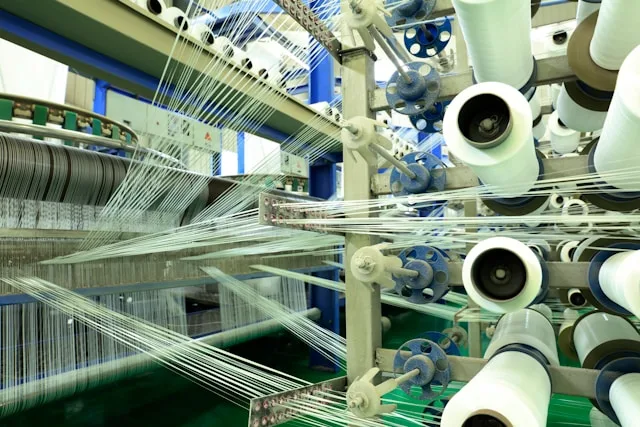
On one side, integrated groups are building what McKinsey has described as "dark finishing" facilities. These are highly automated plants requiring 40 percent fewer operatives but 300 percent higher capital intensity per unit of output. The trajectory is clear: fewer workers, higher skill ceilings, more technology.
On the other side, those same groups are paying 20 to 30 percent salary premiums to retain the master finishers and senior dyeing technologists whose expertise the new facilities are supposed to replicate. According to industry reporting in Milano Finanza, Reda poached a finishing technologist with 15 years of experience in compacting and decatizing from a competitor in Valle Mosso in early 2024, offering a package 35 percent above the market median. This is not the behaviour of an industry that believes its automation timeline is on track.
Here is the synthesis that the capital expenditure figures alone do not reveal: automation in high-complexity wool finishing has not replaced artisanal knowledge. It has created a new, hybrid category of expertise that is harder to source than either the traditional artisan or the pure automation engineer. The firms investing most heavily in automated finishing lines are discovering that the systems require human calibration by specialists who understand both the machinery and the fibre behaviour. Those specialists do not yet exist in meaningful numbers because the training pathway combines two disciplines that have historically been taught in entirely separate institutions.
This means the shortage is not temporary. It will deepen as automation investment accelerates, because each new automated line creates demand for a worker who sits at the intersection of traditional craft and mechatronics rather than replacing both with a machine.
What Biella's Hardest Roles Actually Require
The district faces acute shortages in three categories that are distinct in character but converging in their impact on operations.
Chemical Process Engineers for Low-Impact Dyeing
The first shortage sits at the intersection of textile chemistry and environmental regulation. Biella's dyeing operations run under strict water-quality mandates from ARPA Piemonte and EU Urban Waste Water Treatment Directive requirements. The Consorzio di Bonifica del Bacino del Torrente Cervo invested €47 million in wastewater treatment and water-recycling infrastructure between 2020 and 2024. Individual tintorie face capital expenditure of €2.5 million to €8 million per facility for zero-discharge dyeing machinery.
Operating this equipment requires chemical process engineers who understand protein fibre behaviour, pH control in dye baths, enzymatic finishing, and ZDHC (Zero Discharge of Hazardous Chemicals) implementation. The combination of deep textile chemistry with sustainability compliance expertise is rare. University programmes in sustainable textile chemistry are relatively new, and the graduates they produce lack the 10 to 15 years of plant experience that the most critical roles demand.
Master Finishers With Tacit Artisanal Knowledge
The second shortage is existential rather than cyclical. Master finishers, known locally as maestri di finissaggio, possess tacit knowledge of hand-raising (cardatura), wet-finishing calibration, and visual colour matching under varying light sources. These skills were historically transmitted through multi-year apprenticeships in the district's traditional workshops.
Average tenure for professionals in these roles exceeds 12 years. Unemployment among them runs below 2 percent within the district. Active job postings for these specialisms receive fewer than three qualified applications per opening, compared to 47 for administrative roles. The most qualified practitioners are typically aged 50 to 65, employed, and not seeking new opportunities.
Vitale Barberis Canonico recognised this pressure in 2024 when it restructured its technical career ladder to create a "Distinguished Master" (Maestro Emerito) track. The programme allows senior finishing artisans to remain as individual contributors with equity-like profit sharing rather than being forced into management. The specific trigger, according to the firm's personnel management report, was the need to retain three specialists approaching retirement age.
Mechatronics Technicians for Automated Finishing Lines
The third shortage follows directly from the automation investment described above. Programming PLC systems for continuous dyeing ranges and automated finishing lines requires mechatronics expertise that most Italian industrial manufacturing employers are competing for simultaneously. Biella's textile firms are not only competing against each other for these technicians. They are competing against automotive plants in Turin, food processing operations across Piemonte, and the broader Italian Industry 4.0 adoption wave.
The combination of these three shortages creates a compounding effect. A firm cannot run an automated finishing line without mechatronics technicians. It cannot produce compliant output without chemical process engineers. And it cannot calibrate the automated systems to match the quality standards its luxury clients expect without master finishers who understand what the finished product should look and feel like. Remove any one of the three, and the other two cannot deliver alone.
Compensation Dynamics: What These Roles Actually Pay
Compensation in Biella's textile sector operates under a set of constraints that hiring leaders from other markets often underestimate.
At the senior specialist and manager level, a Plant Quality Manager (Responsabile Qualità di Stabilimento) commands €75,000 to €95,000 base plus bonus. A Senior Textile Chemist sits in the range of €68,000 to €85,000. A Dyehouse Production Manager earns €72,000 to €90,000. These figures are meaningful only in context. Biella's cost of living is dramatically lower than Milan's, which means the effective purchasing power of a €85,000 salary in Biella exceeds that of a €110,000 salary in Milan for most lifestyle categories.
At the executive level, the bands widen considerably. An Operations Director commands €140,000 to €180,000 base, with total compensation reaching €220,000 to €280,000 when long-term incentives and benefits are included. Chief Sustainability Officers and Heads of Responsible Innovation sit at €130,000 to €170,000 base, with material variability depending on whether the employer is a multinational or a family-owned group. Technical Directors earn €120,000 to €160,000, commanding premiums of 15 to 20 percent above standard Italian manufacturing due to specialised textile knowledge.
The competitive tension sits not in absolute numbers but in the difficulty of negotiating a move to a district town when the candidate's alternative is Milan. Milan offers compensation premiums of 25 to 40 percent for comparable roles, and its concentration of luxury brand headquarters creates a persistent gravitational pull for strategic and sustainability professionals. Biella retains operational and technical leadership through vesting equity structures in family-owned firms, but this retention mechanism only works for candidates already embedded in the district.
Como's silk district adds a second source of competition. Como employers often offer flexible hybrid working arrangements of three days remote, which Biella's plant-based operations structurally cannot match. This forces Biella firms to compensate with 10 to 15 percent salary premiums for equivalent dyeing and finishing chemistry roles. For the most senior finishing technology experts, the competitive field extends internationally to Huddersfield in the UK and Sakai in Japan, though both face similar demographic contractions.
The Regulatory Squeeze That Is Reshaping Every Business Plan
Environmental compliance in Biella is not a box-ticking exercise. It is the single largest structural cost driver reshaping the district's business models, and it will intensify through 2026 and beyond.
Water and Chemistry
The Cervo River basin, central to the district's hydraulic infrastructure, operates under strict water-quality mandates. ARPA Piemonte projects a 15 percent reduction in available hydraulic capacity by 2030 due to climate-change-induced reductions in Alpine snowmelt. For water-intensive finishing processes, this is not a regulatory inconvenience. It is a potential production cap.
The EU Ecodesign for Sustainable Products Regulation (ESPR), effective in progressive phases through 2026 to 2030, adds a second layer. It mandates digital product passports for textiles, requiring capital expenditure of €500,000 to €2 million per firm for traceability software and laboratory certification. Firms that cannot invest at this level will lose access to their primary market.
The Compliance Talent Implication
These regulations do not simply require capital. They require people who understand how to implement them. EU Taxonomy regulation expertise, Life Cycle Assessment modelling, and ZDHC certification are not skills that most textile industry veterans possess. They must be recruited or developed, and both pathways are slow. The PNRR has allocated €23 million to Biella textile firms for green transition technologies, with 60 percent directed toward water-recycling and low-temperature dyeing systems. But the money without the people to deploy the technology is an asset that depreciates while sitting idle.
This creates a specific problem for executive hiring across healthcare, life sciences, and regulated manufacturing sectors more broadly: the sustainability compliance officer has become the bottleneck role. Approximately 40 percent of qualified sustainability managers and textile data analysts are actively searching, according to LinkedIn Talent Insights data for Piemonte, which is a far higher active-to-passive ratio than for technical roles. But the pool itself is small, the demand is accelerating, and the experience level required for EU Taxonomy implementation at plant level exceeds what most recent graduates can offer.
The Succession Crisis Behind the Numbers
A separate but equally urgent pressure compounds every hiring challenge described above. According to CNA Biella's survey on generational transition, 34 percent of Biella textile firm owners are over 60 years old with no identifiable succession plan.
This figure deserves more attention than it typically receives in market commentary. It does not simply mean that some firms may eventually need new owners. It means that the specialised subcontracting networks, or indotto, essential to the district's flexibility are at risk of disappearing not because of market failure but because of demographic reality. When the owner of a 30-person tintoria retires without a successor, the tacit knowledge embedded in that operation does not transfer to a database or a training manual. It leaves with the person.
For the larger integrated groups, this creates both a risk and an opportunity. The risk is supply chain fragmentation as subcontractors exit. The opportunity is acquisition of specialist capacity at distressed valuations. Both scenarios require leadership talent capable of managing integration, due diligence, and cultural continuity in a context where the asset being acquired is largely human rather than physical.
Boston Consulting Group's luxury supply chain analysis has noted a related trend: "near-shoring" of high-complexity finishing operations back from Eastern European subcontractors to Biella, driven by quality control requirements for "Made in Italy" certification. This increases demand for operational leaders who can manage both legacy artisanal workforces and automated production lines simultaneously. The profile is rare because it requires credibility in two communities that have historically viewed each other with suspicion.
What This Means for Senior Hiring Leaders
The market intelligence in this article points to a set of practical implications for any organisation hiring into Biella's textile sector in 2026.
First, the candidate pool for the roles that matter most is overwhelmingly passive. Master finishers, senior dyeing technologists, and chemical process engineers are employed, not looking, and accustomed to being approached. Average tenure exceeds 12 years. The unemployment rate for these specialisms runs below 2 percent. Active job postings reach fewer than 3 qualified candidates per opening. A search strategy built on job advertising will fail in this market. It is not a question of optimisation. It is a question of method.
Second, compensation alone does not move these candidates. The retention structures in family-owned firms, including vesting equity, profit-sharing tracks like Vitale Barberis Canonico's Maestro Emerito programme, and the deep personal networks that bind specialists to their communities, mean that a salary premium is necessary but not sufficient. The proposition required to move a senior specialist must address role scope, autonomy, and long-term professional identity.
Third, the timeline pressure is real and directional. The specialists retiring over the next five to ten years are not being replaced at equivalent rates. Automation will eventually absorb some of their functions, but the hybrid human-machine roles being created in the interim are harder to fill, not easier. Every year of delay in securing the technical leadership these organisations need compounds the problem.
KiTalent works with organisations across luxury manufacturing, industrial, and technology-driven sectors to identify and engage precisely this category of candidate: senior specialists and executive leaders who are not visible on any job board and who require a direct, relationship-based approach. With a 96 percent one-year retention rate and a pay-per-interview model that eliminates retainer risk, KiTalent delivers interview-ready candidates within 7 to 10 days, even in markets as concentrated and passive as Biella's textile district.
For organisations competing for finishing technology leadership, chemical process engineering expertise, or operational directors capable of managing the automation transition in Italy's most important wool processing cluster, start a conversation with our executive search team about how we approach this market.
Frequently Asked Questions
What is the average salary for a textile operations director in Biella?
An Operations Director (Direttore Operativo) in Biella's textile district commands €140,000 to €180,000 in base salary, with total compensation reaching €220,000 to €280,000 when long-term incentives are included. Technical Directors earn €120,000 to €160,000 with a 15 to 20 percent premium above standard Italian manufacturing rates. These figures reflect the scarcity of executives who combine deep textile processing knowledge with modern operational leadership. Biella's lower cost of living relative to Milan means effective purchasing power often exceeds what higher nominal salaries deliver in Italy's financial capital.
Why is it so hard to hire master finishers in Biella?
Master finishers (maestri di finissaggio) possess tacit knowledge of hand-finishing techniques developed through multi-year apprenticeships. Average tenure exceeds 12 years, unemployment in the specialism runs below 2 percent, and most qualified practitioners are aged 50 to 65. Active job postings attract fewer than 3 qualified applicants per opening. The candidate pool is overwhelmingly passive, meaning these professionals must be identified and engaged through direct headhunting approaches rather than job advertising. Retention structures like equity participation further reduce willingness to move.
How is automation affecting textile jobs in Biella?
Integrated luxury groups are investing in "dark finishing" facilities that require 40 percent fewer operatives but 300 percent higher capital intensity. However, automation has not eliminated the need for artisanal expertise. It has created a new hybrid role requiring both traditional textile knowledge and mechatronics skills. Firms are simultaneously paying 20 to 35 percent premiums to retain master finishers while investing in machinery designed to replace them. This paradox suggests that codifying tacit craft knowledge into automated systems is taking longer than capital expenditure cycles anticipated.
What environmental regulations affect Biella's textile sector?
Biella's dyeing and finishing operations face overlapping regulatory pressures. EU Urban Waste Water Treatment Directive requirements govern discharge into the Cervo River basin. EU REACH mandates chemical compliance. The EU Ecodesign for Sustainable Products Regulation (ESPR) will require digital product passports for textiles through 2026 to 2030, costing €500,000 to €2 million per firm. Zero-discharge dyeing machinery costs €2.5 million to €8 million per facility. These costs are a primary driver of consolidation among smaller independent dyeworks.
How does KiTalent help with executive hiring in Italy's textile sector?
KiTalent uses AI-enhanced talent mapping combined with direct headhunting to identify and engage passive candidates in concentrated specialist markets like Biella's textile district. In a market where fewer than 3 qualified candidates respond to active job postings for critical technical roles, reaching the employed, non-searching specialists requires a fundamentally different method. KiTalent delivers interview-ready candidates within 7 to 10 days under a pay-per-interview model, with a 96 percent one-year retention rate across more than 1,450 executive placements completed globally.
What is the succession risk in Biella's textile district?
Thirty-four percent of Biella textile firm owners are over 60 with no identifiable succession plan. This threatens not just individual businesses but the specialised subcontracting networks that give the district its flexibility. When small tintorie close without successors, tacit knowledge and processing capacity leave permanently. For larger integrated groups, this creates both supply chain risk and acquisition opportunity, requiring leaders who can manage integration while preserving the human expertise that makes these operations valuable.