Bridgeport's Redevelopment Boom Has a Problem No Amount of Funding Can Fix
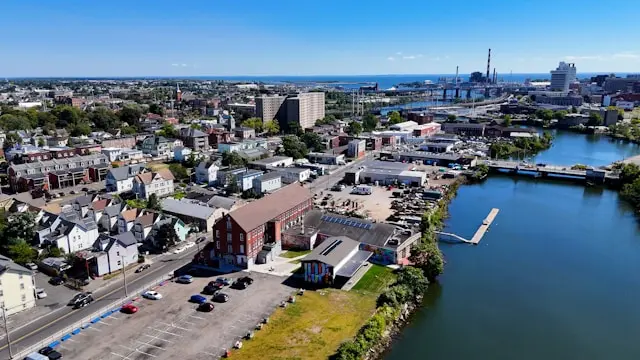
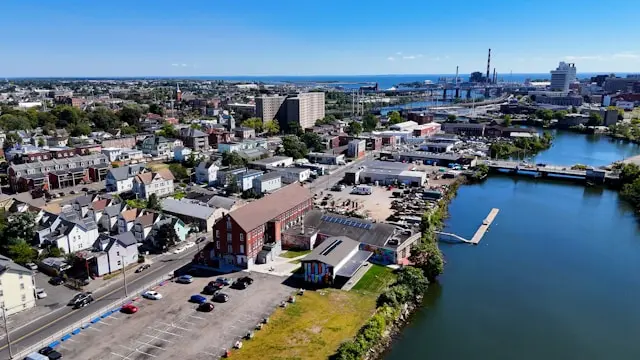
Bridgeport, Connecticut holds $340 million in permitted construction value and a waterfront redevelopment pipeline that could reshape the city over the next decade. State bond funding is flowing. Transit-oriented zoning has been approved. Brownfield remediation grants are in the pipeline. The infrastructure is being laid at Steel Point. Downtown North is moving from planning into active permitting. By nearly every measure of political will and capital allocation, Bridgeport's urban redevelopment is on track.
None of it matters without the people to build it. The Connecticut Department of Labor projects a need for 2,800 additional construction trades workers in Fairfield County by late 2026, against an expected supply of 1,400 qualified entrants. That is a 50% shortfall. Senior project manager roles sit unfilled for 120 to 150 days. Environmental remediation specialists are being offered $25,000 signing bonuses just to stay in Connecticut rather than accept offers from Boston firms. The gap is not abstract. It is measured in delayed groundbreakings, declined project bids, and overtime rates that are adding 22% to labour costs across the market.
What follows is a detailed analysis of where Bridgeport's construction talent shortages are most acute, what is driving them, why aggregate employment statistics mask a deep skills mismatch, and what organisations hiring in this market must do differently to staff the roles that determine whether these projects succeed or stall.
A City Building Two Markets at Once
Bridgeport's urban redevelopment sector operates in what is best described as a bifurcated cycle. On one side, heavy civil and environmental work is active and funded. Bridgeport Landing Development LLC completed $28 million in road and utility work at Steel Point through 2024. The Connecticut Department of Transportation's $210 million Merritt Parkway/Route 8 interchange improvements and $45 million train station upgrades will sustain heavy civil contractor demand through 2027, according to the state's Five-Year Capital Plan. The Port of Bridgeport's $18 million dock rehabilitation adds marine construction to the active pipeline. This is real, contracted work generating sustained demand for civil engineers, superintendents, and heavy equipment operators.
On the other side, vertical construction for residential and commercial buildings faces financing constraints that have slowed the pipeline materially. Commercial construction loan rates hovered at 7.2% through late 2024, per the Federal Reserve Bank of New York's Senior Loan Officer Opinion Survey. Steel Point's residential programme has delivered only 180 of 1,200 planned units. Three proposed Downtown North projects representing 450 units were placed on hold in 2024 pending additional state remediation grants.
The talent implication is that Bridgeport needs two distinct workforces simultaneously. It needs heavy civil and infrastructure crews now, and it needs specialised residential MEP coordinators, urban infill superintendents, and brownfield remediation managers for the vertical construction that is expected to accelerate through 2026 and 2027. The professionals who can do the first job are not the same professionals who can do the second. This distinction is invisible in the aggregate employment data, which is precisely what makes it dangerous for hiring leaders relying on headline labour statistics.
The Numbers That Hide the Real Shortage
Active construction employment in the Bridgeport-Stamford-Norwalk MSA reached 42,300 in September 2024, a 4.1% year-over-year increase. Bridgeport proper accounts for roughly 18% of that total, approximately 7,614 workers. The construction unemployment rate in Fairfield County sits at 3.2%. On paper, this looks manageable. It is not.
Aggregate Statistics Versus Craft-Level Reality
The Associated General Contractors of Connecticut's 2024 Workforce Development Survey tells a fundamentally different story from the headline employment numbers. Among mid-sized commercial contractors with $50 million to $150 million in annual revenue, 78% report they have declined project bids because they could not staff key supervisory positions. That figure is not about bricklayers or labourers. It is about senior superintendents and project managers whose absence means a project cannot proceed regardless of how many trades workers are available.
The unemployment rate for experienced construction managers in Fairfield County is 1.8%. This is near-total employment. It means that virtually every qualified senior project manager in the region is already working, and the only way to hire one is to take that person from another project.
The Skills Mismatch Driving Localised Scarcity
This is the analytical core of Bridgeport's workforce problem. The available construction workforce in the region possesses heavy industrial and highway construction skills suited to I-95 corridor work. Bridgeport's redevelopment pipeline requires specialised residential MEP expertise, brownfield remediation certification, zero-lot-line urban infill experience, and community liaison skills for dense neighbourhood construction. These are different competencies. The Connecticut Department of Labor's aggregate numbers treat them as interchangeable. Contractors bidding on Steel Point and Downtown North projects know they are not.
The workforce gap is not a quantity problem. It is a capability problem. The 2,800 additional workers Fairfield County needs by late 2026 are not 2,800 generic construction workers. They are professionals with specific certifications, specific urban project experience, and specific regulatory knowledge that the existing regional labour pool largely does not possess. Recognising this distinction is the first step toward addressing it. Treating it as a general hiring challenge is the surest way to fail an executive search.
Where the Shortages Hit Hardest
Four role categories represent the most acute talent constraints in Bridgeport's redevelopment market. Each has its own supply dynamics, compensation pressures, and competitive geography.
Environmental Remediation Project Managers
Bridgeport's brownfield sites are not optional obstacles. They are the development sites. Steel Point, Knowlton Street, Harbor Landing, and the Seaview Avenue redevelopment all require extensive remediation, primarily petroleum hydrocarbon cleanup. Environmental remediation costs consume 12 to 18% of total development budgets at these sites, compared to 3 to 5% for greenfield development in suburban Fairfield County. Unanticipated subsurface contamination has caused 30% average budget overruns on Bridgeport brownfield projects since 2020.
The professionals who manage this work, Licensed Site Professionals and senior remediation project managers, are in acute shortage. Only 16% of LSPs in Connecticut are actively seeking new roles, though 40% will consider offers if directly approached. This is a textbook passive candidate market, where visible job advertising reaches fewer than one in five qualified professionals. Signing bonuses of $15,000 to $25,000 and retention premiums of 12 to 15% above 2023 baselines have become standard to prevent Boston-based firms from recruiting Connecticut's limited LSP pool.
Total cash compensation for a senior environmental project manager or LSP in this market runs $126,000 to $174,000, with base salaries of $115,000 to $145,000 and bonuses of 10 to 20%.
Senior Superintendents for Urban Infill
Urban infill construction in Bridgeport demands a specific skill set: tight site logistics, zero-lot-line building, coordination with transit authorities, and community engagement in dense residential neighbourhoods. This is not highway construction. It is not suburban subdivision work. The superintendent who has spent a career managing I-95 interchange projects does not automatically possess the capability to manage a mixed-use TOD build adjacent to an active Metro-North station.
VP of Construction and Senior Superintendent roles in this market carry base salaries of $185,000 to $245,000 with bonuses of 25 to 40%. Developer-side roles with Exact Capital Group or RCI Development may include promote structure participation adding $50,000 to $150,000 annually for successful project deliveries. These figures reflect Fairfield County's 8 to 12% premium above Connecticut state averages, driven by proximity to New York metropolitan cost structures.
The competitive challenge is that Boston and New York offer 25 to 35% compensation premiums for equivalent roles and provide high-rise construction experience that accelerates career trajectories in ways Bridgeport's mid-rise urban infill projects cannot match. Senior superintendents weighing a move to Bridgeport are not just comparing salaries. They are comparing career capital.
Preconstruction Managers and Chief Estimators
TOD and mixed-use estimating in Bridgeport is unusually complex. Pro formas must integrate retail, residential, and parking structures with transit authority coordination, brownfield remediation cost contingencies, LIHTC and Historic Tax Credit financing requirements, and Connecticut's Transfer Act liability provisions. An estimator who can price a conventional office build may struggle with the layered financial structures that characterise every major Bridgeport redevelopment project.
Base salaries for preconstruction managers run $125,000 to $155,000 with bonuses of 15 to 25% tied to bid win rates and margin preservation. The passive candidate ratio is 75%, with an average tenure in current role of 4.2 years, indicating low voluntary turnover. Recruiting these professionals requires direct approaches and a compelling narrative about the complexity and scale of the pipeline, not a job posting.
MEP Coordinators for Brownfield Conversion
Converting industrial brownfield sites to residential MEP infrastructure is a specialist discipline. The environmental constraints, remediation sequencing requirements, and regulatory compliance demands of these projects mean that a general MEP coordinator without brownfield experience will face a steep learning curve that project timelines cannot accommodate. Apprenticeship completion rates in electrical and mechanical trades meet only 45% of journeyman demand, forcing contractors to run overtime at 1.5 to 2 times standard rates for 35% of labour hours. This effectively raises project labour costs by 22%.
Each of these four shortage categories reinforces the others. Without environmental specialists, remediation timelines extend. Without superintendents, vertical construction cannot begin on schedule. Without estimators, bids are either lost or mispriced. Without MEP coordinators, the residential units that justify the entire development pipeline cannot be delivered. The talent problem is not four separate problems. It is one interconnected constraint.
The Paradox of Transit Investment Without Market Absorption
The state of Connecticut has committed $15 million in TOD bond funding for Bridgeport's station-area improvements. Zoning allows a floor area ratio of 8.0 near the Metro-North station. The $45 million station upgrade will improve the commuter connection to New York. By every planning metric, the ingredients for transit-premium residential development are in place.
The market tells a different story. Absorption rates for market-rate multifamily units near Bridgeport's transit stations remain 15 to 20% below Fairfield County suburban averages. The planned 1,200 residential units at Steel Point assume annual absorption of 150 units, but Bridgeport's Class A multifamily absorption has averaged only 85 units annually since 2020. Stamford's TOD zones absorb units at rates 40% higher than Bridgeport's, despite comparable transit access.
The gap is not explained by transit quality. It is explained by property tax rates and perceived school quality. Bridgeport's mill rate of 48.8 versus Stamford's 26.4 creates a tangible cost differential that transit proximity does not offset. For tenants choosing between a Class A apartment near Bridgeport's Metro-North station and a comparable unit near Stamford's, the monthly property tax pass-through and the school district reputation are decisive factors.
This creates a specific problem for construction talent. If absorption rates constrain the pace of vertical construction, then the residential development pipeline that would sustain multi-year employment for senior project managers and superintendents remains uncertain. The professionals being recruited to lead these projects need confidence that the work will continue. A brownfield superintendent who relocates to manage a 320-unit project needs to know that subsequent phases will follow. If absorption risk creates stop-start development cycles, Bridgeport becomes a less attractive career destination regardless of what it pays.
This is the original synthesis that connects the data: Bridgeport's construction talent shortage is not primarily a compensation problem. It is a credibility problem. The city must convince senior construction professionals that its pipeline is durable enough to justify the career risk of leaving more stable markets. Until absorption data supports the projected build-out pace, the cost of a wrong hiring decision falls on both the employer and the candidate.
The Regulatory and Financial Drag on Project Velocity
Even where talent is available and financing secured, Bridgeport's regulatory environment creates friction that compounds workforce shortages by extending project timelines and increasing carrying costs.
Permitting Delays as a Competitive Disadvantage
The City of Bridgeport's Department of Permitting and Land Use averages 14 to 18 weeks for commercial building permit approval. Stamford averages 6 to 8 weeks. Hartford averages 4 to 6 weeks. The difference is not trivial. Carrying cost penalties of $12,000 to $18,000 per month accumulate during permit delays, eroding project margins and extending the period during which a senior superintendent or project manager must be retained without productive work. For contractors weighing whether to pursue Bridgeport projects, the permitting timeline is a material cost input, not merely an inconvenience.
Connecticut's Transfer Act and Open-Ended Liability
Connecticut's Transfer Act imposes strict liability for historical contamination at property transfer, creating cost uncertainty that is unique in degree among Northeast states. Remediation costs at Bridgeport brownfield sites range from $850,000 to $2.4 million per acre depending on contamination type. The 30% average budget overrun on brownfield projects since 2020 is not a statistical curiosity. It means that one in three projects will cost materially more than projected, and the environmental project manager who must deliver within that uncertainty needs deep CT DEEP regulatory knowledge and RCRA compliance experience.
Interest Rate Sensitivity and LIHTC Financing
Bridgeport's redevelopment relies heavily on 4% Low-Income Housing Tax Credit and Historic Tax Credit financing structures. According to Novogradac's 2024 LIHTC Pricing Outlook, a 50-basis-point increase in permanent loan rates renders 18 to 22% of planned Downtown North units financially unfeasible. The Connecticut Bankers Association's 2025 Economic Forecast projected that private development permitting value could increase 8 to 12% if the Federal Reserve achieves 100 basis points in rate cuts. Whether that relief materialises determines whether Steel Point's planned 400-unit, 85,000-square-foot retail groundbreaking proceeds on its Q3 2026 schedule. The construction professionals being hired to lead these projects are making career decisions against a financing backdrop that may shift underneath them.
The compound effect of regulatory delay, environmental cost uncertainty, and financing sensitivity means that Bridgeport's projects move slower than comparable developments in Stamford, Hartford, or suburban Fairfield County. Slower projects require longer commitments from senior talent. Longer commitments require stronger retention packages. This is a cycle that only deepens the cost and difficulty of hiring.
What Hiring Leaders in This Market Must Do Differently
The standard approach to construction hiring does not work in Bridgeport's current market. Posting a role on a construction job board and waiting for applications will not reach the 82% of senior project managers who are employed and not looking. It will not reach the 84% of LSPs who will not respond to an advertisement but will consider a direct approach. It will not compete with Boston firms offering 25 to 35% compensation premiums or Stamford employers offering lower commute times and equivalent pay.
Three realities define the hiring challenge here.
First, the candidates you need are passive. At 1.8% unemployment for experienced construction managers in Fairfield County, visible applicants represent a fraction of the qualified talent pool. The professionals leading comparable brownfield remediation or urban infill projects in Boston, New York, or Hartford are not browsing job boards. They must be identified through systematic talent mapping and approached directly with a proposition tailored to their specific career situation.
Second, compensation alone will not close the gap. The professionals most qualified for Bridgeport's specialised roles are weighing career trajectory, pipeline durability, project complexity, and location quality alongside base salary. A VP of Construction considering a move from a Boston high-rise programme to a Bridgeport mixed-use brownfield project needs to understand the full scope of the pipeline, the developer's financial backing, and the regulatory pathway. The negotiation is fundamentally human, not transactional.
Third, speed matters disproportionately. When roles sit open for 120 to 150 days, the cost is not just the unfilled position. It is the project bids that cannot be submitted, the groundbreaking schedules that slip, and the overtime costs that accumulate across the existing workforce. Firms relying on traditional recruitment timelines are systematically disadvantaged in a market where the best candidates are off the market within days of beginning to consider a move.
KiTalent's approach to executive hiring in real estate and construction is designed for precisely this kind of market. By combining AI-powered talent identification with direct headhunting methodology, KiTalent delivers interview-ready candidates within 7 to 10 days, on a pay-per-interview model that eliminates the upfront retainer risk. In a market where 78% of contractors are declining bids because they cannot staff supervisory roles, the cost of a slow search is not administrative. It is strategic.
For organisations hiring senior construction leadership in Bridgeport's brownfield redevelopment market, where the qualified candidate pool is near full employment, the skills required are highly specialised, and the competitive pull from Boston and New York is constant, speak with our executive search team about how we identify and move the candidates no job board can reach. KiTalent's 96% one-year retention rate reflects a placement methodology built around fit, not just speed.
Frequently Asked Questions
Why is it so hard to hire construction project managers in Bridgeport, Connecticut?
Bridgeport's construction talent shortage is driven by a skills mismatch rather than a pure quantity shortfall. While Fairfield County's aggregate construction unemployment rate is 3.2%, the unemployment rate for experienced construction managers is just 1.8%. Bridgeport's redevelopment pipeline requires specialised brownfield remediation, urban infill, and TOD experience that the region's highway and industrial construction workforce largely does not possess. Senior project manager roles typically sit open for 120 to 150 days, and 82% of qualified professionals are passive candidates not visible through job advertising.
What are senior construction executives paid in Bridgeport's redevelopment market?
Fairfield County construction compensation runs 8 to 12% above Connecticut state averages due to New York metropolitan proximity. Senior project managers with 10-plus years of experience earn total cash compensation of $155,000 to $210,000. VPs of Construction and senior superintendents earn $230,000 to $340,000 or more, with developer-side roles potentially including promote structure participation. Environmental project managers and Licensed Site Professionals earn $126,000 to $174,000. These figures reflect retention premiums that have escalated materially as Boston and New York firms recruit aggressively from the Connecticut talent pool.
What construction projects are driving hiring demand in Bridgeport?
The primary demand drivers include the 52-acre Steel Point waterfront redevelopment, the Downtown North cluster with over 1,400 residential units in various permitting stages, the Connecticut Department of Transportation's $210 million interchange improvements, Bridgeport Hospital's $127 million capital improvement programme, and the Port of Bridgeport's $18 million dock rehabilitation. Exact Capital Group's 320-unit Knowlton Street project and RCI Development's 180-unit Harbor Landing anchor the Downtown North cluster. Both require extensive brownfield remediation, creating parallel demand for environmental specialists and construction leadership talent.
How does brownfield remediation affect construction hiring in Bridgeport?
Brownfield remediation consumes 12 to 18% of total development budgets in Bridgeport, compared to 3 to 5% for greenfield sites in suburban Fairfield County. Connecticut's Transfer Act imposes strict liability for historical contamination, and unanticipated subsurface contamination has caused 30% average budget overruns since 2020. This creates intense demand for Licensed Site Professionals and remediation project managers with CT DEEP regulatory expertise. Only 16% of LSPs in Connecticut are actively job seeking, though 40% will consider offers if directly approached, making specialist executive search methods essential.
What is the construction workforce outlook for Fairfield County in 2026?
The Connecticut Department of Labor projects a need for 2,800 additional construction trades workers in Fairfield County by late 2026, against an expected supply of just 1,400 qualified entrants. This 50% gap is expected to extend project timelines by 15 to 25% or force reliance on Boston and New York subcontractor labour at 18 to 22% cost premiums. Apprenticeship completion rates meet only 45% of journeyman demand in electrical and mechanical trades. For organisations hiring leadership roles in this environment, working with a firm that uses proactive talent pipeline strategies is essential to securing candidates before competitors.
How can construction firms in Bridgeport compete for talent against Boston and New York?
Boston and New York offer 25 to 35% compensation premiums for equivalent senior construction roles and provide high-rise experience that accelerates career trajectories. Bridgeport firms must compete on pipeline depth, project complexity, and role scope rather than salary alone. Highlighting the breadth of Bridgeport's brownfield-to-residential conversion programme, the developer's financial commitments, and the senior leadership exposure available on complex TOD projects can differentiate the opportunity. Speed in the hiring process also matters. KiTalent's direct headhunting methodology reaches the passive candidates that job boards miss and delivers interview-ready shortlists within 7 to 10 days.