Bridgeport's Precision Manufacturing Paradox: $12 Million in Incentives, and Still No One to Run the Machines
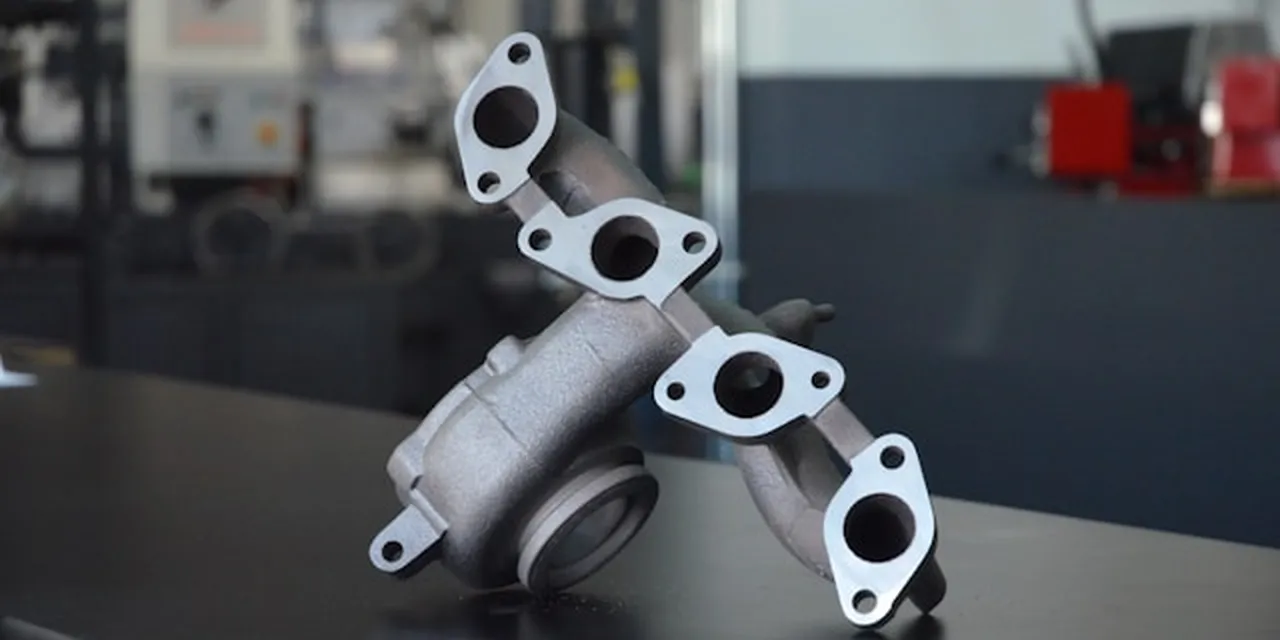
Bridgeport, Connecticut has received over $12 million in state precision manufacturing incentives since 2022. It sits on the I-95 corridor with 24-hour drive-time access to 40 per cent of the US population. Its aerospace sub-tier suppliers serve both the Sikorsky-Boeing DEFIANT X programme and Pratt & Whitney's GTF Advantage engine supply chain. On paper, Bridgeport's East Side industrial corridor should be expanding.
It is not. The city's advanced manufacturing sector is capped at 2 to 3 per cent annual growth, hemmed in by buildings that average 62 years old, a workforce where 28 per cent of skilled practitioners are over 55, and a training pipeline producing barely half the graduates needed to replace retirees. The roles most critical to the sector's future, including senior CNC programmers with 5-axis experience, aerospace-certified quality directors, and manufacturing engineers fluent in Industry 4.0 integration, are taking an average of 94 days to fill. The talent is not on the market. And the infrastructure meant to attract it cannot support the equipment that defines modern precision fabrication.
What follows is a detailed analysis of where Bridgeport's manufacturing talent gaps are most acute, what is driving them, what competing markets are doing to pull skilled workers away, and what hiring leaders in this corridor need to understand before their next critical search fails.
The Real State of Bridgeport's Manufacturing Corridor in 2026
The numbers describing Bridgeport's industrial base tell two different stories depending on which figures you read first. The Bridgeport-Stamford-Norwalk MSA employed approximately 38,200 manufacturing workers as of late 2024, with Bridgeport proper accounting for an estimated 6,800 to 7,200 positions in advanced manufacturing and precision fabrication. ABB Installation Products, operating the former Bridgeport Fittings facility at 305 Union Avenue, remains the city's largest manufacturing employer with 650 to 750 workers at a single 450,000 square foot complex. Precise Components runs 120 to 150 employees on Seaview Avenue. A consortium of 34 regional manufacturers coordinates workforce development through the Bridgeport Regional Business Council's Advanced Manufacturing Cluster.
This looks like a functioning ecosystem. But the physical plant beneath it is deteriorating faster than the incentive money can repair it.
A Vacancy Rate That Signals Obsolescence, Not Opportunity
Bridgeport's industrial vacancy rate stood at 8.4 per cent as of Q3 2024, more than double the Connecticut state average of 4.1 per cent. That gap does not mean Bridgeport has excess capacity waiting for tenants. It means Bridgeport has buildings that modern manufacturers cannot use. The East Side and Pequonnock River corridor contains 2.1 million square feet of Class B and C industrial space, with 34 per cent of buildings exceeding 75 years of age. Most lack the ceiling heights above 24 feet needed for automated precision fabrication lines.
Only 12 per cent of Bridgeport's industrial inventory meets the electrical and floor-load specifications required for precision CNC and additive manufacturing equipment without major capital improvement. That figure alone explains why $12.4 million in state incentives has failed to produce proportional growth. The money funds workforce training and equipment upgrades. But the training targets roles that operate equipment these buildings cannot house, and the equipment upgrades require electrical infrastructure these buildings do not have. Sixty-eight per cent of the city's industrial stock was built before 1960, lacking the 480V three-phase power and high-capacity compressed air systems that modern CNC and additive manufacturing operations demand.
Environmental and Regulatory Overhang
The Pequonnock River corridor carries additional constraints. Heavy metal contamination from legacy machining coolants and solvents places the zone under Connecticut Department of Energy and Environmental Protection oversight. Any expansion or change of use for industrial properties requires Phase II Environmental Site Assessments averaging $75,000 to $120,000, with potential remediation costs exceeding $400,000 per acre. Asbestos abatement in legacy mill buildings runs $45 to $60 per square foot. For smaller contractors, these costs are prohibitive. For larger employers, they add 12 to 18 months to any facility modernisation timeline.
No new speculative industrial construction is planned for Bridgeport's East Side. The trajectory established through 2025 continues into 2026: capacity growth remains capped, and the manufacturers who stay are competing for talent inside buildings that make the work harder than it needs to be.
The Three Roles Bridgeport Cannot Fill
The talent shortage in Bridgeport's precision fabrication sector is concentrated in three categories, each with distinct dynamics and each getting worse on its own schedule. Understanding them separately is essential, because the solutions differ for each.
Senior CNC Programmers With 5-Axis Experience
This is the most acute shortage by volume. Bridgeport-area precision machine shops report an average time-to-fill of 94 days for senior CNC programmer roles, compared to 58 days for general machinist positions. The gap reflects a specific skills threshold: employers need candidates who can programme Mastercam, Esprit, or GibbsCAM software for 5-axis mill-turn centres. That skill set represents less than 18 per cent of the regional machining workforce, according to Burning Glass Technologies labour market data for the Bridgeport MSA.
The compensation for these roles reflects the scarcity. Senior CNC programmer and department lead positions in Bridgeport command $92,000 to $118,000 in base salary, with the MSA median at $104,000. That represents a 12 to 15 per cent premium above the Connecticut state average, driven specifically by aerospace certification requirements. But even at these levels, Bridgeport struggles to compete with Hartford's aerospace cluster, where the same roles pay 8 to 12 per cent more and come with newer facilities.
Quality Directors With AS9100D Aerospace Certification
This is the role where passive candidate dynamics are most extreme. Approximately 82 per cent of qualified professionals in the Bridgeport MSA holding AS9100D Lead Auditor certifications are currently employed and not actively seeking new positions. Their average tenure at current employers exceeds 4.5 years. These are not people browsing job boards. They are embedded in organisations that depend on their certifications to maintain supplier status with aerospace primes.
Quality managers with AS9100D certification earn $108,000 to $135,000 base in the Bridgeport market, with an additional $15,000 to $25,000 annual bonus tied to audit compliance metrics. At the director level, total compensation rises further. But money alone does not move someone whose personal certification is part of their employer's audit readiness. The proposition has to address career trajectory, facility quality, and the strategic importance of the role itself.
Manufacturing Engineers With Industry 4.0 Integration Expertise
This is the shortage that connects directly to the infrastructure paradox. Connecticut's incentive strategy has shifted from precision manufacturing broadly toward advanced materials and digital manufacturing, including additive manufacturing and Industry 4.0 integration. But Bridgeport's legacy metalworking infrastructure cannot support the technologies these engineers would implement. An employer offering an Industry 4.0 manufacturing engineer role in a building with 1950s electrical systems is asking for a skillset it cannot actually deploy.
The result is a capability gap that widens each year. The state funds training. The market demands the skills. The buildings cannot accommodate the work. And the engineers who do hold these capabilities gravitate to facilities in Hartford or Worcester where the infrastructure matches their expertise.
The Demographic Cliff Behind the Numbers
Every hiring difficulty described above is compounding against a retirement wave that Bridgeport's training pipeline cannot offset.
Twenty-eight per cent of the city's precision manufacturing workforce is aged 55 or older. Housatonic Community College's Advanced Manufacturing Technology Center, the primary training pipeline for CNC machining, welding, and metrology in the Bridgeport area, graduates approximately 85 certificate holders annually. The Connecticut Department of Labor's own projections call for 140 to 160 annual replacements just to maintain current staffing levels. The shortfall is not marginal. It is structural, running at roughly 40 per cent below replacement rate.
HCC is expanding. A $2.1 million DECD grant funded an expansion of the Advanced Manufacturing Technology Center by 40 seats as of late 2025, targeting CNC operation and quality control specialisations. The broader MSA projects demand for 450 new precision fabrication technicians by 2026. Even with the expansion, the pipeline produces less than one third of what the market needs each year. And these are entry-level technicians, not the senior programmers, quality directors, or manufacturing engineers that represent the hardest roles to fill.
This is the point at which hiring leaders need to recognise what the data is actually saying. The demographic cliff does not simply make current searches harder. It means that the experienced professionals retiring over the next five years cannot be replaced by graduates. There is no equivalence between an 85-student graduating class and a 28 per cent cohort of workers with decades of institutional knowledge in aerospace tolerancing, GD&T to ASME Y14.5, and multi-axis programming. You cannot recruit experience that has not yet been built.
How Competing Markets Are Pulling Talent Out of Bridgeport
Bridgeport's I-95 location is simultaneously its greatest distribution advantage and its most dangerous talent liability. The same highway that gives manufacturers 24-hour access to 40 per cent of the US population also puts Hartford, New Haven, and Worcester within daily commuting range of every skilled worker in the city.
Hartford's Aerospace Premium
Hartford's aerospace cluster, anchored by Pratt & Whitney and Collins Aerospace, offers senior CNC programmers and quality executives compensation premiums of 8 to 12 per cent above Bridgeport levels. But the compensation gap is only half the pull. Hartford offers newer Class A industrial inventory, clearer career progression into defence contractor roles, and an employer brand associated with global aerospace programmes rather than contract shop work. For a quality director certified to AS9100D, the jump from a 40-person Bridgeport machine shop to a Tier 1 defence supplier in Hartford is a career category change, not just a pay rise.
New Haven's Biomedical Pull
New Haven's biomedical device manufacturing sector, serving Yale New Haven Health System suppliers and Medtronic subcontractors, offers precision fabrication professionals 15 to 20 per cent compensation premiums along with cleaner manufacturing environments. According to CBRE's New Haven Life Sciences Report, this market is actively drawing quality specialists and process engineers away from Bridgeport's industrial zones. The appeal is not purely financial. A precision fabrication professional moving from a 1940s machining facility on the Pequonnock River to an ISO 13485 clean room environment in New Haven experiences a tangible quality-of-life improvement in their daily working conditions.
Worcester's Flexibility Advantage
Worcester, Massachusetts, competes for CNC machinists and manufacturing engineers through the Massachusetts Manufacturing USA initiative, offering state-sponsored training incentives that Connecticut has not matched. More critically, Worcester employers have begun offering remote and hybrid work arrangements for engineering roles that support production without requiring constant floor presence. In Bridgeport's hands-on production environment, this flexibility is rarely available. For a manufacturing engineer whose work splits between design, programming, and floor supervision, a Worcester role that allows two days of remote CAD and simulation work is a compelling differentiator.
The I-95 corridor, in other words, does not just move freight efficiently. It moves talent efficiently too. And it moves that talent toward markets offering more money, better facilities, and working conditions that Bridgeport's ageing infrastructure cannot match.
The Original Paradox: Infrastructure That Enables Outflow
Here is the analytical claim that the individual data points, taken separately, do not make obvious. Bridgeport's two most frequently cited advantages, its state manufacturing incentive funding and its I-95 corridor access, are working against each other in the talent market.
The incentive funding trains workers in advanced skills. The I-95 corridor gives those workers efficient access to Hartford, New Haven, Worcester, and Providence, all of which offer higher pay, better facilities, or both. The state is effectively subsidising workforce development for employers in Bridgeport while simultaneously failing to address the facility constraints that make those employers uncompetitive for the workers they trained. A CNC programmer who completes an HCC certificate in 5-axis programming and takes a role in Bridgeport at $104,000 can, within two years of experience accumulation, commute to Hartford for $116,000 in a building with modern electrical systems and aerospace career progression.
This is not a hiring problem that compensation adjustments alone can solve. It is a retention architecture problem. The physical plant, the career ceiling, and the facility environment combine to make Bridgeport a net exporter of the very talent its incentive programmes create. Until the infrastructure gap closes, or until Bridgeport manufacturers find ways to offer career trajectories that compete with Hartford's defence primes and New Haven's biomedical sector, the talent equation will continue to favour outflow.
Organisations hiring in this market need to understand this dynamic before they write a job description. The candidate who accepts your offer today has options tomorrow that your building and your org chart must answer.
What Bridgeport Hiring Leaders Must Do Differently
The conventional approach to manufacturing executive recruitment in this market, posting roles, waiting for applications, and screening inbound candidates, fails at every level for the positions that matter most.
The Passive Market Reality
When 82 per cent of aerospace-certified quality directors are employed and not looking, the active candidate pool is functionally empty. Posting a role and waiting is not a strategy. It is an admission that you have no strategy. The same applies to senior CNC programmers with 5-axis capability, where fewer than one in five regional machinists hold the required skillset. These searches require direct identification and approach of specific individuals who are currently employed, currently productive, and currently unaware that your role exists.
For VP of Operations and Plant Manager positions, the challenge compounds further. These roles command $165,000 to $215,000 base in the Bridgeport market, with total cash compensation reaching $240,000 to $290,000 for mid-size precision fabricators. Plant managers with specific experience in brownfield modernisation and union management command a 20 to 25 per cent premium on top of base. The number of candidates with this profile in the greater Connecticut market is small enough that most are known to their peers by name. Finding them requires market intelligence, not advertising.
Speed as a Competitive Requirement
A 94-day average time-to-fill for senior CNC programmer roles means that many searches run far longer. During that period, production capacity is constrained, delivery timelines slip, and the contract work that justifies the hire may move to a competitor with available capacity. In aerospace sub-tier supply chains, where Bridgeport shops service Sikorsky with an estimated $45 million in annual spend across 12 to 15 certified subcontractors, a single unfilled quality director role can delay supplier certification and put contract renewals at risk.
The cost of a slow search in this market is not abstract. It is measured in lost contracts, missed delivery windows, and the cascading effect of a critical hire that never materialises. Reshoring initiatives in aerospace and defence are projected to increase sub-contracting opportunities for Bridgeport machine shops by 8 to 12 per cent in 2026, particularly for aluminium and titanium components. Firms that cannot staff their quality and programming functions will watch those contracts flow to Hartford or Worcester shops that can.
Building a Proposition That Holds
Compensation matters, but it is not sufficient. A Bridgeport manufacturer competing with Hartford for a quality director needs to articulate what the role offers beyond salary: direct influence on facility modernisation decisions, a leadership position where the candidate's expertise is the differentiating factor, and involvement in the strategic direction of the operation rather than a slot in a large corporate hierarchy. The smaller scale of Bridgeport's precision shops can be an advantage if it is framed correctly. Not everyone wants to be one of fifty quality managers at a Tier 1 defence contractor. Some want to be the quality leader who transforms a contract shop into a certified aerospace supplier.
But this proposition only works if it is delivered to the right candidate at the right time, by someone who understands both the market and the individual's career calculus. That requires disciplined talent intelligence and a search process designed for passive markets, not for the increasingly fictional world of active applicants.
Bridgeport's Advanced Manufacturing Future Depends on How It Hires Today
The reshoring opportunity is real. Aerospace and defence sub-contracting volumes are rising. The I-95 corridor remains a genuine logistical advantage. Connecticut's incentive infrastructure, while imperfectly targeted, does reduce the cost of workforce development and equipment investment. Bridgeport's precision manufacturing sector has a viable future.
But viability and growth are not the same thing. Growth requires the senior CNC programmers who can run 5-axis mill-turn centres, the quality directors whose certifications unlock aerospace contracts, and the manufacturing engineers who can bridge legacy metalworking with Industry 4.0 systems. These people exist. They are working in Hartford, New Haven, Worcester, and within Bridgeport itself. They are not applying to your job postings. They are not on any job board. They need to be found, assessed, and presented with a proposition that addresses their specific circumstances.
KiTalent delivers interview-ready executive and senior specialist candidates within 7 to 10 days, using AI-powered talent mapping to reach the passive professionals who represent the actual market for these roles. With a 96 per cent one-year retention rate across 1,450 placements, the methodology is built for exactly the kind of embedded, relationship-dependent search that Bridgeport's precision manufacturing sector demands. For organisations competing for senior manufacturing and operations leadership in a market where 82 per cent of qualified candidates are not visible to traditional recruitment, start a conversation with our industrial and manufacturing practice about how to close the roles that are holding your capacity back.
Frequently Asked Questions
Why is it so hard to hire senior CNC programmers in Bridgeport, Connecticut?
Senior CNC programmers with 5-axis experience represent less than 18 per cent of the regional machining workforce. The average time-to-fill for these roles in Bridgeport is 94 days, nearly double the timeline for general machinist positions. The shortage is driven by a narrow skills base concentrated in Mastercam, Esprit, and GibbsCAM programming for mill-turn centres, combined with competition from Hartford and New Haven markets offering 8 to 20 per cent compensation premiums and newer manufacturing facilities. Most qualified candidates are employed and must be approached through direct executive search methods rather than job advertising.
What does a VP of Manufacturing earn in the Bridgeport area?
A VP of Manufacturing or Operations at a mid-size precision fabrication firm with $50 million to $150 million in revenue earns $165,000 to $215,000 in base salary in the Bridgeport MSA. Total cash compensation, including annual bonus and long-term incentive plans, ranges from $240,000 to $290,000. Plant managers at legacy facilities with 200 or more employees earn $145,000 to $185,000 base, with a 20 to 25 per cent premium for candidates with brownfield modernisation and union management experience. For current salary benchmarking across manufacturing leadership roles, specialist data is essential.
How does Bridgeport compete with Hartford for manufacturing talent?
Bridgeport faces systemic disadvantages against Hartford's aerospace cluster, which offers 8 to 12 per cent compensation premiums, newer Class A industrial facilities, and clearer career progression toward defence contractor roles at Pratt & Whitney and Collins Aerospace. Bridgeport manufacturers can compete by emphasising leadership scope, direct influence on facility modernisation, and the entrepreneurial character of smaller precision fabrication operations. Retention strategies must also address the I-95 commuting corridor that makes Hartford accessible to Bridgeport workers within 60 to 90 minutes.
What is the workforce pipeline for precision manufacturing in Bridgeport?
Housatonic Community College's Advanced Manufacturing Technology Center is the primary training pipeline, graduating approximately 85 certificate holders annually in CNC machining, welding, and metrology. An expansion funded by a $2.1 million DECD grant added 40 seats as of late 2025. However, the Connecticut Department of Labor projects demand for 140 to 160 annual replacements to offset retirements, meaning the pipeline produces roughly half of what is needed. The 28 per cent of the workforce aged 55 and over accelerates the urgency.
How can Bridgeport manufacturers recruit aerospace-certified quality directors?
Approximately 82 per cent of AS9100D-certified quality professionals in the Bridgeport MSA are passively employed, with average tenure exceeding 4.5 years. Traditional recruitment advertising reaches almost none of them. Successful hiring requires AI-enhanced talent mapping to identify specific individuals across the Connecticut aerospace supply chain, followed by direct engagement built around a differentiated career proposition. KiTalent's approach to these markets delivers interview-ready candidates within 7 to 10 days by accessing the passive talent pool that represents the real market for these certifications.
What aerospace supply chain opportunities are growing in Bridgeport?
Reshoring initiatives in aerospace and defence are projected to increase sub-contracting opportunities for Bridgeport precision machine shops by 8 to 12 per cent in 2026, according to the Connecticut Aerospace Business Association. Key programmes driving this growth include the Sikorsky-Boeing DEFIANT X and Pratt & Whitney's GTF Advantage engine supply chain, with demand concentrated in aluminium 7075, titanium 6Al-4V, and Inconel component fabrication. Sikorsky already maintains 12 to 15 certified machining subcontractors within Bridgeport city limits, representing approximately $45 million in annual spend.