Bridgeport's Port Is Preparing for Offshore Wind. Its Workforce Is Not.
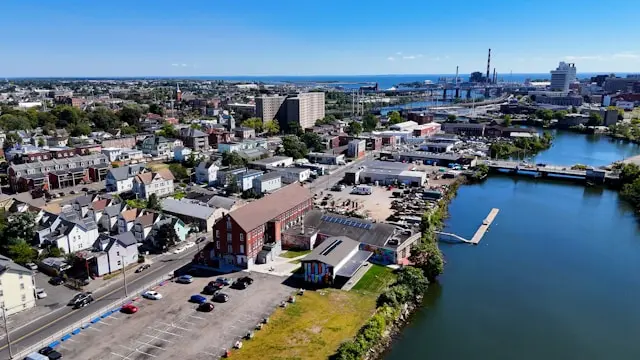
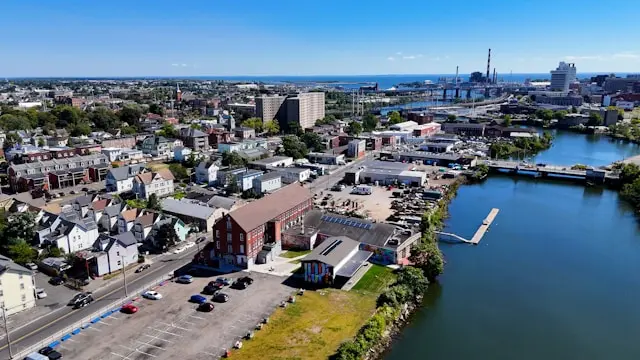
Bridgeport Harbor processed roughly 1.3 million tons of construction aggregates last year, ran up to 32 daily ferry departures during peak season, and berthed service vessels for Connecticut's emerging offshore wind projects. By the numbers, it looks like a port in expansion mode. By the hiring data, it looks like a port running out of people.
The core tension in this market is not funding. It is not infrastructure, though infrastructure constraints are real. It is the collision between two timelines: the construction schedule for Revolution Wind, which enters its build phase in 2026, and the training pipeline for the licensed mariners, certified technicians, and port operations leaders that schedule requires. The construction timeline is fixed. The talent pipeline is not keeping pace. ILA Local 1458 reports a median member age of 52, with projected retirements through 2026 outpacing new apprentices by a ratio of two to one. Licensed deck officers are taking tugboat positions in New York Harbor before Bridgeport ferry operators can complete interviews. GWO-certified offshore wind technicians with meaningful experience are, according to Global Wind Organisation data, 70% passive candidates who do not appear on any job board.
What follows is a ground-level analysis of where Bridgeport's maritime talent shortages are most severe, what is driving them, why the port's structural constraints compound rather than merely accompany the hiring problem, and what organisations recruiting in this market need to understand before they post another vacancy.
A Port That Does Not Do What Most People Think It Does
The first obstacle to hiring well in Bridgeport's maritime sector is a widespread misunderstanding of what the port actually handles. Bridgeport is not a container port. Container operations in Connecticut are concentrated at the Port of New Haven, which offers deeper draft and crane infrastructure suited to that cargo type. Bridgeport's maritime activity centres on three operational clusters: bulk construction aggregates, ferry passenger and vehicle traffic, and emerging offshore wind staging and maintenance.
This distinction matters for recruitment because it defines the credential set employers actually need. A terminal manager with container logistics experience from the Port of New York and New Jersey does not automatically transfer into a breakbulk and aggregate environment where self-unloading conveyor systems, tidal scheduling, and seasonal ferry coordination define the daily operation. The talent pool is narrower than it appears, and recruiters who cast a wide net labelled "maritime logistics" will surface candidates whose experience does not match.
The Aggregate Backbone
Suzio-York Hill Materials, a CRH subsidiary, remains the dominant cargo handler at the port, processing approximately 1.2 to 1.5 million tons annually of construction aggregates delivered by self-unloading bulk carriers. This throughput feeds Connecticut Department of Transportation infrastructure projects funded under the Infrastructure Investment and Jobs Act. According to the Northeast Aggregates Association's 2025 market outlook, aggregate volume is projected to hold steady at roughly 1.3 million tons through 2026 as regional construction demand moderates.
Flat volume does not mean flat hiring pressure. The challenge is replacement, not growth. Equipment operators certified on self-unloading vessel systems are scarce enough that aggregate terminals across the region reportedly offered $5,000 to $8,000 signing bonuses in 2023, according to the Hartford Courant, to attract International Union of Operating Engineers Local 478 members. That premium has not resolved the underlying shortage. It has simply raised the baseline cost of retention.
Ferry Operations at Near-Capacity Staffing
The Bridgeport & Port Jefferson Steamboat Company transported approximately 1.25 million passengers and 375,000 vehicles in 2024, representing a 92% recovery from pre-pandemic volumes. The company scales from 85 year-round employees to 180 to 220 during peak summer months. Every one of those seasonal hires requires either a USCG credential or terminal operations training, and the hidden 80% of qualified passive candidates in this sector are not responding to job board postings.
The ferry operation is not a sideshow in Bridgeport's maritime economy. It is the port's largest single employer by headcount and its most visible link to the regional transportation network.
The Offshore Wind Promise and the Pipeline It Requires
Connecticut has designated Bridgeport as a secondary staging and maintenance port for the Revolution Wind and Sunrise Wind lease areas. The Connecticut Port Authority projects that if the port secures feeder vessel contracts during Revolution Wind's construction phase, Bridgeport could see 150 to 200 indirect logistics jobs in 2026.
That projection sits uncomfortably next to a fact: as of early 2025, Bridgeport's role in offshore wind remained limited to minor component storage and potential maintenance vessel berthing. Major component staging is concentrated at the State Pier in New London, which offers 44 feet of depth and heavy-lift capabilities that Bridgeport cannot match without an estimated $80 to $120 million in capital dredging currently unfunded in federal appropriations.
The talent implication is that Bridgeport's offshore wind workforce demand is real but conditional. It depends on federal permitting for berth modifications, on developers choosing to route feeder vessels through Bridgeport rather than concentrating all operations in New London, and on the port's ability to staff up a workforce that does not yet exist locally in adequate numbers. The U.S. Maritime Administration's 2024 Mariner Workforce Strategic Plan documents a national shortage of approximately 1,800 licensed deck officers annually, with Near Coastal Master licences particularly scarce in the Northeast.
GWO Certification: The Bottleneck Within the Bottleneck
Global Wind Organisation certification is the entry credential for offshore wind technicians. A technician without GWO Basic Safety Training cannot set foot on a turbine installation vessel. The problem is that local Bridgeport residents entering the field require three to six months of certification training at facilities such as Massachusetts Maritime Academy or SUNY Maritime College before deployment. Connecticut institutions are producing fewer than 50 GWO-certified technicians annually. The 2026 construction timeline does not have three to six months of slack built in for each new hire.
Experienced technicians with 24 or more months of offshore work and enhanced certifications in first aid and working at height are a different market entirely. According to Global Wind Organisation data, 70% of these professionals are passive candidates. They are recruited through specialised energy staffing agencies or direct competitor approaches. They are not reading job postings on Indeed.
This bifurcation means that employers in Bridgeport face two simultaneous problems: an entry-level pipeline too slow to meet construction schedules, and an experienced talent pool that requires direct headhunting methodology to access.
The Licensed Mariner Crisis Is Not New. It Is Getting Worse.
The shortage of USCG-licensed deck officers and engineers predates offshore wind. It predates the pandemic. It is a demographic fact that has been building for two decades as fewer Americans pursue merchant marine careers and the existing workforce ages out.
In Bridgeport, this plays out most acutely in ferry operations. MARAD data shows that mate positions on regional ferry services average 40 to 60 days to fill. The reason is not a lack of qualified candidates nationally. It is that qualified candidates accept higher-paying tugboat positions in New York Harbor before the Bridgeport hiring process concludes. The Port of New York and New Jersey offers wage premiums of 30 to 40% for tugboat captains compared to Bridgeport's near-coastal ferry and barge operations. That differential is not something a Bridgeport employer can close without fundamentally restructuring its compensation model.
The passive candidate concentration in this segment is extreme. MARAD's 2024 workforce study indicates that 85 to 90% of qualified masters and engineers hold permanent positions with established seniority and pension vesting, particularly within IBU or MEBA union contracts. Active job board applications represent less than 15% of the qualified regional pool. Recruitment occurs through union halls, maritime academy placement offices, and retained search firms specialising in Coast Guard-credentialed personnel.
For an organisation that relies on traditional job advertising to fill senior maritime roles, this market is functionally invisible. The candidates exist. They are simply not looking.
Bridgeport's Structural Constraints Compound the Talent Problem
Here is the analytical claim that ties this market together: Bridgeport's physical infrastructure limitations do not merely restrict cargo volume. They restrict the port's ability to attract and retain the talent it needs, because they cap the career trajectory available to skilled maritime professionals who choose to work here.
A licensed engineer or terminal supervisor evaluating career options in Connecticut faces a clear hierarchy. New London offers deeper water, primary offshore wind developer presence, and 10 to 15% compensation premiums for wind logistics roles. New Haven offers 40-plus feet of draft, container-on-barge service, petroleum terminals, and 12 to 18% higher wages for licensed engineers and terminal supervisors. New York offers unlimited tonnage opportunities and 30 to 40% premiums for tugboat captains.
Bridgeport offers aggregates, a ferry route, and the possibility of offshore wind work if federal permits clear and berth modifications proceed. That is not an unattractive package, but it is a conditional one. And conditional career prospects do not win bidding wars for passive candidates who already have secure, well-compensated positions elsewhere.
Tidal Windows and Operational Efficiency
Bridgeport Harbor maintains a controlling depth of approximately 35 feet Mean Lower Low Water following recent dredging. That depth, combined with a seven-foot tidal range, restricts heavy-lift offshore wind operations to eight-to-ten-hour windows and requires costly light-loading of vessels. For the workforce, this means shift scheduling challenges, operational downtime during tidal restrictions, and lower overall throughput per labour hour compared to deeper ports.
The Connecticut Siting Council's review process for port infrastructure modifications adds 12 to 18 months of permitting timeline before private investment can proceed. Every month of delay extends the period during which Bridgeport cannot offer the operational scale that would justify premium compensation for port operations executives and logistics directors.
Rail: The Advantage That Isn't
State and city officials emphasise Bridgeport's rail connectivity as a competitive advantage over New London for offshore wind logistics. The Providence and Worcester Railroad provides freight rail access via a single-track connection to the New England Central Railroad and CSX network. On paper, this is genuine infrastructure.
In practice, Metro-North's New Haven Line operates at 98% capacity during peak hours. Freight operations are restricted to overnight windows between 11 PM and 5 AM, limiting service to two or three unit trains weekly. This constraint prevents the port from developing intermodal services that would attract higher-value logistics operations and the experienced professionals who manage them. The rail advantage is theoretical. The depth advantage at competing ports is operational.
The Demographic Cliff in Stevedoring
ILA Local 1458 represents approximately 85 active longshoremen and checkers in Bridgeport. The local reports a median member age of 52, with fewer than 15 new apprentices entering the workforce annually against projected retirements of more than 30 through 2026.
That arithmetic is straightforward. The local is losing experienced stevedoring labour faster than it can replace it, and the replacement challenge coincides exactly with the period when offshore wind construction is expected to generate peak demand for cargo handling capacity.
This is not a problem that compensation alone can solve. The cost of a prolonged vacancy in a safety-critical maritime role is measured in operational downtime, regulatory risk, and the cascading delays that propagate through a construction schedule when a vessel cannot be unloaded on time. The apprenticeship pathway produces qualified stevedores, but it produces them slowly, and the attrition rate at the front end of the pipeline means a meaningful percentage of apprentices will leave for higher-paying opportunities before completing their first three years.
The longshoremen shortage intersects with the offshore wind ramp in a way that state workforce projections have not adequately addressed. Public agencies project over 1,000 maritime and logistics jobs in Bridgeport by 2030. Current data shows the port cannot fill existing positions within 40 to 60 days. The gap between the projection and the reality is not a forecasting error. It is an assumption that organic workforce growth will materialise from a pipeline that has been contracting for a decade.
Compensation Benchmarks and the Geography of Competing Offers
Understanding why Bridgeport's maritime employers struggle to close candidates requires examining the compensation data across roles and competing markets.
In ferry operations, a senior master earns $95,000 to $125,000 in base salary, with total compensation reaching $140,000 to $175,000 including overtime and seasonal premiums. The BLS mean annual wage for captains, mates, and pilots in the Bridgeport-Stamford-Norwalk MSA was $108,340 as of May 2023. An executive or director of marine operations commands $155,000 to $195,000 plus performance incentives.
In port terminal management, senior terminal managers earn $88,000 to $115,000, while a VP of operations overseeing multiple terminals reaches $135,000 to $175,000. These figures are competitive for the aggregate handling segment but trail the premiums available in diversified port environments.
Offshore wind logistics represents the premium tier. Senior project managers in port operations earn $120,000 to $148,000, while directors of port logistics and construction command $165,000 to $220,000 plus project completion bonuses. GWO-certified senior technicians earn $68,000 to $85,000, with lead technicians and site supervisors reaching $95,000 to $115,000.
The competitive dynamic is clear. New London pays 10 to 15% more for equivalent offshore wind roles. New Haven pays 12 to 18% more for licensed engineers and terminal supervisors. New York pays 30 to 40% more for tugboat captains. Bridgeport's compensation is not uncompetitive in absolute terms, but it operates in a regional context where every neighbouring market offers more. For a hiring leader attempting to negotiate an offer with a passive candidate who holds secure employment elsewhere, the conversation is difficult before it begins.
The only lever Bridgeport employers can pull that their competitors cannot is proximity. Bridgeport offers Fairfield County housing costs that, while elevated by national standards, are materially lower than Manhattan or coastal New London. For a candidate with family ties to the region, that matters. For a candidate without them, it is rarely decisive.
What Hiring Leaders in This Market Must Do Differently
The organisations that will fill their critical maritime roles in Bridgeport are the ones that accept three realities about this market.
First, the candidates they need are overwhelmingly passive. Licensed mariners, experienced offshore wind technicians, and port operations executives with breakbulk expertise do not apply to job postings. They are reached through union hall networks, maritime academy placement offices, and direct executive search that maps the qualified pool before a vacancy opens. An organisation that waits until a position is open to begin sourcing is already 40 to 60 days behind.
Second, the competition for these candidates is geographic, not just sectoral. A Bridgeport employer is not competing against other Bridgeport employers. It is competing against New London, New Haven, and the Port of New York and New Jersey simultaneously. The salary benchmarking required to construct a credible offer must account for the full regional compensation topology, not just the local market rate.
Third, speed determines outcomes. In a market where unemployment in maritime transportation stands at 2.1% and the best candidates accept competing offers within weeks, a search process that takes four months is a search process that fails. The organisations filling roles fastest are the ones that arrive at the interview stage with pre-qualified, pre-assessed candidates rather than open-funnel applicants.
KiTalent works with maritime and industrial employers facing precisely this profile of challenge: scarce, credentialed, passive candidate pools where traditional recruitment consistently underperforms. With interview-ready executive candidates delivered within seven to ten days and a pay-per-interview model that eliminates upfront retainer risk, the approach is built for markets where time-to-fill is the critical variable. A 96% one-year retention rate across 1,450-plus executive placements reflects a methodology that identifies candidates who stay, not just candidates who accept.
For organisations competing for licensed mariners, offshore wind logistics leaders, or port operations executives in Bridgeport's constrained and intensely competitive maritime market, speak with our executive search team about how direct search methodology reaches the candidates this market hides from conventional recruitment.
Frequently Asked Questions
What types of cargo does the Port of Bridgeport handle?
The Port of Bridgeport handles bulk construction aggregates, liquid bulk fuel, and project cargo for energy infrastructure. It does not handle containerised cargo, which is concentrated at the Port of New Haven. The port also supports roll-on/roll-off ferry passenger and vehicle traffic operated by the Bridgeport & Port Jefferson Steamboat Company, and is positioned as a secondary staging and maintenance port for Connecticut's offshore wind projects. Aggregate throughput, managed primarily by Suzio-York Hill Materials, runs approximately 1.3 million tons annually.
Why is there a shortage of licensed mariners in Bridgeport?
The shortage reflects a national deficit of approximately 1,800 licensed deck officers annually, with Near Coastal Master licences particularly scarce in the Northeast. In the Bridgeport market, qualified candidates frequently accept higher-paying tugboat positions in New York Harbor before local employers can complete their hiring process. The New York and New Jersey port complex offers wage premiums of 30 to 40% over Bridgeport's near-coastal operations. MARAD reports that 85 to 90% of qualified mariners are passive candidates not visible on job boards, making direct headhunting approaches essential.
What offshore wind jobs are expected in Bridgeport by 2026?
Connecticut Port Authority projections indicate 150 to 200 indirect logistics jobs if Bridgeport secures feeder vessel contracts during the Revolution Wind construction phase. These roles include marine logistics coordinators, GWO-certified technicians, maintenance vessel crew, and port operations supervisors. However, this projection is contingent on federal permitting for berth modifications and on developers routing operations through Bridgeport rather than concentrating solely at the State Pier in New London.
How does Bridgeport's port compare to New London and New Haven for maritime careers?
New London offers 44 feet of depth, primary offshore wind developer presence, and 10 to 15% compensation premiums for wind logistics roles. New Haven provides 40-plus feet of draft, container-on-barge service, and 12 to 18% higher wages for licensed engineers and terminal supervisors. Bridgeport's 35-foot depth limits it to smaller vessel classes and restricts heavy-lift operations to tidal windows. Bridgeport's advantage lies in Fairfield County proximity and potential growth tied to offshore wind maintenance operations.
What salaries do port operations executives earn in Bridgeport?
Senior terminal managers earn $88,000 to $115,000, while VPs of operations overseeing multiple terminals command $135,000 to $175,000. In offshore wind logistics, directors of port logistics and construction earn $165,000 to $220,000 plus project completion bonuses. Ferry operations directors earn $155,000 to $195,000 plus performance incentives. KiTalent provides detailed compensation benchmarking for maritime leadership roles across competing Northeast port markets.
How can employers recruit passive maritime candidates in Bridgeport?
With 85 to 90% of licensed mariners and 95% of port operations executives classified as passive candidates, employers must move beyond job advertising. Effective recruitment in this market relies on union hall relationships, maritime academy placement networks, and AI-enhanced talent mapping that identifies qualified professionals before a vacancy is posted. Speed matters in a market with 2.1% unemployment: organisations that arrive at interview with pre-qualified candidates close roles in days rather than the 40 to 60 day average that characterises conventional approaches.