Cinisello Balsamo Logistics: Where Capital Has Moved Faster Than the Workforce Can Follow
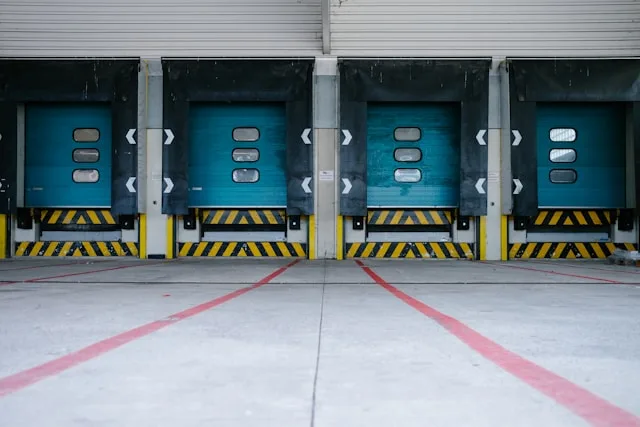
Cinisello Balsamo processes roughly 62% of its logistics throughput for e-commerce fulfilment. That figure has climbed from 54% in just three years. The warehouses filling this demand sit in a corridor where vacancy rates hit 2.1% as of late 2024, prime rents run 12% above the Lombardy average, and the municipal government has cut logistics-zoned land from 6.1% to 4.3% of its territory. Every operator in the Sesto Ulteriano cluster is being asked to move more goods through less space, faster, and with a fleet that must meet Euro VI standards before it crosses into Milan's Area B zone three kilometres to the south.
The response has been predictable in its direction and problematic in its execution. Operators are investing in automation: autonomous mobile robots, warehouse management system upgrades, mezzanine installations designed to extract vertical capacity from buildings that cannot expand horizontally. Colliers projects that 30% of existing warehouse stock in the Sesto Ulteriano area will require automation retrofitting by 2026 to maintain throughput. The capital is flowing. The problem is that the people required to install, operate, and manage these systems do not exist in sufficient numbers. WMS specialist roles in this corridor remain open for 90 to 120 days. Fleet managers with electric vehicle and low-emission zone expertise are being poached at premiums of 15 to 20% above national collective agreement scales. Supply chain directors capable of integrating AI-driven demand forecasting are 85% passive, meaning they are employed, performing, and not responding to job advertisements.
What follows is an analysis of the forces reshaping this logistics corridor, who is hiring, what they cannot find, and what organisations operating in or entering this market need to understand before they commit to their next senior search.
The Geography That Creates the Bottleneck
Cinisello Balsamo sits at the intersection of the A4 Turin-Trieste motorway and Milan's northern ring road, the Tangenziale Nord. This position makes it a natural deconsolidation point for goods entering Milan's densely populated northeastern quadrant. The upstream consolidation point, Interporto di Milano at Liscate/Melzo, feeds two million square metres of intermodal capacity into a corridor where last-mile operators break bulk and dispatch into the city.
The A4 segment between Sesto San Giovanni and Monza, which traverses Cinisello Balsamo, recorded average daily traffic of 145,000 vehicles in 2023. Peak-hour speeds drop below 40 km/h. The SP11, Viale Fulvio Testi, the primary arterial connecting the A4 to the Sesto Ulteriano zone, runs at 110% of designed capacity during morning distribution peaks between 07:00 and 09:00, according to the municipality's sustainable mobility plan.
This is not simply an inconvenience. It is a structural constraint on operational models. Just-in-time delivery windows compress when transit times become unpredictable. Operators running last-mile services into Milan's city centre must also contend with Cinisello Balsamo's own restricted traffic zone, which bars heavy goods vehicles over 7.5 tonnes from the city centre during morning and evening peaks. The result: a forced switch to smaller electric vans for final-leg delivery, adding an estimated €0.35 to €0.50 per parcel in cost.
The A4 third-lane widening between Milan and Brescia, scheduled for completion in late 2025, may have temporarily worsened congestion during its final construction phases. Any lasting relief remains to be seen in 2026. For hiring leaders, the implication is concrete: operations managers in this corridor need expertise in constrained, high-density urban distribution, not the open-road logistics planning that characterises less congested corridors like Piacenza or Cremona.
Land Scarcity Is Forcing a Different Kind of Growth
The Polo Logistico Sesto Ulteriano comprises 1.2 million square metres of logistics and light industrial space. As of late 2024, only 3% of this surface remained available. The municipality's urban development plan explicitly cites "saturation of logistics-compatible surfaces" and has redesignated remaining parcels for mixed-use or residential conversion. New logistics developments exceeding 5,000 square metres now require Strategic Environmental Assessment approval due to proximity to Parco Nord Milano, extending permitting timelines to 18 to 24 months.
This is not a temporary squeeze. It is a deliberate policy direction. The share of municipal territory zoned for productive activities has been cut by nearly a third, from 6.1% to 4.3%.
Why Operators Are Staying Rather Than Relocating
The obvious question: if space is this constrained and this expensive, why not move to Piacenza or Cremona where land is cheaper and more available? The answer lies in a tension visible in the data. Despite near-zero vacancy and explicit zoning restrictions, prime rents in the Sesto Ulteriano micro-market have stabilised at €65 to €75 per square metre rather than spiking to the €90-plus levels that a true supply crisis would produce. Operators are absorbing the constraint through densification. Mezzanine installations, vertical racking, and automation allow them to extract more throughput from the same footprint.
The location premium is higher than the rent curves suggest. Being three kilometres from Milan's northeastern residential density, connected by motorway to the intermodal hub, and positioned on the deconsolidation point for the fastest-growing e-commerce catchment in Lombardy is a competitive advantage that cheaper land 80 kilometres south cannot replicate.
What Densification Demands From the Workforce
Densification is not a facilities decision. It is a workforce decision. Every mezzanine installation requires WMS reconfiguration. Every AMR deployment requires integration specialists. Every warehouse that adds a second operational level needs supervisors who understand automated pick-path optimisation, not just forklift scheduling.
The research from Colliers projecting that 30% of warehouse stock will need automation retrofitting by 2026 describes a capital investment programme that has already begun. But the people who make that investment productive are the scarcest resource in this corridor. This is the core tension of Cinisello Balsamo's logistics market in 2026: the buildings are adapting, the fleets are electrifying, and the workforce has not caught up.
Three Talent Gaps That Define This Market
The shortages in Cinisello Balsamo's logistics corridor fall into three distinct categories, each with different dynamics and different search implications.
WMS and TMS Technical Specialists
Roles requiring expertise in platforms like SAP EWM or Manhattan Associates remain open for 90 to 120 days in the Sesto Ulteriano cluster. General warehouse supervisor roles fill in 45 days. The gap is not marginal. It is a factor of two to three in time-to-fill.
Unioncamere-Excelsior data confirms that "tecnici di magazzino digitale" represent the second-fastest growing shortage category in Lombardy's logistics sector, with unmet demand rising 23% year on year. Unemployment in this specific segment sits below 2%. Average tenure is 4.5 years, according to Randstad's analysis. These candidates are not looking. They respond to direct approaches regarding platform migration projects or equity participation, not to job board postings.
For organisations running a search in this segment, the conventional playbook of posting and waiting reaches almost nobody worth hiring.
Fleet Managers With Green Logistics Expertise
The convergence of Milan's Area B low-emission zone, Cinisello Balsamo's own HGV restrictions, and Parco Nord Milano's environmental mandates means that every last-mile operator in this corridor needs fleet managers who understand electric vehicle deployment, LEZ compliance, route optimisation under emission constraints, and the capital expenditure planning that accompanies a fleet transition costing €80,000 to €120,000 per electric van.
Assologistica surveys indicate that 68% of Lombardy logistics firms cite sustainability compliance expertise as their primary hiring bottleneck. The response has been aggressive poaching. Employers report offering premiums of 15 to 20% above standard CCNL scales to secure managers with this profile. The talent pool is small, the demand is growing, and the competitive dynamic is zero-sum: every hire by one operator is a loss for another.
Supply Chain Directors With AI Integration Capability
At the director and VP level, 85% of qualified candidates in the Milan hinterland are employed and not actively searching. These are professionals responsible for end-to-end supply chain management with P&L accountability, increasingly expected to integrate AI-driven demand forecasting and predictive analytics into operations that were manually planned five years ago.
Total compensation at this level ranges from €120,000 to €160,000, with candidates holding pharmaceutical cold-chain expertise commanding a 15% premium at the top end. The search challenge is not compensation. It is access. Organisations that rely on advertised vacancies rather than headhunting methodology are structurally excluded from 85% of the viable candidate pool.
The Compensation Picture: Three Markets Competing for the Same People
Cinisello Balsamo does not compete for talent in isolation. Its logistics professionals evaluate opportunities across three distinct geographic markets, each offering a different proposition.
Milan's city centre, concentrated in Porta Nuova and CityLife, draws supply chain strategy and procurement executives with salaries 20 to 25% higher than the hinterland. The scope of these roles is typically narrower, focused on strategic planning rather than multi-site operations. But candidates often prioritise the headquarters career trajectory over depot-based management. The pull is status and progression, not just money.
The Piacenza-Parma corridor offers the opposite calculus. Housing costs run 30% lower than the Milan hinterland. Growing 3PL clusters anchored by Kuehne+Nagel and DHL Global Forwarding attract mid-level operations managers seeking homeownership and quality of life. The intensity of last-mile operations in Cinisello Balsamo, with its congestion, restricted zones, and compressed delivery windows, loses its appeal when a comparable role exists in a less pressured environment an hour south.
For bilingual Italian-German executives at the VP and director level, Southern Switzerland presents a more dramatic pull. Lugano and Chiasso offer net salaries 40 to 50% higher for equivalent director roles. The talent pool affected is narrow but critical. Losing a single supply chain director to Ticino does not show up in aggregate statistics. It shows up in the 120-day vacancy that follows.
Within Cinisello Balsamo itself, the compensation structure follows clear seniority bands. Logistics operations managers with 8 to 12 years of experience earn €58,000 to €72,000. At the executive and VP level with multi-site responsibility, this rises to €95,000 to €125,000, with top performers at major 3PLs reaching €140,000 including performance bonuses. Last-mile and e-commerce fulfilment managers at the senior level earn €52,000 to €68,000, climbing to €85,000 to €110,000 at the executive tier. Stock options are increasingly common in private equity-backed 3PLs at this level.
Understanding where your compensation offer sits relative to these benchmarks is not optional. It is the starting point of any credible search in this market.
The Skills Mismatch Hiding Behind Aggregate Employment Data
The Metropolitan City of Milan reports an unemployment rate of 5.8%. Youth unemployment exceeds 15%. These figures create an impression of available labour. The impression is wrong.
This is the analytical point that aggregate data obscures and that hiring leaders in this corridor must understand: the available workforce and the required workforce overlap almost nowhere. The logistics sector in Cinisello Balsamo has automated, electrified, and digitised its operations faster than the local labour market has produced workers with matching credentials. WMS specialists require platform-specific certifications. Fleet managers need electric vehicle optimisation experience that did not exist as a job requirement five years ago. Drivers need C+E licences with ADR hazardous materials certification, and the pipeline of newly qualified drivers is failing to replace the 34% of heavy vehicle drivers in the Milan province who are over 55.
The national "Decreto Flussi" work visa system allocated only 12,000 permits for logistics and transport nationally in 2024. This is insufficient to fill driver shortages across the country, let alone in a single high-demand corridor. Operators unable to recruit domestically are forced toward costly agency staffing, compressing already thin margins in a market where electricity costs for automated warehouses averaged €185 per megawatt-hour in 2024.
According to a CNR-IRPPS study, logistics depots in the Milan hinterland suspended expansion of night-shift operations in Q2 2024 due to the inability to recruit 40 additional C+E licensed drivers with ADR certification. This was despite offering premiums of €1,500 to €2,000 annually above CCNL minimums. The constraint was not willingness to pay. The candidates simply did not exist in sufficient numbers.
The CCNL "Settore Autotrasporto" negotiation, ongoing through late 2024, may impose an additional estimated 3.5% wage increase. For operators already absorbing higher electricity costs, fleet electrification capital expenditure, and automation investment, each incremental labour cost increase further compresses the margin available to attract and retain the specialists who keep these operations running. The cost of making a wrong hire at this level is not merely the salary. It is the operational disruption in a corridor with no slack.
What This Means for Senior Hiring in 2026
The trajectory established through 2025 has continued into 2026. Assologistica's forecast of 4.5% compound annual growth in Lombardy's logistics throughput, driven by pharmaceutical and fashion e-commerce, has increased demand for the same roles that were already impossible to fill at pace.
Cinisello Balsamo's logistics employers face a hiring environment with three defining characteristics.
First, the candidates who matter most are invisible to conventional recruitment. At the operations director and supply chain director level, 85% are passive. At the WMS specialist level, unemployment is below 2% and average tenure is 4.5 years. Posting a role on a job board in this market is not a strategy. It is a formality.
Second, the competition is geographic, not just sectoral. A supply chain director weighing an offer in Cinisello Balsamo is simultaneously evaluating Milan centre for status, Piacenza for lifestyle, and Lugano for net income. The offer must account for all three alternatives, not just the one you think you are competing against. Understanding what motivates a passive candidate to move requires a more sophisticated approach than matching a salary band.
Third, the skills required have changed faster than the talent pool has adapted. The investment in automation, fleet electrification, and digital warehouse management has replaced one kind of logistics professional with another that does not yet exist in sufficient numbers. Capital moved faster than human capital could follow. This is not a temporary misalignment. The regulatory and environmental pressures driving this transformation are intensifying, not easing. Proximity to Parco Nord Milano, Milan's expanding Area B, and EU-wide emissions standards will continue to push operational requirements further from the capabilities of the existing workforce.
For organisations competing for leadership talent in logistics and industrial supply chains, the search methodology matters as much as the offer. Firms that rely on active candidate pools and reactive recruitment processes will consistently lose to competitors who identify and approach the right candidates before a role is even posted.
KiTalent's approach to executive search in constrained markets is built for exactly this dynamic: AI-powered talent mapping that identifies the passive specialists and senior leaders who will never appear on a job board, combined with a direct search methodology that delivers interview-ready candidates within 7 to 10 days. With a 96% one-year retention rate across 1,450 completed executive placements, the model is designed to solve the problem that this corridor's employers face every quarter.
For logistics operators, 3PLs, and e-commerce businesses hiring into Cinisello Balsamo's corridor in 2026, where WMS specialists take 120 days to find, fleet managers are poached at 20% premiums, and supply chain directors are invisible to every conventional channel, start a conversation with our executive search team about how we map and reach this market's hidden talent.
Frequently Asked Questions
What logistics roles are hardest to fill in the Cinisello Balsamo corridor?
Three categories present the greatest difficulty. WMS and TMS specialists with SAP EWM or Manhattan Associates expertise remain open for 90 to 120 days on average, more than double the fill time for general warehouse supervisors. Fleet managers with electric vehicle optimisation and low-emission zone compliance experience are subject to aggressive poaching at premiums of 15 to 20% above national collective agreement scales. Supply chain directors with AI-driven demand forecasting capability are 85% passive, meaning they are employed and not responding to advertised vacancies. Each category requires distinct talent mapping and direct search approaches rather than conventional job advertising.
What do supply chain directors earn in Milan's logistics hinterland?
Supply chain directors with end-to-end and P&L responsibility earn between €120,000 and €160,000 in total annual compensation in the Cinisello Balsamo corridor. Candidates with pharmaceutical cold-chain expertise command premiums of approximately 15% at the top end. At the operations manager level with 8 to 12 years of experience, the range is €58,000 to €72,000, rising to €95,000 to €125,000 at executive and VP level with multi-site responsibility. Stock options are increasingly offered by private equity-backed 3PLs at the senior management tier.
Why is Cinisello Balsamo important for Milan's logistics market?
Cinisello Balsamo sits at the intersection of the A4 motorway and Milan's Tangenziale Nord, making it the primary deconsolidation point for e-commerce flows entering Milan's densely populated northeastern quadrant. The Polo Logistico Sesto Ulteriano comprises 1.2 million square metres of logistics space. E-commerce fulfilment now accounts for an estimated 62% of logistics demand in the catchment area. Major operators including DHL Supply Chain, BRT, and SDA (Poste Italiane Group) maintain facilities here, serving pharmaceutical, retail, and fashion clients across northern Italy.
How does automation affect logistics hiring in Lombardy?
Market projections indicate that 30% of existing warehouse stock in the Sesto Ulteriano area requires automation retrofitting by 2026 to maintain throughput without physical expansion. This creates demand for WMS integration specialists, AMR deployment engineers, and operations managers who understand automated pick-path optimisation. The workforce trained for manual warehousing does not transfer directly into these roles. The result is a systemic skills mismatch: the unemployment rate in the wider Milan metropolitan area is 5.8%, yet specialist logistics technology roles remain unfilled for months. Bridging this gap requires identifying candidates through proactive pipeline development rather than waiting for applications.
What geographic markets compete with Cinisello Balsamo for logistics talent?
Three markets draw talent away from the Cinisello Balsamo corridor. Milan's city centre offers supply chain strategy roles with salaries 20 to 25% higher, attracting executives who prioritise headquarters career trajectories. The Piacenza-Parma corridor offers housing costs 30% lower and a less intensive operational environment, appealing to mid-level managers seeking quality of life. Southern Switzerland, particularly Lugano and Chiasso, offers bilingual Italian-German executives net salaries 40 to 50% higher for equivalent director roles. Retention and recruitment strategies must account for all three alternatives to remain competitive.
How quickly can an executive search firm deliver candidates for logistics leadership roles in this market?
KiTalent delivers interview-ready executive candidates within 7 to 10 days through AI-enhanced direct search methodology. In a market where 85% of supply chain directors are passive and WMS specialists sit below 2% unemployment, conventional search timelines of 90 to 120 days create unacceptable operational risk. KiTalent's pay-per-interview model means organisations only pay when they meet qualified candidates, eliminating the retainer risk associated with traditional search. With over 200 organisations partnered globally and an average client relationship lasting eight years, the approach is designed for markets where the best candidates are invisible to standard channels.