Cuneo's Logistics Talent Paradox: 6.1% Unemployment and 120-Day Searches That Still Fail
The Province of Cuneo has 1,847 active freight transport firms, 2,400 licensed heavy vehicle drivers, and a general unemployment rate above the national average. By every surface metric, this should be a market where hiring leaders fill logistics roles quickly and cheaply.
It is not. Senior forwarding positions in Cuneo sit open for 120 days or more. ADR-certified driver vacancies run 90 to 120 days unfilled across the province's chemical logistics belt. As of late 2024, according to local media outlet Tuttocuneo.it, one of the province's largest international forwarders had spent nine months searching for an International Freight Forwarding Manager before outsourcing the search to a Milan-based headhunter. The unemployment rate tells you nothing useful about this market. The skills mismatch tells you everything.
What follows is a structured analysis of why Cuneo's logistics sector is harder to hire for than its demographics suggest, what forces are widening the gap between available workers and required specialists, and what organisations operating in this alpine corridor need to understand before they commit to their next senior search.
The Consolidation Node That Is Not a Hub
Cuneo's logistics function is frequently mischaracterised. Senior leaders entering this market from Milan or Turin expect a scaled distribution hub with large warehousing footprints and multimodal connectivity. They find something different entirely.
The province's freight and transport sector operates as a consolidation and cross-border brokerage node. Warehousing is predominantly small-scale, under 3,000 square metres and owner-operated, lacking the distribution centre density found in Milan's hinterland or Turin's Orbassano district. The 1,847 active transport firms registered as of Q3 2024 represent 12.3% of Piemonte's total regional logistics establishments, according to Unioncamere Piemonte's Movimprese data. But 78% of those operators maintain fleets of fewer than five vehicles. This is not a logistics hub. It is a dense network of micro-enterprises serving three highly specific verticals.
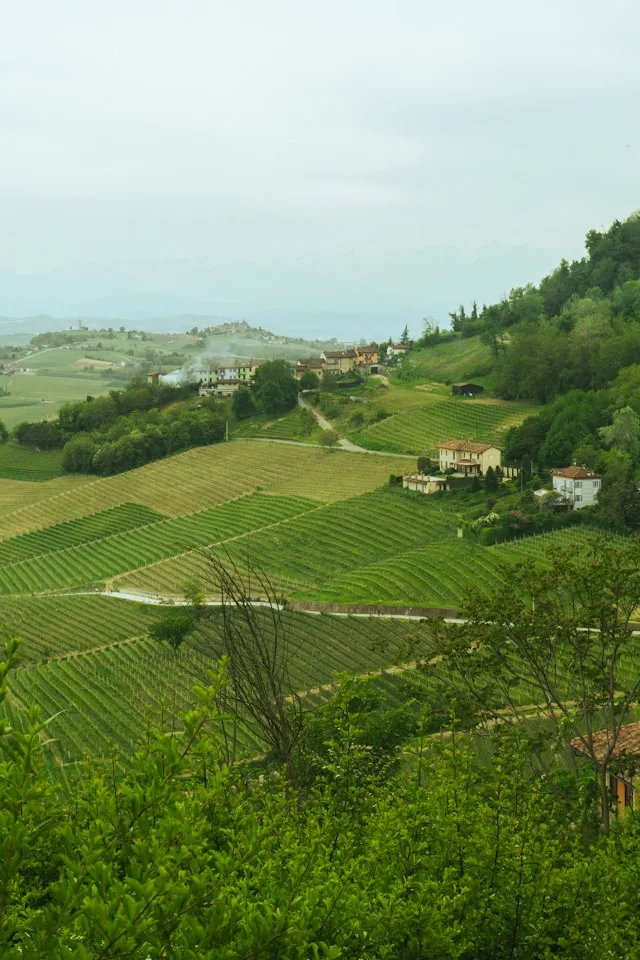
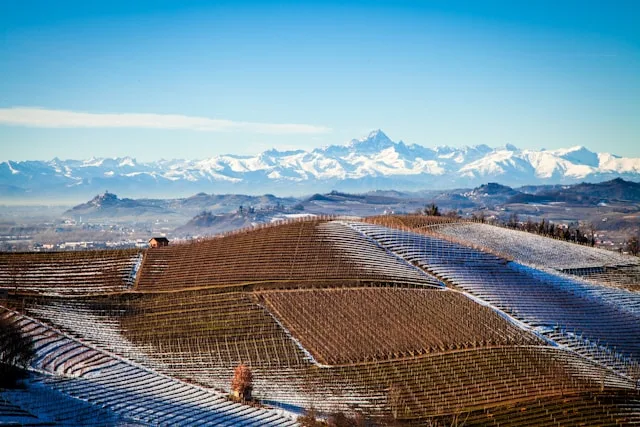
The first is agri-food: wine from the Barolo and Barbaresco appellations, dairy, and confectionery requiring temperature-controlled cross-border transport into France. The second is chemical and industrial components from the Cuneo industrial district, serving textile machinery and plastics manufacturers. The third is the French Riviera corridor itself, with freight moving through the Colle di Tenda and Colle della Maddalena mountain passes.
This specialisation is what makes the talent market so deceptive. The roles that matter most in this province require an unusually specific combination of skills: Franco-Italian customs expertise, alpine fleet management, cold chain integrity, and fluency in both languages. These skills do not exist in surplus anywhere in Italy. They exist in even shorter supply in a province of 586,000 people surrounded by mountains.
Why Unemployment Statistics Mislead Every Hiring Decision
This is the central analytical tension in Cuneo's logistics market, and the one most likely to catch a hiring executive off guard.
Cuneo Province reports a general unemployment rate of 6.1%, above the national average of 5.8%. The median age of workers in transport and logistics is 47.2 years. On paper, these numbers suggest a mature, available labour pool. In practice, they describe the opposite: an ageing workforce with generic qualifications and almost no overlap with the specialist profiles that senior logistics roles demand.
The Forwarding Manager Gap
For international forwarding managers with Franco-Italian expertise, unemployment in the specialism runs below 2%. Average tenure exceeds eight years. According to Michael Page Italy's 2024 logistics market analysis, 85% of placements in this category occur through executive search or direct headhunting rather than job board applications. The active-to-passive candidate ratio for Director-level logistics roles in the province sits at approximately 1:8, according to Hays Italy.
These are not professionals browsing LinkedIn on a Sunday evening. They are embedded in organisations where they are solving operational problems that no one else in the province can solve. The unemployment rate captures none of this reality.
The ADR Certification Bottleneck
The province has 2,400 licensed heavy vehicle drivers. Only 340 hold ADR certifications for hazardous goods transport. That is 14% of the driver base qualified for the chemical logistics work that forms one of the province's three core freight verticals. ADR-certified drivers in Cuneo exhibit 95% employment rates and are typically retained through loyalty bonuses. When they do move, the mechanism is not a job posting. It is a direct poaching approach with immediate start bonuses of €2,000 to €3,000.
The aggregate unemployment figure of 6.1% and the specialist vacancy rate of 8.4% for professional logistics roles describe two entirely different labour markets occupying the same geography. The first is a pool of available workers with generic qualifications. The second is a near-zero-availability market for the skills that actually run cross-border freight through alpine passes. Hiring leaders who plan their search strategy around the first number will fail when they encounter the second.
The Infrastructure Constraints That Shape Every Role
No discussion of Cuneo logistics talent is complete without understanding why the physical infrastructure defines what skills are needed and who possesses them.
The SS20 via the Colle di Tenda experiences an average of 45 days of partial or total closure annually due to landslides or snow, according to ANAS road authority data from 2023-2024. Climate change is accelerating this pattern. ANAS forecasts a 15% increase in weather-related closures by 2030. For any operator running just-in-time supply chains through this corridor, every day of closure costs money, reputation, and sometimes an entire client relationship.
The rail alternative does not exist in practical terms. The Cuneo-Ventimiglia line remains non-electrified, limited to historic tourist traffic, with freight capacity effectively zero for standard container flows. This forces 98% of cross-border freight onto road, according to the European Commission's transport data, exposing operators to EU Mobility Package restrictions on rest periods and cabotage rules that disproportionately disadvantage small Italian fleets.
What this means for talent is direct. Alpine fleet management is not a transferable skill from flatland logistics. It requires specific experience with winter equipment regulations, weight restrictions on mountain routes, and the operational judgement to reroute loads when a pass closes with twelve hours' notice. A supply chain director recruited from Milan's A4 corridor may have excellent credentials and no idea how to manage a fleet that loses its primary route to France for six weeks each winter. This constraint narrows the viable candidate pool further, well beyond what job title matching would suggest.
The infrastructure picture is set to shift modestly by mid-2026. Completion of the A33-A6 smart corridor upgrades, scheduled for Q2 2026, promises to reduce transit times to Savona's port by 12%. Two speculative logistics facilities totalling 45,000 square metres are under development in the Cuneo Sud industrial zone, targeting third-party logistics providers serving French luxury goods distribution. But these developments create additional demand for qualified talent without creating additional supply.
The Regulatory Squeeze on Micro-Operators
Cuneo's fragmented market structure is colliding with a regulatory environment designed for larger, better-capitalised firms. The result is a compliance burden that many of the province's 1,847 transport businesses are not equipped to absorb.
EU Mobility Package Enforcement
The EU Mobility Package, entering full enforcement through 2025 and 2026, imposes return-to-home requirements and stricter posting rules that will increase operational costs for Cuneo-based firms serving France by an estimated 8 to 12%. The impact falls disproportionately on SMEs with fewer than ten vehicles, which describes the vast majority of the province's operators. According to the International Road Transport Union's 2024 impact assessment, these firms lack the administrative infrastructure to manage the documentation burden without hiring dedicated compliance staff.
Carbon Reporting and CBAM
The Carbon Border Adjustment Mechanism implementation in 2026 requires enhanced emissions tracking for cross-border chemical and steel transports. This is not a paper exercise. It demands IT investments in carbon accounting systems that many small Cuneo forwarders have delayed. Meanwhile, the province's fleet remains 78% diesel-dependent, and local operators report retrofitting costs of €15,000 to €25,000 per heavy vehicle to meet EU Euro VI-E standards that took effect in January 2025.
The regulatory squeeze is creating a new category of role that barely existed in this market three years ago: the compliance-literate logistics manager who understands both Franco-Italian customs procedures and EU environmental reporting. Demand for green logistics skills including electric fleet management and intermodal coordination is projected to grow 18% by Q4 2026, according to Unioncamere Piemonte. Training capacity in the province remains limited. The skills are needed now. The training infrastructure to produce them is years behind.
This regulatory pressure also drives the most important original observation about this market. The digital investment data and the fragmentation data are not describing a market in transition. They are describing a market that is splitting in two. Some 42% of surveyed logistics firms in Cuneo reported digitalisation investments in 2024, up from 28% in 2022. But the capital requirements for carbon reporting, CBAM compliance, and TMS adoption favour consolidation. The alpine niche market structure resists economies of scale. The result is an accelerating bifurcation between digitalised mid-cap firms that can attract and retain skilled managers and struggling micro-operators that cannot compete for talent, comply with regulation, or invest in technology. The talent market is not merely tight. It is stratifying into two tiers, and the gap between them is widening with each regulatory cycle.
Compensation: The Three-Way Pull on Cuneo Talent
Executive compensation in Cuneo logistics sits in an uncomfortable middle position. The province pays less than Turin and Genoa but more than smaller Piemonte provinces like Alessandria and Asti. This creates a talent dynamic where Cuneo can attract from smaller markets but consistently loses mid-career professionals to larger cities.
At the senior specialist and manager level, an International Freight Forwarding Manager in Cuneo commands €42,000 to €52,000 base salary. At the executive and VP level, the same role pays €68,000 to €85,000 plus bonus. A Supply Chain Director with cross-border responsibility earns €55,000 to €65,000 at manager level and €85,000 to €110,000 at executive level.
Compare this with Turin, 90 kilometres to the north-east. Senior logistics managers in Turin command €75,000 to €95,000 at Director level, a 20 to 30% premium over equivalent Cuneo positions. Turin offers something Cuneo structurally cannot: career progression into multinational headquarters such as Iveco and Amazon's Italian operations, plus broader multimodal exposure through Caselle airport's air freight facilities.
Genoa, 120 kilometres to the south, pulls from a different angle. Port logistics roles pay 15 to 25% premiums driven by hazardous cargo certifications and union density. Genoa siphons ADR-certified drivers and maritime-intermodal specialists from Cuneo's chemical logistics cluster.
Nice and the French Riviera exert a third gravitational pull, though limited to senior bilingual professionals. French drivers earn net wages approximately 35% higher than Italian counterparts: €2,400 to €2,800 per month versus €1,800 to €2,200 in Cuneo. The language barrier and cost-of-living differentials limit this drain to executive-level bilingual managers rather than operational staff, but at precisely the seniority level where Cuneo's vacancies are most acute.
The compensation gap between Cuneo and Turin is not closing. It is widening fastest at exactly the seniority level where the most critical roles sit. According to research from the Politecnico di Torino, Turin draws mid-career professionals aged 35 to 45 who are seeking vertical mobility. This leaves Cuneo firms recruiting from a bifurcated pool: junior talent at the start of their careers and pre-retirement executives approaching the end of theirs. The missing middle is the cohort with ten to twenty years of operational experience. They are in Turin, in Genoa, or across the border in France.
What the Employer Base Actually Looks Like
Understanding the scale of Cuneo's logistics employers explains why executive search in this market operates differently from larger Italian cities.
Furlog S.p.A., headquartered in Villafalletto, is the province's largest international freight forwarder with 180 employees and a specialisation in cross-border French traffic and temperature-controlled transport. Gondrand's Cuneo branch employs approximately 45 staff focused on customs brokerage and project cargo for industrial machinery. DHL Supply Chain operates a 12,000 square metre facility in Tarantasca serving automotive and fashion verticals with around 80 employees. BRT (Bartolini) runs a last-mile hub in Cuneo city with roughly 60 drivers and sorting staff.
These are not large operations. The biggest private logistics employer in the province has 180 people. Most of the 1,847 registered firms are owner-operators or family businesses. The institutional anchors include the Polo Tecnologico di Cuneo, which hosts a Competence Center for Logistics 4.0 testing IoT tracking for alpine freight, and the Camera di Commercio di Cuneo, which publishes quarterly logistics employment data.
For hiring leaders, the implication is straightforward. A search in this market cannot rely on the methods that work in Milan or Turin. There are no large corporate HR departments producing a steady flow of professionals into the market. There is no deep bench of candidates cycling between big employers. The candidate who can run a cross-border freight operation through alpine passes with Franco-Italian customs fluency is almost certainly already employed, not looking, and retained through loyalty mechanisms that a job posting cannot overcome.
What a Successful Search Requires in This Market
The data points converge on a single conclusion. Cuneo's logistics talent market is a passive candidate market.
For International Forwarding Managers with Franco-Italian expertise, 85% of placements occur through search or headhunting. For Supply Chain Directors with alpine experience, the active-to-passive ratio is 1:8. For ADR-certified drivers, movement happens through direct poaching with signing bonuses, not applications.
A conventional search process, posting a role on job boards and waiting for applications, reaches at most the visible 15 to 20% of this market. The other 80% must be identified, mapped, and approached directly. In a province of 586,000 people where the total pool of qualified senior logistics professionals with cross-border expertise numbers in the low hundreds, the margin for error in candidate identification is close to zero.
The search timeline adds further pressure. According to Il Sole 24 Ore's Piemonte edition, talent competition between Cuneo, Turin, and Genoa has intensified through 2024 and into 2025. A Cuneo-based confectionery exporter lost its Supply Chain Manager to a Turin competitor offering a 25% salary premium and remote-work flexibility. The role required Franco-Italian VAT and customs expertise. Replacing that kind of specialist in this market is not a matter of weeks. It is a matter of months, if it happens at all.
The firms succeeding in this environment share common characteristics. They move fast when a candidate is identified. They offer the total package required to prevent counteroffers: not just compensation, but role scope, autonomy, and in some cases flexibility arrangements that compensate for the salary gap with Turin. They use specialist executive search methods that reach passive professionals through industry networks like Assologistica and AILOG rather than through public advertising.
For organisations competing for cross-border logistics and supply chain leadership in Cuneo's alpine freight corridor, where the candidates who matter most are deeply embedded in current roles and the cost of a failed search compounds with every month a critical position sits vacant, speak with our executive search team about how KiTalent approaches markets where the viable candidate pool is measured in dozens rather than thousands. KiTalent's AI-enhanced talent mapping methodology identifies and reaches the passive professionals that job advertising cannot touch, delivering interview-ready candidates within 7 to 10 days. With a 96% one-year retention rate across 1,450 completed executive placements, the approach is built for markets where precision matters more than volume.
Frequently Asked Questions
Why is it so hard to hire logistics managers in Cuneo despite above-average unemployment?
Cuneo Province's 6.1% unemployment rate reflects available workers with generic qualifications. It does not reflect availability in specialised logistics roles. For International Forwarding Managers with Franco-Italian customs expertise, unemployment in the specialism sits below 2%. The vacancy rate for professional logistics roles at manager level and above is 8.4%, nearly double the provincial average. The aggregate unemployment figure masks a severe skills mismatch between available workers and the specific capabilities that cross-border alpine logistics demands.
What salary does a Supply Chain Director earn in Cuneo compared to Turin?
A Supply Chain Director with cross-border responsibility earns €85,000 to €110,000 at executive level in Cuneo Province. The equivalent role in Turin commands €75,000 to €95,000 at the senior manager tier, with progression opportunities into multinational headquarters pushing total compensation 20 to 30% above Cuneo. This gap drives mid-career professionals toward Turin, leaving Cuneo firms competing for either junior talent or late-career executives. Benchmarking compensation accurately before launching a search is essential to avoid losing preferred candidates to a predictable competitor offer.
What skills are hardest to find in Cuneo's logistics sector?
Three skill categories face the most acute shortages. First, Franco-Italian customs regulatory expertise including knowledge of EU ICS2 pre-clearance systems. Second, alpine fleet management covering winter equipment regulations, weight restrictions, and route contingency planning for mountain passes. Third, ADR certification for hazardous goods transport, where only 340 of the province's 2,400 licensed drivers hold the relevant qualification. Green logistics skills including electric fleet management are emerging as a fourth category with 18% projected demand growth by late 2026.
How does KiTalent approach executive search in a small, passive-candidate logistics market?
KiTalent uses AI-powered direct headhunting to identify and approach professionals who are employed, not actively looking, and not visible on job boards. In markets like Cuneo where the qualified candidate pool for senior logistics roles numbers in the low hundreds, this method reaches the 80% of professionals that conventional recruitment misses. KiTalent's pay-per-interview model means clients only pay when they meet qualified candidates, with full pipeline transparency and weekly reporting throughout the search.
What infrastructure changes could affect Cuneo's logistics market by 2027?
Two developments shape the near-term outlook. The A33-A6 smart corridor upgrades, scheduled for completion in Q2 2026, will reduce transit times to Savona's port by 12% and could divert Genoa-bound traffic through the province. Two new logistics facilities totalling 45,000 square metres are under development in the Cuneo Sud zone targeting 3PL providers. Both developments will increase demand for qualified logistics managers and fleet operators while the talent supply remains constrained by training capacity limits and competition from larger neighbouring cities.
What is the biggest risk for logistics firms hiring in Cuneo Province?
Concentration risk. Approximately 40% of Cuneo's logistics revenue derives from agri-food exports. A poor vintage year or French protectionist measures could contract sector revenues by 5 to 7%. Combined with the EU Mobility Package adding 8 to 12% to operational costs for small operators, firms relying on a narrow client base face compounding pressure. For hiring decisions, this means assessing whether a candidate's expertise spans multiple verticals or is tied to a single client segment that carries cyclical exposure. Understanding the true cost of a wrong hire is particularly important in a market this concentrated.