Cuneo's Precision Manufacturing Sector Has Record Subsidies and a Five-Year Low in Investment: The Talent Consequences Are Just Beginning
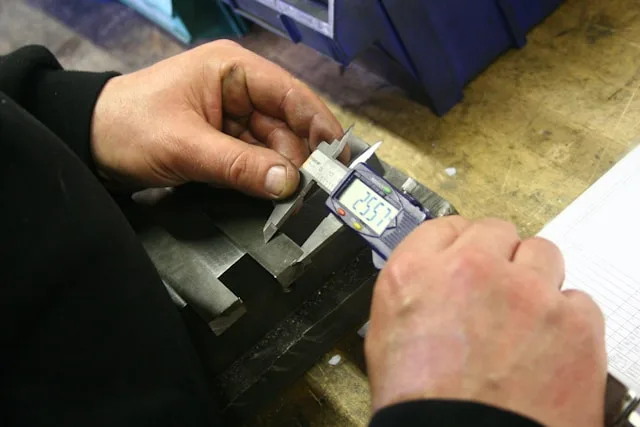
Cuneo Province produced €4.1 billion in machinery and metalworking output in 2024. Its 1,240 active enterprises supply Stellantis, Leonardo, and the Langhe-Roero food and wine cluster. Its export ratio stands at 68%, with Germany, France, and the United States absorbing the majority of shipments. By any aggregate measure, this is a functioning, internationally competitive industrial district.
Yet beneath those headline figures, the district is splitting in two. A minority of larger subcontractors are investing aggressively in collaborative robotics, predictive maintenance, and IoT architecture. The majority, 78% of the enterprise base, report investment intentions at a five-year low. CNC programmer roles sit open for seven to eleven months. Mechatronics maintenance positions go unfilled while training institute places sit 30% vacant. The Italian government's Transizione 5.0 tax credit offers up to 45% deduction for digital and green capital expenditure. Firms are not using it.
This is not a simple shortage story. What follows is an analysis of a district where capital, subsidies, and export demand are all present, but the human infrastructure required to convert them into growth is fracturing along a single fault line: the gap between the firms large enough to attract and retain technical talent and the micro-enterprises that cannot. That gap is widening in 2026, and it is reshaping every senior hiring decision in the province.
The Two-Speed District: Why 67% Adoption Masks 88% Paralysis
The headline statistic from Confindustria Cuneo's 2024 digital transformation survey is striking: 67% of firms in the 50-to-250 employee bracket have implemented at least three interconnected Industry 4.0 technologies. IoT sensors, predictive maintenance systems, and collaborative robotics are no longer pilot projects in these firms. They are production realities.
That figure describes roughly 270 enterprises. The remaining 970 firms, those with 10 to 49 employees, occupy a different reality entirely. Only 12% of these micro-enterprises plan any capital expenditure increase in 2025, down from 31% in 2022. Interest rate sensitivity, energy cost uncertainty, and supply chain fragility in mechatronic components have combined to produce what Confartigianato Cuneo's Q1 2025 Business Confidence Survey describes plainly as investment paralysis.
The Transizione 5.0 tax credit should, in theory, resolve this. A 45% deduction on qualifying digital and green investments is historically generous. But only 28% of firms with fewer than 50 employees secured medium-to-long-term financing for Industry 4.0 transition in 2024, according to the Bank of Italy's survey on industrial investment in Piedmont. The credit is available. The financing to bridge the gap between credit and cash flow is not.
The Green Compliance Wall
The investment paralysis is about to collide with a regulatory deadline. EU ETS Phase IV and the Carbon Border Adjustment Mechanism require metalworking SMEs to invest in energy-efficient furnaces and scrap optimisation. ENEA estimates €120 million in aggregate investment is required across the province to meet 2026 emissions benchmarks. As of late 2024, only 40% of firms had secured financing.
Energy already represents 14 to 18% of production costs for Cuneo's foundries and heat treatment facilities. German competitors operate at 8 to 10%, according to Federacciai's comparative analysis. The green transition is not optional. But for the majority of the district's firms, it is currently unaffordable.
The CSRD Burden on Thin Margins
The EU Corporate Sustainability Reporting Directive compounds the pressure. Confindustria's impact assessment estimates €50,000 to €80,000 in initial audit costs per firm for CSRD alignment. For median-sized enterprises in Cuneo's industrial manufacturing sector, that figure represents 15 to 20% of annual profit. The regulation was designed for publicly listed corporations. Its cascading effect on SME supply chains is creating a compliance cost that has no corresponding revenue.
The combined effect is a district where the firms most in need of modernisation are the least able to fund it. This is not a temporary cyclical dip. It is a structural divergence between two tiers of enterprise that will define hiring patterns for the next several years.
The Talent Market That Cannot Clear: 635 Technical Vacancies and No Pipeline to Fill Them
Vacancy rates in precision manufacturing reached 4.2% in Q4 2024, nearly double the provincial average of 2.1%. The Excelsior Unioncamere labour market monitor and the Centro per l'Impiego di Cuneo identify three categories of acute shortage.
CNC multi-axis programmers and operators account for 340 active vacancies province-wide. Mechatronics maintenance technicians, particularly those with competencies in Siemens TIA Portal and Fanuc robotics, account for 210. Supply chain and production managers account for 85, driven primarily by generational turnover as baby-boomer managers retire.
The aggregate number, 635 technical vacancies, understates the problem. According to Confindustria Cuneo's 2024 competency survey, medium-sized precision machining subcontractors with 50 to 100 employees report CNC programmer roles remaining open for 7 to 11 months on average. Forty percent of these vacancies end in failed searches that require workflow restructuring rather than a hire.
The ITS Meccatronico del Piemonte's Cuneo campus graduates 45 mechatronics technicians annually, with an 85% placement rate within provincial firms. Forty-five graduates against 210 mechatronics vacancies. The arithmetic does not work. And the pipeline is not expanding: 30% of ITS places went unfilled in 2024, according to Ministry of Education monitoring data, because technical manufacturing careers cannot compete with service-sector roles for the attention of young workers.
This is where the original synthesis of this article sits. The talent shortage in Cuneo is not primarily a demand-side problem driven by booming order books. Order backlogs have actually shortened, from 4.2 months in 2022 to 2.8 months in early 2025. Demand is normalising. The shortage persists because the supply side has structurally collapsed: the district's training pipeline produces a fraction of what it needs, the demographic base is eroding, and the wage levels that Cuneo's SME-dominated fabric can sustain are not competitive with Turin or Bologna. Capital has moved faster than human capital can follow, but in Cuneo's case, it is worse: capital has stalled for 78% of firms, and human capital has stalled for all of them.
The Compensation Gap That Drives Talent North and East
Cuneo's wage disadvantage against its two primary talent competitors is not closing. It is widening at exactly the seniority levels where the most critical shortages sit.
An Automation Engineer in Cuneo commands €55,000 to €70,000. The equivalent role in Turin pays €75,000 to €95,000, a premium of 25 to 35%, according to the Unioncamere Piemonte Regional Labour Market Observatory. Turin is 45 minutes by car. The salary differential is not an abstraction. It is a daily commuting calculation.
Bologna and Modena's Packaging Valley competes specifically for packaging machinery engineers and mechatronics specialists. The premium there is narrower, 15 to 20% over Cuneo, but the draw is qualitative as much as financial. IMA, Coesia, and Marchesini offer exposure to integrated OEM environments and international project portfolios that Cuneo's subcontracting model cannot match. A mechatronics engineer in Cuneo machines components for an OEM they may never visit. In Bologna, they work inside the OEM.
At the executive tier, an Operations Director or Plant Manager overseeing a 100-plus employee facility in Cuneo earns €120,000 to €160,000 base, with variable compensation bringing total packages to €150,000 to €210,000. A General Manager of a €20 to 50 million revenue SME earns €100,000 to €140,000 base plus profit-sharing schemes averaging 20 to 30% of base. These figures, drawn from Korn Ferry and PwC compensation studies for Italian industrial SMEs, are competitive within the province. They are not competitive with multinational alternatives in Turin or Milan.
Cuneo retains one genuine advantage: housing costs are 40% lower than Turin, according to Immobiliare.it. For family-oriented professionals in mid-career, this matters. But for the senior specialists and managers the district most desperately needs, the cost-of-living advantage does not fully offset the career-progression gap. A Quality Assurance Manager earning €58,000 to €75,000 in Cuneo can see a clear path to a director-level role at Leonardo or Stellantis in Turin. The equivalent path within Cuneo's atomised SME fabric is far less visible. Understanding how to negotiate executive compensation in this context requires knowledge of both the provincial wage structure and the regional competitive dynamics that shape candidate expectations.
The Passive Candidate Problem in an Atomised District
The market for experienced technical and leadership talent in Cuneo is overwhelmingly passive. LinkedIn Talent Insights data for the Turin-Cuneo manufacturing corridor indicates that for CNC programmers with five-plus years of experience, automation engineers with PLC and robot integration expertise, and R&D managers, only 20 to 25% of qualified candidates are actively seeking employment.
For R&D managers with aerospace or food-machinery specialisation, the figure approaches zero. Average tenure exceeds eight years. Unemployment in this segment is below 0.5%. Hays Italy describes this as a near-100% passive candidate market.
In a district where the largest mechanical employer, Omera S.p.A. in Farigliano, has approximately 380 employees, and where the typical firm employs 30 to 80 people, the hidden 80% of passive talent is not distributed across a few large organisations that a recruiter can systematically map. It is scattered across 1,240 enterprises, many of which do not maintain public LinkedIn profiles for their technical staff. The standard executive search playbook, which relies on identifying target companies and mapping their senior teams, encounters a structural obstacle in Cuneo: there are too many targets, each too small, with too little public visibility.
This atomisation creates a second-order effect. When competitors recruit experienced mechatronics technicians from neighbouring firms within the Fossano industrial zone, according to the CGIL-CISL-UIL Cuneo labour observatory, they offer wage premiums of 18 to 25% above standard CCNL levels. The talent is not entering the district. It is circulating within it, at increasing cost. Every hire from a neighbouring firm creates a vacancy at that firm. The district's total stock of experienced technicians does not increase. The cost of accessing them does.
This zero-sum dynamic is why traditional recruiting methods fail in markets like this. Job postings reach only the 20 to 25% who are actively looking, and at senior specialist and management level, that fraction shrinks further. The 85 open supply chain and production manager positions reflect generational retirement, not voluntary turnover. The replacements must come from somewhere outside the district's current talent pool, and finding them requires direct headhunting methods that reach professionals who are not looking and are not visible on conventional channels.
Reshoring Creates Demand Before It Creates Supply
The Distretto Tecnologico del Cuneese estimates that reshoring of precision machining from Eastern Europe could create 800 to 1,200 new technical positions by 2026. Cuneo's proximity to the Port of Genoa and the Turin aerospace cluster makes it a logical destination for work previously outsourced to Poland, the Czech Republic, and Romania.
This is a real opportunity. It is also an accelerant on an already burning talent shortage.
The 800 to 1,200 positions are incremental. They arrive on top of the existing 635 vacancies. The training pipeline that produces 45 mechatronics graduates per year has no mechanism to scale to meet this demand within the relevant timeframe. The apprenticeship system, which accounts for 34% of new hires in the metalworking sector, operates on a three-to-four-year cycle. An apprentice who begins in 2025 is productive in 2028 or 2029. The reshoring demand is now.
The DTC's Strategic Plan for 2025 to 2027 acknowledges that infrastructure upgrades in broadband and logistics are prerequisites for reshoring to materialise. But the plan is notably silent on where the 800 to 1,200 technicians will come from. This gap between capital investment planning and human capital planning is characteristic of industrial policy across northern Italy. The physical infrastructure receives attention. The workforce infrastructure does not.
For hiring leaders in Cuneo's machinery sector, the implication is direct: firms that wait for the talent pipeline to catch up to reshoring demand will find themselves competing not only with Turin and Bologna but with newly reshored operations within their own province that are better capitalised and offering higher compensation packages than the district has historically supported.
The Demographic Cliff and the Gender Exclusion That Deepens It
The sector's workforce demographics are stark. INPS data for the Province of Cuneo shows 38% of metalworking employees are over 50. Under-30 representation is 11%. Apprenticeship entrants, with a median age of 19, cannot offset the retirement wave in either volume or experience.
Provincial youth unemployment stands at 18.2% for the 15-to-24 age group. Thirty percent of ITS mechatronics places sit vacant. Young people in Cuneo are simultaneously unemployed and uninterested in the sector that has the most vacancies. The perceived lack of career glamour relative to service sectors is the explanation most commonly cited. But that explanation is incomplete.
Women represent only 6% of the metalworking production workforce in Cuneo. Among DTC member firms sampled, zero women hold floor-supervisor roles. This is occurring while female graduation rates in STEM fields in Piedmont have increased 34% since 2018, reaching parity with male graduates in technical high schools.
The gap between educational pipeline and workforce participation is too large to attribute to natural sorting. Structural barriers to entry, including workplace culture, shift inflexibility, and the physical demands of legacy production environments, are intensifying even as the educational supply improves. The talent shortage is partially artificial. A district that excludes half the working-age population from its most in-demand roles and then declares a talent crisis is describing a problem it is also perpetuating.
For executive search in manufacturing and industrial sectors, this dynamic creates both a challenge and an opportunity. The challenge is that the candidate pool, as conventionally defined, is genuinely thin. The opportunity is that firms willing to restructure shift patterns, invest in ergonomic automation, and actively recruit from the female STEM graduate pipeline will access a talent source their competitors are ignoring entirely. The cost of a failed senior hire in a district where replacement candidates take seven to eleven months to find is far higher than the cost of workplace adaptation.
What This Means for Senior Hiring in Cuneo's Manufacturing Sector
The convergence of these dynamics creates a hiring environment unlike anything in the district's recent history. Demand is not exploding. Order backlogs have normalised. But the supply-side collapse is so severe that even stable demand produces acute scarcity.
Senior specialist and executive roles are the hardest to fill and the most consequential when left open. An Automation Engineering Manager who can programme PLC and HMI systems and integrate robot cells is worth €65,000 to €85,000 base plus bonus. There are a finite number of these professionals in the province, and they are not looking. A Quality Assurance Manager capable of managing metrology labs and supplier quality across automotive and aerospace standards is worth €58,000 to €75,000. The AS9100 and IATF 16949 certifications required for these roles take years to accumulate. They cannot be trained in a six-month programme.
The 85 open production and supply chain manager positions represent an entire generation of operational leadership exiting the workforce. Building a proactive talent pipeline for these roles requires search methods that go beyond the province, reaching into Turin, Bologna, and potentially international markets, while offering packages that account for Cuneo's cost-of-living advantage without understating the career-progression concerns that keep senior candidates in larger metropolitan centres.
KiTalent's experience in AI-enhanced talent mapping for manufacturing leadership addresses the specific challenge this district presents: a fragmented employer base, a predominantly passive candidate market, and a compensation structure that requires precise benchmarking against regional competitors. With a pay-per-interview model that eliminates upfront retainer risk, and a 96% one-year retention rate for placed candidates, the approach is designed for markets where the margin for error in senior hiring is extremely thin.
For organisations in Cuneo's machinery and metalworking sector competing to fill the operations directors, automation managers, and R&D leaders who will determine whether their firms make the Industry 4.0 and green transitions or fall further behind, speak with our executive search team about how we approach this market. KiTalent delivers interview-ready executive candidates within 7 to 10 days by reaching the 75 to 80% of qualified professionals who are employed, performing, and invisible to conventional recruitment channels.
Frequently Asked Questions
What are the hardest manufacturing roles to fill in Cuneo Province in 2026?
CNC multi-axis programmers and operators represent the largest single category of vacancy, with 340 open positions province-wide as of early 2025. Mechatronics maintenance technicians with Siemens TIA Portal and Fanuc robotics competencies account for 210 vacancies. At senior level, 85 supply chain and production manager positions are open due to generational retirement. CNC programmer roles in medium-sized firms remain unfilled for 7 to 11 months on average, with 40% of searches ending in failure.
How does Cuneo's manufacturing compensation compare to Turin and Bologna?
Cuneo pays 25 to 35% less than Turin for equivalent engineering roles. An Automation Engineer in Cuneo earns €55,000 to €70,000 versus €75,000 to €95,000 in Turin. Bologna's Packaging Valley offers a 15 to 20% premium over Cuneo for packaging machinery and mechatronics specialists. At executive level, Cuneo Operations Directors earn €120,000 to €160,000 base. Cuneo's cost-of-living advantage, particularly 40% lower housing costs than Turin, partially offsets the gap for mid-career professionals. Executive compensation benchmarking is essential for structuring competitive offers.
Why are Cuneo's manufacturing SMEs not investing despite available tax credits?
The Transizione 5.0 tax credit offers up to 45% deduction for digital and green investments. However, only 12% of firms with 10 to 49 employees plan capital expenditure increases in 2025, down from 31% in 2022. Only 28% of sub-50-employee firms secured medium-to-long-term financing for Industry 4.0 in 2024. Interest rate sensitivity, energy cost uncertainty, and supply chain fragility in mechatronic components are overriding the subsidy incentive. The tax credit reduces cost but does not resolve cash flow or financing access.
What percentage of manufacturing candidates in Cuneo are passive?
For experienced CNC programmers, automation engineers, and R&D managers, 75 to 80% of qualified candidates are employed and not actively seeking new roles. For R&D managers with aerospace or food-machinery specialisation, the passive rate approaches 100%, with average tenure exceeding eight years and unemployment below 0.5%. KiTalent's direct headhunting methodology is specifically designed to reach this passive majority through AI-enhanced talent mapping rather than job advertising.
What is the reshoring opportunity for Cuneo's precision manufacturing sector?
The Distretto Tecnologico del Cuneese estimates that reshoring of precision machining from Eastern Europe could create 800 to 1,200 new technical positions by 2026. Cuneo's proximity to the Port of Genoa and the Turin aerospace cluster drives this trend. However, the district's training pipeline graduates only 45 mechatronics technicians per year, and the apprenticeship cycle requires three to four years. Firms positioning for reshoring demand need to begin building senior technical teams now rather than waiting for the pipeline to scale.
How does Cuneo's demographic profile affect its manufacturing talent market?
The workforce is ageing rapidly: 38% of metalworking employees are over 50, while under-30 representation is just 11%. Women represent only 6% of the production workforce despite reaching parity with male graduates in Piedmont's technical high schools. Meanwhile, 30% of ITS mechatronics training places go unfilled. Youth unemployment in the province stands at 18.2%. The sector faces simultaneous problems of retirement, under-recruitment, and exclusion of half the potential workforce.