Dortmund's ICT Sector Produces the Talent Other Cities Hire: What That Means for Organisations Trying to Recruit Here
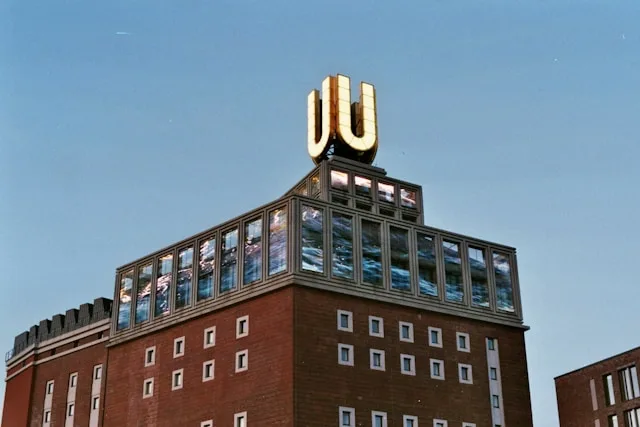
TU Dortmund graduates roughly 1,200 ICT-qualified professionals every year. By every conventional measure, that pipeline should sustain a city with 32,000 to 35,000 technology workers. It does not. Approximately 40% of those graduates leave the Ruhr region within two years, drawn to Munich, Berlin, and Hamburg by salary premiums that Dortmund's employers have not matched and, in most cases, cannot match. The city functions less as a technology talent market and more as a training ground for competitors.
This creates a specific and compounding problem for hiring leaders in Dortmund's ICT sector. The vacancy rate for technology roles open longer than 90 days sits at 4.8% locally, well above the 3.2% national average. Average time-to-fill for software engineering positions reached 143 days through late 2024, up from 112 days the year before. The talent is being produced. It is not staying. And the organisations left competing for what remains are bidding against remote offers from Berlin firms paying 15 to 20% above local market rates for professionals who never need to relocate.
What follows is a ground-level analysis of how Dortmund's ICT market actually operates in 2026: where the hiring gaps are sharpest, which roles have become functionally impossible to fill through conventional methods, and what organisations working in this market need to understand before they commit to a search strategy. The core argument is that Dortmund's talent problem is not a shortage problem. It is a retention architecture problem. And the distinction matters enormously for how you hire here.
The Market That Trains Talent for Export
Dortmund's ICT cluster is real, substantial, and anchored by credible institutions. The TechnologieZentrum Dortmund (TZDO) hosts more than 280 companies and over 5,000 employees on its campus. TU Dortmund's computer science faculty enrols 4,200 students, ranking among the top 20 departments in Germany. The Dortmund technology sector includes publicly listed firms like adesso SE, which reported 14% revenue growth in 2024 from its Dortmund headquarters, and Materna IPS, which employs roughly 600 people locally serving public sector and aviation IT.
None of this is in question. What is in question is whether the city can convert institutional strength into a functioning senior talent market.
The data suggests it cannot, at least not at current equilibrium. A TU Dortmund alumni survey published in 2024 found that 34% of graduates who left the region cited Munich specifically as their destination. The pull factors are predictable: BMW, Siemens, and Munich's startup ecosystem offer compensation packages 20 to 25% above Dortmund equivalents at the senior engineering level, rising to 30% or more for executive roles. Berlin exerts a different kind of gravity. English-speaking work environments, equity participation at growth-stage companies, and a startup culture that Dortmund's more corporate ecosystem cannot replicate.
The result is a market where job postings for ICT roles grew 18% year-on-year through the first three quarters of 2024, outpacing the NRW average of 12%. But vacancy duration grew simultaneously. More openings, fewer fills, longer waits. The gap between demand growth and supply response is widening, not closing.
Dortmund does retain one demographic effectively. Professionals in the family-establishment phase, typically aged 30 to 40, find housing costs of €9 to €12 per square metre compelling against Munich's €18 to €25. But this retention advantage does not extend to early-career talent (who leave before they have families) or to senior high-earners approaching retirement (who follow compensation to southern markets). The city holds the middle of the curve and loses both ends.
Where the Shortages Are Most Acute
Cloud and DevOps Architecture
The most visible shortage in Dortmund's ICT market sits in cloud architecture. Adesso SE publicly advertised a Senior Cloud Architect role for its Dortmund headquarters beginning in March 2024. According to IHK Dortmund's Fachkräftegipfel proceedings from June 2024, the posting remained active for 187 days across StepStone, LinkedIn, and adesso's own careers page before the firm modified the role to accept remote-first candidates from across Germany. The role required German C1-level language skills combined with AWS Solutions Architect Professional certification and seven or more years of enterprise experience. Adesso's HR director described the combination as "nearly impossible to source locally" at the IHK roundtable.
This is not an anomaly. It is a pattern. The specific combination of deep cloud platform expertise, enterprise-scale experience, and German-language business fluency narrows the candidate pool to a fraction of what the raw numbers suggest. Berlin and Munich firms compete for the same profiles but can offer salary bands that Dortmund employers struggle to match. A search for a cloud architect in this market that relies on job boards and inbound applications is effectively limited to the 15 to 20% of qualified professionals actively looking for work. The other 80% are employed, content, and fielding multiple recruiter approaches per week.
Embedded Systems and Automotive IT
Dortmund's proximity to the Ruhr's manufacturing base creates deep demand for embedded systems engineers. ThyssenKrupp's Digital Transformation hub, Cedura's PLM solutions practice, and QA Systems' embedded software testing operations all compete for C/C++ specialists with automotive protocol experience.
According to reporting in the Ruhr Nachrichten business section in August 2024, QA Systems lost three senior C++ developers to Bosch Digital in Stuttgart during the second quarter of that year. Bosch offered compensation packages 35 to 40% above QA Systems' internal salary bands, including relocation bonuses or remote-first contracts. QA Systems subsequently introduced a remote-first retention policy for senior embedded engineers in October 2024 to prevent further departures.
The passive candidate ratio in this category runs at 80% or higher. Average search duration for permanent embedded systems roles sits at four to six months. Movement is triggered almost exclusively by direct outreach or contract expiration, not by job postings. Organisations still relying on conventional advertising for these roles are repeating searches that will not succeed.
Industrial Cybersecurity
The "it's Ruhr" cybersecurity cluster, founded in 2022 and coordinating with Fraunhofer ISST and Fraunhofer IML, has scaled to 65 member organisations. State investment of €12 million is flowing through 2026, targeting 500 new specialised positions. But the professionals to fill those positions are among the most passive in any German technology market.
An estimated 85 to 90% of qualified industrial cybersecurity specialists are passive candidates, according to Michael Page's 2024 Cybersecurity Market Report for Germany. Average tenure in these roles runs 4.2 years. The unemployment rate among qualified OT security professionals sits below 1.5%. Seventy percent of placements in this category are made through headhunters rather than job boards.
The premium for industrial cybersecurity over standard enterprise IT security in Dortmund runs 15 to 20%, driven by manufacturing sector demand and the operational technology convergence that the NIS2 directive has made legally mandatory. This premium is still not sufficient to pull candidates from Munich, where equivalent roles pay 20 to 25% more again.
The Regulation Wave That Compounds Every Shortage
Two regulatory forces are now accelerating demand for talent that Dortmund cannot produce fast enough.
The EU NIS2 directive, transposed into German law in October 2024, creates immediate compliance obligations for any organisation providing essential or important services. For Dortmund's Mittelstand firms with fewer than 500 employees, the requirement is severe: they must implement security architectures they do not have, audited by specialists they cannot afford, or face fines up to €10 million. The local consulting market cannot absorb this demand. The specialists who can design NIS2-compliant OT security architectures are the same 85 to 90% passive pool described above, already employed and not looking.
The EU AI Act adds a second layer of pressure. Bitkom's 2024 KI-Monitor estimated that compliance costs from the AI Act's documentation and audit requirements would reduce AI startup formation by 15 to 20% in 2025 and 2026. For a market like Dortmund, where TU Dortmund's Machine Learning Institute is expected to spin out three to five deep learning startups by late 2026, this is a direct brake on the ecosystem's growth trajectory. The regulatory burden does not prevent large firms from deploying AI. It prevents small firms from forming to compete with them.
The combined effect is a regulatory environment that simultaneously increases demand for compliance-capable technical professionals and reduces the pipeline of new firms that might train them. For hiring leaders in Dortmund's manufacturing and industrial sectors, the implication is direct: the cost of failing to fill a cybersecurity or compliance role is no longer measured only in productivity loss. It is now measured in statutory penalties.
Compensation: Where Dortmund Wins and Where It Cannot Compete
Dortmund's compensation structure tells a bifurcated story. At the senior specialist and manager level, the market pays reasonably well in absolute terms. A VP of Engineering or CTO at a mid-sized software company earns €140,000 to €180,000 base plus 30 to 50% in bonus and long-term incentives. A Senior Cybersecurity Architect commanding an OT/IT convergence role earns €120,000 to €150,000 at team lead level.
These are credible packages in isolation. They are not credible in competition.
Munich trails Dortmund's cost of living substantially, yet pays 18 to 22% more at the senior specialist level and 30% or more at the executive tier. Berlin pays 12 to 15% more at equivalent seniority. Frankfurt's financial services IT sector offers 25% premiums for security and compliance specialists specifically. Even Hamburg competes effectively for UX/UI and full-stack developers through its media tech and fintech sectors.
The most corrosive competitive force is not relocation. It is remote work. Berlin-based firms are hiring Dortmund-based senior professionals for remote roles, paying Berlin rates. This effectively adds 15 to 20% to the compensation of a Dortmund professional without requiring them to move. For the employer trying to retain or attract in Dortmund at local rates, the remote option turns every Berlin job posting into a local competitor.
The SAP Contractor Trap
SAP S/4HANA programme directors represent a particularly instructive case. The permanent salary band in Dortmund sits at €130,000 to €160,000 base plus project bonuses. The contractor rate for the same work runs €120 to €150 per hour. A specialist working 220 billable days at €130 per hour earns roughly €286,000 before expenses. The permanent offer is less than 60% of the contractor alternative.
The result is predictable. S/4HANA migration specialists overwhelmingly prefer contracting. They field three to five recruiter contacts weekly. The permanent market is experiencing a liquidity shortage: there are candidates, but they have no financial incentive to accept permanent roles. Organisations filling these positions through permanent search are negotiating against an economic structure that works against them by design.
The Original Synthesis: Dortmund's Capital Moved Faster Than Its Retention Architecture
Here is the analytical claim that the data supports but no single source states directly.
Dortmund's ICT sector has attracted capital and institutional investment at a pace that outstripped its ability to keep the people that capital needs. The €85 million in venture capital that flowed into Dortmund's ICT and deep tech sector in 2024, the €12 million state cybersecurity investment, TU Dortmund's Machine Learning Institute expansion, adesso's 14% revenue growth: these are all signs of a market that is investing correctly. But 78% of that €85 million was concentrated in just two deals. Pre-seed and seed financing declined 22% year-on-year. The investment profile is top-heavy, and the early-stage ecosystem that should be producing the next generation of employers is starving.
Meanwhile, the retention mechanisms that would keep senior talent in the city remain underdeveloped. There is no local VC ecosystem capable of writing €5 million Series A cheques. Promising TZDO spin-offs relocate headquarters to Berlin or Munich after their seed round. The municipal economic development strategy continues to emphasise university expansion as the primary supply-side solution without addressing the 40% graduate retention gap or the compensation differentials that drive it.
The capital says Dortmund is a growing technology market. The talent flow says it is a production facility for other cities' growth. Until the retention architecture catches up to the investment architecture, every organisation hiring senior technology talent in Dortmund is competing in a market that systematically exports its best supply. That is the structural reality any search strategy must account for.
What This Means for Organisations Hiring in Dortmund's ICT Sector
The practical implications are specific and consequential.
First, conventional search methods fail disproportionately in this market. The applicant-to-job ratio for software engineering roles in NRW's industrial sector sits at 0.7 qualified applicants per vacancy. This means that for every open role, there is not even one qualified active candidate. The qualified professionals are employed, passive, and in many cases being approached by multiple firms simultaneously. A job posting on StepStone or LinkedIn reaches the active 10 to 20%. It does not reach the 80% who will only move for a proposition delivered directly, with specificity and credibility, by someone who understands what they are currently doing and why a new opportunity is worth the disruption.
Second, the search window is compressing. Vacancy duration has risen from 112 to 143 days for software engineering roles. But the best candidates in any given cycle are gone within the first three weeks. The 143-day average is inflated by roles that sit open for months because the initial candidate pool was never adequate. Organisations that take six weeks to assemble a shortlist are consistently arriving after the strongest candidates have already accepted elsewhere.
Third, the remote work dynamic means that compensation benchmarking against local Dortmund rates is no longer sufficient. The relevant comparison set for a senior embedded systems engineer in Dortmund now includes every remote-friendly role offered by a Berlin, Munich, or Stuttgart employer. The candidate sitting in Dortmund is comparing your offer not to what they could earn locally, but to what they could earn without leaving their flat. Any offer that does not account for this reality will lose to one that does, and the losing organisation will never know why the candidate declined because the candidate will simply accept the remote alternative without announcing it.
Fourth, the counteroffer risk is elevated. When QA Systems lost three senior engineers to Bosch at 35 to 40% premiums, it responded by restructuring its remote work policy entirely. Organisations making offers to passive candidates in this market should assume that the candidate's current employer will counteroffer, that the counteroffer will include flexibility concessions as well as compensation, and that the entire process must be managed with the precision that only a dedicated search partner provides.
How KiTalent Operates in Markets Like This
Dortmund's ICT sector is exactly the kind of market where conventional recruitment infrastructure breaks down. The talent exists but is passive. The competition is not local but national. The vacancy durations are long not because organisations are slow, but because the methods they are using cannot reach the candidates they need.
KiTalent's approach is built for these conditions. Our AI-enhanced talent mapping methodology identifies qualified professionals who are not visible on any job board, assessing their fit against specific role requirements before any outreach begins. In a market where 85% of cybersecurity specialists and 80% of embedded systems architects are passive, this capability is not a marginal advantage. It is the difference between a search that reaches the full market and one that reaches only the fraction actively looking.
Our executive search practice delivers interview-ready candidates within 7 to 10 days. In a market where the average time-to-fill has reached 143 days, that compression matters. We operate on a pay-per-interview model with no upfront retainer, meaning organisations pay only when they meet qualified candidates. With a 96% one-year retention rate across 1,450 completed executive placements, the candidates we deliver are not just available. They stay.
For organisations competing for cloud architects, cybersecurity specialists, embedded systems engineers, or SAP programme directors in Dortmund's technology sector, where the candidates you need are employed, passive, and fielding approaches from firms that can outbid you on compensation alone, start a conversation with our executive search team about how we approach this specific market. The method matters more here than in almost any other German city.
Frequently Asked Questions
Why is it so difficult to hire senior ICT professionals in Dortmund?
Dortmund produces roughly 1,200 ICT graduates annually from TU Dortmund, but approximately 40% leave the Ruhr region within two years for Munich, Berlin, or Hamburg. The professionals who remain are predominantly passive: 80 to 90% of senior specialists in cybersecurity, embedded systems, and cloud architecture are employed and not actively seeking new roles. The applicant-to-job ratio for software engineering in NRW's industrial sector sits at just 0.7 qualified candidates per vacancy. Conventional job advertising reaches only a fraction of the available talent pool, making direct headhunting methods essential for any senior technology hire.
What salaries do senior technology leaders earn in Dortmund?
VP of Engineering and CTO roles at mid-sized Dortmund software companies command €140,000 to €180,000 base salary plus 30 to 50% in bonus and long-term incentives. Senior Cybersecurity Architects at team lead level earn €120,000 to €150,000. SAP S/4HANA Programme Directors earn €130,000 to €160,000 base plus project bonuses. These figures trail Munich by 18 to 22% at senior specialist level and by 30% or more at executive level, which is the primary driver of talent outflow.
Which ICT roles are hardest to fill in Dortmund in 2026?
The four most acute shortage categories are Cloud/DevOps Architects with AWS or Azure certifications, Embedded Systems Engineers with automotive C/C++ experience, Industrial Cybersecurity Specialists with OT/IT convergence expertise, and SAP S/4HANA migration consultants. One Dortmund-headquartered firm had a Senior Cloud Architect role open for 187 days before expanding the search to remote candidates nationally. Search durations of four to six months are typical for embedded systems and cybersecurity roles.
How does Dortmund's ICT sector compare to Munich and Berlin?
Dortmund employs 32,000 to 35,000 in ICT and offers materially lower living costs than Munich or Berlin. However, Munich pays 20 to 25% more at senior level and 30% more at executive level. Berlin firms increasingly hire Dortmund-based professionals for remote roles at Berlin rates, adding 15 to 20% above local Dortmund compensation without requiring relocation. Dortmund competes effectively for mid-career professionals with families who value affordability but loses early-career and senior-level talent to higher-paying markets in southern Germany.
What is the impact of NIS2 on Dortmund's technology hiring market?
The EU NIS2 directive, transposed into German law in October 2024, requires organisations providing essential services to implement security architectures audited by qualified specialists. Dortmund's Mittelstand firms face fines up to €10 million for non-compliance but cannot source the necessary cybersecurity professionals locally. With 85 to 90% of qualified industrial cybersecurity specialists being passive candidates and unemployment in this specialism below 1.5%, the regulation has created urgent demand in a market with almost no available supply.
How can organisations improve their chances of hiring senior technology talent in Dortmund?
The critical shift is moving from advertising-based recruitment to direct candidate identification. In a market where fewer than one qualified applicant exists per open role, job postings are structurally insufficient. Organisations that succeed in this market use proactive talent pipeline strategies that identify and engage passive candidates before a vacancy becomes urgent. Speed also matters: the strongest candidates in any given cycle are typically committed within three weeks, while the average search runs 143 days.