Duqm's Hydrocarbon Sector in 2026: Why a Suspended Refinery Made the Talent Problem Worse, Not Better
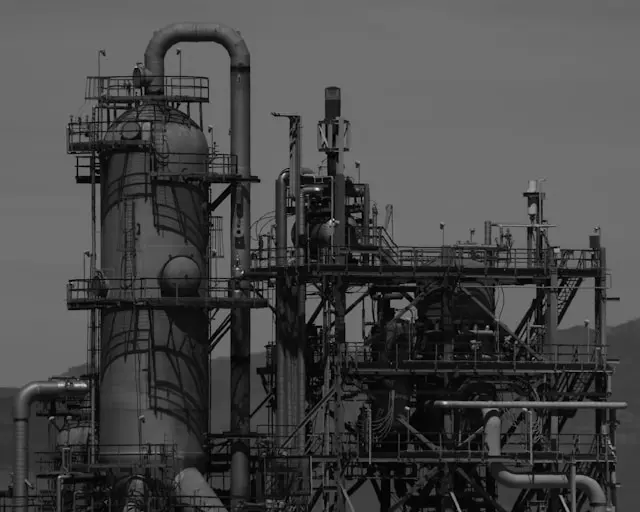
When a $9 billion refinery project halts indefinitely, the assumption from the outside is straightforward: fewer jobs, more available talent, a market that loosens. Duqm's reality in 2026 is the opposite. The April 2024 suspension of the Duqm Refinery and Petrochemical Industries Company (DRPIC) joint venture between OQ and Kuwait Petroleum International removed the single largest demand signal for downstream engineering talent in the Sultanate of Oman. It did not release a single process safety engineer into the market. The specialists the project needed were never locally available in the first place.
What remains active in Duqm tells a more specific and more difficult hiring story. The Oman Tank Terminal Company (OTTCO) is completing Phase 2 of the Ras Markaz Crude Oil Park, targeting 200 million barrels of total storage capacity by the end of 2026. Green hydrogen and ammonia projects under the Hydrom and OQ8 frameworks are entering EPC phases. The workforce has contracted from a projected peak of 6,000 to 8,000 construction contractors to roughly 1,200 to 1,500 personnel. But the roles that remain unfilled are the ones that matter most: process safety managers, corrosion and integrity engineers, and terminal operations directors. These are roles where 85% to 95% of viable candidates are not looking for work, and where Duqm competes against Abu Dhabi, Jubail, and Ras Laffan for professionals who have easier, better-paid, and more comfortable options.
What follows is a ground-level analysis of why Duqm's hydrocarbon talent market is tighter than its project pipeline suggests, which roles face the most severe constraints, and what organisations operating in this zone need to understand before they attempt their next senior hire.
The Refinery Suspension Revealed a Shortage That Already Existed
The DRPIC suspension is the defining fact of Duqm's hydrocarbon sector. According to MEED's reporting in April 2024, the halt was driven by unfavourable project economics, capital cost escalation, and OQ's strategic pivot toward energy transition assets. The 230,000 barrels-per-day refinery and petrochemical complex, had it proceeded, would have been the most complex downstream facility Oman had ever operated. It would have required hundreds of specialists in catalytic cracking, hydrotreating, and continuous reforming. Oman has zero operational history in large-scale downstream refining.
That last point is critical. The project did not fail and then leave behind a pool of experienced downstream engineers. It stalled before it could attract them. The specialists it needed were working for ADNOC in Ruwais, for SABIC in Jubail, or operating terminals in Rotterdam, Singapore, and Fujairah. They had not relocated to Duqm. Most had never seriously considered it.
The public narrative of contraction obscures a more precise reality. Duqm's midstream and storage subsector continues to grow. OTTCO's Phase 2A, adding 25 million barrels of storage, completed in late 2024. Phase 2B is under construction now. Green ammonia projects require process engineers with syngas and ammonia synthesis experience. The demand signal changed direction. It did not disappear. And the roles that these active projects require sit in the same acute shortage categories that Oman's downstream sector has struggled to fill for years.
The refinery suspension, paradoxically, made things harder. It damaged Duqm's reputation as a destination for career investment at exactly the moment when the storage and energy transition projects needed credibility to attract senior talent.
What OTTCO's Expansion Actually Requires
The Ras Markaz Crude Oil Park is the anchor asset for Duqm's hydrocarbon zone going forward. Currently operating 55 million barrels of storage, the terminal is on track for 200 million barrels of total capacity by Q4 2026. Phase 2 completion will create 150 to 200 permanent operations roles. These are not construction positions. They are the long-term operating workforce that will run one of the largest crude storage facilities in the Middle East.
Tank Farm Commissioning and Integrity Specialists
The immediate hiring pressure centres on tank farm commissioning specialists and integrity engineers. These roles require API 650/653 certification for tank design and inspection, API 570 for piping inspection, and API 581 for risk-based inspection methodology. They also require familiarity with Omani regulatory requirements under MD 286/2021, which governs process safety management in the Sultanate. The intersection of international API certification and Omani regulatory knowledge narrows the candidate pool to a fraction of the already small global supply.
Corrosion and integrity engineers are particularly scarce. According to the Michael Page GCC Salary Guide for 2024, employers in Oman typically recruit these specialists by offering 15% to 25% premiums above standard salary bands, often targeting professionals at Petroleum Development Oman (PDO) or other established Omani operators. Average tenure before an external approach lands is just 18 months. This means the small domestic pool of qualified professionals is being constantly churned rather than grown.
Terminal Operations Leadership
At the leadership level, the challenge is more severe. Terminal operations director searches in the GCC typically take 10 weeks. In Duqm, according to the Boyden Oman Executive Search Briefing for 2024, these searches routinely stall after initial candidate slate rejection and extend to four to six months. The reason is that 95% of qualified terminal operations directors globally are passive candidates. They hold secure positions in Rotterdam, Singapore, or Fujairah. Moving them to a remote Omani industrial zone requires relocation packages that go well beyond compensation. It requires a compelling case for why a career in Duqm is worth the disruption. The refinery suspension has made that case harder to make, not easier.
For organisations filling senior industrial and energy leadership positions, the Duqm market demands a search methodology built entirely around direct identification and engagement of passive candidates. No job board will surface a terminal operations director willing to relocate from Fujairah to Ras Markaz.
The Green Hydrogen Pivot Creates Demand for Skills That Do Not Yet Exist at Scale
Duqm's strategic reorientation toward green hydrogen and ammonia production represents the zone's long-term future. The Green Energy Oman initiative and OQ8 project are entering EPC phases. OQ has indicated that the suspended DRPIC site may be converted to a smaller-scale 50,000 bpd modular refinery or alternative fuels hub, with a final investment decision pending since late 2025.
These projects require a different talent profile than conventional refining. Process engineers with syngas and ammonia synthesis experience sit at the intersection of traditional petrochemical knowledge and emerging energy technology. The global supply of professionals who understand both industrial-scale ammonia production and the specific electrolyser and desalination systems used in green hydrogen is growing, but slowly. It is growing most slowly in the GCC, where the hydrogen sector is newer than in Northern Europe or East Asia.
This creates a compounding effect. Duqm needs conventional downstream specialists for its storage operations. It simultaneously needs energy transition specialists for its hydrogen and ammonia ambitions. The two talent pools overlap but are not identical. And both are in deficit. The International Energy Agency's World Energy Investment report for 2024 documented the broader challenge: international lenders' ESG constraints are redirecting capital from fossil fuel refining toward hydrogen and ammonia projects where offtake agreements remain immature. Capital is arriving. The workforce to deploy it is not.
Here is the original synthesis this data supports, and it is the analytical spine of this article: Duqm's refinery suspension did not create talent availability. It destroyed the one demand signal large enough to justify relocation to a remote industrial zone. The storage and hydrogen projects that remain active need many of the same specialists, but individually none of them carries the gravitational pull of a $9 billion megaproject. Duqm now needs megaproject-calibre talent for a portfolio of mid-scale projects, and the value proposition for candidates has fundamentally weakened.
Compensation Competitiveness: Why Duqm Loses Before the Conversation Starts
Duqm's compensation structure is competitive within Oman but materially behind the markets it competes against for the same talent.
At the executive and VP level, terminal operations roles in Duqm command OMR 8,000 to 11,000 per month (approximately USD 20,800 to 28,600), according to the Boyden Oman Compensation Report for 2024. Process and chemical engineering executives earn OMR 7,500 to 10,000 per month (USD 19,500 to 26,000), with HSE and process safety leadership at OMR 6,500 to 9,000 (USD 16,900 to 23,400). EPC project management at VP level reaches OMR 9,000 to 12,000 per month (USD 23,400 to 31,200).
These figures include a 10% to 15% location premium above Muscat equivalents, reflecting Duqm's remoteness and limited housing supply, according to the Mercer GCC Total Remuneration Survey for 2024. But they remain 20% to 30% below equivalent roles in Abu Dhabi's Ruwais and KIZAD zones, according to the Hays GCC Salary Guide for 2025. Saudi Arabia's Eastern Province offers comparable base salaries but layers on SABIC and Aramco housing allowances and recently improved expatriate family visa provisions. Qatar's Ras Laffan offers a 15% premium for terminal operations roles, backed by the project stability of the North Field LNG expansion.
The compensation gap is not the whole story. Abu Dhabi offers established international schools, superior healthcare infrastructure, and proximity to Dubai. Jubail and Ras Al-Khair offer larger-scale projects with clearer career trajectories. Ras Laffan offers long-term demand visibility from the largest LNG expansion in the world. What Duqm offers is a 30-year tax holiday, customs exemptions under SEZAD, and a housing deficit of approximately 8,000 units for industrial workers.
Senior process engineers and project directors frequently negotiate the terms of a move with multiple competing offers from GCC employers. A candidate weighing Duqm against Ruwais is not comparing salaries alone. They are comparing school quality for their children, healthcare access for their family, and the likelihood that the project they join will still exist in three years. The refinery suspension amplified that last concern.
Omanization: A Compliance Requirement That Cannot Be Met Through Recruitment Alone
Ministerial Decision 118/2024 mandates 90% Omanization for administrative roles and 60% to 75% for technical operations in new SEZAD licences. The intent is clear: Oman wants its industrial zones staffed by Omani nationals. The structural problem is that the specific skills these zones require do not yet exist in the Omani workforce at the required depth.
Oman has never operated a large-scale downstream refinery. Sultan Qaboos University and the German University of Technology in Oman produce chemical engineers with upstream or academic exposure. They lack practical experience in catalytic cracking, hydrotreating, or the continuous reforming processes that would have been required for DRPIC. They equally lack operational experience in industrial-scale ammonia synthesis, which is what the green hydrogen projects will demand.
This is not a recruitment problem. It is a training pipeline problem. You cannot recruit experience that does not yet exist in sufficient quantity. Compliance with 60% to 75% Omanization for critical safety roles may be technically impossible without multi-year structured development programmes that do not currently exist at the scale required. Employers in Duqm face a paradox: the regulation requires local talent, the local talent requires years of development that can only happen inside operational facilities, and the operational facilities require experienced specialists to run safely during that development period.
Historical volatility in Omanization percentage requirements adds planning risk. Quotas have fluctuated between 35% and 90% depending on role classification. Workforce plans built to a 60% target may need to reach 75% within a single regulatory cycle. For organisations building leadership teams in this environment, the only viable strategy combines immediate external recruitment of experienced specialists with a parallel commitment to structured Omani workforce development. Neither alone is sufficient.
The new Environmental Authority requirements for marine impact assessments have extended approval timelines for storage terminal expansions by six to nine months. This adds further uncertainty to project schedules and, by extension, to the hiring timelines that depend on them.
The Competitive Drain: Where Duqm's Candidates Go Instead
The three markets actively drawing talent away from Duqm are Abu Dhabi, Saudi Arabia's Eastern Province, and Qatar's Ras Laffan. Each offers a distinct combination of advantages that Duqm cannot currently match.
Abu Dhabi: Ruwais and KIZAD
Senior process engineers and project directors based in or recruited to Oman frequently move to ADNOC downstream expansions when approached with roles offering 20% to 30% salary increases and dramatically better family infrastructure. Some manage the Duqm assignment as a 28/28 rotation from Abu Dhabi rather than relocating, treating it as a temporary engagement rather than a career commitment. This rotation model sustains short-term staffing but prevents the deep institutional knowledge that complex terminal operations require.
Saudi Arabia: Jubail and Ras Al-Khair
Mechanical integrity engineers and rotating equipment specialists are drawn to Saudi megaprojects for career progression that Duqm, with its suspended refinery, cannot offer. The SATORP expansion and Jafurah gas development represent the kind of long-duration, high-visibility assignments that accelerate a career. Duqm's active projects are important but lack the scale and profile that senior professionals use to evaluate their next move.
Qatar: Ras Laffan
The North Field LNG expansion, expected to create 15,000 new energy sector jobs by 2027 according to QatarEnergy's project pipeline report, offers something Duqm cannot: visible, long-term demand certainty. A terminal operations professional choosing between Ras Laffan and Ras Markaz is choosing between a facility backed by decades of guaranteed LNG offtake and a terminal whose anchor refinery project was indefinitely suspended.
The challenge for any executive search engagement in this market is not identifying who has the skills. That is the straightforward part. The challenge is constructing a value proposition that overcomes these structural disadvantages. In a market where 85% to 95% of senior candidates are passive, and where competing employers offer more money, better infrastructure, and greater project certainty, the proposition must address career factors that compensation alone cannot solve.
What Hiring Organisations in Duqm Need to Do Differently
The conventional search model fails in Duqm for reasons that go beyond candidate scarcity. A process safety engineer search in Oman typically advertises for 90 to 120 days, according to the Hays GCC Salary Guide for 2025. The equivalent role in the UAE fills in 45 to 60 days. That 45 to 75 day gap is not caused by a lack of qualified people globally. It is caused by the fact that job board advertising does not reach candidates who are not looking, and in Duqm, almost nobody is looking.
The search methodology must start from the assumption that every qualified candidate is employed, content, and sceptical of Duqm as a destination. Direct headhunting that maps terminal operations professionals across Rotterdam, Singapore, Fujairah, and the GCC and approaches them individually with a structured proposition is the only method that reaches this market. Talent mapping conducted before a search begins can identify where the viable candidates actually sit and which of their current employers are most vulnerable to a well-structured approach.
Organisations must also address the infrastructure gap in their offer structure. A housing allowance matters more in Duqm than in any other GCC industrial zone because the housing stock is genuinely insufficient. Education provisions matter because international school capacity is limited to two institutions. And contract duration guarantees matter because the refinery suspension has taught candidates that Duqm projects can stop without warning.
KiTalent's approach to markets like Duqm is built around these realities. Using AI-enhanced direct headhunting methodology, interview-ready candidates for senior industrial and energy roles are identified and engaged within 7 to 10 days. The pay-per-interview model means organisations only invest when they meet qualified candidates, eliminating the retainer risk that makes speculative searches in remote markets especially costly. With a 96% one-year retention rate across 1,450 executive placements, the emphasis is on candidates who will stay, not just candidates who will accept.
For organisations hiring into Duqm's storage, midstream, or energy transition operations, where the candidate pool is predominantly passive, the competing markets offer better packages, and the refinery suspension has created lasting reputational headwinds, start a conversation with KiTalent's industrial energy practice about how direct search reaches the professionals that conventional recruitment cannot.
Frequently Asked Questions
What happened to the Duqm Refinery project and how does it affect hiring?
The $9 billion DRPIC refinery joint venture between OQ and Kuwait Petroleum International was suspended indefinitely in April 2024 due to unfavourable economics and capital cost escalation. The suspension reduced the active workforce from a projected 6,000 to 8,000 to approximately 1,200 to 1,500 personnel. However, OTTCO's Ras Markaz storage terminal expansion and emerging green hydrogen projects continue to drive demand for specialised engineering and operations talent. The suspension damaged Duqm's employer brand without releasing experienced talent into the market, since most specialists the project needed had never relocated to Oman.
What are the hardest roles to fill in Duqm's hydrocarbon sector?
Process safety engineers with 10 or more years of downstream experience, corrosion and integrity engineers with API 653/570 certification, and terminal operations directors represent the most acute shortages. Process safety searches in Oman typically run 90 to 120 days versus 45 to 60 in the UAE. Terminal operations director searches extend to four to six months. At the senior level, 85% to 95% of qualified candidates are passive, requiring specialist executive search and direct headhunting rather than job advertising.
How does Omanization affect technical hiring in Duqm?
Ministerial Decision 118/2024 mandates 60% to 75% Omanization for technical operations roles in new SEZAD licences. However, Oman lacks operational history in large-scale downstream refining and industrial ammonia production, meaning the local workforce does not yet possess the specific experience these roles require. Employers must balance compliance with safety requirements, typically by pairing international specialists with Omani professionals in structured development programmes. Quota percentages have historically fluctuated, adding workforce planning uncertainty.
What salaries do senior hydrocarbon professionals earn in Duqm?
Terminal operations executives earn OMR 8,000 to 11,000 per month, approximately USD 20,800 to 28,600. Process engineering executives earn OMR 7,500 to 10,000 monthly. HSE and process safety leadership commands OMR 6,500 to 9,000. All Duqm roles include a 10% to 15% location premium above Muscat equivalents due to remoteness and limited housing. Despite this premium, Duqm compensation remains 20% to 30% below Abu Dhabi and approximately 15% below Qatar for comparable roles, according to market benchmarking data from Hays and Mercer.
Why is it so difficult to attract senior talent to Duqm compared to other GCC locations?
Duqm competes against Abu Dhabi, Jubail, and Ras Laffan for the same specialist profiles. These markets offer higher compensation, established international schools, superior healthcare, and larger-scale projects with clearer career trajectories. Duqm's housing deficit of approximately 8,000 units and limited family infrastructure compound the challenge. The refinery suspension created lasting reputational concern among candidates about project stability. Effective recruitment requires proactive identification of passive candidates and individually structured relocation propositions.
What is the outlook for green hydrogen hiring in Duqm?
Green hydrogen and ammonia projects under the Green Energy Oman and OQ8 frameworks are entering EPC phases, creating demand for process engineers with syngas and ammonia synthesis experience. This talent profile overlaps partially with conventional petrochemical expertise but requires distinct knowledge of electrolyser systems and green feedstock processes. The global supply of professionals with both skill sets is limited and concentrated in Northern Europe and East Asia, making international executive search essential for Duqm's energy transition ambitions.