Duqm Port Has the Infrastructure but Not the People: The Talent Bottleneck Stalling Oman's Maritime Ambitions
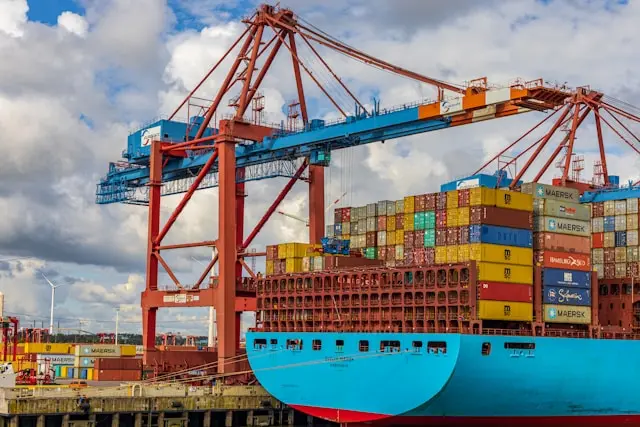
Oman's Port of Duqm can handle 3.5 million TEU of containerised cargo and 25 million tonnes of dry bulk annually. In 2024, it processed roughly a third of that. Two world-class dry docks sit ready for 120 vessel repairs a year. Last year, 85 ships came through. The gap between what Duqm was built to do and what it actually does is not a demand problem. It is a people problem.
The conventional story of a developing port is that cargo arrives before the quays are ready. Duqm has inverted that story entirely. The quays are built, the berths are operational, the expressway from Muscat is complete, and the international airport is functioning. What is missing are the certified welders, marine pilots, port automation engineers, and technical superintendents required to run these facilities at anything close to their designed throughput. The 6,000 maritime and logistics workers currently in the zone are not enough, and the pipeline producing replacements is a fraction of what the market requires.
What follows is a ground-level analysis of where the hiring gaps are most acute, what is driving them, why conventional recruitment methods fail in this specific market, and what organisations operating in Duqm's maritime sector need to understand before they attempt their next critical hire.
Duqm's Maritime Market in 2026: Scale Without Sufficiency
The Port of Duqm operates as Oman's largest deep-water facility, with an 18-metre draft capable of accommodating Capesize vessels across eight operational berths and 4,000 metres of quay wall. The Oman Drydock Company runs two dry docks with a combined capacity of 510,000 DWT. Asyad Group manages container terminal operations. OQ8's refinery reached full operations in the first half of 2025, adding roughly 200 maritime logistics positions for feedstock import and product export handling alone.
Terminal 3 completion is scheduled for the second quarter of 2026, adding 2 million TEU of capacity and requiring 150 new operational staff. Container traffic projections point to 1.4 million TEU this year, a 15% increase over 2024. ODC anticipates reaching 100 to 110 vessel repairs following its technical cooperation agreement with Hyundai Heavy Industries signed in late 2024.
Every one of these growth milestones depends on talent that does not currently exist in sufficient numbers within Oman's maritime and industrial economy. The infrastructure buildout has moved at the pace of sovereign capital. The human capital buildout has moved at the pace of a training academy that produces 150 marine engineering graduates per year against regional demand exceeding 400 positions. That mismatch is the central tension in Duqm's maritime story, and it is getting worse as the port's operations grow more technically complex.
The Three Shortages That Define This Market
Certified Marine Welders: Eight Months and Counting
Oman Drydock Company has maintained open vacancies for 35 to 40 certified marine structural welders since the second quarter of 2024. These are 6G position certified roles, the highest welding qualification for marine structures. According to ODC's HR Director, as cited in the Oman Observer in November 2024, the company has recruited actively in India, Pakistan, and the Philippines. It has offered relocation packages including housing and 25% salary premiums above Muscat rates. Fill rates remain at 40%.
This is not a compensation problem. ODC is paying above market. It is a supply problem compounded by location. A certified marine welder with large-vessel experience can work in Singapore, Batam, Dubai, or any of the greenfield ports emerging across Saudi Arabia. Duqm sits 550 kilometres from Muscat and 600 kilometres from Dubai. It offers none of the metropolitan amenities those competing locations provide. The cost of a prolonged vacancy at this level is not merely operational inconvenience. Each unfilled welder position directly reduces ODC's capacity to process the vessel repairs its commercial team has already contracted.
Port Automation Specialists: The Intersection Nobody Trained For
The second acute shortage sits at the junction of maritime operations and information technology. Port automation engineers, particularly those with Terminal Operating System experience on platforms like Navis N4, are in acute shortage across the entire GCC. Duqm competes for these specialists against NEOM, Jazan, Jebel Ali, Khalifa Port, and King Abdullah Port. The passive candidate ratio for this category runs at approximately 75%, according to data from the Navis User Conference employment survey and Hays Technology Middle East.
When Asyad Ports Duqm needed a Marine Operations Manager with container terminal automation experience following an internal promotion in March 2024, according to Gulf Maritime Review, the role remained vacant for six months. It was eventually filled in September 2024 by a candidate recruited from Abu Dhabi Ports at Khalifa Port, reportedly at a 35% compensation premium above standard Duqm market rates. The package included full family accommodation in Muscat with weekly commuting flights.
That single hire illustrates the market dynamic. To fill one automation-experienced manager, Duqm had to poach from a direct competitor, pay a premium that exceeded a third of the standard rate, and solve the lifestyle problem by housing the candidate's family in a different city. This is not scalable. Terminal 3 alone will require similar profiles. The question facing every maritime employer in Duqm is how to replicate that outcome dozens of times simultaneously.
Marine Pilots: Retired Europeans on Rotation Contracts
Marine pilots certified for Very Large Crude Carrier and Capesize operations represent perhaps the tightest segment. Fewer than 2% of qualified pilots in the GCC are unemployed at any given time. Average tenure runs eight to twelve years per employer. An estimated 85 to 90% of qualified candidates are passive, according to the International Maritime Pilots' Association and regional maritime HR consultancy data.
OPAZ has reportedly resorted to employing retired pilots from European ports on six-month rotation contracts at daily rates of OMR 400 to 500, equivalent to USD 1,040 to 1,300 per day. This is a temporary measure, not a workforce strategy. As OQ8's refinery drives increasing VLCC traffic through Duqm, the pilot requirement will grow. The rotation model becomes more expensive and less sustainable with each additional vessel movement.
The forward implication is stark. Duqm's three most critical technical shortages are all in roles where the majority of qualified candidates are not actively seeking new positions and cannot be reached through conventional job board advertising.
Why Duqm's Talent Bottleneck Is Structural, Not Cyclical
Here is the analytical claim this market data supports but does not state directly: Duqm's capital investment schedule and its human capital development timeline operate on fundamentally different clocks, and every year of growth widens the gap rather than closing it.
A dry dock can be built in three years. A quay wall in two. A certified marine technical superintendent requires ten or more years of progressive experience to reach qualification. A port automation engineer with Navis N4 expertise requires five to seven years of operational exposure at a functioning automated terminal. Duqm does not yet have the operating history to have produced these specialists internally. It must import every one of them from markets that are also short.
This is not a cyclical shortage that will resolve when the next cohort graduates. The Oman Maritime Academy's Duqm campus is expanding from 200 to 500 annual cadet places. But the academy itself faces a 30% instructor vacancy rate, with teaching positions filled by contract staff from the Philippines and India. The institution training Oman's future maritime workforce cannot fully staff its own classrooms. Meanwhile, Duqm's economy is moving from basic stevedoring toward complex ship repair and automated port operations. The skills gap is not closing. It is actively widening as the technology requirements of the sector evolve faster than the training institutions can adapt.
The data on Omanisation confirms this trajectory. Overall Omanisation in the maritime sector improved to 28% in 2024 from 22% in 2022. But in technical roles specifically, Omanisation fell from 21% to 18% over the same period, according to Ministry of Labour statistics. The general category improved because administrative and supervisory roles absorbed Omani graduates. The technical category declined because the certifications required for ship repair, port automation, and pilotage are international standards that Omani institutions cannot yet confer. Oman's maritime academy produces generalist graduates. Duqm's economy demands specialists with credentials issued by classification societies, international welding bodies, and TOS platform vendors.
The implication for any organisation hiring in this market is that the competitive environment for technical maritime talent is not going to ease. It is going to intensify as Terminal 3 comes online, ODC's Hyundai partnership generates additional work volume, and OQ8's refinery reaches full operational cadence.
Compensation in Duqm: The Premium That Still Is Not Enough
Duqm's compensation framework operates on a distinct structure that hiring leaders from other GCC markets must understand before they build an offer. Every salary is tax-free. Housing is either provided directly or covered through allowances ranging from OMR 400 to OMR 1,500 per month depending on seniority. On top of that baseline, the "Duqm Premium" for hardship and remote location typically adds 15 to 30% above equivalent roles in Muscat or Salalah, according to Mercer's GCC Remuneration Report location premium analysis.
What Senior Roles Actually Pay
At the executive level, a Head of Marine Operations or Port Director commands OMR 6,500 to 9,000 in monthly base salary, equivalent to USD 16,900 to 23,400. This comes with full executive housing, international schooling support, a company vehicle, annual home leave flights, and performance bonuses up to 30% of base. A Shipyard Director or Technical Director at ODC can reach OMR 8,000 to 12,000 monthly, or USD 20,800 to 31,200, with profit-sharing arrangements tied to yard utilisation.
At the senior specialist level, a Port Operations Manager with 10 to 15 years of experience earns OMR 3,500 to 4,500 monthly base plus OMR 800 to 1,200 in housing allowance. A Technical Superintendent or Ship Repair Manager earns OMR 4,000 to 5,500 with additional technical certification allowances. A Supply Chain Director handling industrial or project cargo earns OMR 4,500 to 6,000.
The Real Competitor Is Not Salary
These figures look competitive on paper. The problem is that Duqm is not competing on paper. It is competing against Dubai, where a maritime professional can live in a cosmopolitan city with international schools within walking distance, career progression paths to global shipping line headquarters, and a spouse employment market that does not exist in Duqm. It is competing against Abu Dhabi, where AD Ports Group pays 20 to 25% higher than Duqm for equivalent technical roles and offers materially better family accommodation.
Even within Oman, Sohar Port sits two hours from Muscat versus Duqm's five and a half. Sohar-based professionals resist transfers to Duqm despite career advancement opportunities, creating what the Oman Chamber of Commerce Labour Mobility Survey describes as internal labour market friction. A professional considering Duqm faces a specific calculation: take the hardship premium, accept geographic isolation, and hope the career trajectory justifies the personal cost. For candidates with families, that calculation frequently does not resolve in Duqm's favour.
This is why money alone is not solving Duqm's hiring problems. The Asyad Ports automation manager hire required a 35% premium plus family accommodation in Muscat plus weekly commuting flights. That package was designed for one individual. Reproducing it at scale would fundamentally reshape the cost structure of Duqm's port operations. The challenge for hiring leaders is not whether they can afford to pay more. It is whether they can construct a total proposition that makes relocation rational for a professional who already has options elsewhere.
The Geopolitical Tailwind and Why It Complicates Everything
The Red Sea crisis that began with Houthi attacks on commercial shipping in late 2023 temporarily boosted Duqm's attractiveness as an alternative routing hub. Vessels rerouting around the Cape of Good Hope found Duqm a viable bunkering and maintenance stop. This was a windfall for the port's utilisation numbers and a proof of concept for its strategic positioning outside the Strait of Hormuz chokepoint.
But the geopolitical tailwind creates its own hiring complication. If Red Sea traffic normalises, the temporary demand advantage fades. If it persists or worsens, demand for Duqm's services accelerates into a market that already cannot staff its existing operations. Either scenario creates planning uncertainty. Employers are reluctant to make permanent hires against potentially temporary demand. Candidates are reluctant to relocate to a facility whose growth trajectory depends on conflict patterns in Yemen.
The delayed final investment decision on the PDH/PP petrochemical complex, postponed to 2026 according to OQ strategic project updates, compounds this uncertainty. That project was expected to generate substantial additional maritime logistics demand. Its deferral means projected maritime employment growth has not materialised on the original timeline. Every delayed project weakens the narrative that Duqm is an accelerating market, which in turn makes it harder to persuade passive candidates that the career opportunity justifies the lifestyle trade-off.
For hiring executives, the implication is direct. Every month a critical role remains unfilled in this environment represents not just lost productivity but a strategic window closing. The geopolitical advantage is time-limited. The infrastructure is depreciating whether it is used or not. The candidates who could change Duqm's trajectory are employed elsewhere, and they are not going to appear on a job board.
The Omanisation Paradox: Policy Pulling Against Market Reality
The Ministry of Labour mandates 35% Omanisation for maritime transport companies and 20% for technical ship repair roles. These targets reflect a legitimate national objective. Oman's young population needs private sector employment, and the maritime sector is a strategic priority under Vision 2040.
The problem is arithmetic. Oman produces approximately 150 marine engineering graduates per year. Regional demand across all employers exceeds 400 positions. And the graduates Oman produces are generalists. They hold degrees. They do not hold 6G welding certifications, NACE marine coating inspection credentials, or Navis N4 platform qualifications. These are international certifications that require years of supervised practice at facilities with the relevant equipment and standards. The gap between qualification and certification is where Omanisation targets collide with operational reality.
The result is a compliance bottleneck. Employers in Duqm must choose between meeting Omanisation quotas and staffing their operations with certified personnel. In practice, most do both imperfectly: they hire Omani graduates into training pathways that take years to produce certified specialists, while relying on expatriate contractors to perform the work today. This creates a workforce that is partially compliant on paper, dependent on expatriates in practice, and expensive in both dimensions.
The companies that resolve this tension most effectively are those that invest in structured talent pipeline development, pairing international hires with Omani trainees in a deliberate succession framework. But building that pipeline requires hiring the international specialists first. And hiring those specialists, as every data point in this market confirms, is exactly the thing Duqm finds hardest to do.
What This Market Demands From a Search Strategy
The aggregate numbers tell the story concisely. Maritime-specific job postings in SEZAD reached 1,200 in 2024. Average time-to-fill was 94 days, more than double the 45-day average for administrative roles. Technical ship repair roles show a 68% vacancy rate at any given time, according to the Oman Chamber of Commerce and Industry's Duqm branch survey.
A 94-day average fill time in a market where 75 to 90% of the candidates you need are passive means the conventional approach is structurally inadequate. Posting a role on a regional job platform and waiting for applications will surface, at best, the 10 to 25% of candidates who are actively looking. In maritime technical specialisms, active candidates often indicate career distress or contract termination rather than available capacity. The strongest candidates are employed, performing well, and not monitoring job boards.
Reaching them requires a fundamentally different method. It requires identifying where they work, understanding what would motivate a move, constructing a proposition that addresses the specific lifestyle and career objections that Duqm presents, and approaching them directly with a credible offer before a competitor does. It requires knowing, for example, that a ship repair technical superintendent currently in Singapore's Keppel or Sembcorp Marine yards has a specific set of concerns about moving to the GCC that differ entirely from those of a port automation engineer currently at Khalifa Port.
KiTalent works with organisations facing exactly this challenge: hiring senior and specialist talent in markets where the candidates are not visible and the competitive dynamics require speed, precision, and deep market knowledge. With AI-enhanced direct search methodology that maps passive candidate pools across competing employers and geographies, KiTalent delivers interview-ready candidates within 7 to 10 days. In a market where the average search runs 94 days, that compression is not a marginal improvement. It is the difference between filling a role and losing the candidate to Abu Dhabi.
The 96% one-year retention rate for placed candidates reflects something specific about how these searches are constructed. The proposition is tested before the introduction is made. A candidate who accepts a Duqm role through a properly managed search does so having understood the location, the lifestyle trade-off, and the career trajectory. They stay because the role matches what they were told. In a hardship market where early attrition is a constant risk, that retention rate is material.
For organisations competing for certified marine engineers, port automation specialists, or ship repair leadership across the GCC, where traditional search methods consistently fail to reach the right candidates and every month of vacancy costs throughput, reputation, and competitive positioning, speak with our executive search team about how we approach this market.
Frequently Asked Questions
What is the average salary for a port director in Duqm, Oman?
A Head of Marine Operations or Port Director in Duqm commands a monthly base salary of OMR 6,500 to 9,000, equivalent to USD 16,900 to 23,400. All salaries are tax-free. Executive packages include full housing provision, international schooling support, a company vehicle, annual home leave flights, and performance bonuses up to 30% of base salary. The "Duqm Premium" adds 15 to 30% above equivalent roles in Muscat, reflecting the location's geographic isolation and limited metropolitan amenities compared to other GCC ports.
Why is it so hard to hire maritime specialists in Duqm?
Three factors converge. First, geographic isolation: Duqm sits 550 kilometres from Muscat and 600 from Dubai, with none of the lifestyle infrastructure those cities offer. Second, supply constraints: Oman produces only 150 marine engineering graduates annually against regional demand exceeding 400 positions. Third, passive candidate dominance: 75 to 90% of qualified marine pilots, ship repair superintendents, and port automation engineers are employed and not actively seeking roles. These candidates must be identified and approached through direct headhunting methodology rather than conventional advertising.
What are the most in-demand maritime roles in Oman's Duqm SEZ?
The three most acute shortages are certified marine structural welders with 6G position certification, port automation engineers with Terminal Operating System experience on platforms like Navis N4, and VLCC-certified marine pilots. Oman Drydock Company has maintained 35 to 40 open welder vacancies for over eight months. Technical ship repair roles show a 68% vacancy rate at any given time. Marine pilots command premiums of 40 to 50% above standard GCC market rates when recruited for Duqm.
How does Duqm compare to Dubai and Abu Dhabi for maritime careers?
Dubai offers higher base salaries by 10 to 15%, an established maritime ecosystem including global shipping line headquarters, and superior lifestyle amenities. Abu Dhabi pays 20 to 25% more than Duqm for equivalent technical roles with better family infrastructure. Duqm compensates through tax-free salaries, hardship premiums, and housing provision, but most maritime professionals view it as a hardship posting. The competitive gap is narrowest for senior technical roles where Duqm offers direct operational responsibility that larger, more hierarchical ports cannot match.
What is the Omanisation requirement for maritime companies in Duqm?
The Ministry of Labour mandates 35% Omanisation for maritime transport companies and 20% for technical ship repair roles. However, actual Omanisation in technical positions reached only 18% in 2024, down from 21% in 2022. The decline reflects a widening gap between the generalist qualifications Omani graduates hold and the international specialist certifications Duqm's employers require. Companies must balance compliance with operational staffing, typically by pairing Omani trainees with expatriate specialists in structured development programmes.
How long does it take to fill a maritime role in Duqm?
The average time-to-fill for maritime-specific roles in SEZAD reached 94 days in 2024, more than double the 45-day average for administrative positions. Highly specialised roles such as marine pilots or ship repair technical superintendents can remain open considerably longer. KiTalent's AI-enhanced direct search model delivers interview-ready executive candidates within 7 to 10 days, compressing the timeline in a market where extended vacancies directly reduce port and shipyard throughput.