Edmonton's Petrochemical Corridor Has the Infrastructure but Not the Workforce to Decarbonise It

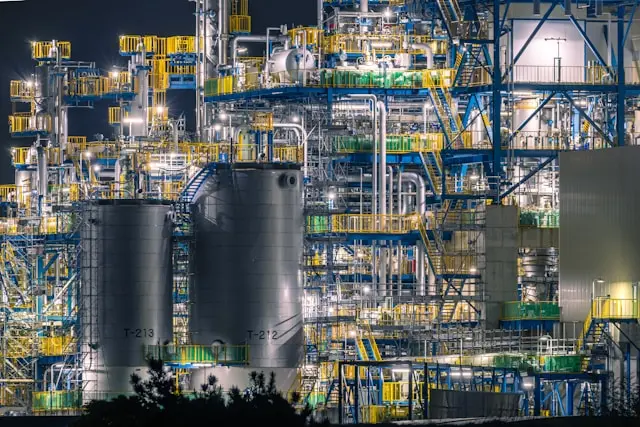
Alberta's Industrial Heartland represents $40 billion in installed capital assets and processes roughly 35% of Canada's total refining capacity. Air Products' $1.6 billion net-zero hydrogen complex began commercial operations in late 2024. Imperial Oil's Strathcona Renewable Diesel project is moving toward startup. Shell's Polaris carbon capture project and Dow's $9.8 billion Path2Zero ethylene cracker are advancing through pre-construction phases. By every capital measure, this is one of the most ambitious industrial decarbonisation corridors in North America.
Yet the talent market tells a different story. Carbon capture process engineers with amine solvent experience sit vacant for eight to eleven months. Hydrogen production specialists command premiums 18 to 22% above 2023 baselines, and 34% of hydrogen facility operators in the region received direct recruitment approaches from US Gulf Coast competitors in 2024 alone. The skilled trades workforce faces a demographic cliff, with 28% of petrochemical maintenance technicians aged 55 or older. The gap between installed infrastructure and available human capital is not narrowing. It is widening at the exact seniority levels where the most consequential roles sit.
What follows is a ground-level analysis of the forces reshaping Edmonton's industrial talent market, where the real shortages are, what they cost, and what organisations operating in this corridor need to do differently to secure the leadership and specialist talent that will determine whether these projects succeed or stall.
The Shadow Demand Problem: Why Delayed Projects Are Not Easing the Talent Shortage
The headlines from 2025 suggested the labour market might soften. Dow pushed the final investment decision on its Path2Zero complex beyond 2025 into late 2025 or 2026, contingent on renewable electricity agreements and CCUS sequestration contracts. Shell deferred its Polaris carbon capture project pending federal Investment Tax Credit clarity. A surface reading of these delays implies fewer people needed, fewer roles open, less urgency.
That reading is wrong.
The data shows the opposite pattern. Vacancy durations for decarbonisation-specific roles increased from six months to nine months between 2023 and 2024. PetroLMI's 2024 Decarbonisation Workforce Report forecasts a 12% increase in demand for carbon capture process engineers and hydrogen production specialists in the Edmonton region between 2024 and 2026, against a projected supply growth of only 3% from local educational institutions.
Front-End Engineering Teams Hold the Talent Hostage
The mechanism is straightforward. Projects that defer construction do not dissolve their front-end engineering teams. Shell maintains process engineering, regulatory strategy, and carbon accounting staff to preserve optionality on Polaris. Dow continues pre-FEED work on Path2Zero. These teams are small in headcount but draw from the same specialist pool as every operational facility in the corridor. The result is what the research describes as "shadow demand": roles that do not appear in construction employment metrics but absorb precisely the professionals every other employer needs.
The Illusion of Surplus
Air Products' hydrogen complex illustrates the dynamic from the opposite direction. The facility created approximately 2,000 peak construction positions. It transitioned to 100 permanent operational roles. That steep taper released general construction labour back into the market, creating a temporary surplus visible in aggregate employment data. But the surplus exists in a different skill category from the deficit. The Edmonton region has available general labour. It does not have available carbon capture process engineers, hydrogen safety specialists, or instrumentation technicians with SIL programming expertise. The aggregate masks the acute.
For hiring leaders evaluating this market, the implication is clear: waiting for project delays to ease the competition for specialist talent is a miscalculation. The specialists are already absorbed, and the projects that appear dormant are the ones holding them.
Edmonton Builds the Plants. [Calgary](/calgary-canada-executive-search) Captures the Knowledge Work.
This is the analytical tension that hiring leaders in this corridor most consistently underestimate. Edmonton's capital region hosts the physical assets. Strathcona Refinery processes 191,000 barrels per day. The Scotford Complex integrates upgrading, refining, and chemicals. Fort Saskatchewan is Dow's largest Canadian manufacturing site. The Industrial Heartland corridor handles 4.5 million tonnes of industrial feedstock annually through Port Alberta.
Yet Calgary reports 40% more petrochemical engineering job postings than Edmonton, according to Statistics Canada labour force data and Edmonton Global's sector analysis.
The explanation is not complicated. Imperial Oil's corporate headquarters sits in Calgary. Shell Canada's leadership is in Calgary. Suncor's corporate offices are in Calgary. Dow Canada's business leadership operates from Calgary. The high-value knowledge work, including process design, carbon accounting, regulatory strategy, and technology investment decisions, migrates to the corporate centre. The physical execution stays in the Industrial Heartland. Edmonton supplies the plant. Calgary supplies the engineering.
What This Means for Senior Recruitment
The practical consequence for executive search is severe. A VP Manufacturing or VP Refining Operations role requires physical presence at the plant site, which means a 45 to 60 minute commute from downtown Edmonton to the Industrial Heartland in Strathcona County. A senior engineer considering their career trajectory sees a clearer pathway to VP Manufacturing or Chief Engineering Officer from a Calgary corporate office, where the decision-making authority and the executive visibility reside, without relocation to an operational site.
Calgary also offers average base salaries 8 to 12% higher for equivalent engineering roles. The cost of living is 15 to 18% higher, but the net compensation advantage persists, particularly for dual-income households where one partner works outside the energy sector. The result is a talent gravity that pulls senior technical leadership away from the corridor where the assets physically sit. For organisations trying to fill site-level leadership, this dynamic is not theoretical. It is the reason the search takes nine months instead of three.
The longer this bifurcation persists, the harder it becomes for Edmonton to develop the self-sustaining talent cluster that $40 billion in installed assets should logically produce.
The Compensation Reality: What CCUS and Hydrogen Roles Actually Pay
Compensation in Edmonton's petrochemical corridor is not a single market. It is three distinct markets operating under one regional label, each with different competitive dynamics and different failure points for hiring leaders who treat them as interchangeable.
Specialist Technical Roles
A Senior Carbon Capture Process Engineer with eight to fifteen years of experience and direct familiarity with amine treating, compression, and CO₂ dehydration commands a base salary of $135,000 to $165,000 CAD. Total cash compensation with bonus reaches $155,000 to $195,000 CAD. This represents an 18 to 25% premium above conventional refinery process engineers, a premium driven entirely by the scarcity of professionals who have participated in operational CCUS projects. The pool is concentrated among alumni of the Boundary Dam and Quest projects in Saskatchewan, many of whom are approaching retirement age.
Hydrogen Production Operations Managers with backgrounds in syngas, steam methane reforming, or autothermal reforming operations earn base salaries of $145,000 to $175,000 CAD and total cash compensation of $170,000 to $210,000 CAD. Following the Air Products facility startup, these figures represent a market that moved sharply upward through 2024 as Shell, Dow, and US competitors began pre-positioning for their own hydrogen operations.
Instrumentation and Control Technicians, the journeyman-certified specialists with SIL programming expertise that every turnaround and commissioning depends on, earn $52 to $68 CAD hourly, translating to $108,000 to $141,000 annually with overtime. Turnaround premiums add 15 to 20% on top.
The Houston Premium
For any organisation attempting to attract or retain CCUS and hydrogen talent, the external benchmark that matters most is Houston. Senior Process Engineers with carbon capture experience command $145,000 to $180,000 USD in Texas, representing a 60 to 70% premium over Edmonton equivalents when currency-adjusted. Housing costs in Houston run 25 to 30% higher, but Houston also offers something Edmonton's Industrial Heartland cannot: flexible hybrid work arrangements for engineering design roles.
This is not a gap that a modest pay increase closes. A passive candidate weighing an Edmonton offer against a Houston alternative is evaluating a compensation differential, a commute differential, a flexibility differential, and a career trajectory differential simultaneously. Organisations that treat salary negotiation as the primary lever are solving the wrong problem.
Executive Compensation
At the VP level, compensation reflects the scale of accountability. A VP Manufacturing or VP Refining Operations carrying P&L responsibility for a complex like Scotford or Strathcona earns a base of $280,000 to $380,000 CAD, with total cash compensation of $450,000 to $650,000 CAD. Site General Managers at large integrated operators trend toward $750,000 to $950,000 CAD in total direct compensation including long-term incentives.
The emerging VP/CCUS and Low Carbon Solutions role, responsible for carbon capture project development, government incentive management, and hydrogen business line P&L, commands a base of $250,000 to $320,000 CAD and total cash of $400,000 to $550,000 CAD. US-headquartered firms like Dow and Air Products typically add equity participation. This role barely existed five years ago. The compensation bands are still being established, and the candidates qualified to fill them can be counted in the dozens across all of Western Canada.
The compensation data points toward a consistent pattern: the more specialised the decarbonisation expertise, the wider the gap between what the market will bear and what the available talent pool can supply.
The Regulatory Squeeze: Carbon Pricing, Tax Credits, and the Hiring Decisions They Force
Capital investment decisions in Edmonton's industrial corridor are not made in a compensation vacuum. They are made against a regulatory environment that is simultaneously pushing organisations toward decarbonisation and failing to provide the fiscal certainty required to commit capital at scale. The resulting uncertainty cascades directly into hiring behaviour.
Carbon Pricing as a Hiring Catalyst and Constraint
The federal Output-Based Pricing System imposes a carbon price of $80 per tonne of CO₂ equivalent, adding an estimated $12 to $15 per barrel of synthetic crude at upgraders without CCUS. This creates powerful economic incentive to invest in carbon capture. It simultaneously erodes margin competitiveness against US Gulf Coast producers who face no comparable carbon cost, according to the Business Council of Alberta's 2024 Carbon Pricing Analysis.
For hiring leaders, the tension is direct. The carbon price makes CCUS expertise existentially valuable. The margin erosion makes every hiring decision subject to tighter financial scrutiny. Organisations need carbon capture process engineers, hydrogen safety specialists, and regulatory strategy professionals more urgently than ever, while the economics of the products those professionals help produce are under sustained pressure.
The Investment Tax Credit Freeze
The delayed finalisation of CCUS Investment Tax Credit legislation, expected in 2024 and pushed to 2025, has frozen final investment decisions across the corridor. Shell's Polaris project requires the 37.5 to 60% capital cost coverage to achieve internal rate of return hurdles. Without that certainty, FID remains deferred. Without FID, the 2,000 to 2,500 construction trades positions and 300 to 400 engineering and technical roles that Shell's social impact assessment projects for the construction phase remain theoretical rather than real job requisitions.
This freeze does not reduce the need for talent. It compresses the eventual hiring timeline. When the ITC is finalised and FIDs are triggered, the demand for CCUS-qualified professionals will arrive as a step function rather than a gradual ramp. Organisations that wait for the regulatory signal before beginning their talent search will find themselves competing for the same candidates simultaneously, and the hidden cost of a failed or delayed executive hire in a corridor this capital-intensive is measured in millions.
Permitting bottlenecks compound the problem. The Alberta Energy Regulator's average processing time for new CO₂ injection well licences increased from 11.2 months in 2022 to 14.3 months in 2024. Every month of regulatory delay is a month where the engineering team remains employed on pre-construction work rather than advancing to operations, extending the period of shadow demand and keeping specialists locked into roles they might otherwise leave.
The Demographic Cliff That No Capital Investment Can Fix
This is the insight that separates organisations making informed hiring decisions from those reacting to vacancy data: Edmonton's petrochemical talent shortage is not primarily a demand problem. It is a supply problem with a demographic timer attached.
Twenty-eight percent of current petrochemical maintenance technicians in the Edmonton region are aged 55 or older. The professionals who hold the most concentrated CCUS operational knowledge, the alumni of Boundary Dam and Quest, are aging into retirement. The local educational pipeline produces enough graduates to cover 3% supply growth per year against a 12% demand increase. The maths does not work.
This is a knowledge problem disguised as a hiring problem. The experience required to integrate carbon capture solvent systems with existing refinery heat integration networks cannot be taught in a classroom. It was built over decades of operational exposure at a small number of facilities. When the professionals who hold that knowledge retire, the knowledge does not transfer to a replacement. It disappears.
The Trades Shortage Is Already Producing Operational Consequences
The pattern is visible in concrete operational outcomes. During Canadian Natural Resources' 2024 Spring Turnaround at the Sturgeon Refinery, according to commentary from the Jacobs Engineering Q2 2024 earnings call, the contractor consortium including Jacobs and Fluor was unable to fill 40 Instrumentation Technician positions despite 90-day lead times. Scope deferrals were pushed to the 2025 turnaround cycle. The shortage was attributed to competing turnaround demands at Suncor's Edmonton refinery and Shell Scotford.
When turnaround maintenance is deferred, the cost is not simply a scheduling inconvenience. It is a reliability risk, a safety risk, and an insurance liability. For organisations building talent pipelines in this corridor, the trades shortage is not a future problem. It produced measurable operational consequences in 2024 and the competitive dynamics have not changed.
Fort McMurray and Lloydminster compete for the same Alberta workforce, offering 15 to 20% wage premiums and fly-in/fly-out arrangements that eliminate commuting costs. An instrumentation technician living in the Edmonton region can earn more in the oil sands while spending less time away from home than their Industrial Heartland commute requires. The retention challenge is not about compensation alone. It is about the total proposition.
What Hiring Leaders in Edmonton's Industrial Corridor Must Do Differently
The conventional approach to filling technical and leadership roles in this market has failed repeatedly. A posted vacancy for a Senior Carbon Capture Process Engineer sits open for eight to eleven months. VP-level operations appointments are universally made through direct sourcing or retained search, not through job boards. Approximately 78% of professionals with ten or more years of CCUS or hydrogen experience in Western Canada are passive candidates: employed, not applying, and reachable only through direct headhunting methods that identify and engage them individually.
The ratio of active to passive candidates for the most critical roles in this corridor is approximately 1:4. For every qualified professional who is actively looking, four are not. The 80% of senior talent that never appears on a job board represents the only viable candidate pool for roles like VP/CCUS and Low Carbon Solutions, Hydrogen Production Operations Manager, or Chief Engineering Officer.
Building Ahead of the Regulatory Trigger
The smartest organisations in this market are not waiting for the ITC to be finalised before building their search infrastructure. They are conducting talent mapping now, identifying the forty or fifty individuals in Western Canada and the US Gulf Coast who hold the specific combination of CCUS operational experience, Alberta regulatory familiarity, and leadership capability that the next wave of projects will require. When the investment decisions unlock, these organisations will be ready to move within days rather than months.
This is where executive search in the industrial and manufacturing sector earns its value. The cost of a search that takes nine months in a market where compensation packages reach $950,000 CAD at the senior level is not the search fee. It is the project delay, the turnaround deferral, the regulatory filing that misses its window because the person who should be leading it has not been hired yet.
KiTalent delivers interview-ready executive candidates within seven to ten days through AI-powered talent mapping that reaches the passive professionals this market depends on. With a pay-per-interview model that eliminates upfront retainer risk, and a 96% one-year retention rate for placed candidates, the approach is built for markets where the margin for error on a senior hire is measured in hundreds of millions of capital deployment.
For organisations competing for CCUS, hydrogen, and petrochemical leadership in Edmonton's Industrial Heartland, where the candidate pool is small, the stakes are high, and the regulatory clock is about to start, speak with our executive search team about how we approach this market before the next wave of FIDs compresses your timeline further.
Frequently Asked Questions
What is the current demand for CCUS and hydrogen talent in Edmonton?
Edmonton's capital region posted approximately 1,800 job vacancies in chemical, petroleum, and industrial process operations in Q3 2024, with a vacancy rate of 6.8% compared to 4.2% for the broader economy. PetroLMI projects a 12% increase in demand for decarbonisation technical roles between 2024 and 2026, while local educational supply grows at only 3%. Carbon capture process engineers with solvent experience remain vacant for eight to eleven months on average, more than double the timeline for conventional refining roles. This gap is expected to widen further if pending investment decisions on Shell Polaris and Dow Path2Zero are confirmed in 2026.
What do petrochemical and CCUS executives earn in Edmonton?
VP Manufacturing and VP Refining Operations roles at major operators carry base salaries of $280,000 to $380,000 CAD, with total direct compensation reaching $750,000 to $950,000 CAD for site General Managers. The emerging VP/CCUS and Low Carbon Solutions role commands a base of $250,000 to $320,000 CAD and total cash of $400,000 to $550,000 CAD. At the specialist level, Senior Carbon Capture Process Engineers earn $135,000 to $165,000 CAD base, an 18 to 25% premium over conventional refinery equivalents. Full market benchmarking is essential given how rapidly these bands are moving.
Why is it so difficult to hire carbon capture engineers in Alberta?
The difficulty stems from an extremely shallow experience pool. The professionals who hold direct operational knowledge of large-scale carbon capture systems are concentrated among alumni of the Boundary Dam and Quest projects, many of whom are approaching retirement age. Approximately 78% of professionals with ten or more years of CCUS experience in Western Canada are passive candidates who are not actively applying to vacancies. The technical specificity of integrating carbon capture with existing refinery heat networks cannot be replicated through classroom training alone, making direct operational experience a non-negotiable requirement that few candidates possess.
How does Edmonton's petrochemical talent market compare to Houston?
Houston represents the dominant external competitor. Senior Process Engineers with carbon capture experience earn $145,000 to $180,000 USD in Houston versus $115,000 to $145,000 CAD in Edmonton, a 60 to 70% premium when currency-adjusted. Houston housing costs run 25 to 30% higher, but Texas also offers more flexible hybrid work arrangements for engineering design roles. Edmonton's Industrial Heartland requires full onsite presence with a 45 to 60 minute commute from downtown. The compensation and flexibility differentials together make Houston a persistent pull factor for the most experienced CCUS professionals. Firms that understand why executive recruiting fails in competitive markets recognise that salary alone does not close this gap.
What regulatory factors affect petrochemical hiring timelines in Edmonton?
Three regulatory dynamics directly shape hiring. First, the federal carbon price of $80 per tonne CO₂ equivalent creates urgency for CCUS investment while simultaneously compressing margins. Second, the delayed finalisation of the CCUS Investment Tax Credit has frozen final investment decisions on major projects including Shell Polaris, meaning that when the ITC is confirmed, hiring demand will arrive as a step function rather than a gradual ramp. Third, the Alberta Energy Regulator's average processing time for new CO₂ injection well licences has increased from 11.2 months to 14.3 months, extending project timelines and the period during which specialist talent remains locked in pre-construction roles.
How can organisations secure executive talent in Edmonton's petrochemical corridor?
Conventional job advertising reaches at most 20% of the viable candidate pool for senior CCUS and hydrogen roles. The remaining 80% are passive candidates who must be identified and engaged through direct executive search methods. KiTalent uses AI-enhanced talent mapping to identify the specific individuals across Western Canada and internationally who hold the operational experience, regulatory knowledge, and leadership capability these roles require. With interview-ready candidates delivered within seven to ten days and a 96% one-year retention rate, the approach is designed for markets where the cost of a slow search is measured in deferred capital deployment and lost competitive position.