Ettelbruck Logistics Hiring: Why the Highest Wages in the Greater Region Still Cannot Close the Gap
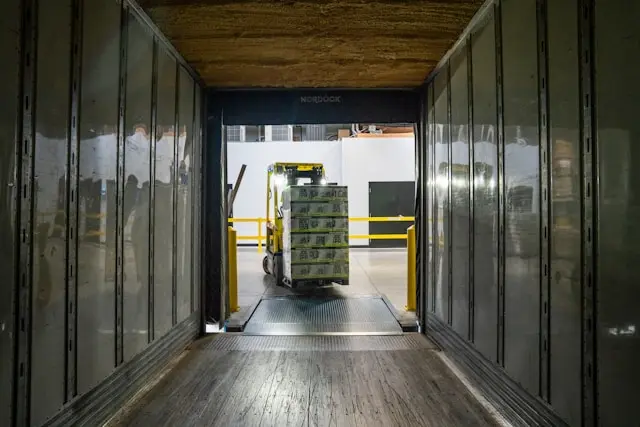
Ettelbruck sits at the strongest rail junction in northern Luxembourg, three kilometres from the A7 motorway, and anchors a logistics cluster of roughly 45 active transport enterprises. Its HGV drivers with ADR and refrigeration certifications earn upwards of €65,000 annually, among the highest figures for comparable roles anywhere in the EU. By every conventional measure, this should be a market where hiring is straightforward.
It is not. The northern Luxembourg logistics sector recorded a vacancy rate of 8.3% in late 2024, materially above the 6.1% national average. Specialised driver roles now sit open for 90 to 120 days. At least one regional haulier pulled two refrigerated trucks from service because it could not find licensed drivers at any price. The pattern across the Ettelbruck cluster is consistent: demand is strong, wages are competitive, and roles still go unfilled for months.
What follows is an analysis of why compensation alone has failed to resolve the shortage in this specific market, what structural forces are keeping the gap open, and what organisations operating in or hiring for northern Luxembourg's logistics sector need to understand before they commit to a search strategy that relies on the assumption that money solves everything.
The Rail Junction That Cannot Become a Hub
Ettelbruck's logistical identity rests on its position as the last major CFL Cargo marshalling point before the Belgian border on the Nordstreck. The junction handles roughly 4.2 million tonnes of freight annually through the CFL Cargo network. Line 10 runs toward Belgium. Line 1a connects to Diekirch and Echternach. The A7 motorway, linking Luxembourg City to Koblenz, is accessible via the Schieren interchange. On paper, this is infrastructure that should attract large-scale logistics clustering.
Why the Infrastructure Has Not Attracted Scale
The missing ingredient is land. Luxembourg's industrial vacancy rate stood at 0.3% nationally in Q3 2024, according to CBRE Luxembourg's MarketView. In northern Luxembourg, the situation is more severe. Available industrial land in the Ettelbruck catchment totals less than 12 hectares, with only 2.3 hectares possessing rail siding access. No greenfield logistics developments are planned. Average industrial land prices in the north reached €285 per square metre in 2024, a 14% year-on-year increase. Across the border in Lorraine, comparable land costs €45 to €65 per square metre.
The single-track nature of the Ettelbruck-Diekirch line limits freight capacity to six trains daily. That ceiling prevents any serious development of a rail-served logistics park. CFL Multimodal has indicated plans to expand cross-border rail services from Ettelbruck toward Liège-Guillemins, potentially increasing container traffic by 20,000 TEU annually by end of 2026. But that expansion meets the same constraint: there is nowhere to put the containers once they arrive.
The Ceiling Effect on Employers
This creates what the data reveals as a ceiling effect. Successful logistics firms in the Ettelbruck cluster cannot expand beyond SME scale without relocating. The options are Arlon in Belgium or the Bettembourg-Dudelange corridor in southern Luxembourg. Sixty-eight per cent of logistics firms in the canton employ fewer than ten people. No large-scale distribution centre operated by a major e-commerce player exists in the area. The result is a market composed almost entirely of small operators competing for a finite pool of qualified workers, none of them large enough to offer the career progression or employer brand that attracts talent passively.
For organisations looking to map the available talent in a constrained logistics market, the Ettelbruck picture represents an extreme version of a challenge visible across many secondary European logistics nodes: infrastructure exists, but the ancillary conditions for scaling do not. And the talent implications follow directly from that structural reality.
Cross-Border Commuting Patterns Are Working Against Ettelbruck
Only 34% of the logistics workforce in the Ettelbruck canton actually resides within Luxembourg. The remaining 66% commutes daily from Belgium or Germany, primarily from Bastogne, Arlon, Trier, and Bitburg. This cross-border dependency is not unusual for Luxembourg, where nearly half the total workforce is non-resident. But in the logistics sector around Ettelbruck, it creates a specific vulnerability.
The talent flow is predominantly southward. Approximately 40% of logistics professionals living in the Ettelbruck and Diekirch region commute to southern Luxembourg logistics parks each day. The draw is clear: 10 to 15% higher wages, larger employers with more visible career paths, and better public transport connectivity. A logistics operations director in the Contern or Bettembourg corridor earns roughly €135,000 compared to €125,000 for the equivalent role in the north, according to available salary benchmark data. But the gap matters less than the perception. Larger employers in the south offer a route to European headquarters roles. The small firms clustered around Ettelbruck do not.
The cross-border dynamic introduces a second pressure. German-national drivers working in Trier earn 25 to 30% less gross than their Ettelbruck counterparts but often take home comparable net income because of lower taxation and dramatically lower housing costs. A square metre of housing in northern Luxembourg runs €18 to €25. In Trier, it is €8 to €12. For a driver deciding where to work, the Luxembourg wage premium evaporates once rent is factored in. The firms paying the highest gross salaries in the Greater Region are not necessarily offering the best standard of living. And the candidates know it.
The Wage Premium Paradox
This is the central tension in Ettelbruck's logistics labour market, and it challenges a foundational assumption in most hiring strategies: that raising wages will resolve a shortage.
Senior HGV drivers with ten or more years of experience and ADR certification earn €58,000 to €68,000 annually in the Ettelbruck cluster, including bonuses. That represents a 12 to 15% premium over the Luxembourg profession minimum, driven purely by scarcity. Transport operations managers earn €75,000 to €90,000. Logistics directors and country operations heads command €120,000 to €155,000 in base salary, with bonus structures averaging 20 to 25% of base. Supply chain VPs with regional responsibility reach €140,000 to €180,000. Luxembourg-based logistics executives command a 10 to 12% salary premium over equivalent roles in Trier or Arlon, according to Mercer's Luxembourg Total Remuneration Survey.
Despite these figures, vacancy rates remain above the national average and have done so for more than 36 months. The Transports Schroeder example is instructive: the firm publicly indicated it was offering wages "significantly above collective agreement minimums" and still could not fill driver seats. A northern Luxembourg cold-chain operator, according to the LFB/ILRES Logistics Salary Survey 2024, poached an operations director from an Ettelbruck competitor by offering a 22% compensation premium and €18,000 in guaranteed annual bonuses. That is not a sign of a market that responds to incremental pay rises. That is a market where the available supply of qualified professionals is exhausted at any price.
The original analytical claim of this article is this: the Ettelbruck logistics market has priced itself into a compensation ceiling where further wage increases do not expand the candidate pool because the binding constraints are not monetary. Housing costs, the absence of career progression in firms too small to promote internally, and the physical impossibility of expanding operations on land that does not exist are what hold this market in permanent shortage. The money is a necessary condition. It is not a sufficient one. And organisations that rely on salary as their primary recruitment tool in this market are spending more without hiring faster.
Automation Investments Are Replacing One Shortage with Another
The 2026 outlook for the Ettelbruck logistics cluster projects 3.2% employment growth, constrained not by demand but by labour availability. That growth figure masks a compositional shift that is already underway.
Post Luxembourg's regional sorting facility in the Zone Industrielle Heisdorf employs approximately 120 staff in last-mile distribution for northern Luxembourg postal codes. Automation investments in this facility are expected to eliminate 15 to 20 manual sorting positions while simultaneously creating 8 to 10 technician roles. The net headcount reduction is modest. The skills transformation is not.
The Technician Gap
The manual sorting positions being eliminated are among the few roles in the Ettelbruck logistics market that function as active candidate markets, where sufficient applicants respond to postings. Entry-level warehouse operatives and administrative logistics coordinators still generate three to five applicants per opening. The technician roles replacing them require maintenance certifications, diagnostic capabilities, and familiarity with automated sorting systems. These specialists do not exist in the northern Luxembourg labour pool in adequate numbers. They are being drawn from the same constrained technical talent market that already struggles to fill industrial and manufacturing roles across the Greater Region.
The pattern is not unique to Post Luxembourg. It is consistent with what happens when capital investment in automation moves faster than the workforce can retrain. The investment has not reduced the need for people. It has replaced the people it could find with a category of people it cannot. For hiring leaders considering how to build a forward-looking talent pipeline, this is the dynamic that matters most. The roles disappearing are the easy ones to fill. The roles arriving are not.
The Regulatory Pressure Building for 2026
Three regulatory forces are converging on Ettelbruck's logistics operators simultaneously, and each one tightens the hiring market further.
Wage Indexation and Cost Escalation
Luxembourg's automatic wage indexation mechanism triggered a 2.5% salary increase in April 2024, with a further 2.0% adjustment anticipated for mid-2025. These increases are structural, automatic, and cumulative. They raise logistics operational costs faster than in any neighbouring jurisdiction. For small haulage firms already operating on thin margins, each indexation round narrows the gap between the cost of employing a driver and the revenue that driver generates. The pressure to consolidate intensifies with every cycle. The FEDIL Sector Outlook for logistics and transport has flagged this as a primary driver of expected mergers among northern Luxembourg hauliers through 2026.
Low-Emission Zone Compliance
The anticipated 2026 implementation of low-emission zones in northern Luxembourg municipalities may render 30 to 40% of the current HGV fleet non-compliant. Capital investment per vehicle runs €85,000 to €120,000. For a firm operating five trucks, the compliance bill alone could reach €600,000. This accelerates fleet modernisation but also accelerates the exit of marginal operators. The firms that cannot finance new vehicles will cease to operate. Their drivers will enter the market briefly before being absorbed by the surviving firms.
Cabotage Enforcement
Strict enforcement of EU Regulation 1072/2009 limits the ability of Luxembourg-registered hauliers to use foreign-licensed drivers for domestic operations. In a market where 66% of the workforce already commutes from abroad, this regulation constrains the very labour flexibility that the sector depends on. It does not prohibit cross-border employment. But it restricts the operational workarounds that small firms have historically used to manage driver shortfalls during peak periods.
The combined effect of these three forces is not simply cost pressure. It is a structural acceleration of consolidation. Fewer firms will operate in the Ettelbruck cluster by 2028. The survivors will be larger, better capitalised, and competing for the same finite pool of specialised workers. For anyone responsible for executive hiring in logistics and distribution, the implication is that the window to secure leadership talent in this market narrows every quarter.
Where the Passive Candidate Ratios Tell the Real Story
The most revealing data in the Ettelbruck logistics market is not the vacancy rate. It is the passive candidate ratios.
Rail logistics engineers and CFL operations specialists operate in a market with effectively zero unemployment. The ratio of active to passive candidates is estimated at 1:9. Nine out of ten qualified professionals in this specialism are employed, not looking, and will not respond to a job posting. They move through internal promotion or through targeted approaches. Supply chain directors with multimodal experience show passive ratios of 1:7, with average tenure of 4.8 years in their current roles. Movement is typically triggered by relocation offers or equity participation, not salary alone. Even specialised HGV drivers function as a passive market: those holding ADR Class 3 and refrigerated transport certifications show active-to-passive ratios of 1:4.
This is the mathematical reality that explains why conventional recruitment methods fail in this market. A job posting reaches the active fraction only. In a market where 90% of rail logistics specialists and 80% of certified HGV drivers are not looking, the reach of a traditional recruitment campaign covers a fraction of the available talent. The candidates a posting does attract are statistically less likely to hold the specialist certifications that define the hardest-to-fill roles.
The firms that hire successfully in Ettelbruck do so through word of mouth or through direct approaches. The LFB salary survey's report of a 22% poaching premium for an operations director is not an anomaly. It is the standard mechanism. In a market where 80% of the best candidates are not actively looking, the only search methodology that reaches them is one designed specifically for passive talent identification. Posting a role on ADEM and waiting is not a strategy. It is a concession.
What This Means for Organisations Hiring in Northern Luxembourg
The Ettelbruck logistics market in 2026 presents a paradox that most hiring leaders will not have encountered elsewhere. The infrastructure is real. The wages are high. The demand is strong. And the roles still do not fill.
The reasons are now clear. Land scarcity prevents firms from scaling, which prevents them from offering career progression, which prevents them from competing for talent against larger employers in the south. Cross-border commuting economics erode the wage premium that was supposed to attract workers. Automation replaces fillable roles with unfillable ones. Regulatory costs push small operators toward consolidation or exit. And the candidates who possess the most critical certifications are overwhelmingly passive, invisible to job boards, and accessible only through direct engagement.
For organisations that need to fill logistics leadership roles in this environment, the question is not whether to pay more. That lever has been pulled. The question is how to reach the 80 to 90% of qualified professionals who will never respond to an advertisement, and how to construct a proposition that addresses housing, progression, and quality of life alongside compensation. KiTalent's approach to this challenge combines AI-powered talent mapping across industrial and logistics markets with direct engagement of passive candidates. The methodology delivers interview-ready candidates within 7 to 10 days, not because the search is rushed but because the mapping has already been done before the first conversation takes place.
The cost of a wrong hire at operations director level in this market is not merely the salary wasted. It is the 90 to 120 days before the failure becomes visible, during which routes are underserved, contracts are at risk, and the remaining team absorbs work they cannot sustain. In a market this small, a bad appointment is visible to every competitor. And the second search is harder than the first.
For organisations competing for logistics and supply chain leadership in northern Luxembourg, where the candidates you need are not visible on any job board and the constraint is not willingness to pay but the ability to reach professionals who are not looking, speak with our executive search team about how we identify and engage passive talent in this specific market. KiTalent's pay-per-interview model means there is no upfront retainer. You pay only when you meet qualified candidates.
Frequently Asked Questions
Why is it so difficult to hire HGV drivers in Ettelbruck despite high wages?
Ettelbruck's logistics sector pays among the highest HGV driver wages in the EU, with ADR-certified senior drivers earning €58,000 to €68,000 annually. The shortage persists because the binding constraints are not monetary. Housing costs in northern Luxembourg are three to four times higher than in competing German markets like Trier, eroding the gross wage advantage. Cross-border commuters who could fill these roles often find comparable net income closer to home. Only 34% of the logistics workforce in the area actually lives in Luxembourg. The remaining 66% commutes internationally, and many are drawn south to larger employers offering better career paths.
What logistics roles are hardest to fill in northern Luxembourg?
The hardest roles are those requiring specialist certifications in a small geographic market. Rail logistics engineers with CFL operations knowledge face effectively zero unemployment, with a 1:9 active-to-passive candidate ratio. Supply chain directors with multimodal experience show ratios of 1:7. HGV drivers holding ADR Class 3 and refrigeration certifications are scarce even by Luxembourg standards, with 1:4 ratios. These roles require direct headhunting approaches rather than job board advertising, as the overwhelming majority of qualified professionals are employed and not actively seeking new positions.
How does Ettelbruck's logistics sector compare to southern Luxembourg?
Ettelbruck serves as a secondary logistics node focused on regional haulage and last-mile distribution for northern Luxembourg. The Bettembourg-Dudelange corridor in the south handles the majority of national freight volume and hosts intermodal terminals, large-scale distribution centres, and major e-commerce operations absent from Ettelbruck. Salaries are 8 to 12% higher in the south for equivalent roles. Roughly 40% of logistics professionals living in the Ettelbruck region commute south daily for work, drawn by higher pay, larger employers, and clearer career progression to European headquarters roles.
What is the salary range for logistics executives in Luxembourg?
Logistics directors and country operations heads in Luxembourg earn €120,000 to €155,000 in base salary, with bonus structures of 20 to 25%. Supply chain VPs with regional responsibility command €140,000 to €180,000. Luxembourg-based logistics executives earn a 10 to 12% premium over equivalent roles in the Greater Region cities of Trier and Arlon. Transport operations managers earn €75,000 to €90,000. These figures reflect both the high cost of operating in Luxembourg and the compensation premiums required to attract senior professionals in a structurally constrained market.
How will the 2026 Nordstreck rail upgrades affect logistics hiring in Ettelbruck?
The Luxembourg government's €47 million Nordstreck rail modernisation programme includes Ettelbruck junction upgrades scheduled for mid to late 2026. During construction, freight capacity will temporarily drop by an estimated 15%. Post-completion, throughput should increase by 8%. CFL Multimodal plans to expand cross-border services toward Liège, potentially adding 20,000 TEU annually. The upgrades will create short-term disruption and a small number of specialised engineering roles, while the longer-term capacity increase may attract additional operators. However, land scarcity remains the binding constraint on whether increased rail capacity translates to actual logistics growth.
Can executive search firms help with logistics hiring in a small market like Ettelbruck?
Small, specialised markets are precisely where executive search delivers the most value. In a market where 90% of rail logistics specialists and 80% of certified HGV drivers are not actively looking, traditional recruitment channels reach only a fraction of the candidate pool. KiTalent's AI-enhanced methodology identifies passive candidates across the Greater Region, including cross-border professionals in Belgium and Germany who would be open to the right proposition. With a 96% one-year retention rate across 1,450 executive placements, the approach is designed for markets where the margin for error is smallest and the cost of a failed hire is highest.