Ettelbruck's Precision Engineering Sector in 2026: Why Acute Talent Shortages Have Not Moved the Wage Needle

Ettelbruck's metalworking and fabrication cluster entered 2026 in a condition that classical economics would call impossible. Vacancies for CNC machinists sit open for more than 120 days. Welding supervisors attract fewer than half a candidate per opening. SMEs in the Zone Industrielle "Um Kiem" routinely poach certified welders from competitors with signing bonuses of €2,000 to €3,000. Yet nominal wage growth in Luxembourg's metalworking sector slowed to 2.1% in 2024, below inflation and less than half the rate of increase seen in IT and financial services. The shortage is real. The price signal that should accompany it is absent.
This disconnect is not a curiosity. It is the defining constraint shaping every hiring decision in Ettelbruck's light manufacturing and precision engineering sector. Thirty-five to forty active SMEs, employing between 450 and 550 people directly, depend on a labour pool that is structurally at full employment, geographically contested by Trier, Arlon, and Luxembourg City, and increasingly regulated by circular economy mandates that demand new skills nobody in the region has trained for yet. The sector's output value is rising. Its headcount is not. And the executives capable of steering these businesses through the transition are among the most passive candidate populations in any European industrial market.
What follows is an analysis of the forces reshaping Ettelbruck's manufacturing base, the specific roles that have become near-impossible to fill through conventional methods, and why the standard recruitment playbook fails in a market where more than 85% of the candidates you need are not looking. For senior hiring leaders responsible for production, operations, or plant leadership in Luxembourg's northern region, the implications are immediate and material.
A Small Cluster Under Disproportionate Pressure
Ettelbruck's manufacturing identity is easy to underestimate. The sector accounts for roughly 12 to 15% of local employment, a fraction of the logistics and services sectors that dominate the Nordstad economy. But its economic significance exceeds its headcount. Third- and fourth-generation family workshops like A. Frisch S.à r.l. and Schulz Luxembourg S.A. form the backbone of a regional supply chain that feeds Luxembourg's construction industry and serves cross-border clients in Belgium's Province du Luxembourg and Germany's Eifel district. Approximately 60% of local fabrication output serves residential and commercial construction, a dependency that makes the cluster acutely sensitive to building permit cycles.
Capacity utilisation in the Nordstad metalworking cluster stood at 89% through late 2024, five points above the national manufacturing average of 84%. Order books covered an average of 4.2 months, down from 5.1 months in 2023 but still above pre-pandemic levels. Private capital expenditure across Ettelbruck's industrial zones reached €4.2 million in 2024, directed primarily toward CNC machinery upgrades and photovoltaic installations on warehouse roofs.
These are the numbers of a sector that is investing and operating at high intensity. They are also the numbers of a sector that cannot grow. No greenfield industrial expansions were permitted in 2024 because of zoning saturation. The sole identified expansion area, 2.3 hectares near the N7 corridor, remains pending environmental review and will not become available before 2027 at the earliest. The machines are new. The buildings that house them are full. And the people who run them are, in many cases, already considering offers from competitors down the road.
For any executive search process focused on manufacturing leadership in this region, the constraint is not finding companies that need leaders. It is finding leaders who can operate within constraints this tight, from physical space to workforce availability, without the margin for error that a larger operation would provide.
The Vacancy Problem That Wages Have Not Solved
The most striking feature of Ettelbruck's talent market in 2026 is the gap between shortage severity and compensation response. ADEM registered 47 unfilled positions in metallurgy and metalworking for the Canton Diekirch as of November 2024, a vacancy rate of 8.2% compared to a national average of 4.1% across all sectors. Three roles account for the bulk of the difficulty.
CNC Machinists: 120 Days and Counting
CNC machinists in the Nordstad region take more than 120 days to place, according to ADEM's bottleneck analysis. The candidates with the qualifications that matter most, specifically master craftsmen with ten or more years of experience on Heidenhain or Siemens controls, exhibit passive candidate ratios exceeding 85%. They do not respond to job advertisements. They are employed, stable, and typically retained through long-tenure relationships with German or Luxembourgish manufacturers. Recruitment into this segment occurs almost exclusively through direct headhunting or referral-based search, not through any channel that a job board can reach.
Welding Supervisors and Industrial Maintenance Technicians
Welding supervisors (Chef de soudure) present a different but equally severe constraint. Vacancies persist for 90 or more days with only 0.4 candidates per opening. The active candidates who do appear often lack the required EN ISO 9606-1 certifications. Certified supervisors, meanwhile, are retained through non-compete clauses and loyalty bonuses that make them expensive and legally complicated to move. Approximately 70% of this population is passive.
Industrial maintenance technicians round out the critical shortage profile. Thirty-four percent of local SMEs identify this role as the single position blocking their expansion plans. The combination of PLC programming knowledge, mechanical aptitude, and willingness to work in a small-firm environment with limited career ladder progression narrows the field to a point where traditional recruitment methods consistently fail.
Yet wages have not responded as supply-demand theory predicts. Nominal wage growth in Luxembourg's metalworking sector ran at 2.1% in 2024, trailing consumer price inflation of 2.9% and falling far short of the 4.5% growth recorded in IT and financial services. This is the paradox at the centre of Ettelbruck's hiring challenge. The shortage exists. The market is not pricing it.
The explanation lies in a structural rigidity that no single employer can resolve alone. Most of these SMEs serve construction clients who are themselves facing margin pressure from a projected 12% decline in Luxembourg building permits through 2025. Fabricators cannot pass higher labour costs through to clients who are already cutting budgets. The result is a wage ceiling that holds even as vacancies accumulate. Cross-border labour market segmentation compounds the problem: wage arbitrage between Luxembourg, Belgian, and German markets does not function smoothly because of differing social security systems, tax treatment, and non-compete enforceability.
The Cross-Border Labour Pool Is Shrinking
Approximately 38% of employees in Ettelbruck's industrial estates commute from Belgium or Germany. This cross-border workforce has been the relief valve that kept the sector staffed through previous cycles of domestic tightness. That valve is closing.
Belgian and German tax reforms enacted through 2024 and 2025 have reduced the net financial advantage of working in Luxembourg for frontalier residents. The IGSS report on cross-border workers estimated that these reforms could shrink the available cross-border talent pool by 8 to 10%. The effect is not uniform. Junior and mid-level technicians are most price-sensitive to changes in net take-home pay. Senior specialists and managers, whose gross compensation in Luxembourg already commands a 25 to 35% premium over equivalent roles in Trier or Arlon, are more likely to continue commuting. But the pipeline of younger workers entering the cross-border labour market is thinning at exactly the moment Ettelbruck's SMEs need it most.
Trier, 45 kilometres away, offers housing costs 40% below Ettelbruck's periphery and a strong technical university producing engineering graduates. German automotive suppliers including Continental and Schaeffler are actively recruiting Luxembourg-based talent willing to reverse the traditional commute direction. Arlon, 35 kilometres into Belgium, presents a growing logistics sector that offers flexible hours, a draw for workers who might otherwise have entered manufacturing.
Luxembourg City itself is the most powerful competitor. Fintech and industrial services roles in the capital offer 15 to 20% salary premiums for comparable engineering skills, plus career mobility that a family workshop in Ettelbruck simply cannot match. The net migration of skilled tradespeople is negative for Ettelbruck relative to both Luxembourg City and Trier. The loss is most acute among engineers under 35 seeking international corporate career paths.
The practical consequence for hiring leaders in Ettelbruck's manufacturing cluster is that every search now competes not only with local firms but with employers in three countries and a capital city that can outbid them on compensation, career trajectory, or lifestyle. A search strategy that does not account for this geography will fail before it begins.
The Original Synthesis: Capital Is Modernising Faster Than the Workforce Can Follow
The €4.2 million invested in Ettelbruck's industrial zones in 2024 went overwhelmingly into CNC machinery upgrades and energy infrastructure. This investment was rational. Higher-value manufacturing requires better machines. EU energy transition mandates require photovoltaic capacity and, eventually, the replacement of fossil fuel heating systems. The sector's output value is projected to rise 3.5% through 2026 even as headcount contracts by 1.5 to 2%.
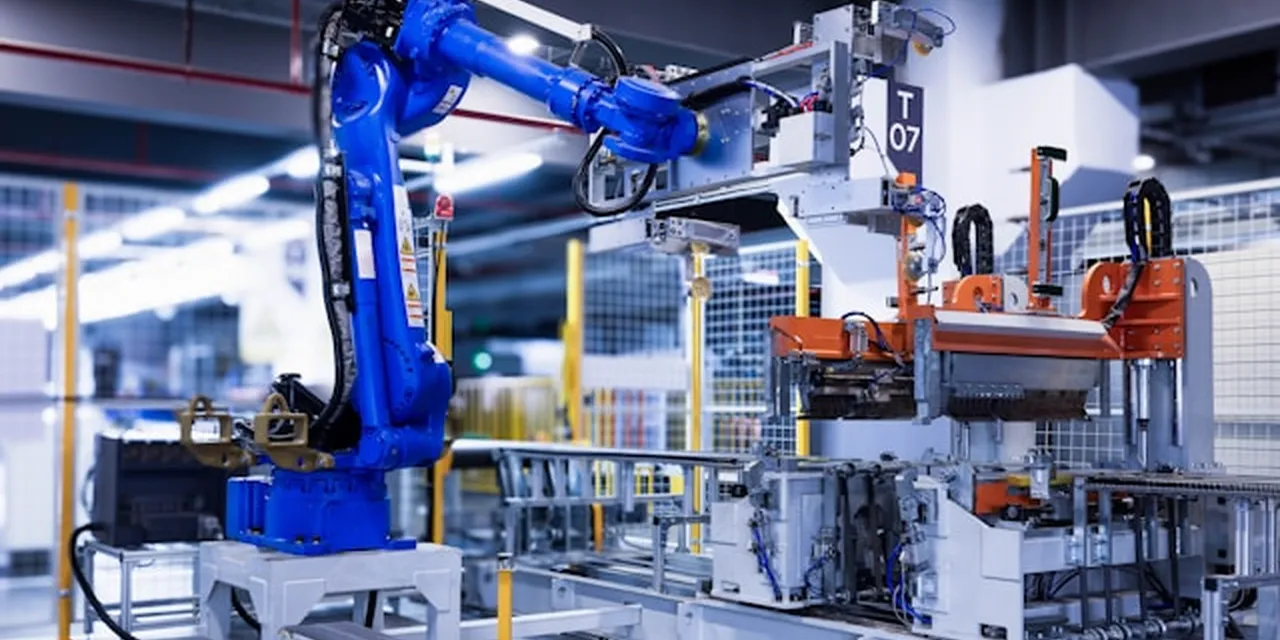
But here is what the aggregate numbers obscure: the investment in automation has not reduced the need for workers. It has replaced one category of worker with another that does not yet exist in sufficient numbers. A workshop that upgrades from manual lathes to five-axis CNC machining centres does not need fewer people. It needs different people. It needs CNC programmers fluent in Heidenhain controls and SolidWorks CAD/CAM. It needs maintenance technicians who can diagnose PLC faults. It needs quality managers who can implement ISO 9001 systems. None of these roles are easier to fill than the manual roles they replaced. Most are harder.
Capital moved faster than human capital could follow. The Centre de Formation des Métiers du Bâtiment trains approximately 180 apprentices annually in construction and fabrication trades, but the curriculum has not yet caught up with the skill profiles that modernised workshops now require. Active candidates from this pipeline, typically junior technicians with fewer than three years of experience, require 12 to 18 months of upskilling before they meet SME productivity standards. The FabLab Nordstad in Diekirch provides access to precision prototyping equipment, but utilisation by Ettelbruck manufacturers remains limited.
The sector's modernisation is therefore widening the gap between the talent it needs and the talent it can find. Every CNC upgrade creates a vacancy that takes four months to fill. Every energy transition mandate adds a compliance skill requirement that the existing workforce does not possess. The businesses that invested earliest are now the ones most exposed to the talent constraint, because they need the most advanced skill profiles in a market that cannot supply them.
This is not a temporary mismatch that the training system will resolve in a cycle or two. It is a systemic lag between capital investment speed and workforce development speed. Senior leaders who understand this dynamic will plan their talent pipelines accordingly. Those who assume that modernisation reduces headcount pressure will find themselves with excellent machines and nobody qualified to run them.
Regulatory Pressure Is Adding Skill Requirements, Not Removing Them
Two regulatory shifts are about to compound the talent strain that Ettelbruck's manufacturers already face.
The Circular Economy Law
Luxembourg's Loi sur l'économie circulaire takes effect in March 2026. It mandates extended producer responsibility for construction materials, requiring local fabricators to certify recycled content percentages across their product lines. Compliance costs are estimated at €15,000 to €50,000 per SME, depending on product complexity. The financial burden is material but manageable. The skills burden is not.
Circular economy material tracing is a discipline that barely existed in Luxembourg's metalworking sector three years ago. It requires knowledge of lifecycle assessment methodology, material provenance documentation, and reporting systems that most workshops have never used. The professionals who possess these skills tend to work in environmental consultancy or large-scale manufacturing, not in 45-person fabrication shops in northern Luxembourg. Hiring them means competing with a different labour market entirely.
The EU Machinery Regulation
The transposition of EU Machinery Regulation 2023/1230, effective January 2027, will require conformity assessment updates costing €10,000 to €30,000 per product line. This is a compliance exercise that demands quality management and regulatory affairs expertise. For SMEs already struggling to fill QHSE (Quality, Health, Safety, Environment) manager positions at €80,000 to €105,000, the additional regulatory workload will either absorb existing management bandwidth or create new vacancies that the market cannot fill.
Taken together, these regulations mean that every manufacturing SME in Ettelbruck will need access to skills in circular economy compliance, machinery conformity assessment, and energy transition planning within the next 18 months. The local training infrastructure is not producing these skills at scale. The cross-border labour pool is contracting. And the wage ceiling imposed by construction-sector margin pressure limits employers' ability to bid for the scarce professionals who do possess them. The regulatory timeline is fixed. The talent supply timeline is not.
What Ettelbruck's Compensation Market Actually Looks Like
For hiring leaders benchmarking packages against this market, the compensation structure reflects the sector's unusual characteristics: high skill requirements, small organisational scale, and a trilingual premium that adds cost without adding productivity.
At the senior specialist and manager level, Production Managers command €85,000 to €110,000 in base salary plus bonus. Senior CNC Programmers and Engineers fall in the €75,000 to €95,000 range. Quality Managers sit between €80,000 and €105,000. These figures are competitive within Luxembourg's manufacturing sector but fall 15 to 20% below what equivalent skills command in Luxembourg City's industrial services firms.
At the executive level, the picture tightens further. A Plant Manager running an SME of 50 to 150 employees earns €130,000 to €165,000 in base compensation, with total packages reaching €150,000 to €185,000. Operations Directors command €145,000 to €180,000. General Managers of manufacturing SMEs range from €160,000 to €220,000, with the upper end reserved for roles with international scope.
The trilingual premium is a distinctive feature of this market. Roles requiring fluency in Luxembourgish, French, and German command 8 to 12% more than bilingual equivalents. In a sector where daily operations involve Luxembourgish-speaking workshop staff, French-speaking Belgian suppliers, and German-speaking machinery vendors, trilingualism is not a luxury. It is an operational necessity. But it narrows the candidate pool dramatically. Finding an Operations Director with the right technical background, manufacturing leadership experience, and trilingual fluency reduces an already thin market to a handful of viable candidates.
For organisations considering how to structure compensation offers in this market, the key insight is that salary alone will not move the candidates who matter most. Plant Managers and Operations Directors in this segment average more than eight years of tenure. Their loyalty is anchored in relationship, autonomy, and proximity to home. The proposition that moves them is not a marginal pay increase. It is a role with meaningfully greater scope, or a business with a clearer growth trajectory, presented through a trusted intermediary rather than a cold outreach.
The Search Method This Market Demands
The passive candidate ratios in Ettelbruck's precision engineering sector make the market structure unmistakable. More than 85% of qualified CNC machinists are passive. Approximately 70% of certified welding supervisors are passive. More than 90% of Plant Managers and Operations Directors are passive. The active candidate pool consists primarily of junior technicians requiring over a year of upskilling and career changers who have not yet built the productivity habits that SME environments demand.
A search process that relies on job advertising, inbound applications, or database matching will reach, at best, the 10 to 15% of the market that is actively looking. In a geography where the total economically active population within a 30-minute commute is 28,000 and unemployment sits at 3.8%, that fraction translates to a vanishingly small number of viable candidates for any given senior role.
Advertised vacancies for Plant Manager roles in markets of Ettelbruck's size typically indicate internal succession planning failures rather than genuine external recruitment, according to the Pedersen & Partners Industrial Executive Mobility Study. The implication is clear: by the time a role appears on a job board, the employer has already exhausted internal options and is competing against time, not just against other employers.
The hidden 80% of executive talent in this market requires a fundamentally different approach. It requires mapping the specific individuals in Trier, Arlon, Luxembourg City, and the wider Nordstad region who hold the right certifications, speak the right languages, and might consider a move under the right conditions. It requires understanding which non-compete clauses are enforceable under Luxembourg law versus Belgian or German law. It requires knowing that a candidate in Trier values housing cost savings while a candidate in Luxembourg City values career trajectory. Each passive candidate in this market represents a distinct set of motivations that a generic outreach cannot address.
KiTalent's approach to talent mapping in specialised industrial markets is built for exactly this challenge. AI-enhanced identification of passive candidates, combined with direct engagement by sector-specialist consultants, delivers interview-ready shortlists within 7 to 10 days. The pay-per-interview model means clients invest only when they meet qualified candidates, eliminating the upfront retainer risk that disproportionately burdens SMEs operating on construction-sector margins. With a 96% one-year retention rate across 1,450 or more executive placements, KiTalent's methodology is calibrated for markets where the cost of a wrong hire at senior level is not merely financial but existential for a business of 50 to 150 employees.
For organisations competing for production leadership, CNC engineering talent, or operations management in Ettelbruck's precision engineering cluster, where the candidates you need are not visible on any job board and the margin for a failed search is measured in months of lost production capacity, open a conversation with our industrial sector search team about how we approach this market differently.
Frequently Asked Questions
Why is it so difficult to hire CNC machinists in Ettelbruck and the Nordstad region?
CNC machinists with ten or more years of experience on Heidenhain or Siemens controls are more than 85% passive in this market. They are employed in stable positions and do not respond to job advertisements. The total economically active population within commuting distance is approximately 28,000, with unemployment at 3.8%, indicating structural full employment in skilled trades. Average time-to-fill exceeds 120 days. Conventional job advertising reaches fewer than 15% of viable candidates. Direct search and headhunting methods are the only reliable route to this talent segment.
What do Plant Managers and Operations Directors earn in Luxembourg's manufacturing SME sector?
Plant Managers running SMEs of 50 to 150 employees earn €130,000 to €165,000 in base salary, with total compensation reaching €150,000 to €185,000 including bonuses and benefits. Operations Directors command €145,000 to €180,000. General Managers of manufacturing SMEs range from €160,000 to €220,000 depending on international scope. Roles requiring trilingual fluency in Luxembourgish, French, and German attract an additional 8 to 12% premium. These figures reflect 2024 salary survey data from Hays Luxembourg and Morgan Philips.
How does the Luxembourg Circular Economy Law affect manufacturing SMEs in Ettelbruck?
The Loi sur l'économie circulaire, effective March 2026, mandates extended producer responsibility for construction materials. Local fabricators must certify recycled content percentages across their product lines. Compliance costs range from €15,000 to €50,000 per SME. Beyond the financial impact, the law requires skills in lifecycle assessment methodology and material tracing documentation that most metalworking workshops have not previously needed. This creates a new category of hiring demand in a market already facing acute shortages.
What percentage of Ettelbruck's industrial workforce commutes from Belgium or Germany?
Approximately 38% of employees in Ettelbruck's industrial estates are cross-border commuters, primarily Belgian residents from the Province du Luxembourg and German residents from the Eifel district. Belgian and German tax reforms through 2024 and 2025 have reduced the net advantage of working in Luxembourg for these commuters, potentially shrinking the cross-border talent pool by 8 to 10%. This contraction is most pronounced among junior and mid-level technicians who are more sensitive to changes in take-home pay.
How does KiTalent approach executive search in specialised manufacturing markets like Ettelbruck?
KiTalent uses AI-enhanced talent mapping to identify passive candidates who would never appear through job advertising. In markets where 85 to 90% of qualified candidates are not actively looking, this direct identification methodology is the only way to build a viable shortlist. KiTalent delivers interview-ready candidates within 7 to 10 days under a pay-per-interview model, meaning SMEs invest only when they meet qualified professionals. The firm's 96% one-year retention rate reflects a process designed for precision rather than volume.
What are the main risks to Ettelbruck's manufacturing sector in 2026 and 2027?
Three risks converge. First, a projected 12% decline in Luxembourg building permits reduces order volumes for fabricators whose output is 60% construction-dependent. Second, regulatory costs from the Circular Economy Law and the EU Machinery Regulation 2023/1230 will require compliance investments of €25,000 to €80,000 per SME. Third, the cross-border labour pool is contracting as Belgian and German tax reforms reduce the financial incentive for frontalier commuters. Together, these pressures squeeze both revenue and the talent supply needed to maintain operations.