Fribourg's Precision Engineering SMEs Are Automating Fast. The Workforce to Run the Machines Is Not Keeping Up.
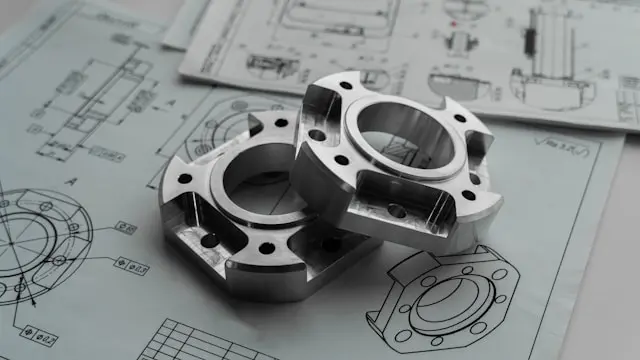
Canton Fribourg's 320 precision engineering firms invested CHF 89 million in new production technologies in 2024. Five-axis CNC machining centres, cobots, automated quality inspection systems. The capital went in. The people to operate, programme, and maintain that equipment did not follow at anything close to the same pace. SECO now projects a structural deficit of 450 skilled production workers in the canton's industrial sector by the end of 2026.
This is not a story about a sector in decline trying to attract reluctant talent. Fribourg's precision engineering cluster generated CHF 1.8 billion in turnover in 2022, grew headcount by 2.3% through 2024, and serves client bases spanning medtech implants, automotive components, and industrial automation. The problem is more specific and more difficult: a canton dominated by SMEs has committed to a technological trajectory that demands a workforce it cannot produce or recruit quickly enough. CNC multi-axis programmers, precision toolmakers, and automation integration engineers now sit open for an average of 5.8 months. In Zurich, the equivalent figure is 3.2 months. Fribourg's smaller employers, lower brand visibility, and constrained immigration quotas compound every week that passes.
What follows is a ground-level analysis of the forces reshaping Fribourg's precision engineering market, the specific roles where the pressure is most acute, what these dynamics mean for compensation, and what hiring leaders in this cluster need to understand before launching their next search.
The Shape of the Cluster: 320 Firms, 8,200 Workers, and a CHF 89 Million Bet on Automation
Precision engineering and advanced manufacturing employ approximately 8,200 people directly across Canton Fribourg, representing 6.8% of total cantonal employment. Ninety-four per cent of the canton's roughly 320 firms in the sector employ fewer than 250 people. This is a classic Mittelstand-style industrial cluster: family-owned, technically deep, export-oriented, and operating at margins thin enough that a sustained move in the EUR/CHF rate can trigger restructuring.
That export orientation matters. Sixty-two per cent of Fribourg's precision engineering output crosses a border, compared with 58% nationally. The persistent strength of the Swiss franc, with EUR/CHF parity pressure continuing into 2026, has compressed margins by an estimated 150 to 200 basis points for these firms. According to the Chambre de commerce et d'industrie du Canton de Fribourg, the response has been overwhelmingly technological: invest in automation, raise throughput per worker, and reduce dependence on a labour market that cannot deliver.
The CHF 89 million invested in new production technologies in 2024 was concentrated in 5-axis CNC machining centres and automated quality inspection. These are not incremental upgrades. A single 5-axis machining cell costs CHF 500,000 to CHF 1.2 million. For an SME with fewer than 100 employees, this represents a capital commitment that fundamentally changes the skill profile of the workforce required to run the operation.
Here lies the central analytical point of this article: Fribourg's automation investment has not reduced its dependence on scarce human capital. It has replaced one category of scarce worker with another that is even scarcer. The semi-skilled machine operator who ran a 3-axis lathe has been replaced by a requirement for a 5-axis CNC programmer who can work with Siemens NX, implement digital twins, and apply geometric dimensioning and tolerancing at medical device tolerances. The capital moved faster than the human capital could follow. Every CHF invested in a new machining centre widens the gap between what these firms need and what the local talent pipeline can deliver.
The geographic footprint of this cluster extends beyond the city. The Granges-Paccot, Marly, and Givisiez industrial corridor anchors the larger firms, but a distinct secondary cluster operates in the Sense district: Tafers, St. Antoni, and Le Mouret, focused on precision turning and mould-making. Industrial vacancy rates in the primary zones stand at 2.1%, which is effectively full occupancy. The cluster cannot expand physically without new development, and the blueFACTORY innovation district's second phase, completing in the first half of 2026, adds 12,000 square metres of laboratory and light manufacturing space. That space is expected to absorb 15 to 20 precision engineering spin-offs from HEIA-FR.
Growth is happening. Space is constrained. The workforce to fill either the existing operations or the new ones is the binding constraint.
Where the Shortages Bite Hardest: Three Roles, Three Distinct Problems
In the third quarter of 2024, 68% of Fribourg manufacturing SMEs reported recruitment difficulties for skilled production roles. The national average was 54%. That fourteen-point gap is not evenly distributed. It concentrates in three specific role categories, each with a different root cause.
CNC Multi-Axis Programmers
This is the most acute shortage. A CNC programming role for simultaneous 5-axis machining in Fribourg remains unfilled for an average of 5.8 months, according to Adecco Switzerland's 2024 recruitment duration study. Unemployment in this micro-segment is 0.8%. The ratio of active to passive candidates is roughly 1:9. For every programmer who might respond to a job posting, nine more are employed, not looking, and would need to be approached directly.
The demand side has intensified in lockstep with the automation investment. Job postings for "Programmeur CNC" in Fribourg rose 34% year-on-year in the fourth quarter of 2024. The candidate pool shrank 8% over the same period. These figures are moving in opposite directions with no mechanism to reverse either trend in the near term.
Precision Toolmakers
Moulistes and outilleurs with ten or more years of experience maintain average tenure of 7.2 years and are almost never active on job boards. Recruitment occurs through direct approach or industry networks. The Sense district cluster, which specialises in precision turning and mould-making, competes for this same talent pool against the Jura Arc's deep watchmaking ecosystem. Fribourg offers better sectoral diversity for a toolmaker seeking experience beyond horology, but Swatch Group and Richemont offer something Fribourg's SMEs generally cannot: structured career paths and perceived job security inside a large corporate group.
Automation Integration Engineers
PLC and robotics integration roles represent a somewhat different dynamic. These candidates have more transferable skills across industries, which means the active-to-passive split is closer to 40/60. But transferability cuts both ways. A PLC programmer proficient in Siemens S7 or Beckhoff platforms is equally attractive to pharmaceutical packaging firms, food processing companies, and logistics operators. Fribourg's precision engineering SMEs compete for this talent against every other sector that automates.
One mid-sized automation supplier in Granges-Paccot restructured its shift patterns in 2024, moving to a compressed four-day week of four ten-hour shifts. The explicit purpose was to attract PLC programmers from the Zurich market who wanted better work-life balance. According to the CCIFR's November 2024 newsletter, the firm accepted operational inefficiencies as the cost of solving a recruitment problem it could not solve with compensation alone.
The forward implication is clear. The firms that adapt their operating models to the realities of what scarce candidates actually want will fill roles. The firms that post job advertisements and wait will not. For executive and senior specialist roles in this market, the picture is starker still: 100% of viable candidates for VP Operations and Technical Director positions within the Fribourg catchment area are passive.
The Compensation Picture: What These Roles Pay and Why the Gaps Matter
Fribourg's compensation structure sits in a specific position on the Swiss gradient. It trails Zurich by 8 to 12% for equivalent roles but exceeds the Jura and Neuchâtel cantons by 3 to 5%. This positioning creates a structural tension that hiring leaders must understand before they set a compensation strategy.
An Operations Director overseeing a plant of 100 to 200 employees in Fribourg earns a base salary of CHF 135,000 to CHF 165,000, with a bonus of 10 to 20%. At VP level, directing multi-site or high-complexity automation operations, the range rises to CHF 180,000 to CHF 220,000 with bonuses of 20 to 30% and, in family-owned firms, equity participation. An Engineering Director in R&D-focused precision work earns CHF 125,000 to CHF 155,000 at manager level, scaling to CHF 190,000 to CHF 240,000 at CTO level with considerable variation depending on equity arrangements.
For medtech-specialised Quality and Regulatory Affairs roles, the range runs CHF 115,000 to CHF 140,000 for a Quality Manager holding ISO 13485 certification, rising to CHF 160,000 to CHF 195,000 for a Head of QA/RA.
These numbers tell only part of the story. The more revealing data point comes from the Swissmem regional labour market survey, which documented a specific pattern: a Chef de département usinage position at a Sense district SME sat vacant from March to November 2024. It was ultimately filled by recruiting a candidate from a competitor in La Chaux-de-Fonds with a 22% salary premium and a relocation package. That premium was not a market rate adjustment. It was the cost of moving a passive candidate out of a stable role in a competing region.
This is the compensation dynamic that aggregate salary surveys miss. The published benchmark tells you what a role pays when filled through normal channels. The actual cost of filling the role, when the candidate must be identified, approached, and persuaded to relocate from an established position, regularly exceeds the benchmark by 15 to 25%. Hiring leaders who budget to the midpoint of a salary survey and then discover they cannot attract a single qualified candidate are repeating a pattern that has become endemic in this market.
The gap is widening fastest at exactly the seniority level where the most consequential roles sit. Zurich's 12 to 18% salary premium for equivalent positions is not closing. For a senior 5-axis CNC application engineer, the spread has widened as Zurich employers absorb more of the national talent pool. Negotiating the total proposition for these candidates now requires Fribourg employers to compete on dimensions beyond base pay: work-life flexibility, equity participation, project variety, and proximity to decision-making that a global corporate cannot offer.
The Talent Drain Arithmetic: Who Fribourg Loses and Where They Go
HEIA-FR, the canton's engineering school, trains approximately 180 microtechnics and industrial automation engineers each year. Of those graduates, 34% remain in the canton for employment. The rest leave.
Twenty-two per cent of HEIA-FR graduates move to the Zurich job market annually. The draw is straightforward: salary premiums of 12 to 18%, larger corporate employers like ABB and Siemens with structured career progression, and international schooling options for those building a life. Housing costs in Zurich are 35 to 45% higher than Fribourg, which partially offsets the salary differential. But for a 26-year-old engineer without a family, the housing calculation is less relevant than the career trajectory.
The Lausanne-Vaud medtech corridor captures another tranche. Multinational headquarters including Medtronic, Straumann, and Sonova offer global mobility programmes, international project management exposure, and, at VP level, stock options that Fribourg's privately held SMEs cannot match. The 5 to 8% salary premium at mid-level widens materially at senior ranks.
Cross-border competition adds a further dimension. The Grand Est region of France and Baden-Württemberg in Germany attract junior talent with lower cost-of-living-adjusted real wages, though Fribourg retains a clear advantage in net compensation and tax efficiency for senior roles.
The net effect is a leaking pipeline. HEIA-FR produces 180 engineers per year. The canton retains roughly 61 of them. Against a projected structural deficit of 450 skilled production workers by end-2026, this retention rate cannot close the gap. Even doubling retention from 34% to 68% would yield only 122 retained graduates per year, still far short of replacing retirements and meeting new demand.
This means Fribourg's precision engineering firms must recruit laterally from other cantons and internationally. The canton's B-permit quotas for non-EU skilled workers, capped at 1,450 annually across all sectors, create a hard constraint. Recruiting a specialist toolmaker from outside EU free-movement agreements requires consuming a permit allocation that competes with every other sector in the canton. For the hiring executive planning an international search, this is not a bureaucratic footnote. It is a binding constraint that determines whether a search is even viable within a given year.
Structural Risks Beyond the Labour Market
The labour shortage is the most visible pressure on Fribourg's precision engineering cluster. It is not the only one.
EU Medical Device Regulation Compliance
Fribourg hosts 45 or more medtech component suppliers. Fifteen per cent of precision firms now hold ISO 13485 certification, and that figure is growing as more firms seek to enter the medical device supply chain. The EU Medical Device Regulation imposes re-certification costs averaging CHF 250,000 per firm. For an SME with 30 employees and CHF 4 million in turnover, that figure represents more than 6% of annual revenue. According to Swiss Medtech's MDR implementation survey, this compliance burden falls disproportionately on smaller firms, which is precisely the firm profile that dominates Fribourg's cluster.
The regulatory cost also has a talent dimension. Quality and Regulatory Affairs specialists who understand MDR compliance are themselves in short supply. Survey data suggests that some Quality Managers are leaving regulated roles specifically because of MDR compliance fatigue. The compliance burden creates both a financial cost and a human capital drain simultaneously.
The Succession Cliff
Thirty-eight per cent of Fribourg precision engineering SME owners are over 55. According to Credit Suisse and KMU Forschung's study on Swiss industrial succession, the lack of succession plans in this cohort threatens approximately 1,200 jobs. A precision engineering firm without a succession plan is not merely a governance risk. It is a talent risk. Senior engineers considering whether to join a 60-person SME will ask whether the founder's retirement in three years means a sale, a closure, or continuity. The answer to that question shapes every recruitment conversation. Firms with no credible succession narrative face a hidden cost that compounds over every search cycle: the best candidates choose employers with visible futures.
Industrial Real Estate and Energy Costs
Full occupancy in primary industrial zones constrains physical expansion. Energy tariffs at CHF 0.18 per kilowatt-hour place Fribourg at a 23% premium to the EU average and a 50% premium to competitor locations in Vorarlberg, Austria, at CHF 0.12 per kWh. These costs erode the margin buffer that SMEs need to fund the salary premiums required to attract scarce talent. The competitive circle tightens: higher energy costs compress margins, compressed margins limit salary offers, limited salaries lose candidates to Zurich.
What This Means for Hiring Leaders in This Market
The conventional approach to hiring in Fribourg's precision engineering sector has been network-based and locally focused. Owners knew the graduating class at HEIA-FR, attended Swissmem regional events, and relied on word-of-mouth referrals within the cluster's 320 firms. That approach worked when the talent arithmetic was less strained.
It no longer works for the roles that matter most.
For CNC multi-axis programmers, the ratio of active to passive candidates is 1 to 9. For precision toolmakers with a decade of experience, the average tenure is 7.2 years and job board activity is negligible. For executive-level Operations Directors and CTOs, 100% of viable candidates in the Fribourg catchment are passive. The traditional search method, posting a role, waiting for applications, interviewing whoever appears, reaches at most 10% of the viable candidate pool. The other 80% of high-performing professionals require identification, direct approach, and a proposition that addresses what they specifically need to hear.
The timeline pressure compounds this. A role that sits open for 5.8 months in a firm that has just invested CHF 800,000 in a new machining centre means that investment is producing zero return while the search runs. The cost of a slow search is not just the recruiter's fee. It is the capital sitting idle, the orders turned away, the margin erosion from running manual processes that the automation was supposed to replace.
Speed and method both matter. KiTalent's approach to this specific challenge uses AI-powered talent mapping to identify the passive candidates who match the technical profile, whether they sit in the Jura Arc, Greater Zurich, Lausanne-Vaud, or across the border. The model delivers interview-ready candidates within 7 to 10 days, on a pay-per-interview basis with no upfront retainer. For a Fribourg SME competing against larger, better-known employers for the same scarce talent, eliminating the months of delay that characterise a conventional search is the difference between filling the role and losing the candidate to a competitor who moved faster.
The 2026 outlook is not a temporary squeeze. Swissmem projects 1.5 to 2.0% output growth for Western Swiss mechanical engineering, with Fribourg matching this trajectory. The blueFACTORY expansion will generate new demand for precision engineering talent. Retirement rates among the 38% of owners over 55 will accelerate leadership vacancies. The HEIA-FR pipeline retains only a third of its graduates. None of these dynamics reverse on their own.
For organisations competing for operations leadership, engineering directors, and specialist technical roles in Fribourg's precision manufacturing cluster, where the candidates are passive, the timelines are punishing, and the cost of an unfilled role compounds with every month, speak with our executive search team about how KiTalent approaches searches in constrained industrial markets. With a 96% one-year retention rate across 1,450 completed executive placements, the methodology is built for exactly this kind of search.
Frequently Asked Questions
What is the average salary for a precision engineering Operations Director in Fribourg?
An Operations Director or Directeur des Opérations overseeing a plant of 100 to 200 employees in Canton Fribourg earns a base salary of CHF 135,000 to CHF 165,000, with an annual bonus of 10 to 20%. At VP level, directing multi-site or high-complexity automation operations, the range rises to CHF 180,000 to CHF 220,000 with a 20 to 30% bonus. Equity participation is common in family-owned firms. Fribourg compensation trails Zurich by 8 to 12% for equivalent roles but exceeds Jura and Neuchâtel by 3 to 5%.
Why is it so hard to hire CNC programmers in Fribourg?
CNC multi-axis programmer roles for simultaneous 5-axis machining remain open for an average of 5.8 months in Fribourg, nearly double the 3.2 months in Zurich. Unemployment in this micro-segment is 0.8%, meaning virtually every qualified candidate is already employed. The ratio of active to passive candidates is approximately 1 to 9. Job postings rose 34% year-on-year in late 2024 while the candidate pool shrank by 8%. Filling these roles requires direct headhunting of passive candidates rather than traditional advertising.
How does Fribourg's precision engineering cluster compare to Zurich for talent?
Zurich offers salary premiums of 12 to 18% for equivalent roles, larger corporate employers with structured career progression, and better international schooling options. However, housing costs are 35 to 45% higher. Fribourg loses approximately 22% of HEIA-FR engineering graduates to Zurich annually. Fribourg's advantage lies in proximity to decision-making inside SMEs, better work-life balance, and growing sectoral diversity across medtech, automotive, and industrial automation rather than concentration in a single sector.
What is the biggest structural risk facing Fribourg precision engineering firms?
Beyond the labour shortage, the most material structural risk is the succession crisis. Thirty-eight per cent of precision engineering SME owners in the canton are over 55, and many lack formal succession plans. This threatens approximately 1,200 jobs and compounds every talent challenge: senior candidates hesitate to join firms without visible leadership continuity. Simultaneously, EU Medical Device Regulation compliance costs averaging CHF 250,000 per firm burden smaller medtech component suppliers disproportionately.
How can Fribourg manufacturers attract talent from Zurich or Lausanne?
Compensation alone rarely closes the gap. Successful examples involve restructuring operating models, such as compressed four-day weeks, to offer work-life advantages that larger urban employers do not. Equity participation in family-owned firms, direct access to senior leadership, and project variety across multiple end markets are differentiators Zurich's large corporates cannot match. The key is identifying the specific passive candidates for whom these factors outweigh a salary premium, which requires structured talent mapping rather than broad advertising.
What role does KiTalent play in precision engineering executive search in Switzerland?
KiTalent applies AI-enhanced direct search to identify and approach the passive candidates who make up the overwhelming majority of qualified professionals in Fribourg's precision engineering market. The model delivers interview-ready leadership candidates within 7 to 10 days on a pay-per-interview basis with no upfront retainer. With more than 1,450 executive placements completed and a 96% one-year retention rate, the methodology is designed for constrained industrial markets where traditional recruitment methods reach fewer than 10% of viable candidates.